
A Method for Determining Installation Parameters of Relative Navigation On-orbit Demonstration of Space Non-cooperative Targets
A non-cooperative target and relative navigation technology, which is applied in the field of determination of on-orbit demonstration installation parameters of non-cooperative target relative navigation, can solve the problem that there is no method for determining key parameters of on-orbit tests, and achieve clear constraints and simple determination of initial values , to ensure the effect of observability
Patent Information
- Authority / Receiving Office
- CN · China
- Patent Type
- Patents(China)
- Current Assignee / Owner
- Publication Date
- 2020-04-10
Smart Images
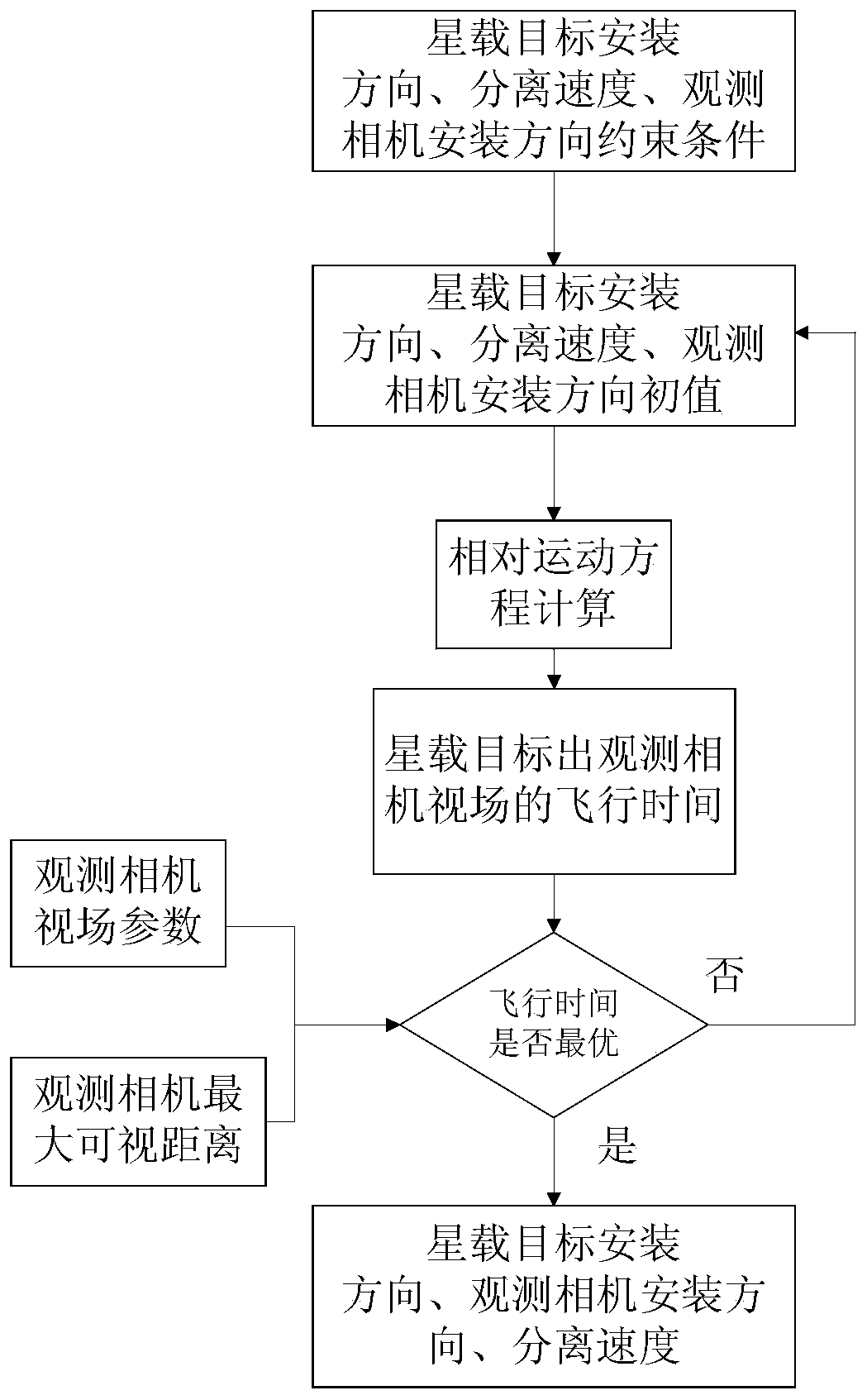
Figure 1 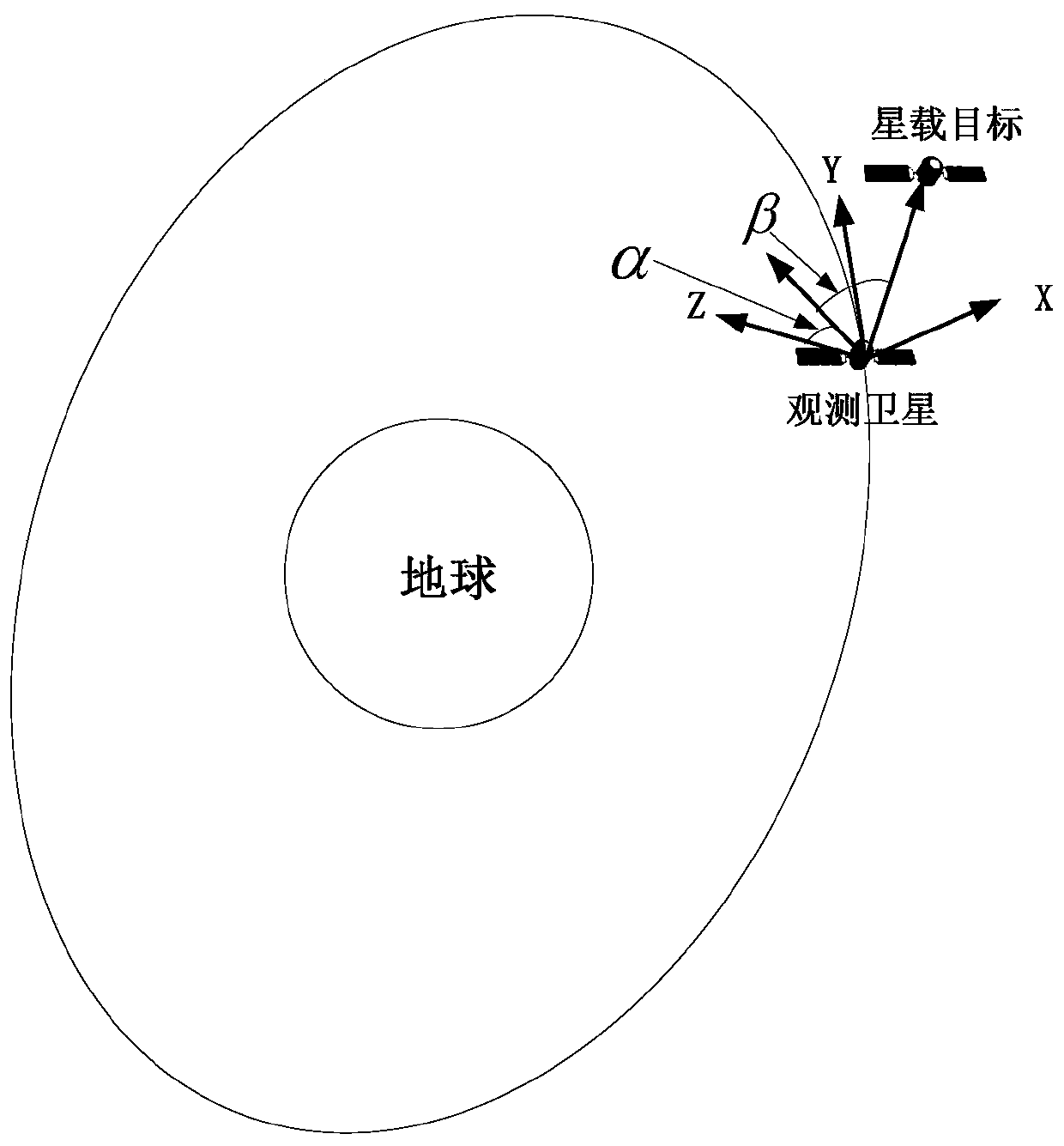
Figure 2 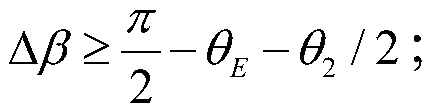
Figure 3
Abstract
Description
technical field
[0001] The invention relates to a method for determining installation parameters of a non-cooperative space target relative to navigation on-orbit demonstration, and belongs to the field of satellite orbit design. Background technique
[0002] Space non-cooperative targets are characterized by no specific identification, no response device, inability to perform action coordination, and are often in a state of invalid roll. Therefore, determining the location and status of such non-cooperative targets is a prerequisite for on-orbit service. In the on-orbit demonstration and verification test of non-cooperative target perception, measurement and identification, the on-orbit perception and identification system is mainly composed of subsystems such as a stereo vision system, an intelligent perception and identification processing unit, a spaceborne target and a target release mechanism. After the observation satellite releases the spaceborne target, it perceive...
Examples
Embodiment Construction
[0043] The present invention will be described in detail below in conjunction with the accompanying drawings and specific embodiments.
[0044] Such as figure 1 As shown, the present invention provides a method for determining the installation parameters of a space non-cooperative target relative to navigation on-orbit demonstration. The installation separation parameter determination method includes the installation direction offset Δα of the spaceborne target T , the separation initial velocity Δv of the spaceborne target, and the installation deflection angle Δβ of the observation camera, the method includes the following steps:
[0045] (1) Take the center of mass of the observation satellite as the coordinate origin O, the direction of the earth center pointing to the center of mass of the observation satellite is the positive direction of the X-axis, and the normal direction of the flight orbit of the observation satellite is the positive direction of the Z-axis, accordi...