
A kind of selective plugging agent and its application
A selective, chemical technology, applied in chemical instruments and methods, wellbore/well components, sealing/packaging, etc., can solve the problems of poor pumpability, short validity period, poor oil-water selectivity, etc., to achieve good pumpability, The effect of strong oil-water selectivity, high blocking rate and high erosion resistance
Patent Information
- Authority / Receiving Office
- CN · China
- Patent Type
- Patents(China)
- Current Assignee / Owner
- Publication Date
- 2021-01-26
Smart Images
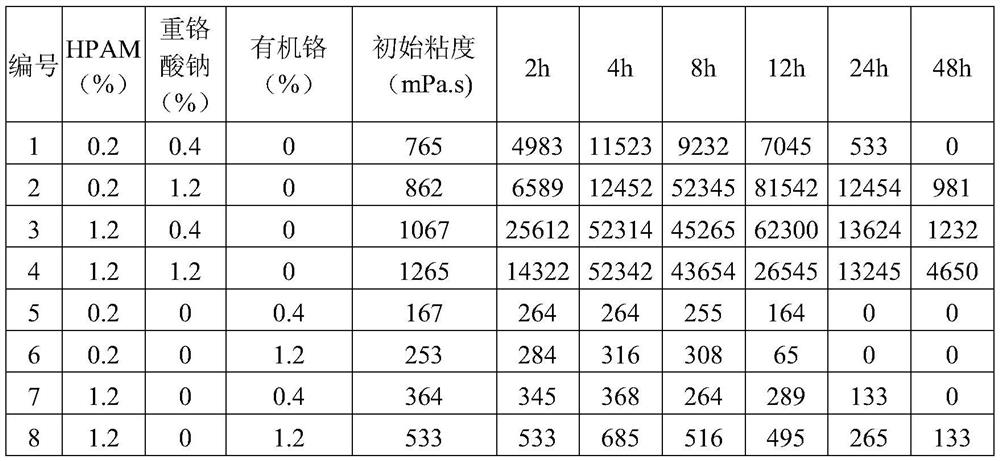
Figure 1 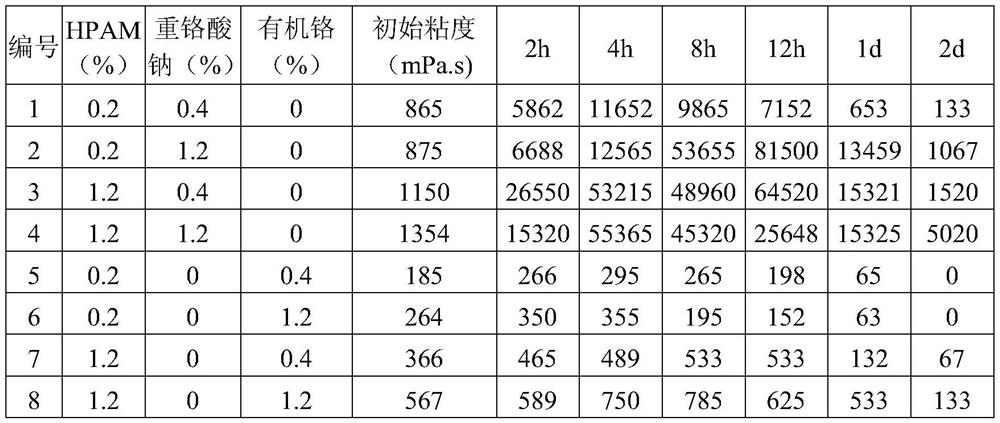
Figure 2 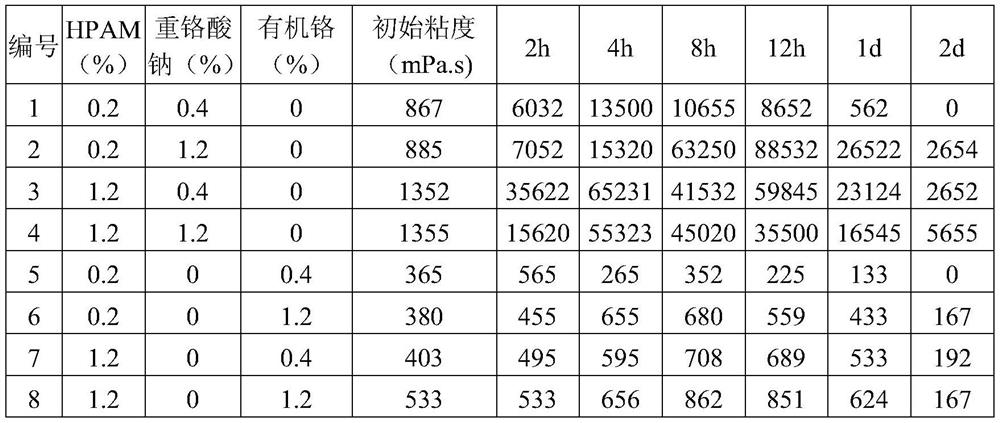
Figure 3
Abstract
Description
technical field
[0001] The invention relates to a chemical agent in the technical field of petroleum production engineering, in particular to a selective plugging agent and its application in selective water plugging of non-moving pipe strings in casing damaged wells in low-permeability oilfields. Background technique
[0002] Oil well water plugging is an important technical measure of "controlling water and stabilizing oil" implemented from production wells. In this process technology, the selectivity of water shutoff agent is the key, especially for low permeability oil fields, the plugging effect of selective water shutoff is the best. At present, although the selective water shutoff technology has been widely used in domestic oilfields and is becoming more and more mature, the mainstream chemical water shutoff system is mainly used in the test of chemical water shutoff technology, and its effective rate is only 50%. The daily oil increase is 0.1t, the average single we...
Examples
Embodiment 1
[0013] Weigh polyacrylamide, sodium dichromate, organic chromium and the remaining water according to the mass concentration percentages described in Table 1 below, and mix the above-mentioned components to obtain a selective blocking agent. The amide is anionic polyacrylamide with a molecular weight of 12 million. Through indoor experiments, the results of testing the gelling effect of 12 million anionic polyacrylamides are shown in Table 1.
[0014] Table 1
[0015]
Embodiment 2
[0017] Weigh polyacrylamide, sodium dichromate, organic chromium and the remaining water according to the mass concentration percentages described in Table 2 below, and mix the above-mentioned components to obtain a selective blocking agent. The amide is an anionic polyacrylamide with a molecular weight of 17 million. Through indoor experiments, the results of testing the gelling effect of 17 million anionic polyacrylamides are shown in Table 2.
[0018] Table 2
[0019]
Embodiment 3
[0021] Weigh polyacrylamide, sodium dichromate, organic chromium and the remaining water according to the mass concentration percentages described in Table 3 below, and mix the above-mentioned components to obtain a selective blocking agent. The amide is an anionic polyacrylamide with a molecular weight of 19 million. Through indoor experiments, the results of testing the gelling effect of 19 million anionic polyacrylamides are shown in Table 3.
[0022] table 3
[0023]