
A Calibration Method for Dual Manipulators Based on Camera Optical Axis Constraints
A dual robotic arm and calibration method technology, which is applied in the field of robot calibration, can solve the problems of lower absolute positioning accuracy of the end of the robotic arm, kinematic parameter error, and complicated calibration process, so as to reduce calibration costs, fewer calibration steps, and calibration accuracy high effect
Patent Information
- Authority / Receiving Office
- CN · China
- Patent Type
- Patents(China)
- Current Assignee / Owner
- Publication Date
- 2021-09-28
Smart Images
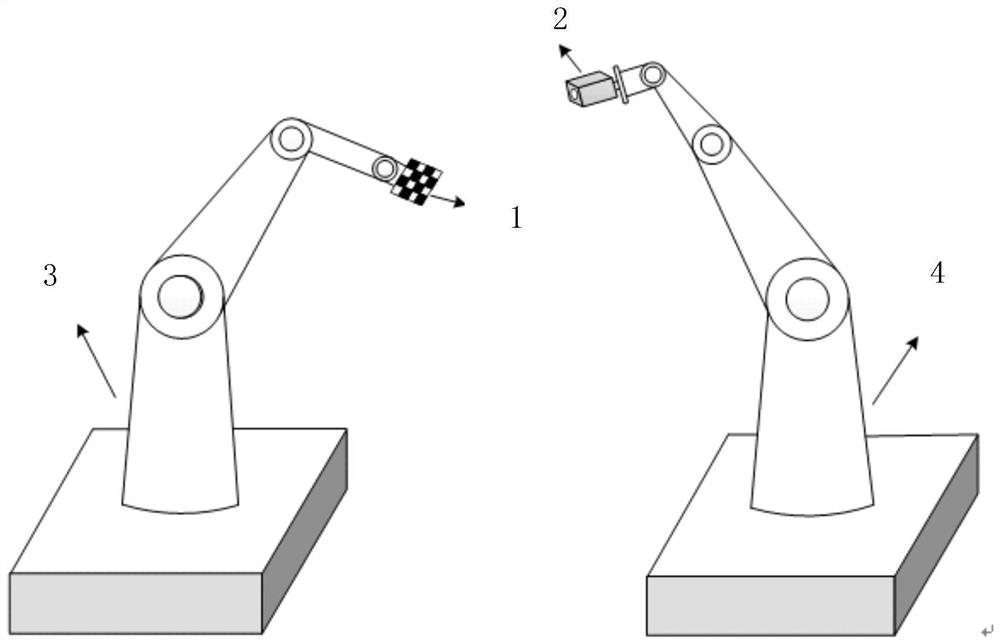
Figure 1 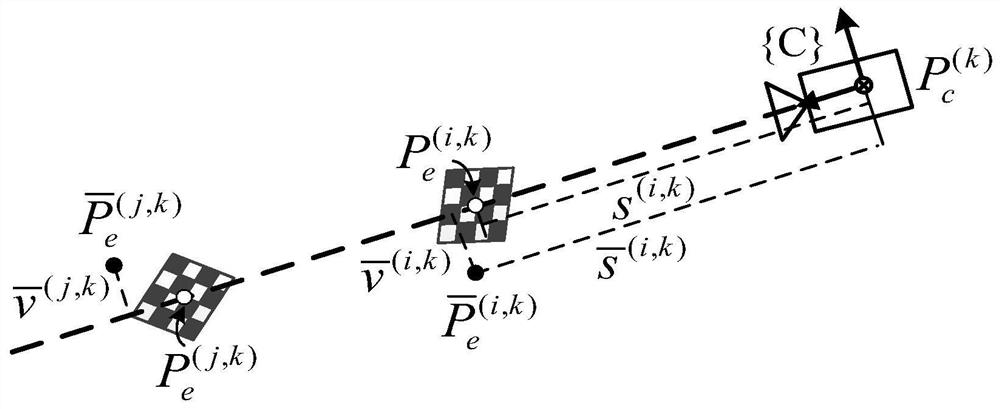
Figure 2 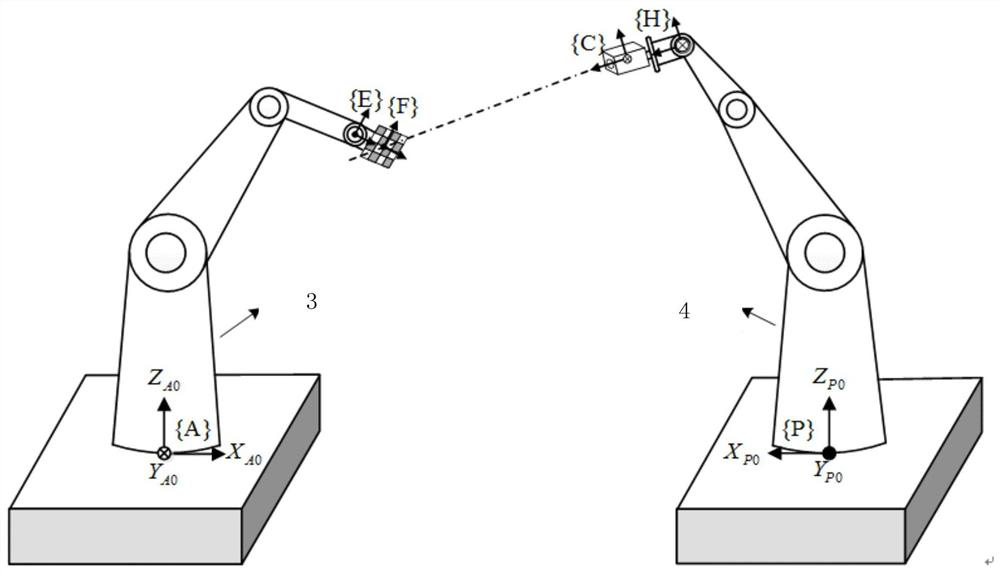
Figure 3
Abstract
Description
technical field
[0001] The invention relates to a dual-manipulator calibration method, in particular to a dual-manipulator calibration method based on camera optical axis constraints, and belongs to the field of robot calibration. Background technique
[0002] As one of the major landmark products in the development of the robot industry, the dual-arm robot has more and more applications in the fields of industry, life, medical treatment, aerospace and other fields. Dual robotic arms can cooperate to complete tasks that are difficult for a single robotic arm, such as moving objects with large mass or volume, complex assembly of multiple components, handling of flexible objects, etc., which has the advantages of saving cost, saving space, and improving production efficiency. When the dual-arm cooperation completes various tasks, the accuracy of the dual-arm system directly affects the degree of completion and success rate of the task, and tasks such as parts assembly put forw...
Examples
Embodiment Construction
[0037] The present invention will be described in detail below in conjunction with the accompanying drawings.
[0038] The invention provides a method for calibrating dual mechanical arms based on camera optical axis constraints. At present, robots are developing rapidly, and more and more fields require dual-arm collaborative robots. In order to successfully complete the operation tasks, the dual-arm system must be calibrated. In view of the low positioning accuracy of the current dual-arm collaborative robot, the present invention simultaneously completes the calibration of kinematic parameters and base coordinates of the two robotic arms, providing technical support for the dual-arm system to complete high-precision tasks. The basic idea of the present invention is to make the optical axis of the camera installed at the end of one manipulator serve as a virtual linear constraint, and the pose of the other end of the manipulator satisfy the virtual constraint of the optica...