
Safety monitoring method for carrier-based aircraft carrier landing process
A technology for safety monitoring and carrier-based aircraft, applied in special data processing applications, complex mathematical operations, instruments, etc., can solve the problems of the safety impact of carrier-based aircraft landing process and the inability to evaluate the mutual influence of risk factors
Patent Information
- Authority / Receiving Office
- CN · China
- Patent Type
- Applications(China)
- Current Assignee / Owner
- Publication Date
- 2019-09-10
Smart Images
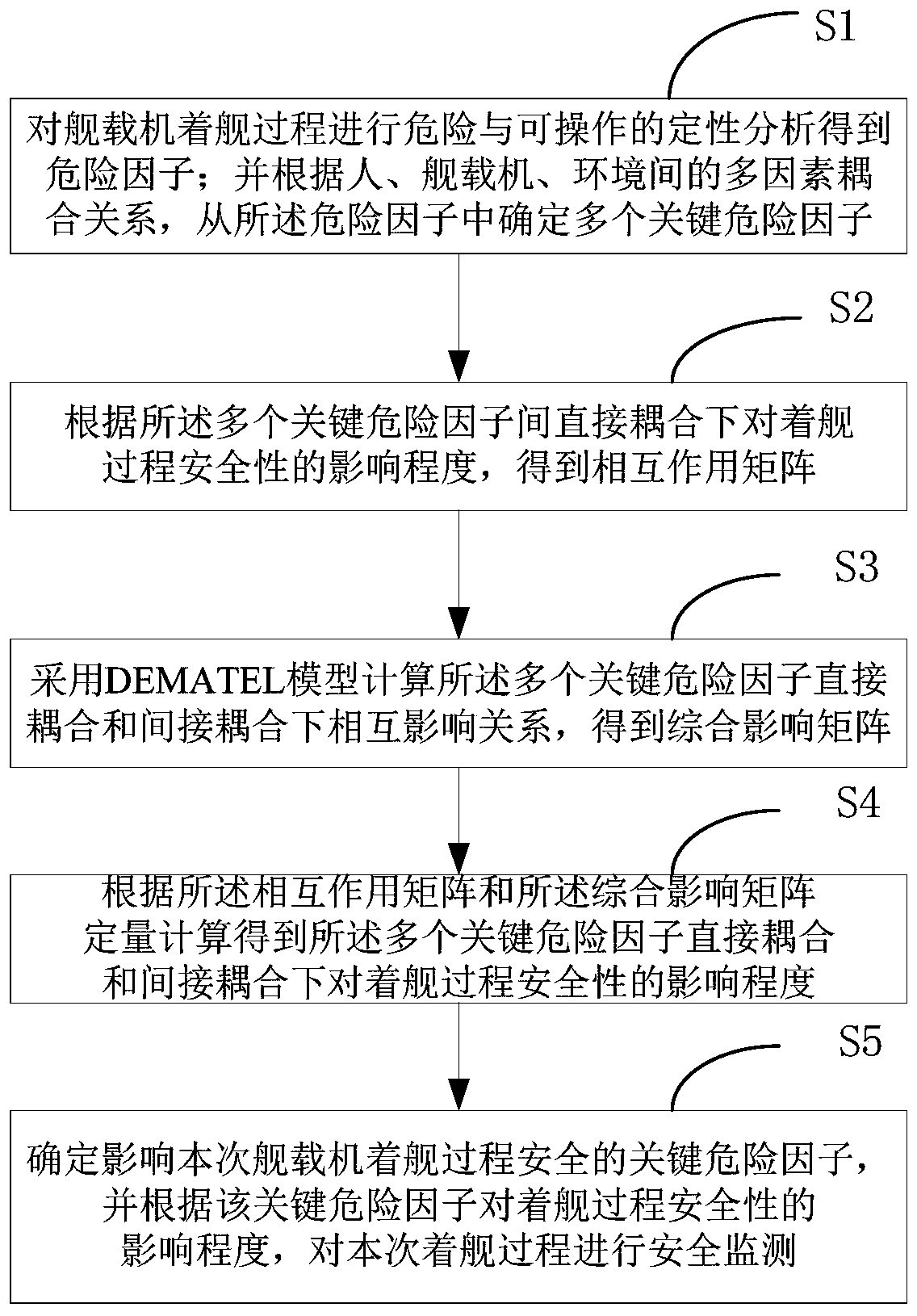
Figure 1 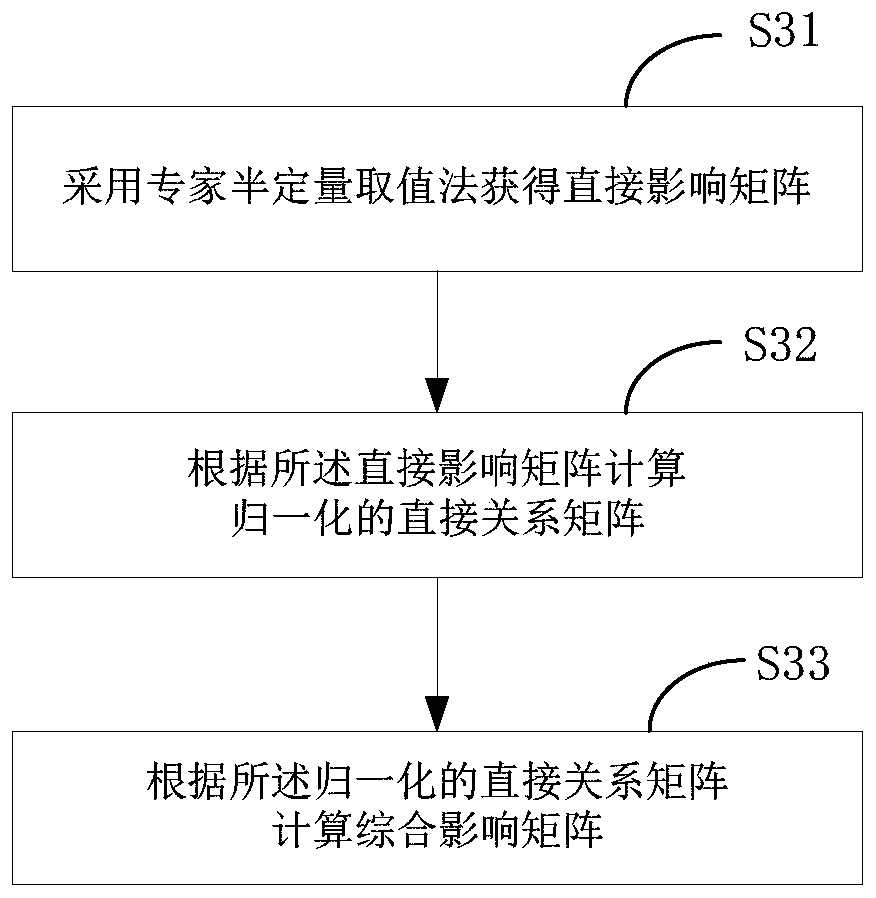
Figure 2 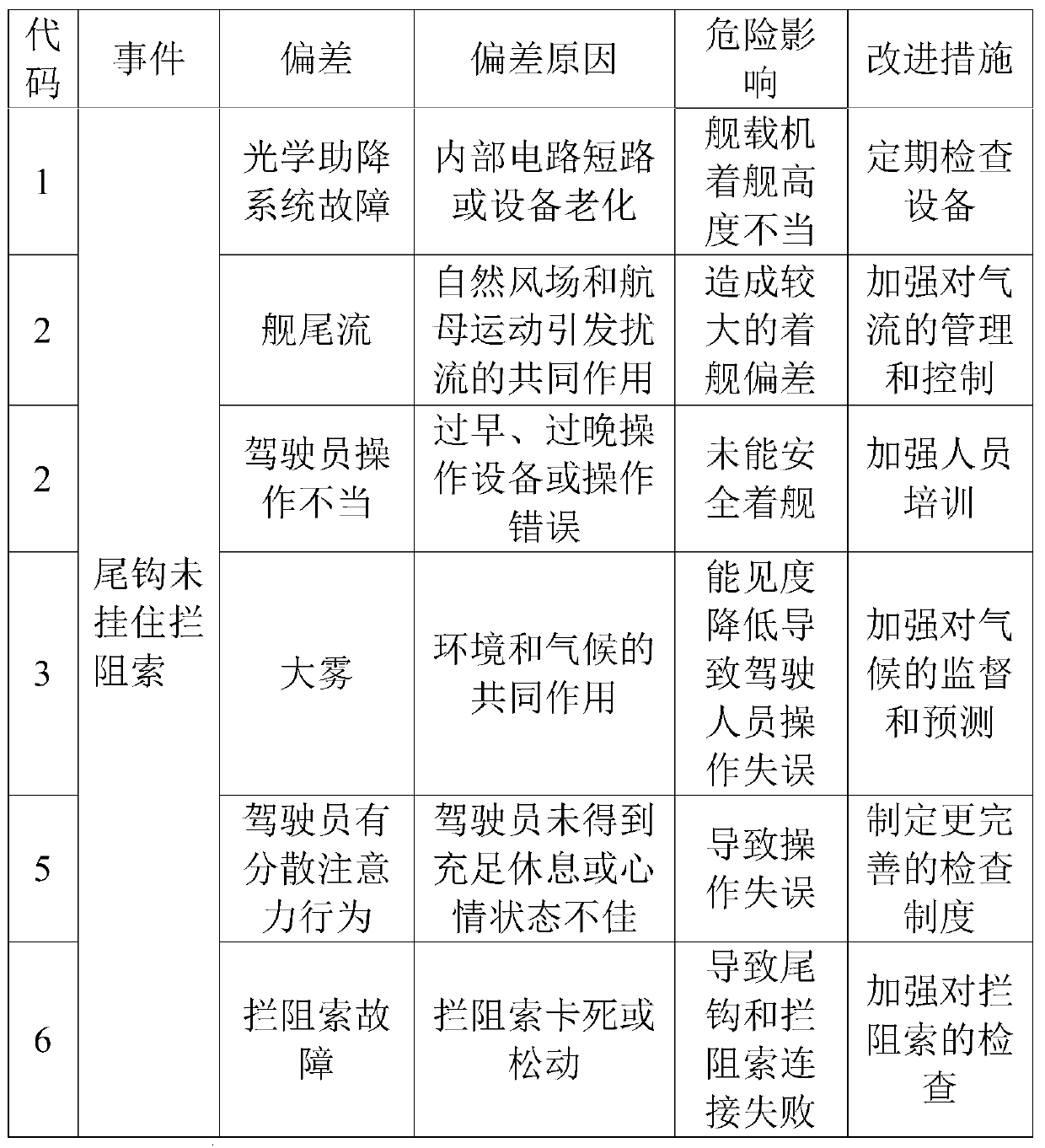
Figure 3
Abstract
Description
technical field
[0001] The invention relates to the technical field of safety monitoring, in particular to a method for safety monitoring of a carrier aircraft landing process. Background technique
[0002] A complex integrated system refers to a system that has a high degree of integration of system components, and the functions and task processes performed need to be jointly executed by multiple factors. Compared with the traditional simple system, the high degree of integration and complexity of the task process of the complex system increases the number of system safety issues, and the complex integrated system often appears as a safety-critical system, so it is particularly necessary to ensure its safety. For the landing process of carrier-based aircraft, the factor that leads to the failure of its mission process is often not a single factor, but the result of the coupling of multiple factors, which brings a huge challenge to the safety analysis of the landing process ...
Examples
Embodiment Construction
[0056] Preferred embodiments of the present invention will be described in detail below in conjunction with the accompanying drawings, wherein the accompanying drawings constitute a part of the application and together with the embodiments of the present invention are used to explain the principle of the present invention and are not intended to limit the scope of the present invention.
[0057] The technical idea of the embodiment of the present invention is: first, use the HAZOP method to carry out single-factor risk analysis on the shipboard aircraft landing process, determine the list of risk factors at the three levels of man, machine and environment, and determine multiple key risk factors; secondly, use The interaction matrix method quantitatively evaluates the influence degree of the interaction between any two key risk factors on the safety of the ship landing process, and the interaction matrix is obtained; finally, the decision-making trial and evaluation laborato...