
An underwater node authentication method based on symmetric polynomial and ECC algorithm
A symmetric polynomial and authentication method technology, applied in the field of underwater node authentication based on symmetric polynomial and ECC algorithm, can solve problems such as high communication overhead, achieve the effect of less communication overhead, easy management, and reduction of communication conflicts and collisions
Patent Information
- Authority / Receiving Office
- CN · China
- Patent Type
- Patents(China)
- Current Assignee / Owner
- Publication Date
- 2022-02-18
Smart Images
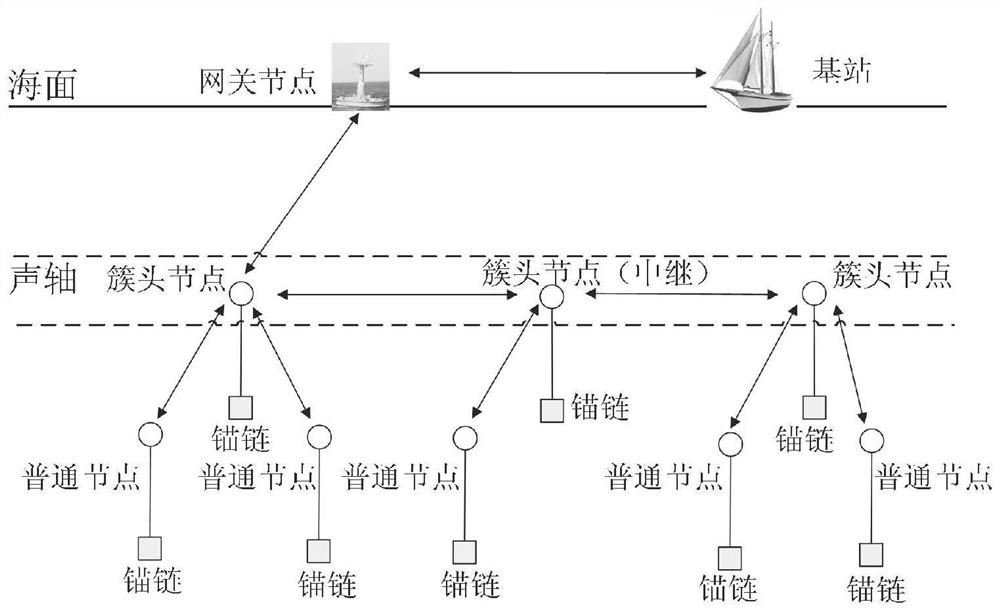
Figure 1 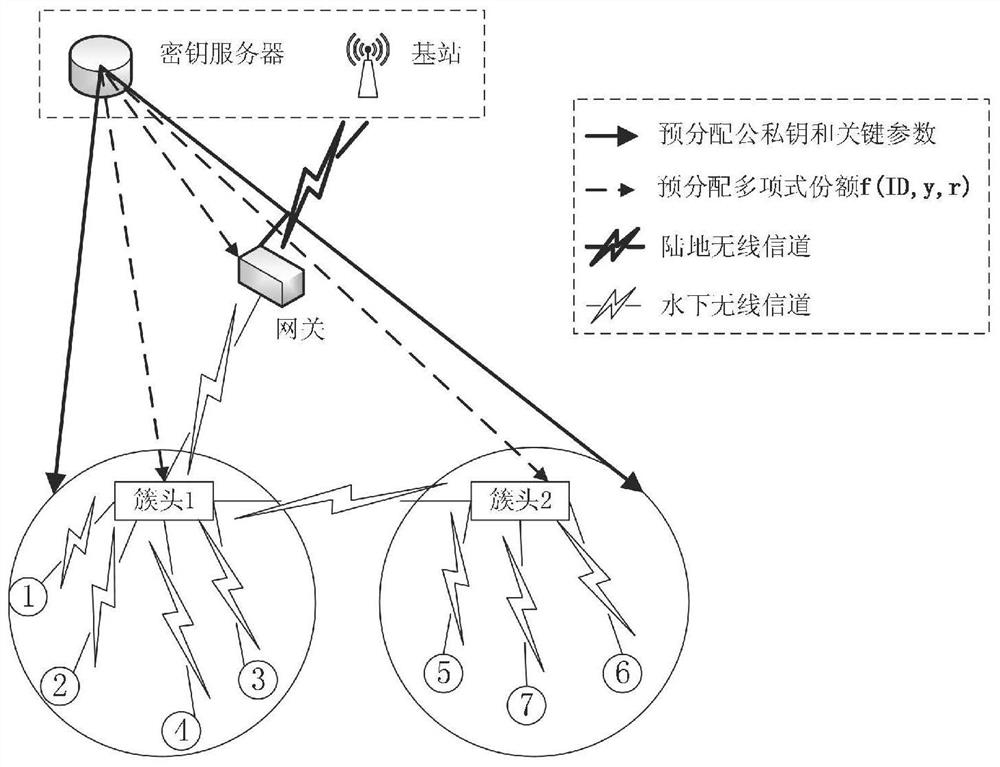
Figure 2 
Figure 3
Abstract
Description
technical field
[0001] The invention relates to the technical field of node authentication, in particular to an underwater node authentication method based on a symmetrical polynomial and an ECC algorithm. Background technique
[0002] Abundant marine resources and a large number of marine application scenarios have made researchers around the world increasingly keen on the development of marine resources and the research on underwater acoustic communication network technology. Scientific researchers around the world are more widely involved in marine technology research, and countries are paying more and more attention to the acquisition and processing of marine information. Ocean data is the key basis for all ocean technology applications, including data generation, collection, storage, transmission, and processing. Therefore, key technologies of underwater acoustic communication networks have gradually become key research topics for major oceanic countries. Designing and...
Examples
Embodiment Construction
[0033] Such as figure 1 , figure 2 As shown, an underwater node authentication method based on symmetric polynomial and ECC algorithm includes the following steps:
[0034] (1) Initialization
[0035]1) The base station selects and generates security parameters required for network authentication and stores them in all network nodes. Network nodes include gateway nodes, cluster head nodes and common nodes.
[0036] 2) The base station assigns unique IDs to all physical components in the network.
[0037] 3) The base station calculates the public-private key pair (PU) for all network nodes i , PR i ) and stored in the corresponding node. After the calculation is completed, the base station deletes the private keys of all nodes, and only saves the identity public key pair of the node (ID i , PU i ). After calculating the public and private keys of all nodes, the unique identity key pair (ID i , PU i , PR i ) is stored in the identity identifier as ID i in the node. ...