
Method for maintaining antigen activity in antigen-fluorescent microsphere conjugate and application in novel coronavirus antibody chromatography detection reagent
A fluorescent microsphere and detection reagent technology, applied in the field of immunochromatography, can solve the problems of decreased antigen activity, low sensitivity of antibody detection reagents, inability to stretch protein conformation, etc.
Patent Information
- Authority / Receiving Office
- CN · China
- Current Assignee / Owner
- Publication Date
- 2020-10-23
Smart Images
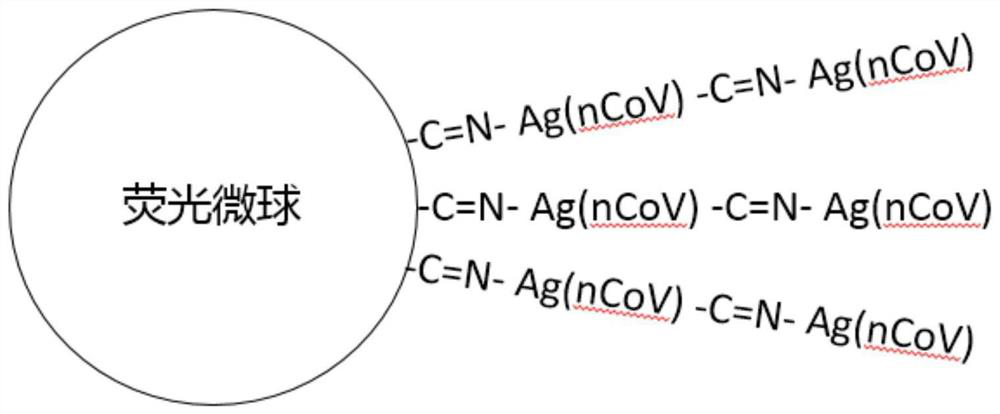
Figure 1 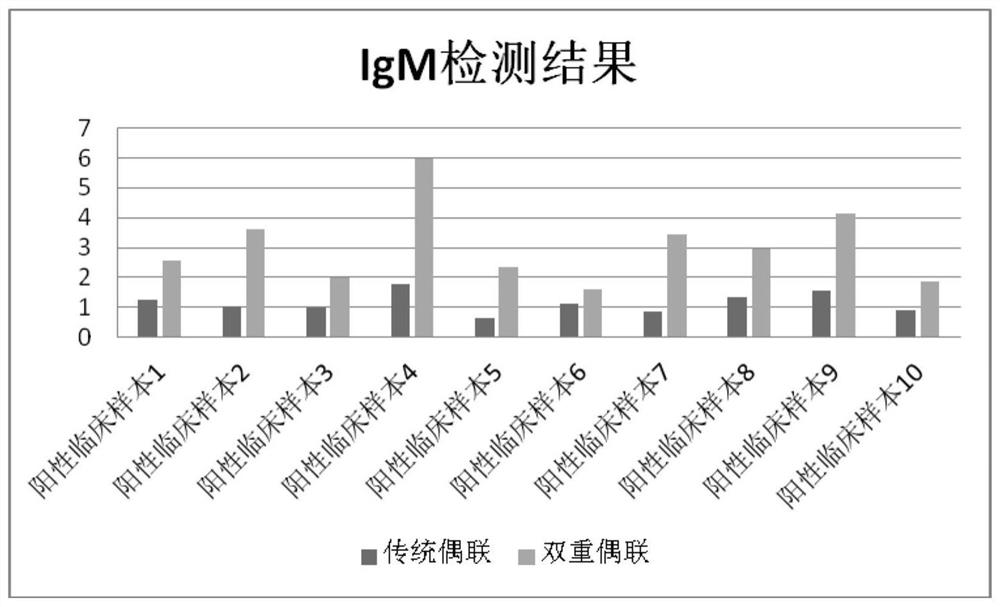
Figure 2 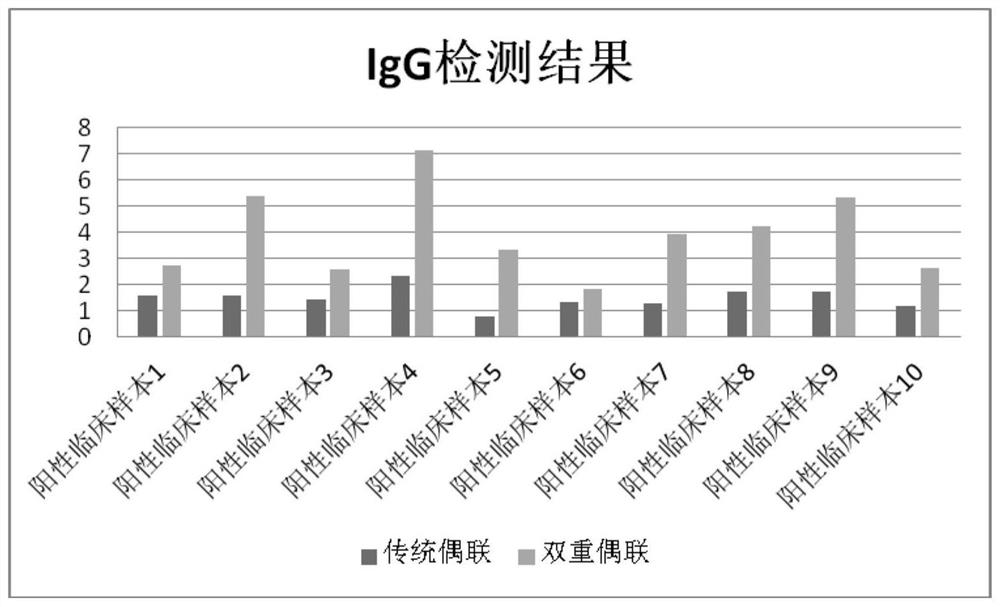
Figure 3
Abstract
Description
technical field
[0001] The invention relates to the technical field of immunochromatography, in particular to a method for maintaining antigen activity in an antigen-fluorescent microsphere conjugate and its application in a novel coronavirus antibody chromatography detection reagent. Background technique
[0002] At present, the detection methods for the new coronavirus are mainly divided into two categories, one is the direct detection of the virus, such as the "gold standard" nucleic acid detection of etiology, which is the detection of certain specific nucleic acid sequences in the virus gene; the other is the indirect detection of the virus. Detection, such as the detection of new coronavirus-specific serum antibodies, when the virus invades the human body, the human immune system will produce a large number of immunoglobulins, the most common of which are IgG and IgM, which are key components of the body's immune response to the virus, so through Serum testing for susp...
Examples
Embodiment 1
[0038] 1. Preparation of antigen-antigen-fluorescent microsphere conjugates
[0039](1) Take out 500ul fluorescent microspheres (1% concentration W / V, green fluorescence-excitation 475nm-emission 525nM) into a centrifuge tube.
[0040] (2) Centrifuge (12000rpm-20000rpm according to different particle sizes) for 10min to settle the microspheres and remove the supernatant.
[0041] (3) Add 500ul coupling buffer (50mM MES pH 6.0) and mix well.
[0042] (4) Add 20ul EDC solution (200mM), 20ul sulfo-NHS solution (200mM), mix well, and incubate on a rotary mixer for 30min.
[0043] (5) Centrifuge (12000rpm-20000rpm according to different particle sizes) for 10min to settle the microspheres and remove the supernatant.
[0044] (6) Add 500ul coupling buffer (50mM MES ph6.0), mix well, add 0.1mg new crown antigen, mix well, and incubate for 1 hour at room temperature with a rotary mixer.
[0045] (7) Centrifugation (choose 12000rpm-20000rpm according to different particle sizes
[...