
Electrode assembly and secondary battery
A technology of electrode components and secondary batteries, which is applied in the direction of electrode manufacturing, electrical components, battery components, etc., can solve problems affecting the energy density of batteries, achieve the effects of improving overall mechanical properties, increasing energy density, and preventing thermal runaway
Patent Information
- Authority / Receiving Office
- CN · China
- Patent Type
- Applications(China)
- Current Assignee / Owner
- Publication Date
- 2021-04-20
Smart Images
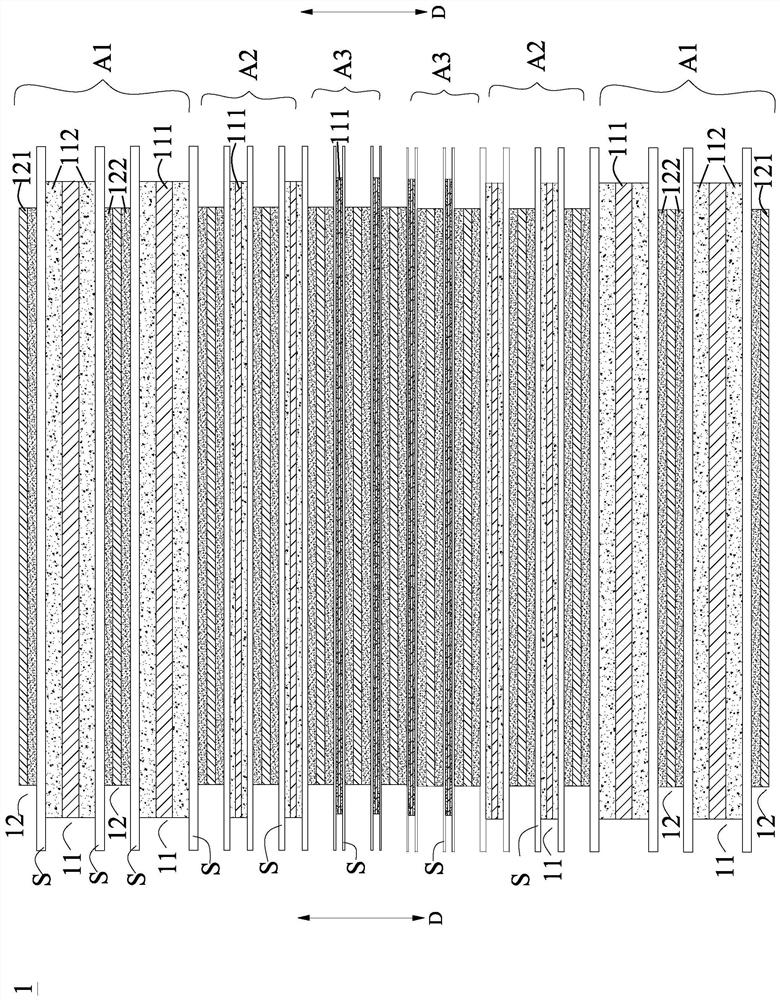
Figure 1 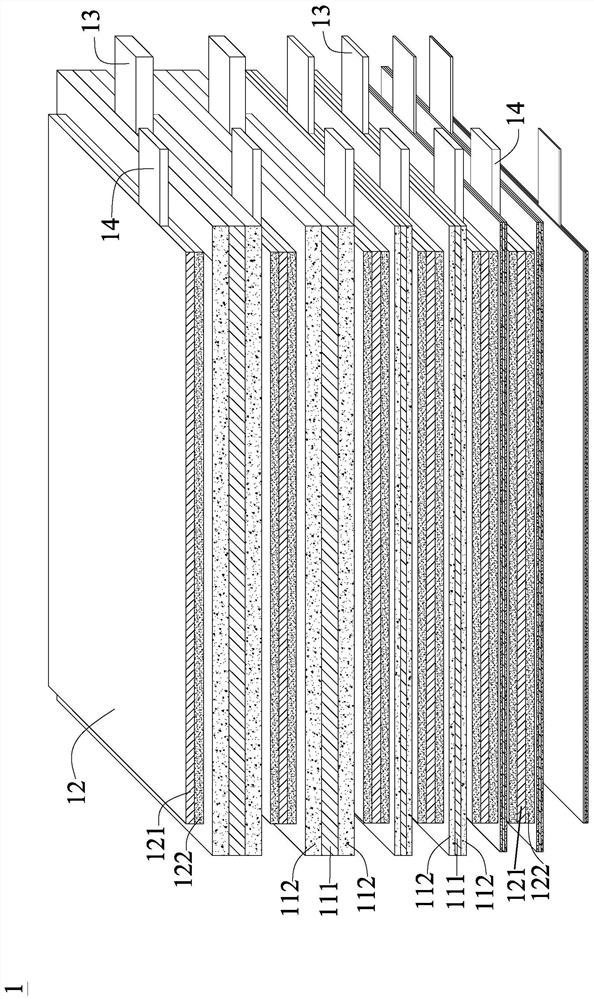
Figure 2 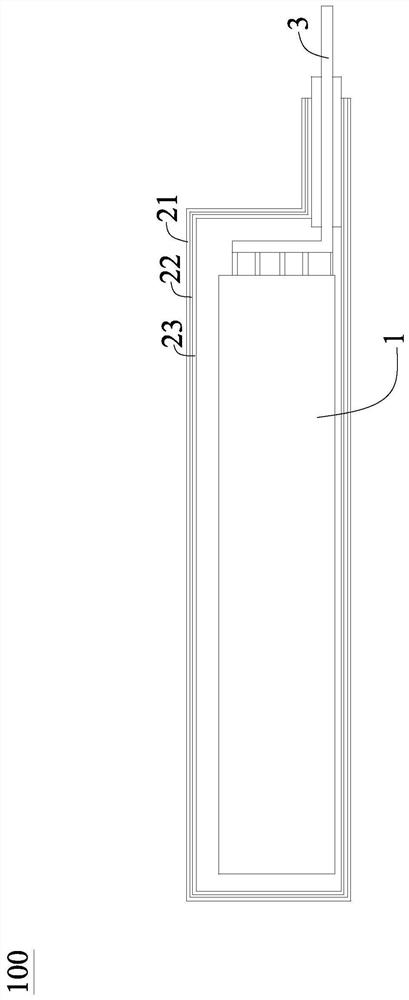
Figure 3
Abstract
Description
technical field
[0001] The disclosure relates to the field of secondary batteries, in particular to an electrode assembly and a secondary battery. Background technique
[0002] The negative current collector material in the secondary battery is usually copper foil, and the thickness of the copper foil has a great influence on the performance of the battery when it is impacted. If the secondary battery uses thicker copper foil, it can make the battery have better mechanical strength. When the battery is hit, the thick copper foil can effectively reduce the short-circuit failure caused by the generation of debris. In the event of a short circuit, the thick copper foil can divert the current more, the voltage will drop rapidly, reduce the heat generation of the battery, and prevent the battery from thermal runaway.
[0003] Although the use of thick copper foil can effectively improve the pass rate when impacted, it greatly affects the improvement of battery energy density. ...
Examples
Embodiment Construction
[0042] The drawings illustrate embodiments of the disclosure and it is to be understood that the disclosed embodiments are merely examples of the disclosure, which may be embodied in various forms and therefore specific details disclosed herein should not be construed as limiting. , but merely as a basis for the claims and as a representative basis for teaching one of ordinary skill in the art to variously employ the present disclosure.
[0043] Reference herein to "an embodiment" means that a particular feature, structure, or characteristic described in connection with the embodiment can be included in at least one embodiment of the present disclosure. The occurrences of this phrase in various places in the specification are not necessarily all referring to the same embodiment, nor are separate or alternative embodiments mutually exclusive of other embodiments. It is understood explicitly and implicitly by those skilled in the art that the embodiments described herein can be ...