
A kind of method for detecting adulteration of sesame oil
A technology of sesame oil and polyphenols, applied in the field of sesame oil quality monitoring, can solve the problems of overlapping edible vegetable oils, increasing the difficulty of fluorescence spectrum analysis, and failing to meet the rapid detection of the market
Patent Information
- Authority / Receiving Office
- CN · China
- Patent Type
- Patents(China)
- Current Assignee / Owner
- Publication Date
- 2022-08-05
Smart Images
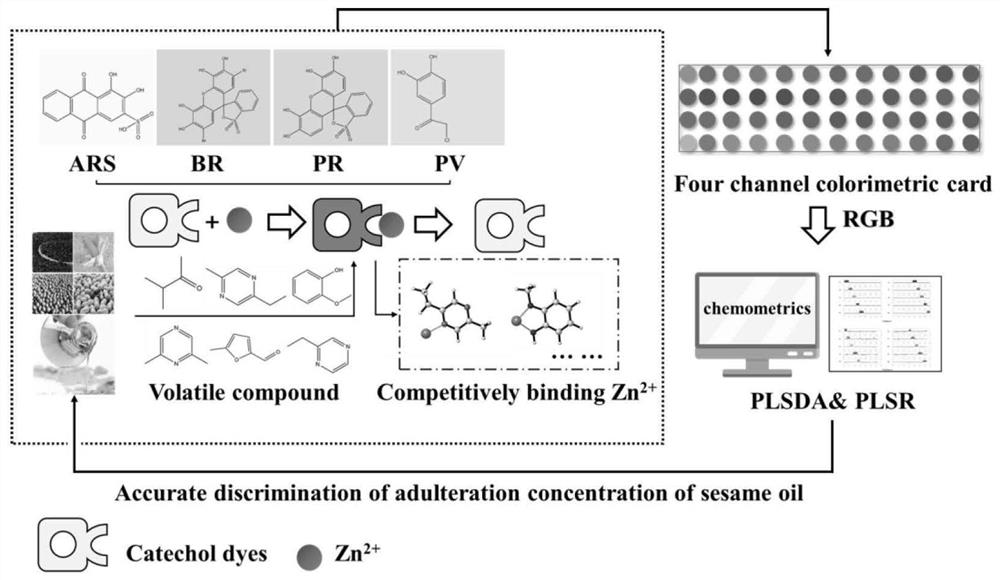
Figure 1 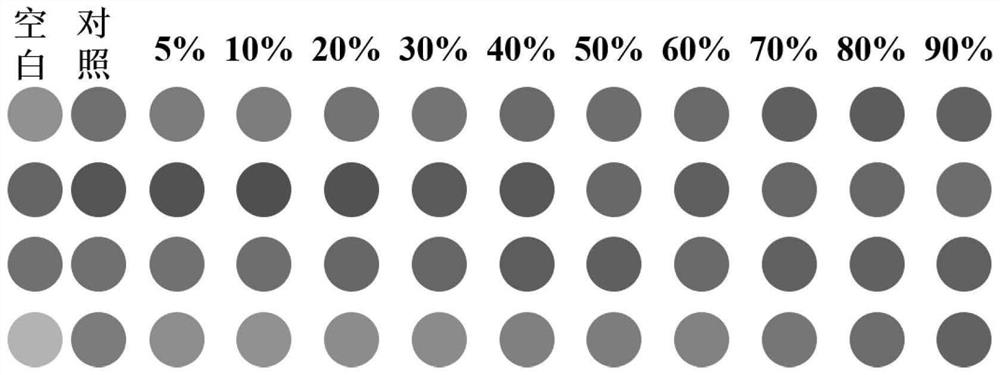
Figure 2 
Figure 3
Abstract
Description
technical field
[0001] The invention relates to the technical field of sesame oil quality monitoring, in particular to a method for detecting adulteration of sesame oil. Background technique
[0002] Sesame oil is a vegetable oil with special flavor extracted from sesame seeds, which contains a large amount of active substances such as lignans, vitamin E, sesamol, and has antioxidant, anti-cancer and anti-aging effects. It is loved all over the world for its unique aroma and excellent nutritional value. Driven by interests, in recent years, counterfeit and shoddy sesame oil products have appeared on the market. In the adulteration process, cheap vegetable oils are often used to add flavors and colors to mimic real sesame oil.
[0003] At present, there are traditional analytical methods such as fatty acid spectroscopy, nuclear magnetic resonance spectroscopy, chromatography, etc. to detect adulteration of sesame oil at home and abroad. These analytical methods have high ac...
Examples
Embodiment 1
[0050] figure 1 The operation schematic diagram of the rapid detection of sesame oil adulteration by the polyphenol dye array sensor of the present embodiment;
[0051] In a 96-well plate, four kinds of dyes, Alizarin Red S, Bromopyrophenol Red, Pyrogallol Red, and Catechol Violet, were used as the first row, the second row, and the third row of the first column of the array sensor, respectively. row and fourth row.
[0052] In the second column are the corresponding dyes and Zn of the first column, respectively. 2+ The mixed complexation system, specifically:
[0053] Column 2, first row: C 茜素红S =10×10 -5 mol / L, corresponding to C Zn 2+ is 20×10 -4 mol / L;
[0054] Column 2, second row: C 溴焦酚红 =40×10 -6 mol / L, corresponding to C Zn 2+ 40×10 -4 mol / L;
[0055] Column 2, row 3: C 邻苯三酚红 =10×10 -5 mol / L, corresponding to C Zn 2+ 40×10 -4 mol / L;
[0056] Column 2, Row 4: C 邻苯二酚紫 =16×10 -5 mol / L, corresponding to C Zn 2+ 80×10 -4 mol / L;
[0057] The 3rd to ...