
Double-face basic structure differential moisture-conducting fabric
A basic structure and differentiated technology, applied in fabric surface trimming, roughening, textiles and papermaking, etc., can solve problems such as unsatisfactory one-way moisture guide effect, narrow range of suitable fabrics, poor washing resistance, etc.
Patent Information
- Authority / Receiving Office
- CN · China
- Patent Type
- Applications(China)
- Current Assignee / Owner
- Publication Date
- 2021-09-10
Smart Images
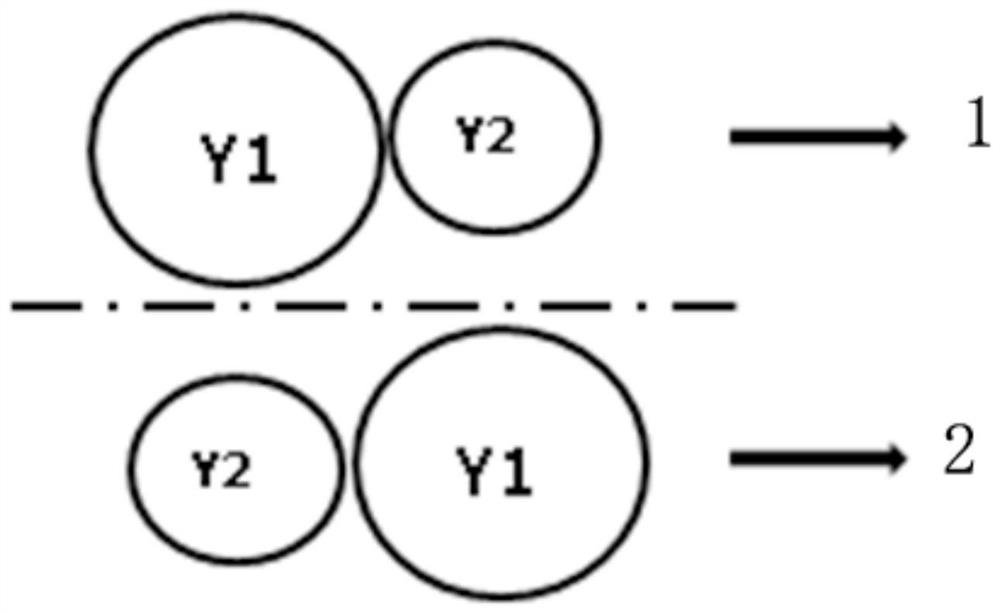
Figure 1 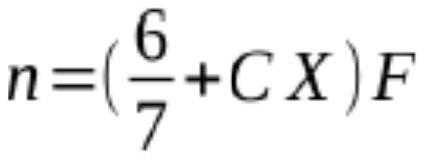
Figure 2 
Figure 3
Abstract
Description
technical field
[0001] The invention relates to the technical field of textile fabrics, in particular to a differentiated moisture-conducting fabric with a double-sided basic structure. Background technique
[0002] One-way conduction phenomena widely exist in nature, such as plant nerve conduction, water and energy transmission, etc. Through the bionic design, one-way conduction effectively solves many practical problems such as oil-water separation and mist capture in the process of separation or collection. In recent years, people have put forward higher requirements for the comfort and functionality of clothing, and multi-functional textiles such as waterproof and moisture-permeable, moisture-absorbing and quick-drying, heat-conducting and cool-feeling have received extensive attention.
[0003] At present, there are two main methods of producing unidirectional moisture-wicking fabrics in the industry: one is to use coating or printing technology to print water-repellen...
Examples
Embodiment 1
[0043] first yarn Y 1 Using mechanical elastic polyester 75D / 48F, the second yarn Y 2 Polyester 40D / 72F is used, among which, the first yarn Y 1 diameter D 1 with the second yarn Y 2 diameter D 2 Ratio ≥ 1.2, the first yarn Y 1 Water conductivity of LP 1 with the second yarn Y 2 Water conductivity of LP 2 Ratio1 and n of the second yarn Y 2 A unit loop structure woven into the fabric body is arranged in an adjacent or alternate manner, m=1, n=1 in Example 1; and the first yarn Y 1 or the second yarn Y 2 Any one of the yarns is distributed in a ratio of 1:1 on the clothing side 1 and the skin-fitting side 2 of the fabric body.
[0044] In this example, a plane made of the yarn was formed by tightly winding the yarn on a microscope slide, water was dropped on the plane by a contact angle measuring instrument, and the contact angle θ thereof was measured. first yarn Y 1 (model is round PES 75D / 48F) contact angle θ 1 is 63°, the second yarn Y 2 (model is round PES 40...
Embodiment 2
[0074] On the basis of Example 1, the converted material is used to weave a polyester and nylon knitted fabric with a double-sided structure.
[0075] Use ordinary round polyester 75D / 36F as the first yarn Y 1 and Nylon 66 (50D / 48F) as the second yarn Y 2 . The two yarns are interlaced to form the main body of the fabric, which is then piled. M the first yarn Y 1 and n of the second yarn Y 2 A unit loop structure woven into the fabric body is arranged in an adjacent or alternate manner, m=1, n=1 in Example 1; and the first yarn Y 1 or the second yarn Y 2 Any one of the yarns is distributed in a ratio of 1:1 on the clothing side 1 and the skin-fitting side 2 of the fabric body.
[0076] In this embodiment, the known polyester density in the industry is 1360000g / m 3 , nylon density is 1150000g / m 3 . first yarn Y 1 (75D / 36F) Polyester monofilament equivalent radius is:
[0077]
[0078] D. Y1 =2×7.36=14.72(μm)
[0079] Capillary equivalent radius r Y1 =0.227R Y1...
Embodiment 3
[0096] On the basis of embodiment 1, adopt the first yarn Y 1 : Ordinary round polyester 75D / 36F and second yarn Y 2 : Cross-section nylon yarn 70D / 68F, the two yarns are interwoven to form the fabric body, and form a weft-knitted double-sided fabric.
[0097] first yarn Y 1 (75D / 36F) Polyester monofilament equivalent radius is:
[0098]
[0099] D. Y1 =2×7.36=14.72(μm)
[0100] Capillary equivalent radius r Y1 =0.227R Y1 =1.67(μm)
[0101] It is convenient to calculate the total capillary volume of round 75D / 36F polyester single yarn
[0102]
[0103] Similarly, we calculate the second yarn Y 2 (70D / 68F) The equivalent radius of cross-section nylon monofilament is:
[0104]
[0105] D. Y2 =2×5.48=10.96(μm)
[0106] Capillary equivalent radius r Y2 =0.471R Y2 =2.58μm)
[0107] It is convenient to calculate the total capillary volume of cross-section 70D / 68F nylon single yarn
[0108]
[0109] Known first yarn Y 1 Polyester contact angle θ 1 The ang...