
Method for repairing heavy metal polluted bottom mud through combination of leaching and stacking
A technology of polluted sediment and joint restoration, applied in chemical instruments and methods, sludge treatment, water pollutants, etc., can solve the problems of increased biological toxicity of heavy metals, reduced humus content, difficult to use microorganisms to degrade organic matter, etc. The effect of chemical utilization, inhibition of organic matter mineralization, and efficient removal of fixation
Patent Information
- Authority / Receiving Office
- CN · China
- Current Assignee / Owner
- Publication Date
- 2022-03-18
Smart Images
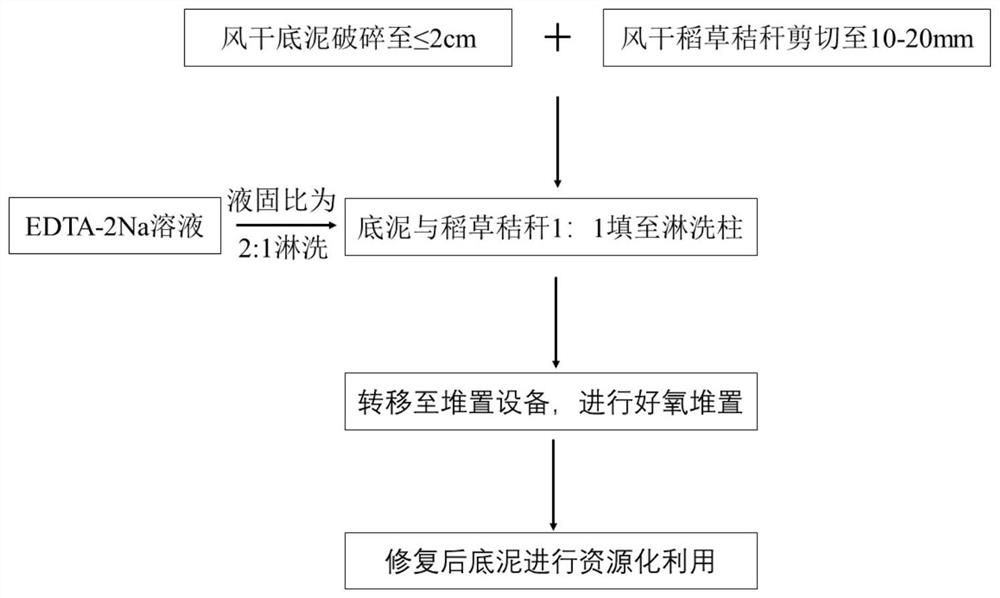
Figure 1 
Figure 2 
Figure 3
Abstract
Description
technical field
[0001] The invention belongs to the field of remediation of heavy metal pollution in bottom mud in environmental engineering, and in particular relates to a method for jointly repairing heavy metal polluted bottom mud by leaching and stacking. Background technique
[0002] With the development of industrialization and the increase of human activities, a large amount of industrial wastewater containing heavy metals is discharged into the ecological environment due to improper disposal, causing serious environmental problems. After heavy metals enter the water body, they are easily deposited in the river sediment through complexation, adsorption, ion exchange and co-precipitation. Heavy metals are common harmful pollutants with characteristics of persistence, difficulty in biodegradation, high biotoxicity and potential bioaccumulation. Heavy metals in river sediments can pose risks to aquatic organisms and human health through the food chain. Therefore, the p...
Examples
Embodiment 1
[0037] A method for combined restoration of heavy metal-contaminated sediment by leaching and stacking, such as figure 1 shown, including the following steps:
[0038] S1. Collect the surface sediment of the Changsha section of the Xiangjiang River, air-dry it at room temperature, remove impurities, grind and crush it, and pass through a 10-mesh sieve to obtain sediment with a particle size ≤ 2 cm. The rice straw (commercially purchased) is air-dried and ground (cut) to a length of 10-20 mm. The basic physical and chemical properties and heavy metal content of the sediment and rice straw are shown in Table 1.
[0039] Table 1 Basic physical and chemical properties of sediment and rice straw
[0040]