
Modified polyolefin catalyst as well as preparation method and application thereof
A technology of polyolefin catalyst and modifier, applied in the field of modified polyolefin catalyst and preparation thereof
Patent Information
- Authority / Receiving Office
- CN · China
- Patent Type
- Applications(China)
- Current Assignee / Owner
- Publication Date
- 2022-07-29
Smart Images
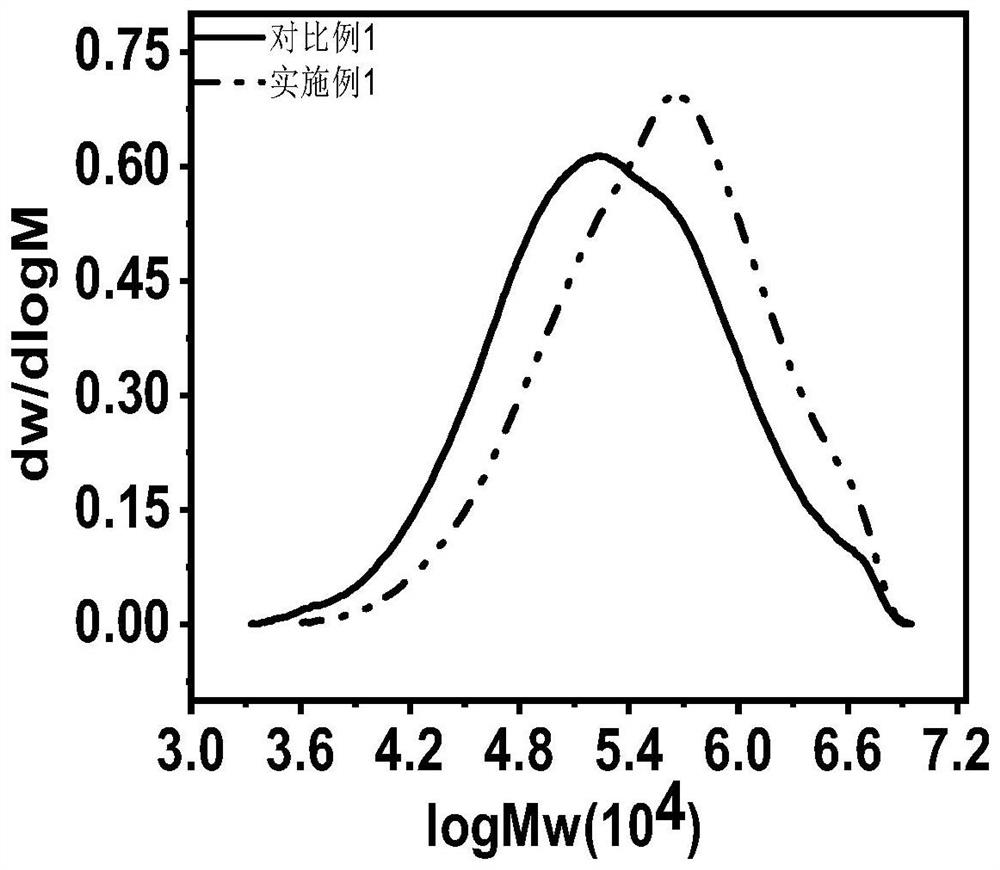
Figure 1 
Figure 2 
Figure 3
Abstract
Description
technical field
[0001] The invention relates to a modified polyolefin catalyst, a preparation method and application thereof, and belongs to the field of catalysts. Background technique
[0002] Polyolefin is an indispensable basic material and strategic material for national economy and national defense construction. In industry, in order to meet the stable operation of industrial devices, polyolefins need to be produced using supported catalysts. This supported catalyst can inhibit the sticking of the reactor wall, and obtain spherical-like and high bulk density polyolefin particles, which has irreplaceable advantages in particle transportation, transportation, storage, processing and other links. Usually, a supported catalyst needs to use a rigid inorganic carrier, an organic carrier (such as a polymer), or an inorganic / organic composite carrier to disperse the metal active centers of the catalyst. On the one hand, the excellent particle morphology of the support is use...
Examples
Embodiment 1
[0026] Using MgCl in Comparative Example 1 2 Loaded TiCl 4 Catalyst (Ziegler-Natta catalyst) 1.0g, add 100mL n-hexane, add 0.1g hexamethylcyclotrisiloxane at 30°C, stir for 30min, filter out the supernatant, dry to free flow to obtain modified olefin Polymerization Catalyst A. Take olefin polymerization catalyst A with a Ti molar content of 10 μmol, add 500 mL of n-hexane, raise the temperature to 70 ° C, add 1 mol of triethyl aluminum, feed ethylene to a pressure of 10 bar, and polymerize for 1 h to obtain 310.5 g of polyethylene. GPC After the measurement, the molecular weight of the product was 2303000 g / mol and the molecular weight distribution was 3.5.
Embodiment 2
[0028] Using MgCl in Comparative Example 1 2 Loaded TiCl 4 1.0g catalyst (Ziegler-Natta catalyst), add 100mL n-hexane, add 0.01g cage polysilsesquioxane at 30°C, stir for 30min, filter out the supernatant, dry to free flow, and obtain the modified olefin Polymerization Catalyst B. Take olefin polymerization catalyst B with a Ti molar content of 10 μmol, add 500 mL of n-hexane, raise the temperature to 70 ° C, add 1 mol of triethyl aluminum, feed ethylene to a pressure of 10 bar, and polymerize for 1 h to obtain 152.2 g of polyethylene. After measurement, the molecular weight of the product was 1,840,000 g / mol, and the molecular weight distribution was 4.3.
Embodiment 3
[0030] Using MgCl in Comparative Example 1 2 Loaded TiCl 4 1.0 g of catalyst (Ziegler-Natta catalyst), add 100 mL of n-heptane, add 1.0 g of cage-type polysilsesquioxane at 30°C, stir for 90 min, filter out the supernatant, and dry to free flow to obtain a modified Olefin polymerization catalyst C. Take olefin polymerization catalyst C with a Ti molar content of 10 μmol, add 500 mL of n-heptane, raise the temperature to 70 ° C, add 1 mol of triisobutyl aluminum, feed ethylene to a pressure of 10 bar, and polymerize for 1 h to obtain 127.3 g of polyethylene, After measurement by GPC, the molecular weight of the product was 2,450,000 g / mol, and the molecular weight distribution was 3.1.