
OFDMA system frequency time 2-D wire-less resource scheduling method
A technology of wireless resource scheduling and system frequency, applied in orthogonal multiplexing systems, electrical components, multiplexing communications, etc. or spectral efficiency, etc.
Patent Information
- Authority / Receiving Office
- CN · China
- Patent Type
- Patents(China)
- Current Assignee / Owner
- Publication Date
- 2011-01-26
- Estimated Expiration
- Not applicable · inactive patent
Smart Images
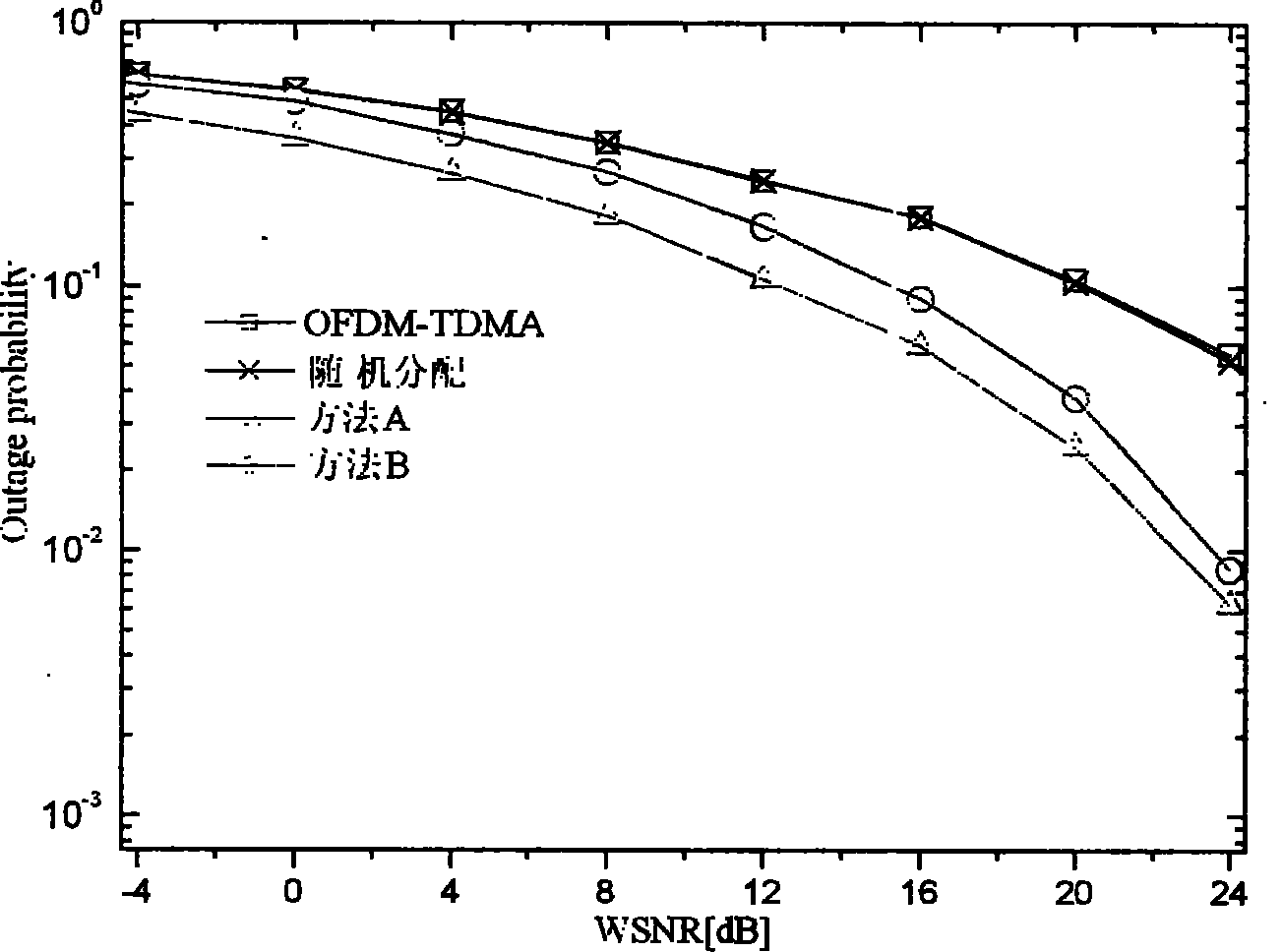
Figure 1 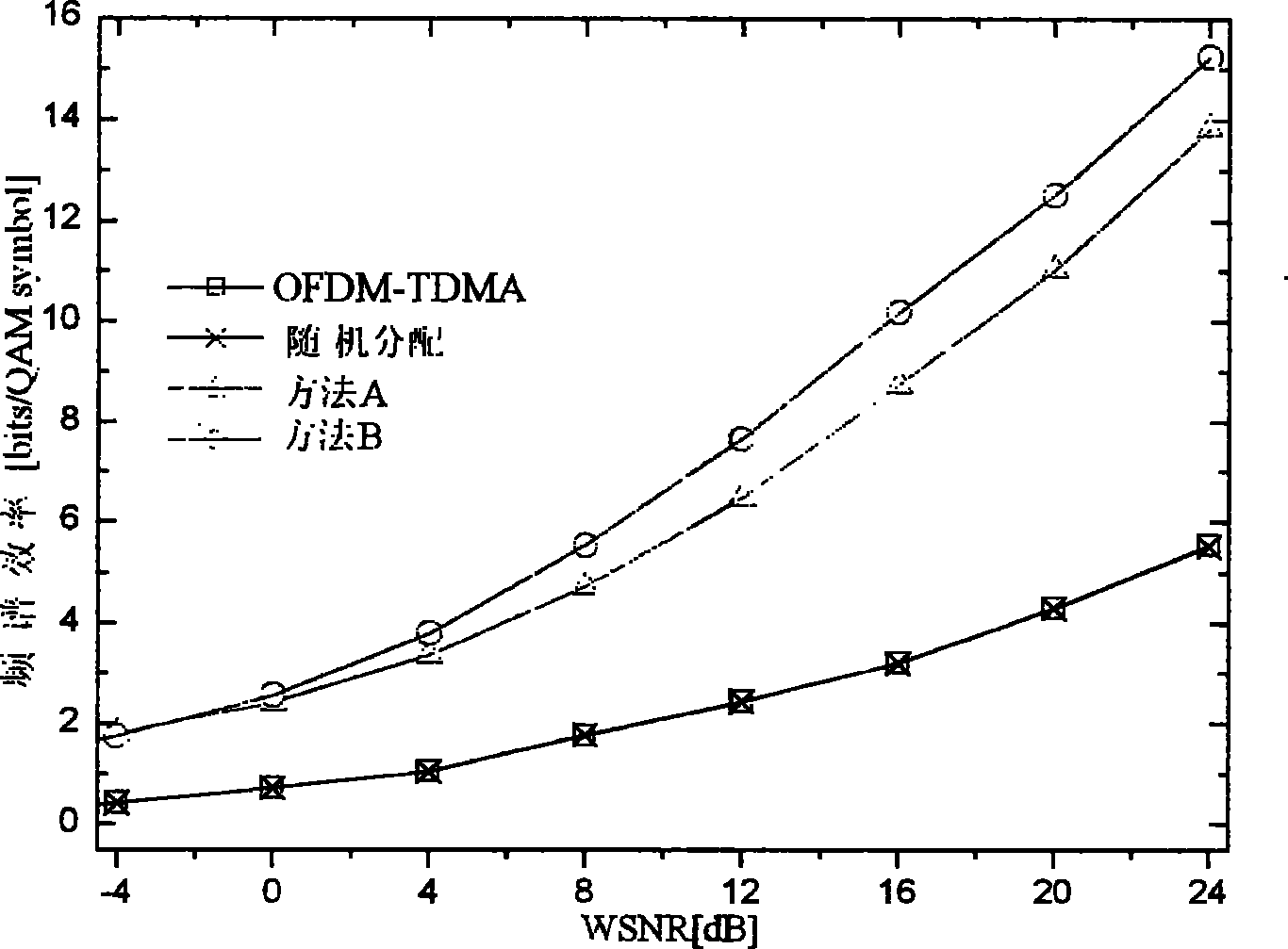
Figure 2 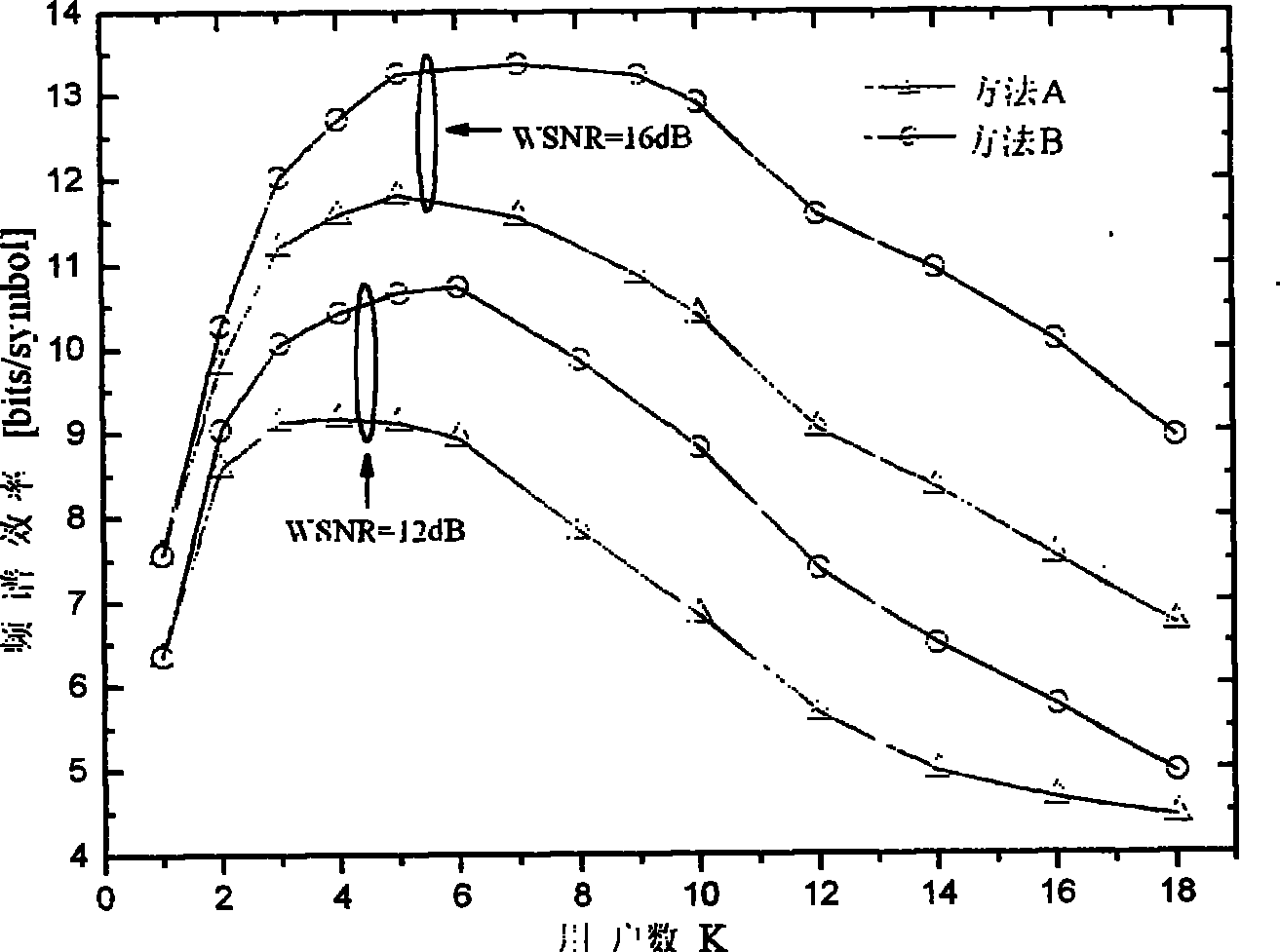
Figure 3
Abstract
Description
Technical field
[0001] The invention belongs to the field of wireless communication, and particularly relates to a frequency-time two-dimensional wireless resource scheduling method of an OFDMA system. Background technique
[0002] OFDM (Orthogonal Frequency Division Multiplexing: Orthogonal Frequency Division Multiplexing) is a special multi-carrier transmission technology that divides a wide transmission bandwidth into multiple orthogonal sub-carriers for parallel transmission of data. Of course, OFDM can also be regarded as a modulation technology or multiplexing technology. One of the biggest advantages of OFDM technology is to combat multipath fading. Since the entire transmission bandwidth is divided into multiple narrow-band sub-carriers, the signal in each sub-carrier can be regarded as flat fading. In a single-carrier modulation system, the fading of the channel will affect the entire signal bandwidth; however, in an OFDM multi-carrier modulation system, only a small p...
Examples
Embodiment Construction
[0075] In order to further understand the present invention, we will perform simulation analysis and verification below:
[0076] In the simulation, WSNR (Worst SNR) is used to represent the worst signal-to-noise ratio in the cell, which is defined as the signal-to-noise ratio (SNR) when the user is at the edge of the cell, and does not consider the effects of shadow fading and fast fading.
[0077] In order to facilitate the comparison between different methods, two scheduling methods, OFDM-TDMA and random allocation, are also simulated in the scheduling of OFDMA frames. The OFDM-TDMA scheduling method is to allocate time slots to different users. The time slot occupies the entire frequency band; and the random resource allocation is to randomly allocate frequency-time blocks to users.
[0078] The resource scheduling performance of a downlink OFDMA cell is simulated in the 5GHz frequency band. The path loss factor is selected as n=4, and the shadow fading standard deviation is 10d...