
System and method for performing vision system planar hand-eye calibration from straight line features
a technology of vision system and straight line features, applied in image analysis, image enhancement, instruments, etc., can solve the problems of increasing cost and setup time, and achieve the effect of reducing the dependence of the vision system and sufficient calibration accuracy
Patent Information
- Authority / Receiving Office
- US · United States
- Patent Type
- Patents(United States)
- Current Assignee / Owner
- Publication Date
- 2019-08-13
Smart Images
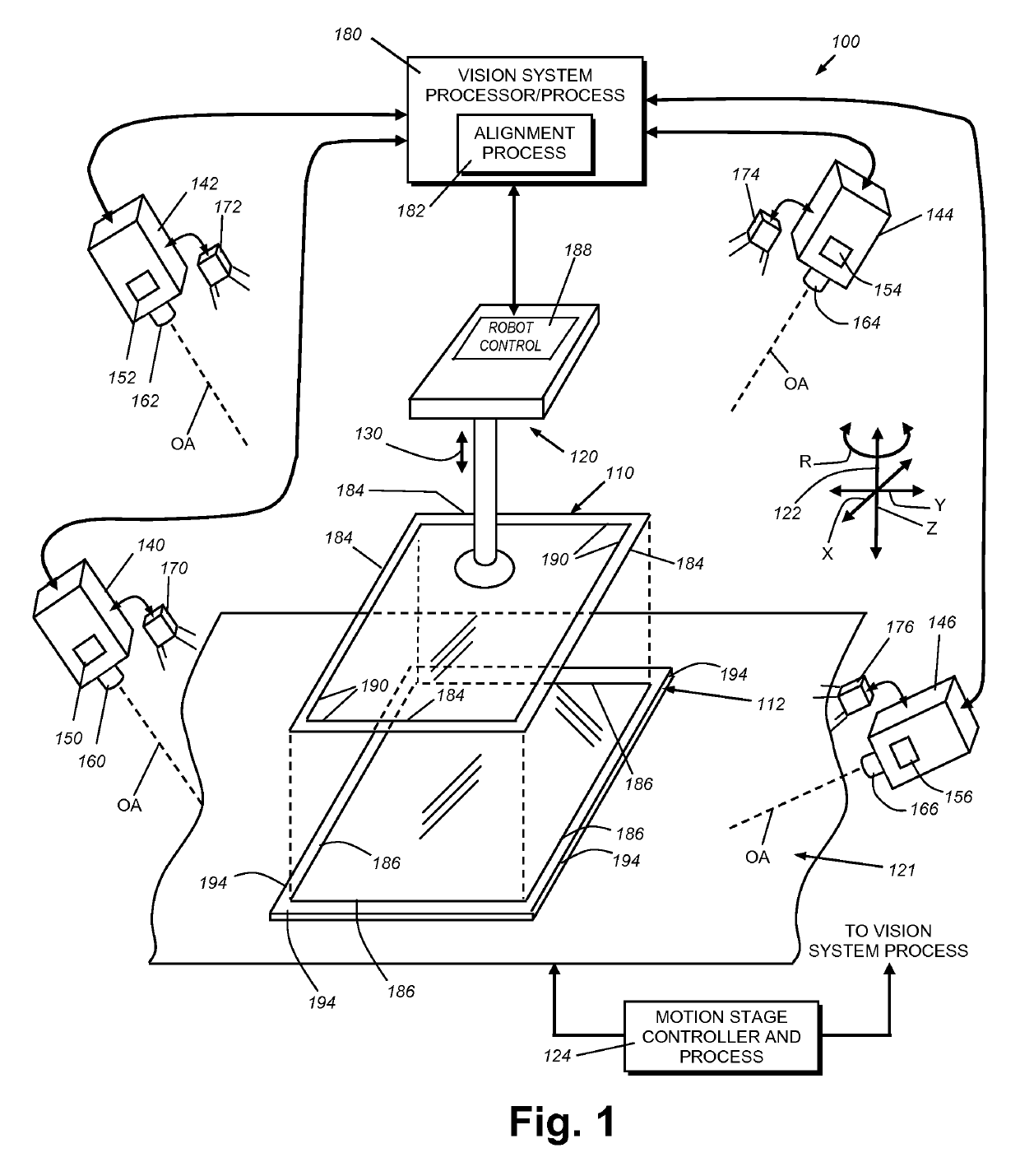
Figure 1 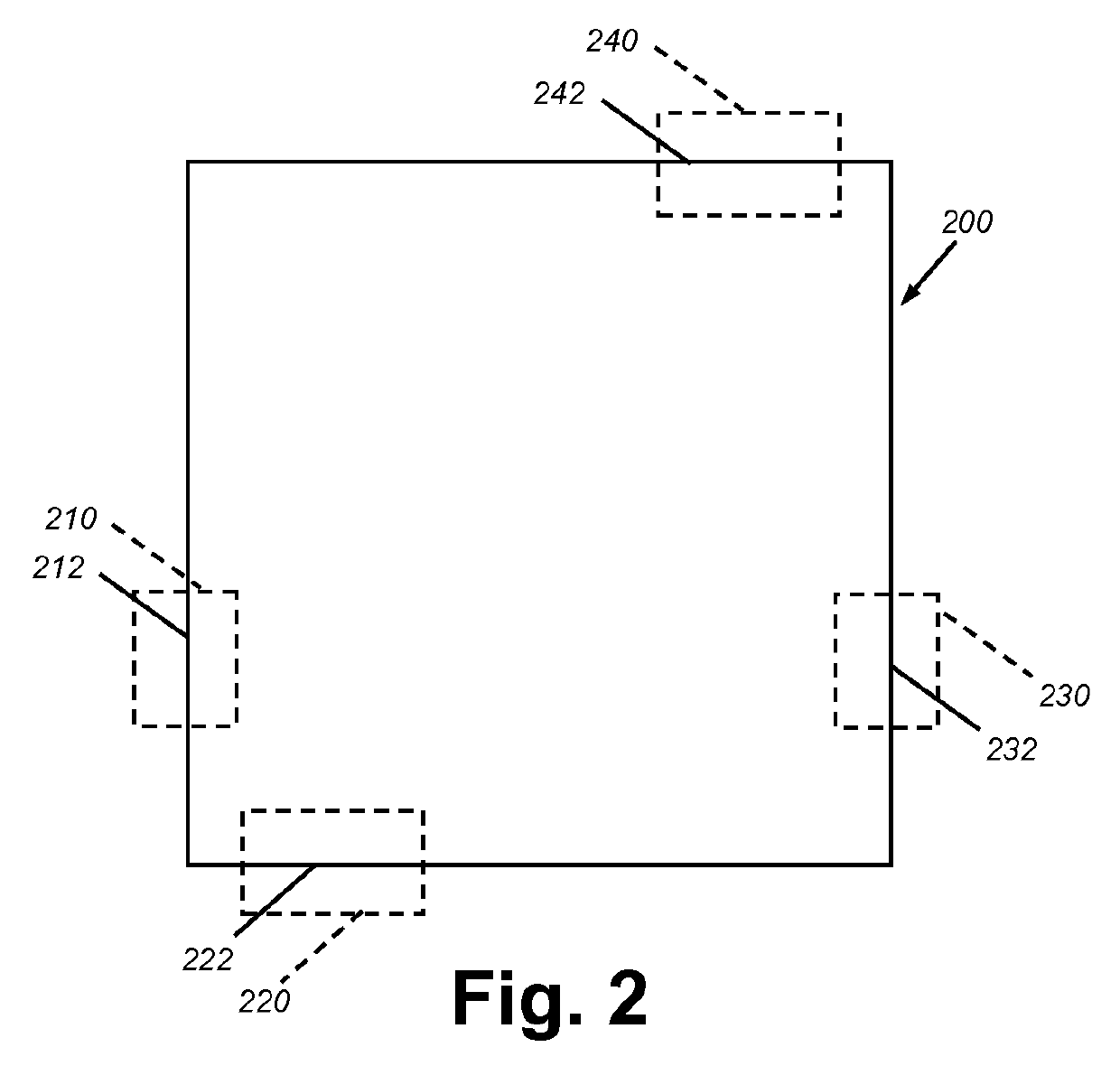
Figure 2 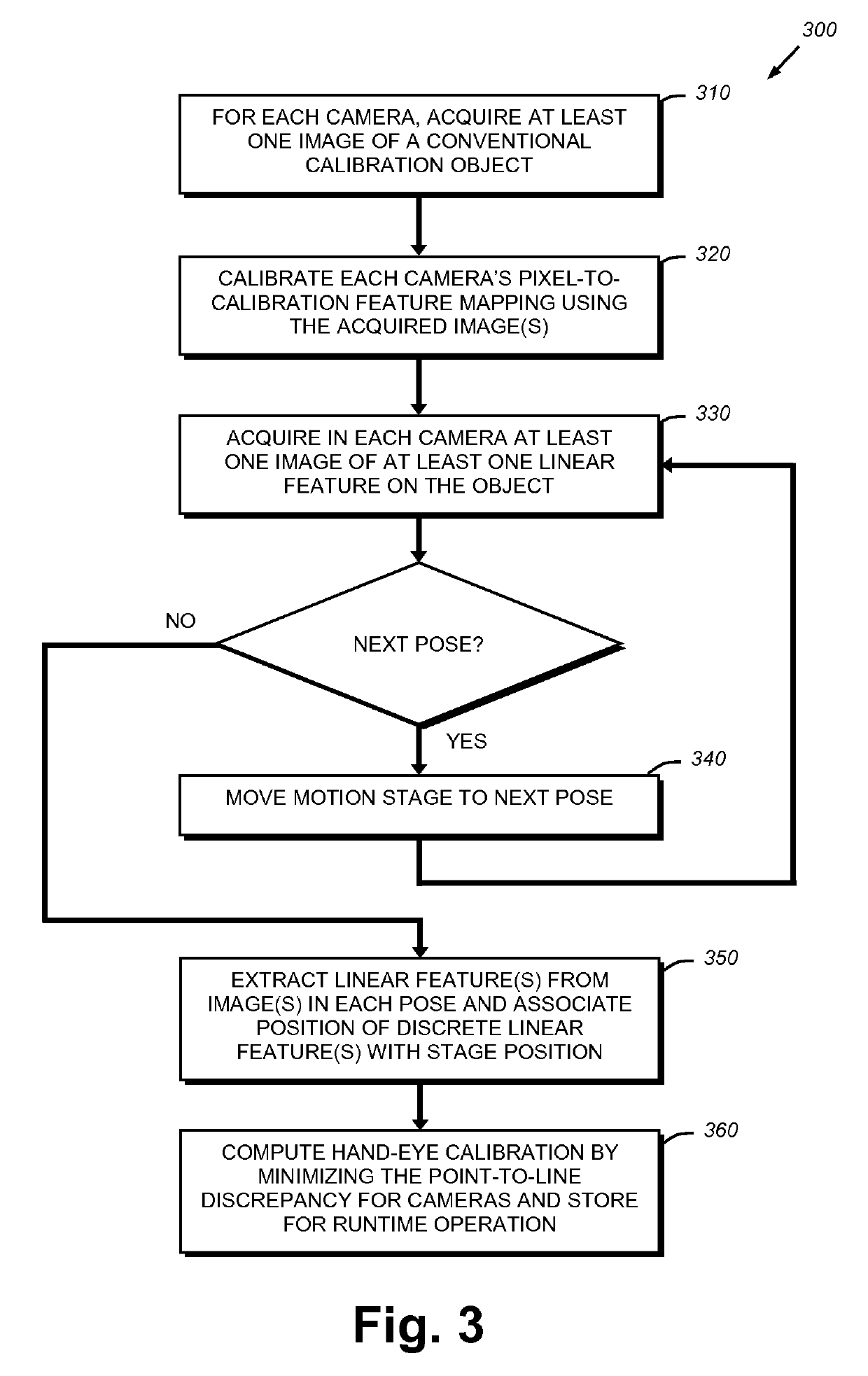
Figure 3
Abstract
Description
FIELD OF THE INVENTION
[0001] The present invention relates to calibration systems and methods, and calibration objects used in machine vision system applications.BACKGROUND OF THE INVENTION
[0002] In machine vision systems (also termed herein “vision systems”), one or more cameras are used to perform vision system process on an object or surface within an imaged scene. These processes can include inspection, decoding of symbology, alignment and a variety of other automated tasks. More particularly, a vision system can be used to inspect a flat work piece passing through an imaged scene. The scene is typically imaged by one or more vision system cameras that can include internal or external vision system processors that operate associated vision system processes to generate results. It is generally desirable to calibrate one or more cameras to enable it / them to perform the vision task(s) with sufficient accuracy and reliability. A calibration plate can be employed to calibrate the camer...
Examples
Embodiment Construction
I. Hand-Eye Calibration, Further Considerations
[0020]Traditional hand-eye calibration, whether performed manually, or within a vision system, entails establishing correspondence between observed image feature positions and their expected physical positions, and minimizing the discrepancy between the observed positions and the expected positions. In the illustrative embodiment, the use of linear features, and the like, employs various aspects of traditional hand-eye calibration, but additional considerations are addressed. These considerations arise because of the differences between the calibration features available in traditional hand-eye calibration as performed in the prior art and the novel approach to calibration using runtime objects of manufacture and selected linear features thereon. These differences relate primarily to the type of correspondence, which in turn, results in different ways to compute and minimize the discrepancy between the observed data in the acquired imag...