
Cell balancing with local sensing and switching
a cell and local sensing technology, applied in battery overheat protection, secondary cell servicing/maintenance, safety/protection circuit, etc., can solve the problems of limited battery performance, limited total charge available in series-connected group of cells, and limited battery overall performan
Patent Information
- Authority / Receiving Office
- US · United States
- Patent Type
- Patents(United States)
- Current Assignee / Owner
- Publication Date
- 2020-11-10
Smart Images
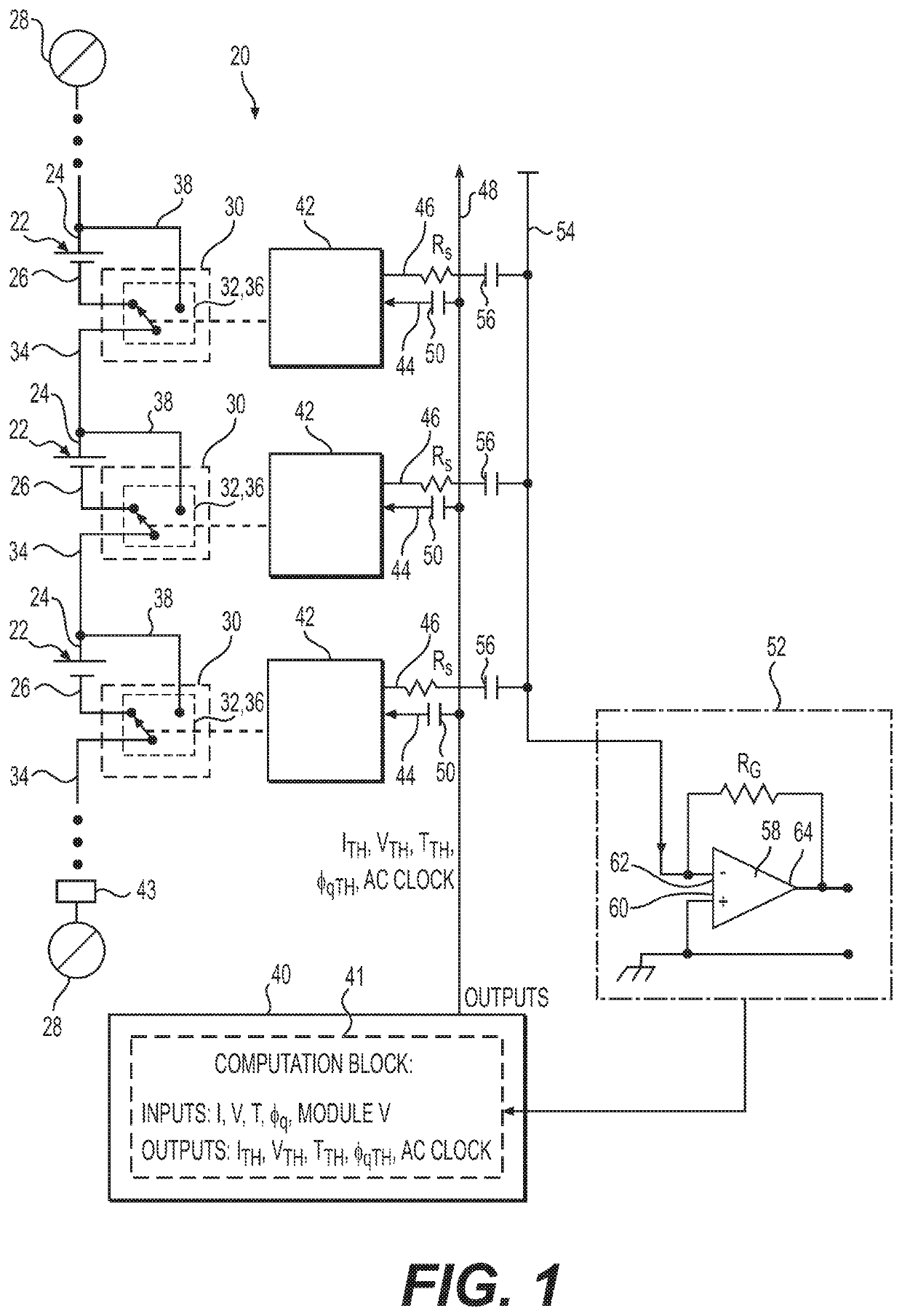
Figure 1 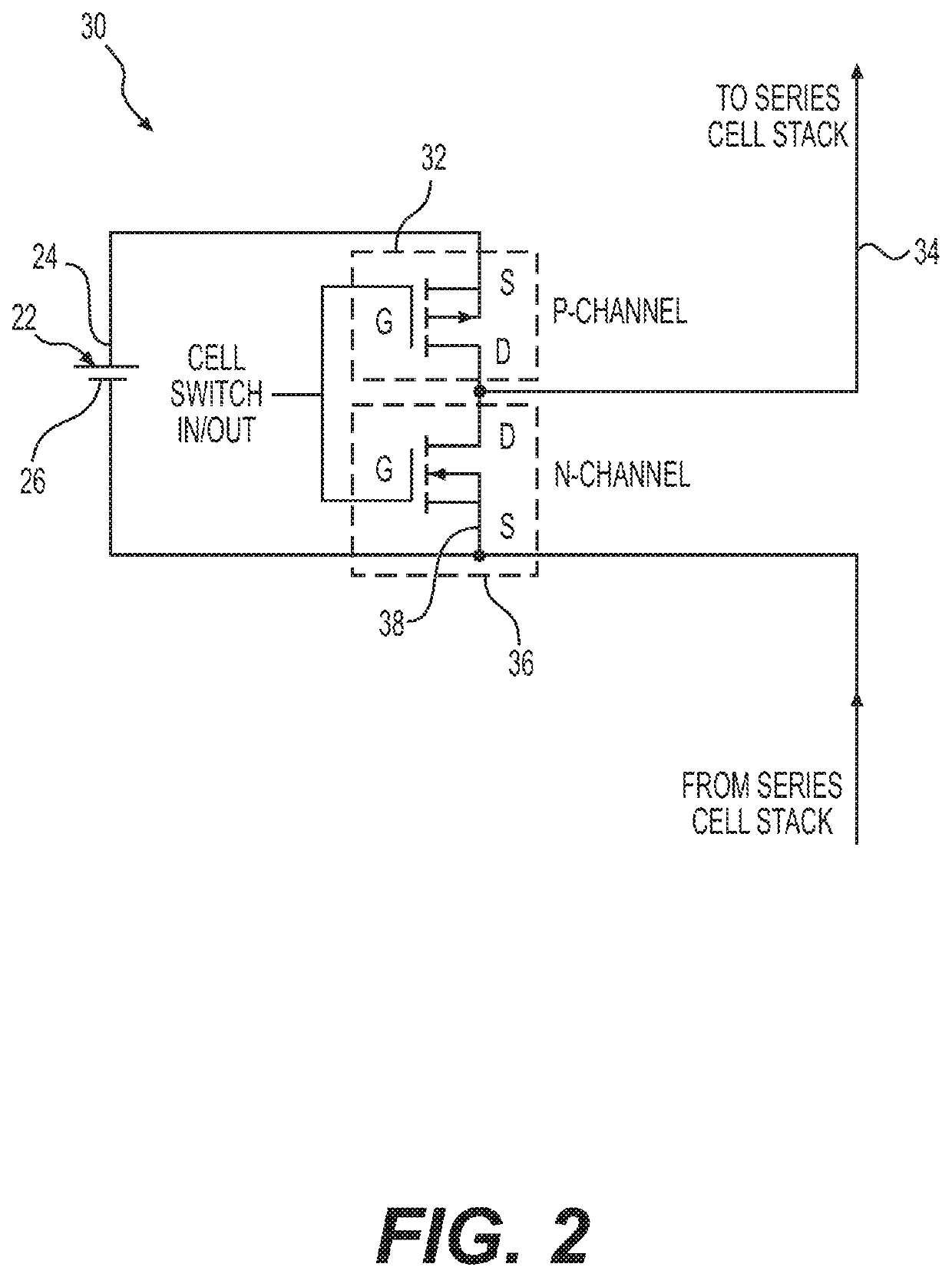
Figure 2 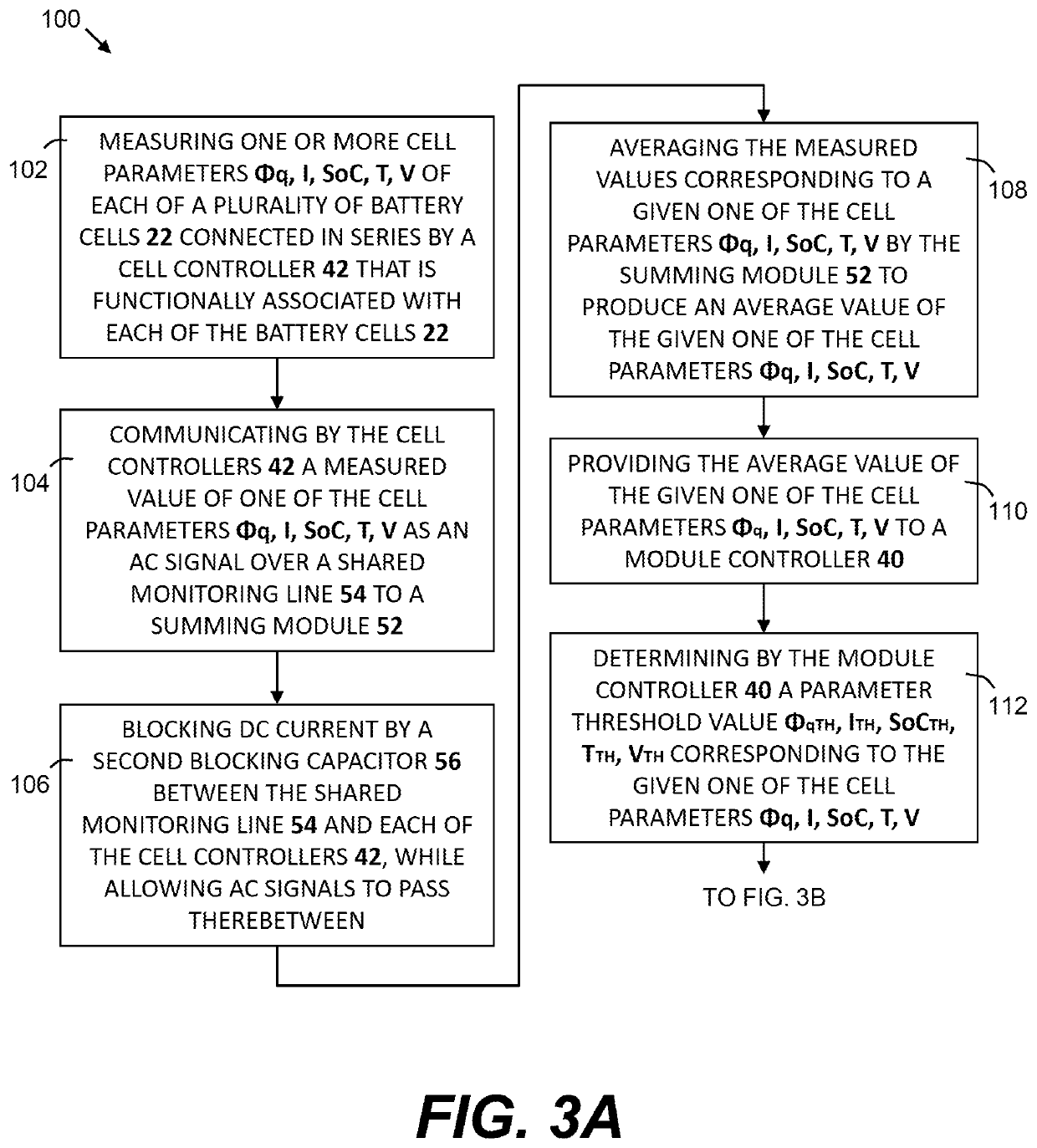
Figure 3
Abstract
Description
CROSS REFERENCE TO RELATED APPLICATION
[0001] This application claims the benefit of U.S. provisional patent application Ser. No. 62 / 585,824, filed Nov. 14, 2017, the contents of which are incorporated herein by reference in their entirety.BACKGROUND OF THE INVENTION1. Field of the Invention
[0002] A system for a cell balancing with local sensing and switching in a multi-cell battery module.2. Description of the Prior Art
[0003] It is well known that variability in electrical properties of individual cells can limit a battery's overall performance. This is particularly true in batteries with a high cell count. Typically, the performance of the battery is limited to the performance of the weakest cell. Each cell's performance can be measured with parameters such as total voltage under load, temperature under load, charge storage capability, internal impedance, dynamic charge mobility and others.
[0004] For example, the peak current flow in a series-connected group of cells is limited by the ...
Examples
Embodiment Construction
[0037]Referring to the Figures, wherein like numerals indicate corresponding parts throughout the several views, a system for cell balancing with local sensing and switching is provided. As shown in FIG. 1, the system includes a battery module 20 having a plurality of battery cells 22 arranged in a series configuration with a module terminal 28 at each end of the series of the battery cells 22 for charging or discharging the battery module 20. Each of the battery cells 22 as set forth in this disclosure may refer to a single electrochemical cell or to a grouping of two or more electrochemical cells connected and monitored together as a group.
[0038]Each of the battery cells 22 includes a switched cell terminal 24 and a non-switched cell terminal 26. In the example embodiment shown in FIGS. 1 and 2, the switched cell terminal 24 is the positive terminal of the battery cell 22, and the non-switched cell terminal 26 is the negative terminal of the battery cell 22. However, it should be ...