
Glass fiber separators for batteries and method for making such separators
Patent Information
- Authority / Receiving Office
- US · United States
- Current Assignee / Owner
- Publication Date
- 2002-10-03
- Estimated Expiration
- Not applicable · inactive patent
Smart Images
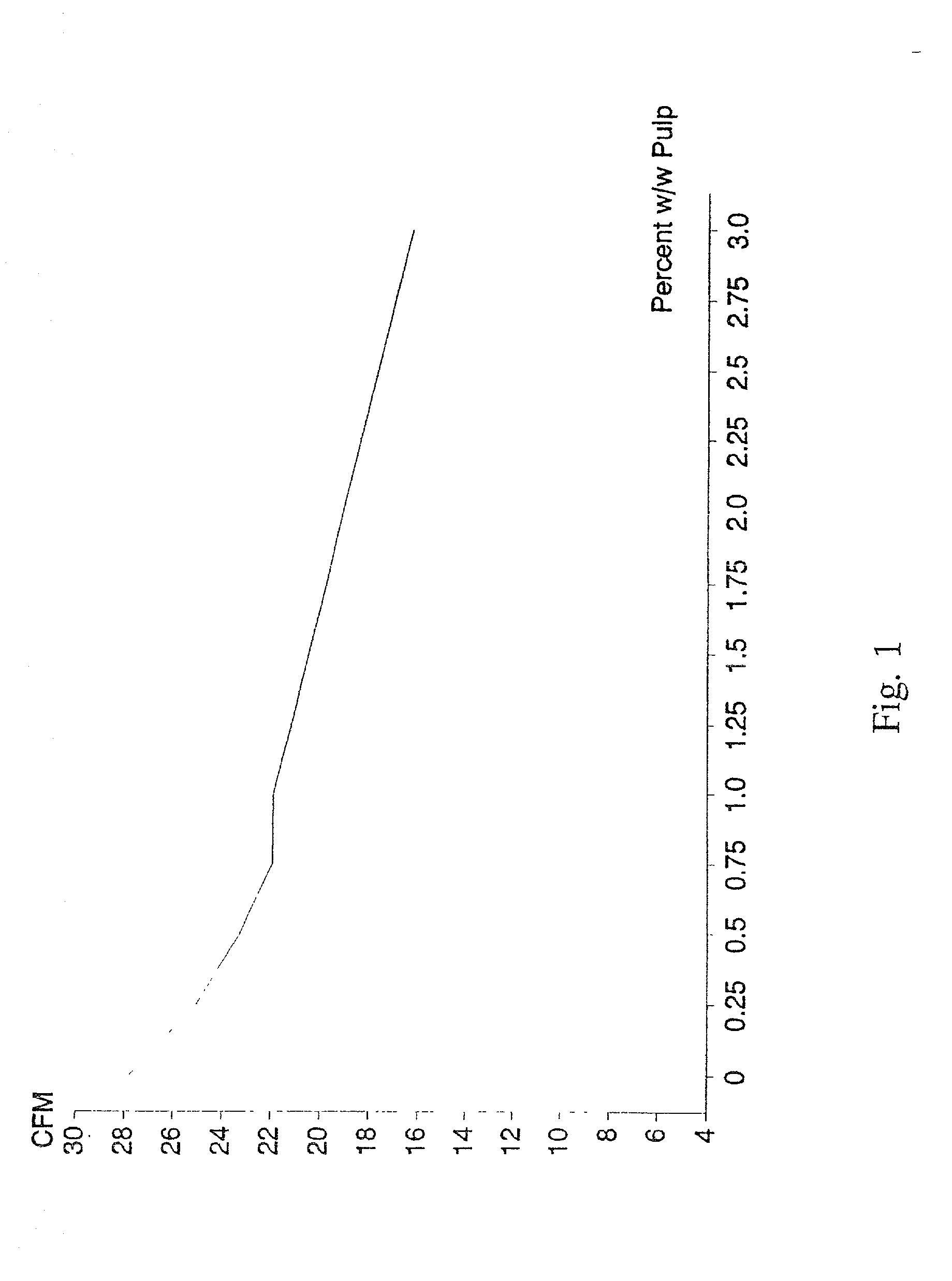
Figure 1 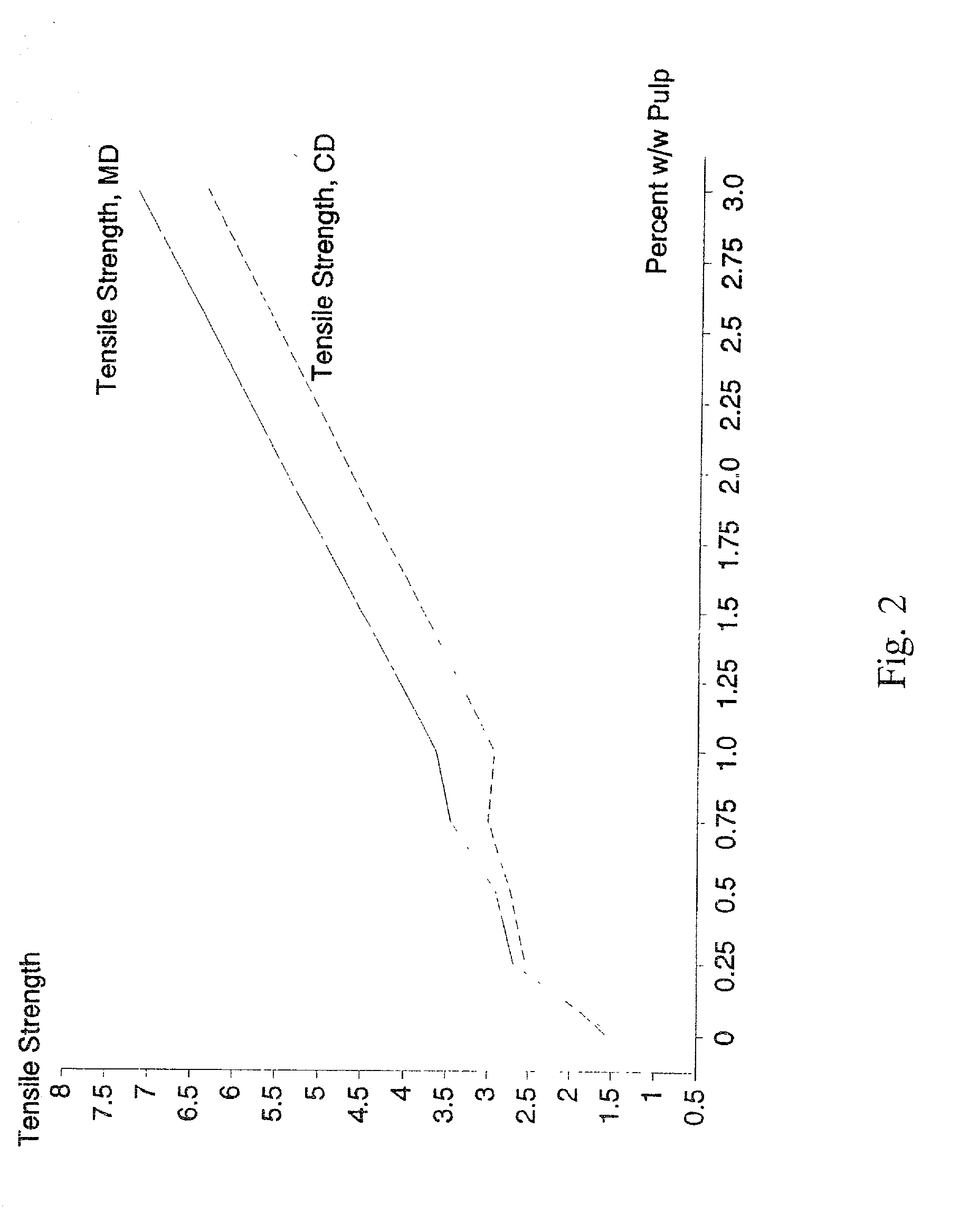
Figure 2 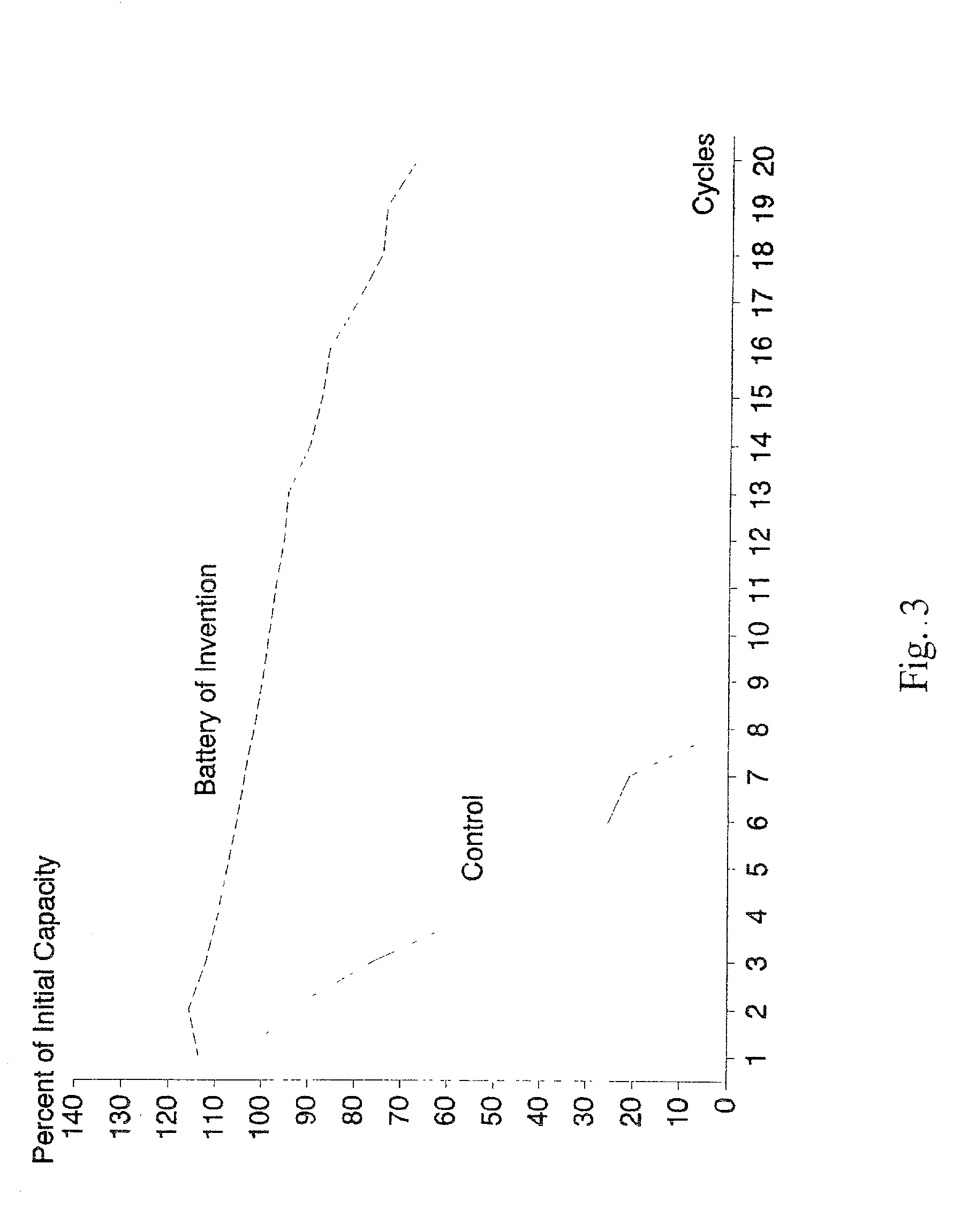
Figure 3
Abstract
Description
REFERENCE TO RELATED APPLICATIONS
[0001] This is a continuation of application Ser. No. 09 / 214,332, filed Apr. 7, 1999 as a 35 USC 371 application based upon PCT / US97 / 11579, filed Jun. 30, 1997 and as a continuation in part of Provisional application Serial No. 60 / 021,154, filed Jul. 1, 1976.
[0002] 1 Field of the Invention
[0003] The present invention relates generally to the field of batteries and, more specifically, to separators containing glass fibers which are positioned between the positive and negative plates of batteries and to a method for producing such separators. As is subsequently discussed in more detail, separators containing glass fibers are well known. Long before glass fiber separators, however, cedar veneers were used as a separator material, and were replaced by microporous, hard rubbery separators and cellulose separators impregnated with resins.
[0004] 2. Description of the Prior Art
[0005] Valve regulated ("sealed"--"recombinant") lead acid (VRLA) batteries are kn...
Examples
examples 2-6
[0044] Glass fiber separator hand sheets were also produced from other furnishes which contained varying amounts of kraft pulp that had been beaten to a consistency of 0.9906 percent and a Canadian freeness of 57 cc. The furnishes also contained the previously identified Schuller 206, 210X and A20-BC-1 / 2 inch glass fibers. The hand sheets were produced in a laboratory apparatus by depositing a furnish on a wire or screen, and draining the furnish. The apparatus comprised a tank with a screen in the bottom, a drain below the screen, a valve which opened and closed the drain, and paddles which were moved back and forth to simulate the movement of a furnish in commercial papermaking apparatus and establish a "machine direction" parallel to the direction of paddle movement. The furnish and the pulp were stirred for about two minutes, after which the valve was opened so that the water drained through the screen while the separator was retained on the screen. The furnish that was charged ...
examples 7-11
[0055] Glass fiber separator hand sheets were also produced by the method described in Example 1 from other furnishes which contained varying amounts of kraft pulp that had been beaten to a consistency of 0.9906 percent and a Canadian freeness of 57 cc, and were then dipped in a latex, 3 percent w / w solids. The final compositions, in percent w / w, of representative ones of the furnishes are set forth in Table IX, below, and the properties of separators produced from the furnishes are set forth in Table X, below, where thickness of the separator material is in mm:
example example example example example
13TABLE IX Composition Example Example Example Example Example of Furnish 7 8 9 10 11 210 X 79 77 73 70 65 A20-BC1 / 2 10 10 10 10 10 inch fibers 206 10 10 10 10 10 Cellulose 1 3 7 10 15
[0056]
14TABLE X Example Example Example Example Example Property 7 8 9 10 11 grammage 121.6 121.9 127.5 123.1 122.7 g / m.sup.2 Thickness, mm (10.34 KPa) 0.792 0.778 0.750 0.742 0.603 (20 KPa) 0.760 0.745 0.720 0.698 0.585 Tensile Newtons / m MD 93.0 120.6 139.2 152.3 168.8 CD 80.6 102.0 122.0 139.2 158.5 Elongation, Percent MD 1.8 2.3 1.9 2.3 1.9 CD 1.5 2.1 2.0 2.1 2.0 Frazier 8.97 5.08 1.39 0.918 n.d. Permeability Wicking 225 184 253 261 391 seconds / 10 mm Stiffness, mg MD 2500 3400 4300 4700 4600 CD 2200 2800 3900 3900 3700 Pore Size- 16.8 16.1 19.4 20.5 25.4 First Bubble Method, .mu.m Pore size-liquid Porosimetry Coulter, .mu.m Min 5.283 4.726 3.427 2.285 1.092 Max 46.54 40.89 27.52 21.73 11.88 Mean 9.550 7.881 5.839 4.902 2.920 LOI, % 6.7 8.4 12.7 17.1 21.3