
Device and method for identifying interference source in wireless communications
a wireless communication and interference source technology, applied in the field of wireless communication interference source identification, can solve the problems of interference source, inability to demodulate, degrade the communication quality of conventional techniques, etc., and achieve the effect of improving the transmission performance of wireless communication equipmen
Patent Information
- Authority / Receiving Office
- US · United States
- Current Assignee / Owner
- Publication Date
- 2005-06-02
- Estimated Expiration
- Not applicable · inactive patent
Smart Images
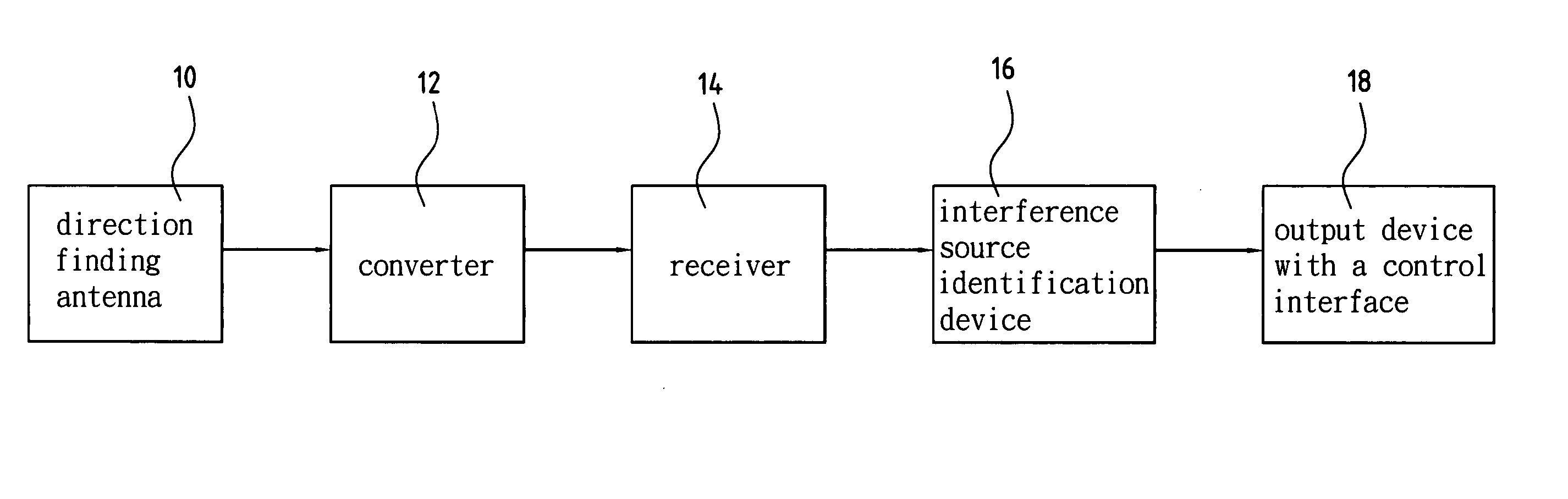
Figure 1 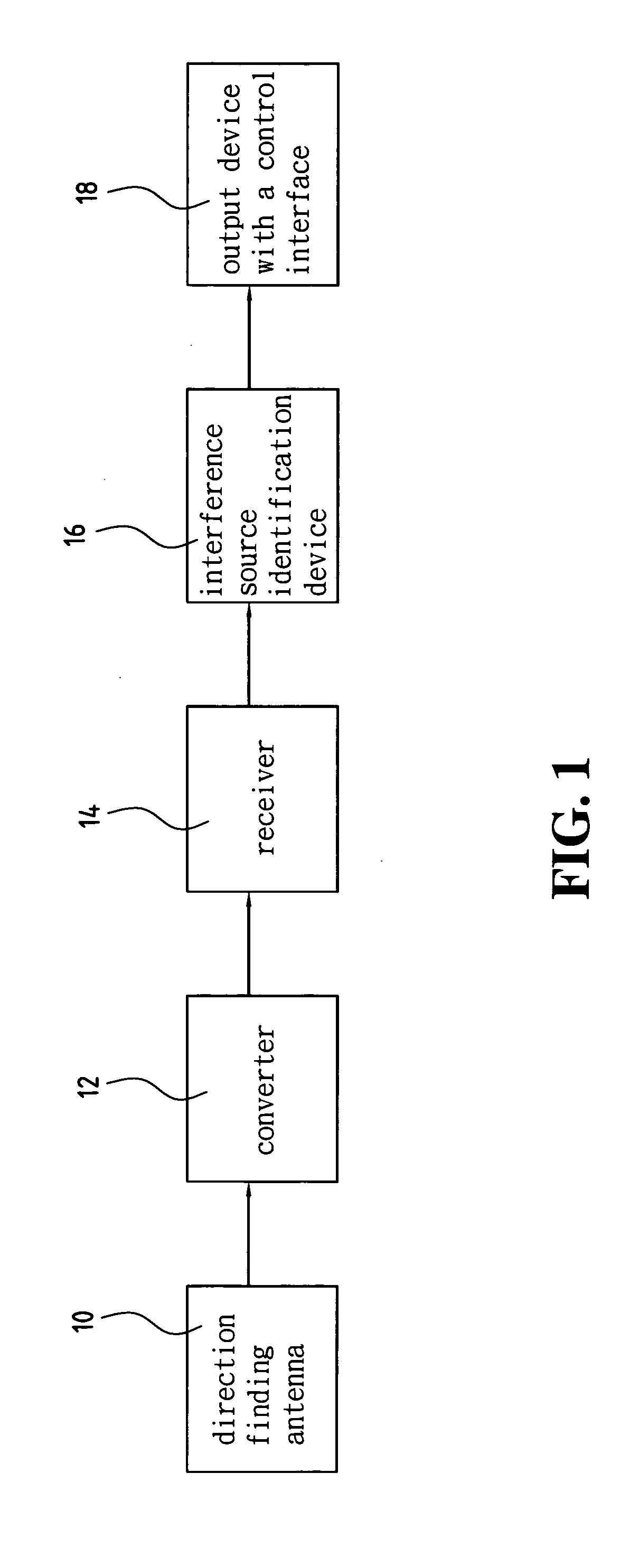
Figure 2 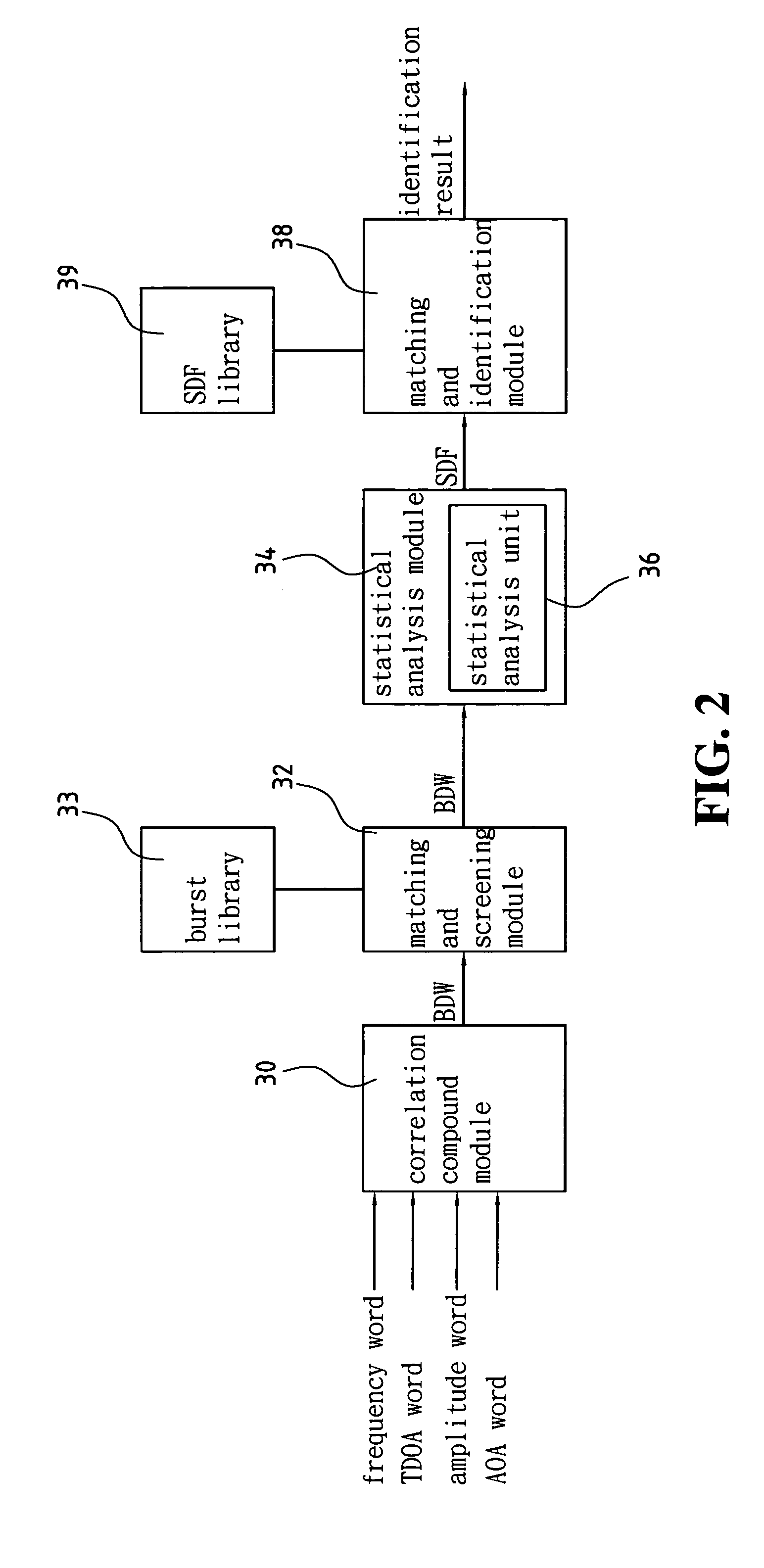
Figure 3
Abstract
Description
FIELD OF THE INVENTION
[0001] The present invention relates to a method for identifying interference source and, more particularly, to a method for identifying interference source in wireless communications by library matching. BACKGROUND OF THE INVENTION
[0002] Unlicensed communication bands are generally categorized as unlicensed Industrial Scientific and Medical (ISM) Band and Unlicensed National Information Infrastructure (UNII) Band. The ISM Band usually uses the frequency 902-928 MHz and 2.4-2.4835 GHz, while the UNII Band uses 5.15-5.35 GHz and 5.725-5.825 GHz.
[0003] In these unlicensed bands, each signal source uses different frequencies, for example, the Wireless LAN per IEEE 802.11b / g standards uses 2400-2483.5 MHz, per IEEE 802.11a, it uses 5150-5350 MHz and 5725-5825 MHz, microwave ovens use 2414-2465 MHz, cordless telephones use 2401.5-2478 MHz, Bluetooth uses 2402-2480 MHz, and so on.
[0004] Under most circumstances, the unlicensed communication environment is filled ...
Examples
Embodiment Construction
[0016]FIG. 1 shows a diagram of the present invention. As shown in FIG. 1, the interference source identification system comprises a direction finding antenna 10, a converter 12, a receiver 14, an interference source identification device 16, and an output device 18 with a control interface. Interference source identification device 16 is the core component of the present invention for identifying the interference source. The following first describes the components and the role they play in the present invention. The details of the interference source identification device 16 will be described later.
[0017] Direction finding antenna 10 is used for receiving and processing radio frequency (RF) to provide the back stage and extract the directional information of the interference source. Converter 12 is for converting the RF signals into intermediate frequency (IF) signals. Receiver 14 measures and calculates the frequency, time difference of arrival (TDOA), amplitude, and angle of ar...