
Water soluble analgesic formulations and methods for production
a technology of analgesic formulation and water soluble, applied in the direction of drug composition, biocide, dispersed delivery, etc., can solve the problems of limited application, inability to treat the underlying inflammation, and anemia from resultant blood loss, so as to improve stability and bioactivity.
Patent Information
- Authority / Receiving Office
- US · United States
- Patent Type
- Applications(United States)
- Current Assignee / Owner
- Publication Date
- 2006-12-28
- Estimated Expiration
- Not applicable · inactive patent
Smart Images
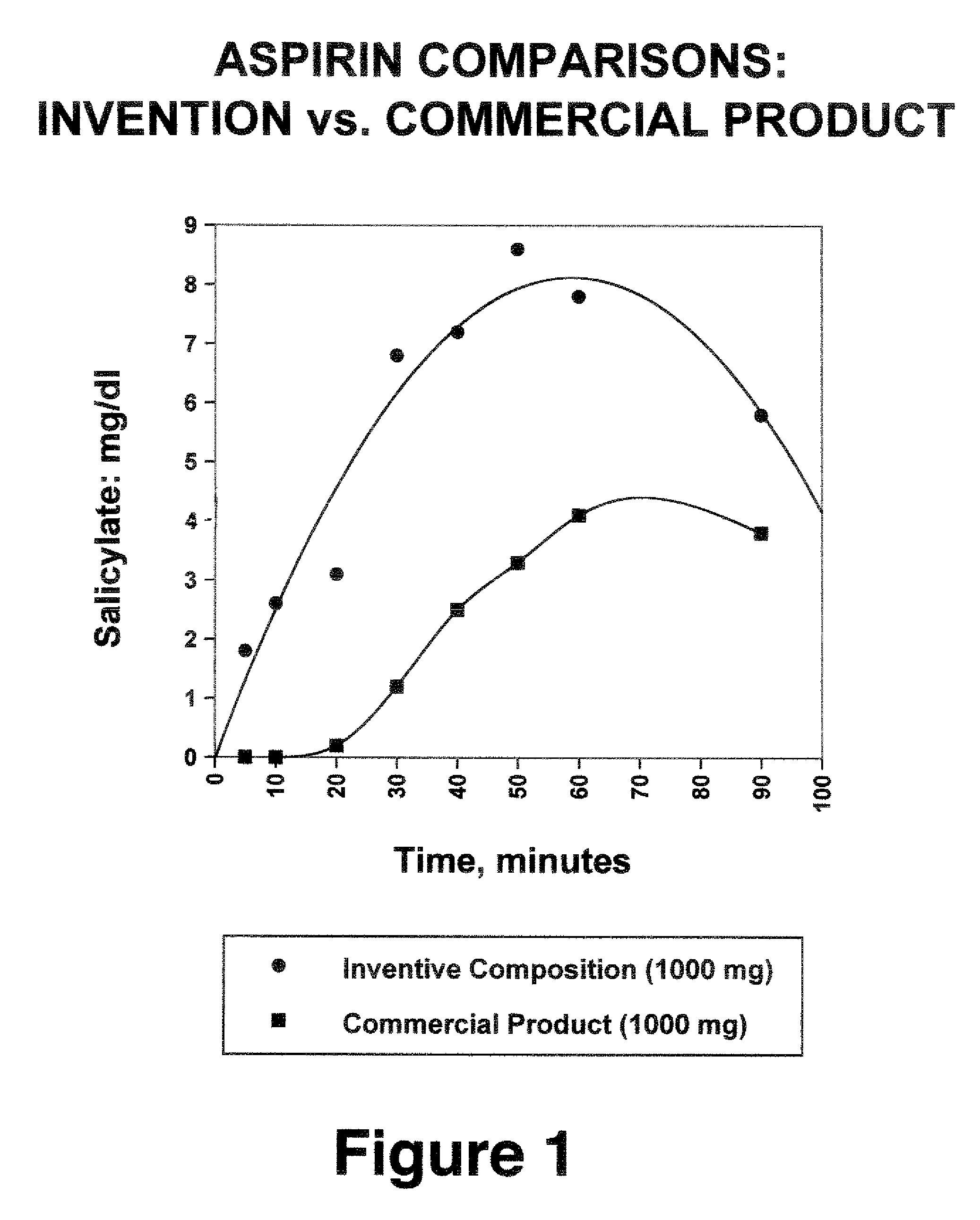
Figure 1 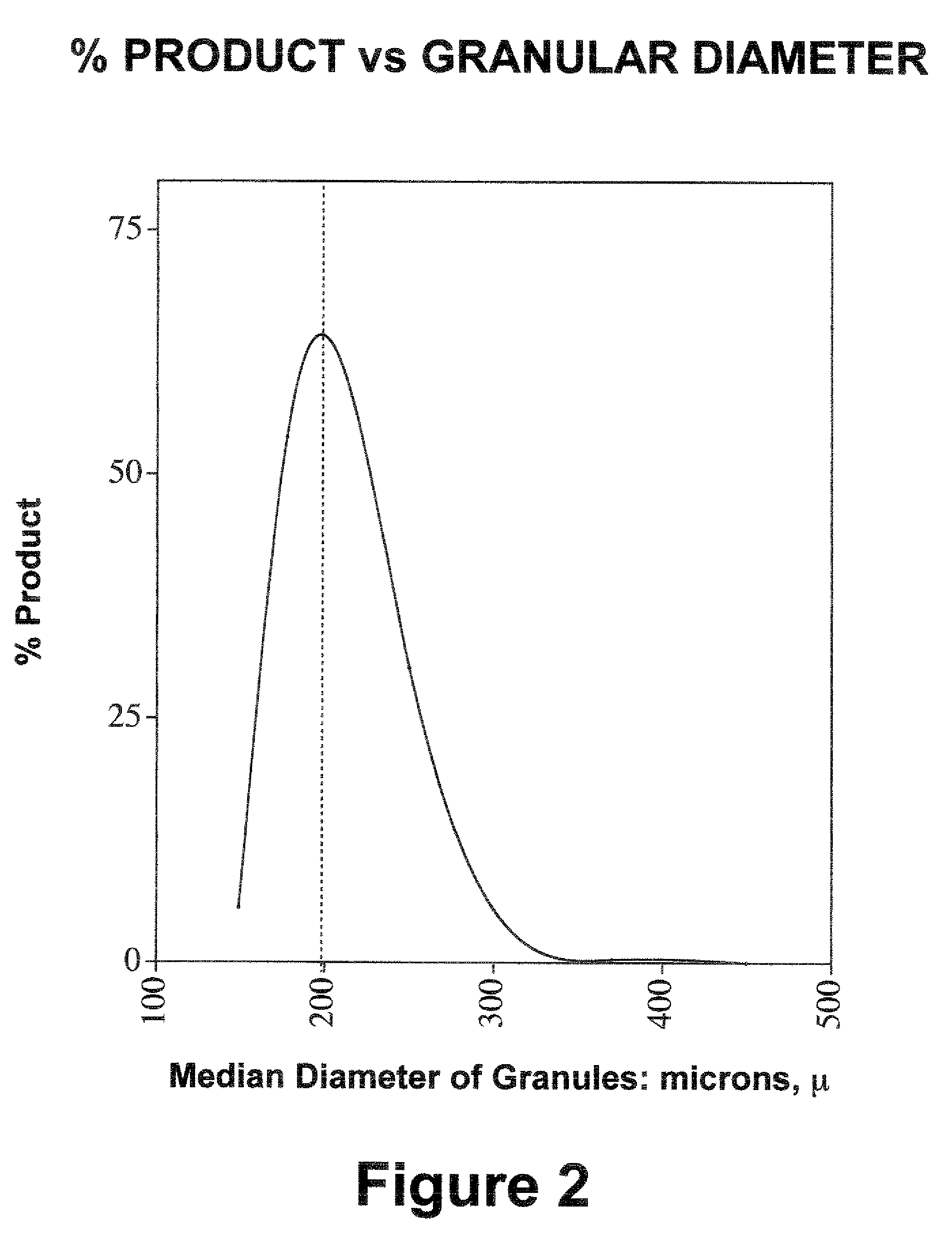
Figure 2 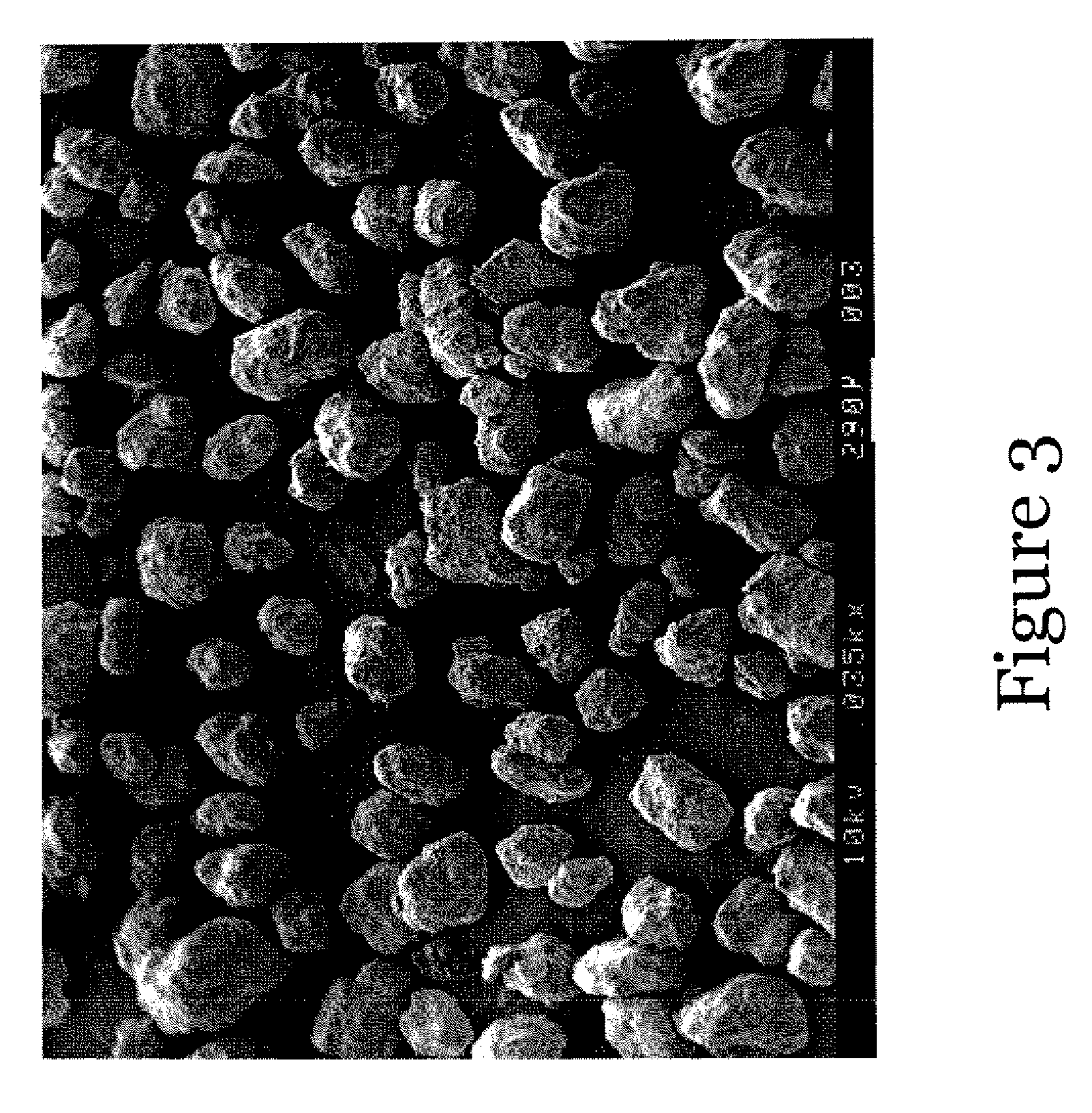
Figure 3
Abstract
Description
RELATED APPLICATIONS
[0001] This patent application claims the benefit of, under Title 35, United States Code, Section 119(e), U.S. Provisional Patent Application No. 60 / 693,591, filed Jun. 24, 2005.FIELD OF THE INVENTION
[0002] The present invention relates generally to aspirin and other analgesic compositions and, more specifically, to water soluble aspirin and other analgesic compositions which have enhanced stability and bioactivity as compared to previously known water soluble aspirin and other analgesic compositions. BACKGROUND OF THE INVENTION
[0003] Acetylsalicylic acid (aspirin), an important member of a family of therapeutics known as non-steroidal anti-inflammatory drugs (NSAIDs) is known to have analgesic, antipyretic and anti-inflammatory properties. These multiple properties make it an ideal therapeutic for pain relief (including, but not limited to, the treatment of headaches), fever reduction and treatment of arthritis and other related indications. Aspirin's mechani...
Examples
example 1
[0059] Aspirin (625.0 g) was added portionwise to a solution of 1750.0 g of tripotassium citrate monohydrate in 10.0 L of water containing sodium lauryl sulfate (1.5 g). A trace amount of undissolved aspirin was removed by filtration. The resultant clear solution was slowly applied onto 2623.5 g of sucrose using a fluid-bed spray processor (inlet temperature: 45-47° C.; outlet temperature: 38-39° C.). The resulting agglomeration contained granulated product with a median particle size of about 200%. There was no detectable level of salicylic acid using the ferric chloride procedure, which can detect as little as 0.25% hydrolysis. A 5.2 g portion (containing 650 mg of aspirin) of the resultant free-flowing product in 100 ml of water with stirring and mixing was palatable and completely soluble within 15 seconds and gave a pH of 5.87.
example 2
[0060] A mixture of 30.0 g of aspirin, 70.0 g of tripotassium citrate monohydrate, 100.0 g of sucrose and 60 mg of sodium lauryl sulfate was thoroughly shaken on a rocker assembly to ensure homogeneity. The resultant free-flowing product was stable for at least 3 weeks at 50° C. and at least 2 weeks at 75° C. and completely stable to ultraviolet light (254 nm) for at least 1 week. There was no detectable level of salicylic acid using the ferric chloride procedure, which can detect as little as 0.25% hydrolysis. Addition of 3.33 g of the mixture (containing 500 mg of aspirin) to 150 ml of purified water with stirring and mixing was palatable and substantially soluble within 15 seconds, completely soluble in 180 seconds, and gave a pH of 5.67.
example 3
[0061] A mixture of 30.0 g of aspirin, 70.0 g of tripotassium citrate monohydrate, 20.0 g of aspartame and 36 mg of sodium lauryl sulfate was thoroughly shaken on a rocker assembly to ensure homogeneity. The resultant free-flowing product was stable for at least 3 weeks at 50° C. and at least 2 weeks at 75° C. There was no detectable level of salicylic acid using the ferric chloride procedure, which can detect as little as 0.25% hydrolysis. Addition of 2.00 g of the mixture (containing 500 mg of aspirin) to 150 ml of purified water with stirring and mixing was palatable and substantially soluble within 15 seconds, completely soluble in 240 seconds, and gave a pH of 5.93.