
Method for preventing unauthorized access to the computer system by using one-time password
a one-time password and unauthorized access technology, applied in the direction of unauthorized memory use protection, instruments, individual entry/exit registers, etc., can solve the problems of incalculable loss, unauthorized access to the computer system, and the password assigned by users is too simple, so as to achieve reliable and cost-effective ways to protect the computer system
Patent Information
- Authority / Receiving Office
- US · United States
- Current Assignee / Owner
- Publication Date
- 2007-10-18
Smart Images
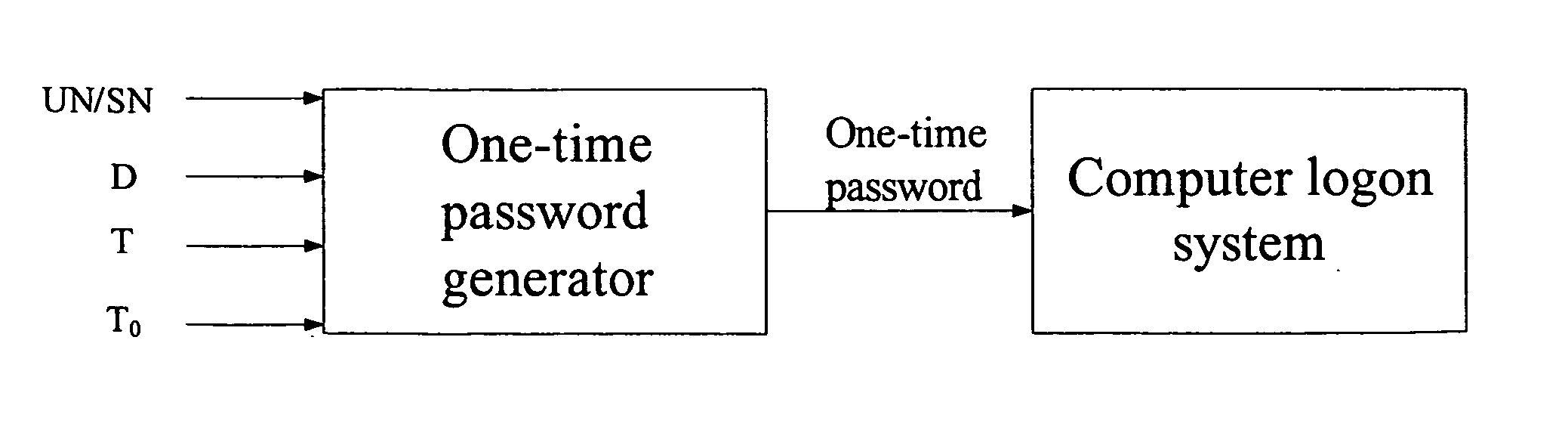
Figure 1 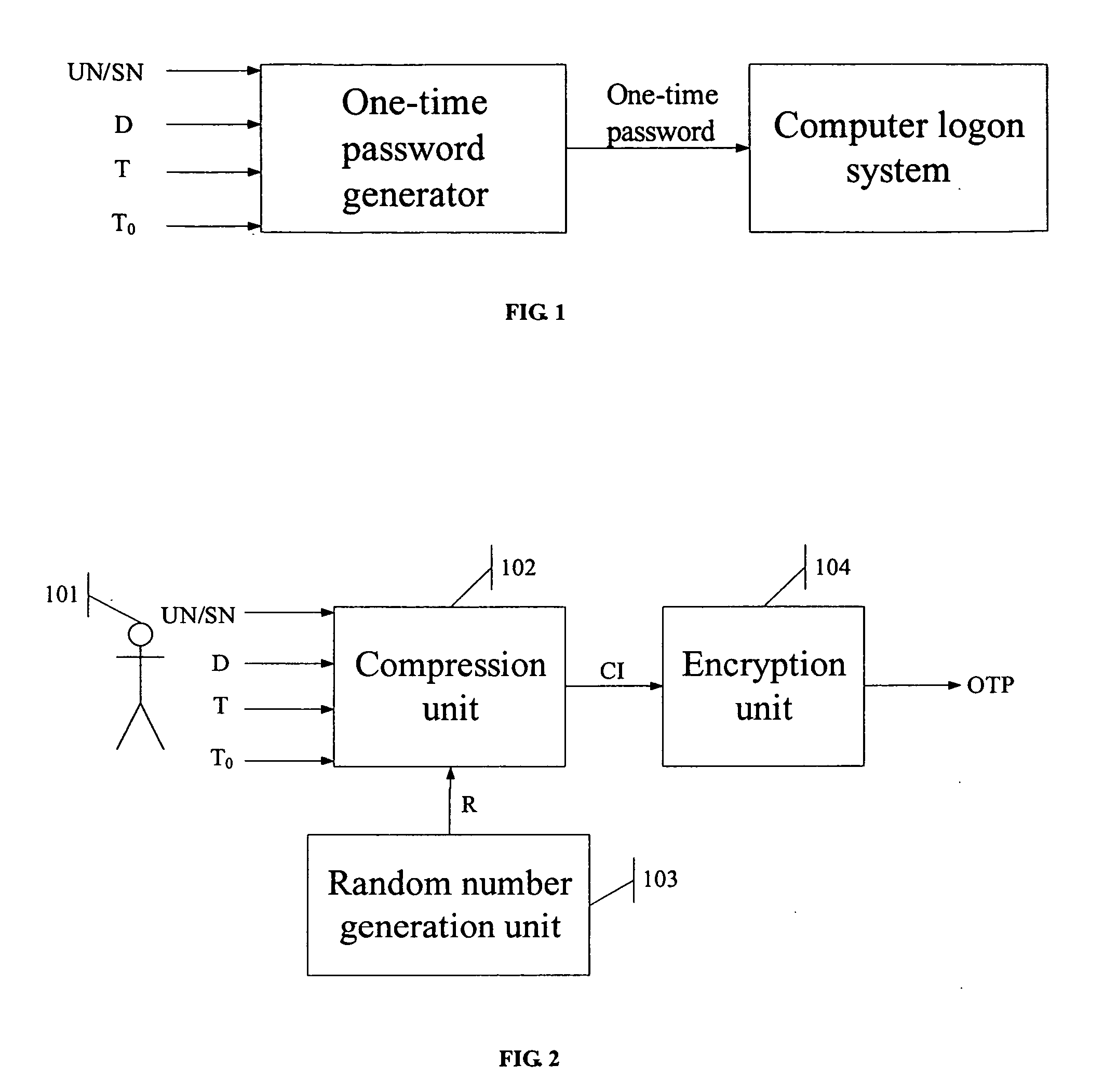
Figure 2 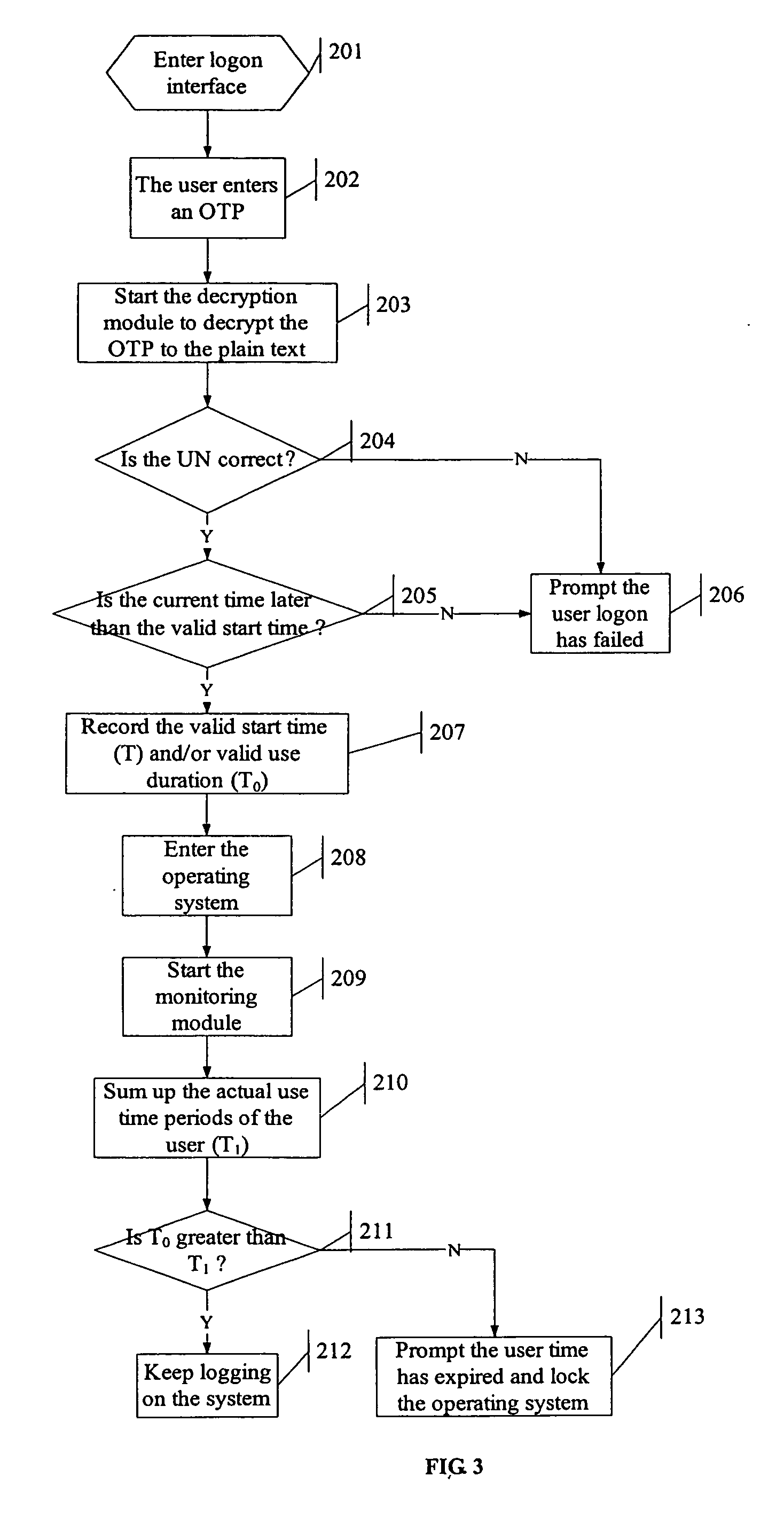
Figure 3
Abstract
Description
FIELD OF THE INVENTION
[0001] The present invention relates to a method for preventing unauthorized access to the computer system, and more particularly, to a method for preventing unauthorized access to the computer system by using one-time password. BACKGROUND OF THE INVENTION
[0002] In recent years, with dramatic advances in information technologies, the computer is involved in daily life, working, and learning as a useful tool consequentially. However, sometimes the computer is accessed by malicious people through unauthorized means, which may cause incalculable loss. Preventing unauthorized access to the computer system becomes an important problem on computer information security.
[0003] To resolve this problem, a user name and password combination is often used to protect the computer system from being intruded by unauthorized users. But the password assigned by users tends to be too simple, and can be cracked easily. Once it is figured out by malicious people, the password p...
Examples
first embodiment
The First Embodiment
[0020] The first embodiment makes use of the duration as a limit condition to implement the present invention.
[0021] If a user is logging on the computer system, the user must use a one-time password generated by the one-time password generator. The generator is installed on a computer that is administrated by the administrator. The user needs to provide user information to the administrator, and the administrator uses the one-time password generator with the information to produce the one-time password. Referring to FIG. 2, this is the working principle diagram of the one-time password generator. The one-time password generator will prompt the user to input the following information: [0022] 1) Unique User Number (UN), which can be assigned to the user by software distributor, or can be assigned to each employee by the administrator of intranet; [0023] 2) Valid Start Date (D), which is defaulted to the current date or can be customized, and indicates the valid d...
second embodiment
The Second Embodiment
[0028] The second embodiment makes use of the counts of usage as a limit condition to implement the present invention.
[0029] Like the previous embodiment, the user first must request a one-time password produced by the one-time password generator from the administrator. Referring to FIG. 2, this is the working principle diagram of the one-time password generator. The one-time password generator will prompt the user to input the following information: [0030] 1) Unique System Number (SN), which is entered when installing the logon protection system of the present invention; [0031] 2) Valid Start Date (D), which is defaulted to the current date or can be customized, and indicates the valid date when the one-time logon password takes effect; [0032] 3) Valid Start Time (T), which is defaulted to the current time or can be customized, and indicates the valid time when the one-time logon password takes effect; [0033] 4) Valid Use Duration (T0), which is a number of ho...