
Hydrophilic stain release agents
Patent Information
- Authority / Receiving Office
- US · United States
- Current Assignee / Owner
- Publication Date
- 2007-11-08
Smart Images
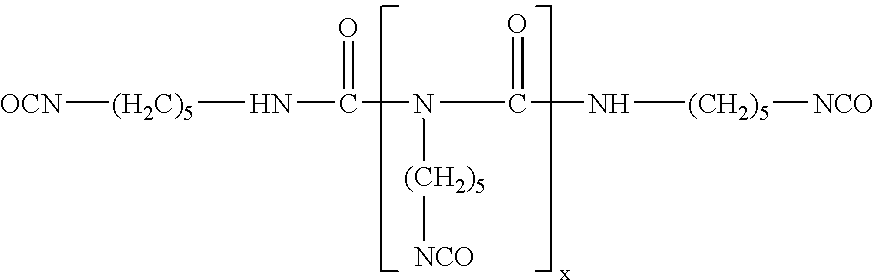
Figure 1 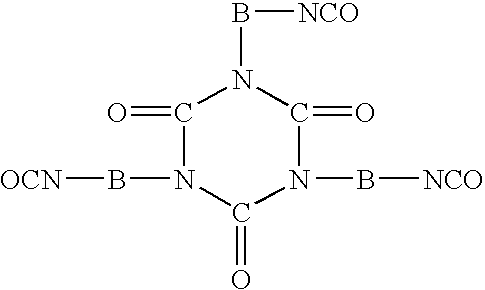
Figure 2 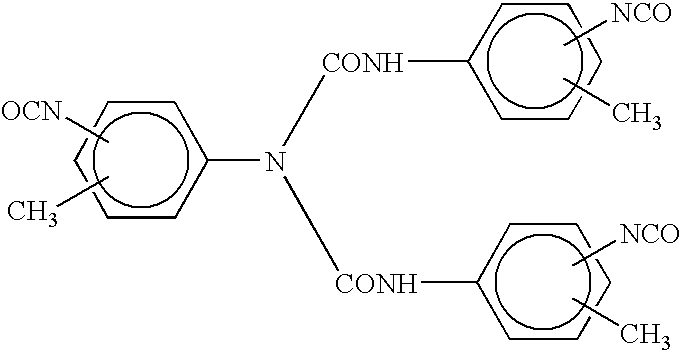
Figure 3
Abstract
Description
FIELD OF THE INVENTION
[0001] This invention relates to aqueous compositions comprising fluorochemical agents useful as treating agents to provide hydrophilicity and stain release to fibrous materials. BACKGROUND OF THE INVENTION
[0002] Fabrics and other fibrous substrates are often treated chemically to provide particular surface properties such as repellency, stain resistance soil resistance and the like. Various modifying additives or finishing agents such as softeners, stiffeners, lubricants, and other known additives are also commonly employed to provide a suitable commercial substrate, such as a textile or carpet having the desired surface properties. These modifications typically increase the oleophilicity of the substrate, thereby significantly increasing its tendency to accept oily stains and reducing its ability to release such stains during laundering. While stain resistance helps to inhibit the initial staining of a substrate, once stained, it is important that the subst...
Examples
example 1
[0045] A three-neck, 1 L round-bottom flask was equipped with a reflux condenser with a nitrogen inlet, a temperature probe, an addition funnel, and a TEFLON-coated magnetic stirring bar. The reaction vessel was charged with methoxy polyethylene glycol 750 (45 g, 60 mmol), 3,3,4,4,5,5,6,6,7,7,8,8,8-tridecafluorooctan-1-ol (41.7 g, 115 mmol) and DESMODUR N100 (82.3 g, 63% in methyl isobutyl ketone (MIBK), 270 mmol). The colorless reaction mixture was heated to 65° C. until the temperature stabilized. To this, 3.3 g of Tyzor TPT solution (5% Tyzor TPT in MIBK) was added slowly through the addition funnel, followed by stirring at 95° C. for 3 hours. To the flask, 40 g MIBK and 16 g water was added and the temperature was held at 75° C. for 4 hours. An additional 295 g of water was added and the mixture was stirred at 78° C. for 30 minutes or until no isocyanate was detected. The solution was homogenized using a digital sonifier for 5 minutes and MIBK was removed via vacuum distillation...
example 2
[0047] The procedure of Example 1 was employed except for using 3,3,4,4,5,5,6,6,6-nonafluorohexan-1-ol (30.2 g, 0.115 mol) in place of 3,3,4,4,5,5,6,6,7,7,8,8,8-tridecafluorooctan-1-ol. The resulting dispersion was 33.4% solids and 4.26% Fluorine.
[0048] The dispersion was applied to 100% cotton fabric using Test Method 1. The fabric was evaluated for wicking using Test Method 2, stain release using Test Method 3, and durability using Test Method 4. Results are listed below in Table 1.
example 3
[0052] A three-neck, 1 L round-bottom flask was equipped with a reflux condenser with a nitrogen inlet, a temperature probe, an addition funnel, and a TEFLON-coated magnetic stirring bar. The reaction vessel was charged with 3,3,4,4,5,5,6,6,6-nonafluorohexan-1-ol (1.52 g, 5.77 mmol), 3,3,4,4,5,5,6,6,7,7,8,8,8-tridecafluorooctan-1-ol (2.1 g, 5.77 mmol), methoxy polyethylene glycol 750 (4.5 g, 6.0 mmol), 0.3 g of the Tyzor TPT solution catalyst, and DESMODUR N100 (8.2 g, 63% in MIBK, 27 mmol) were used. The reaction was heated for 3 hours at 95° C. After the deionized water was added (1.6 g. 89 mmol) the reaction was heated at 95° C. until there was no isocyanate present, as detected using a Colormetric Technologies, Inc isocyanate test strip—the solution was heated for 7 hours and an additional 12 hours at 75° C. Homogenization was performed as described in Example 1 giving a final product that was 15.7% solids and 3.08% F.
[0053] The dispersion was applied to 100% cotton fabric usin...