
Enhanced system and method for wound track navigation and hemorrhage control
a technology of enhanced system and control method, applied in the field of advanced system and control method of major hemorrhage, can solve the problems of causing substantial and often fatal bleeding, requiring greater external pressure, and bleeding to star
Patent Information
- Authority / Receiving Office
- US · United States
- Patent Type
- Applications(United States)
- Current Assignee / Owner
- Publication Date
- 2008-05-22
- Estimated Expiration
- Not applicable · inactive patent
Smart Images
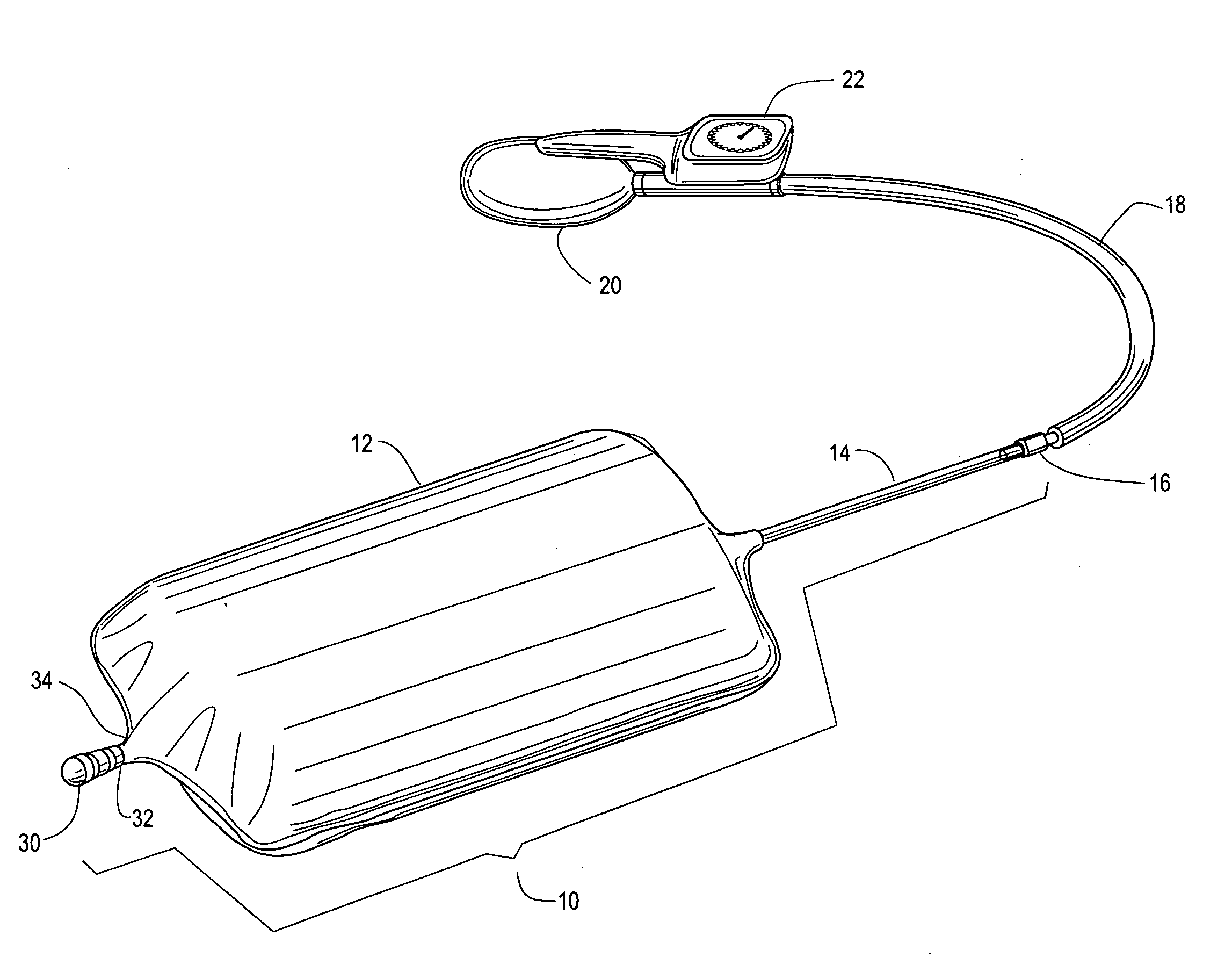
Figure 1 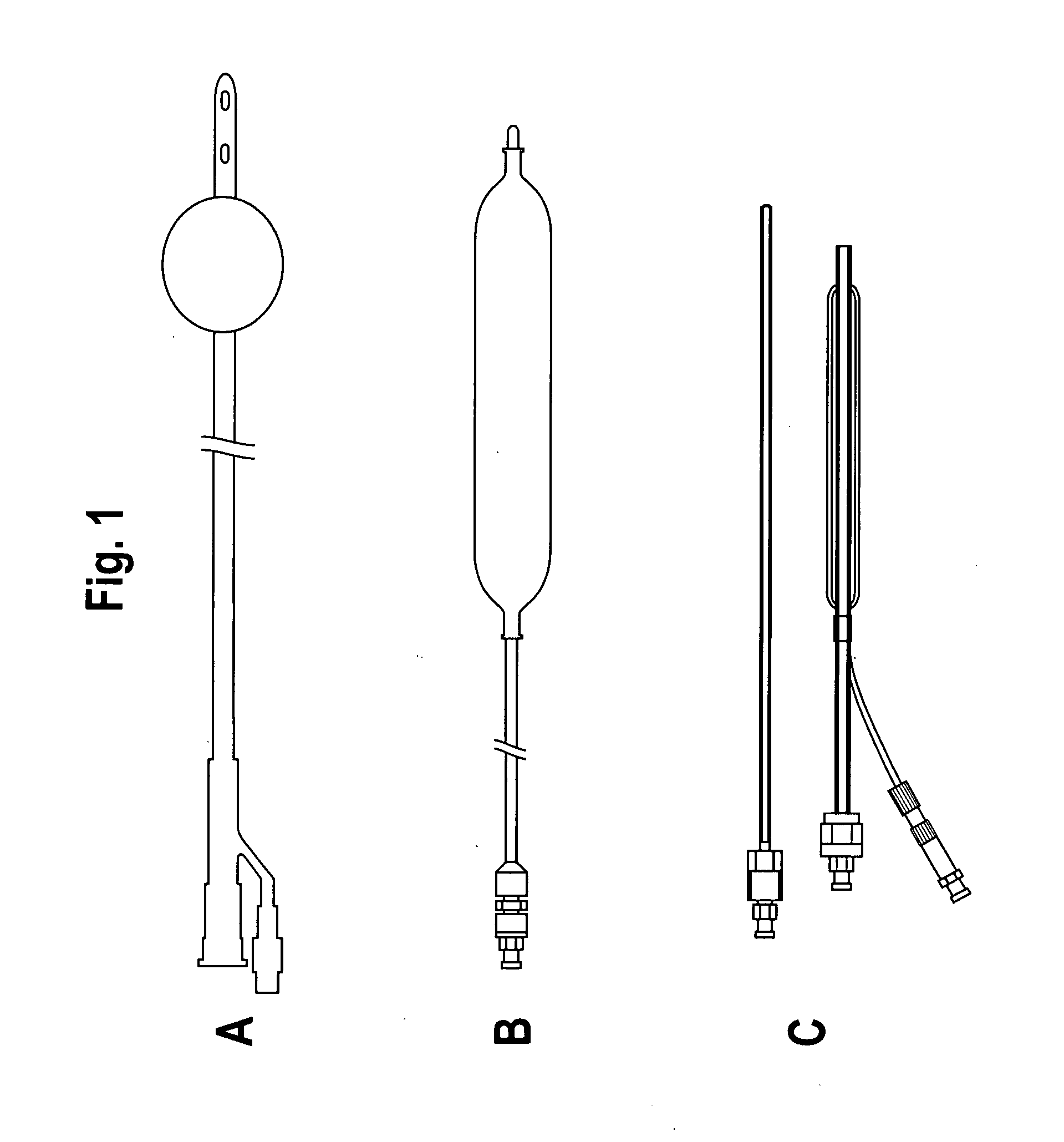
Figure 2 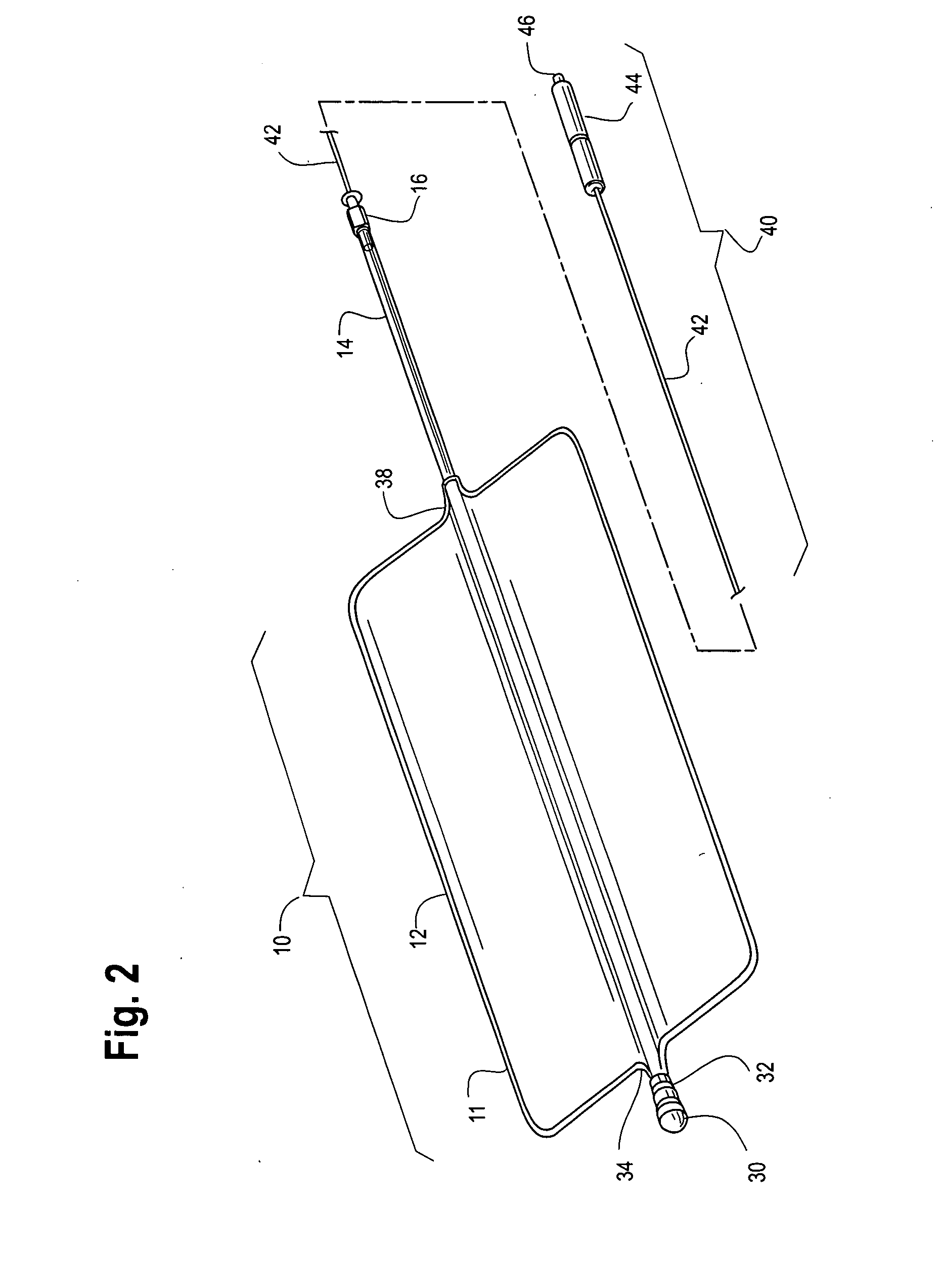
Figure 3
Abstract
Description
CROSS-REFERENCE TO RELATED APPLICATIONS
[0001] I hereby claim the benefit under Title 35, United States Code, § 120, of the prior, co-pending U.S. application listed below and, insofar as the subject matter of each of the claims of this application is not disclosed in the manner provided by the first paragraph of Title 35, United States Code, § 112, I acknowledge the duty to disclose material information as defined in Title 37, Code of Federal Regulations, § 1.56(a), which occurred between the filing date of this application and the national or PCT international filing date of this application Ser. No. 10 / 917,019, Filed Aug. 11, 2004.FEDERALLY SPONSORED RESEARCH
[0002] Not ApplicableSEQUENCE LISTING OR PROGRAM
[0003] Not ApplicableFIELD OF INVENTION
[0004] The present application is a continuation-in-part of U.S. application Ser. No. 10 / 917,019 filed Aug. 11, 2004
[0005] The present invention relates generally to devices and methods for controlling major hemorrhage in living creatures. More ...
Examples
Embodiment Construction
[0091]A highly effective catheter system and method for controlling hemorrhage from traumatic wounds, particularly penetrating wounds, is described. Said system, referred to in its preferred embodiment as an internal compression tourniquet catheter system, is constructed in the form of a catheter which has attached to a portion of its length an inflatable member resembling a balloon. Said inflatable member, the balloon, is constructed of nonelastic material such that when deflated it is flat and redundant around the catheter which passes within it. The balloon is nonelastic and is of large potential volume, and it can be inflated with near zero distending pressure and is such that when positioned within a wound track and inflated with gas or a liquid, the inflating pressure within the balloon is transmitted without diminution to the surrounding tissue of the wound track. Actually, due to the large volume, nonelastic construction of the balloon, it is the reaction of the tissues of t...