

Verbena plant named 'radverb'
a technology of verbena and plant, applied in the field of verbena plant named 'radverb', can solve the problems of loss to mankind, and achieve the effects of less flower fragrance, smooth leaf texture, and small flowers
Patent Information
- Authority / Receiving Office
- US · United States
- Patent Type
- Applications(United States)
- Current Assignee / Owner
- Publication Date
- 2010-03-18
Smart Images
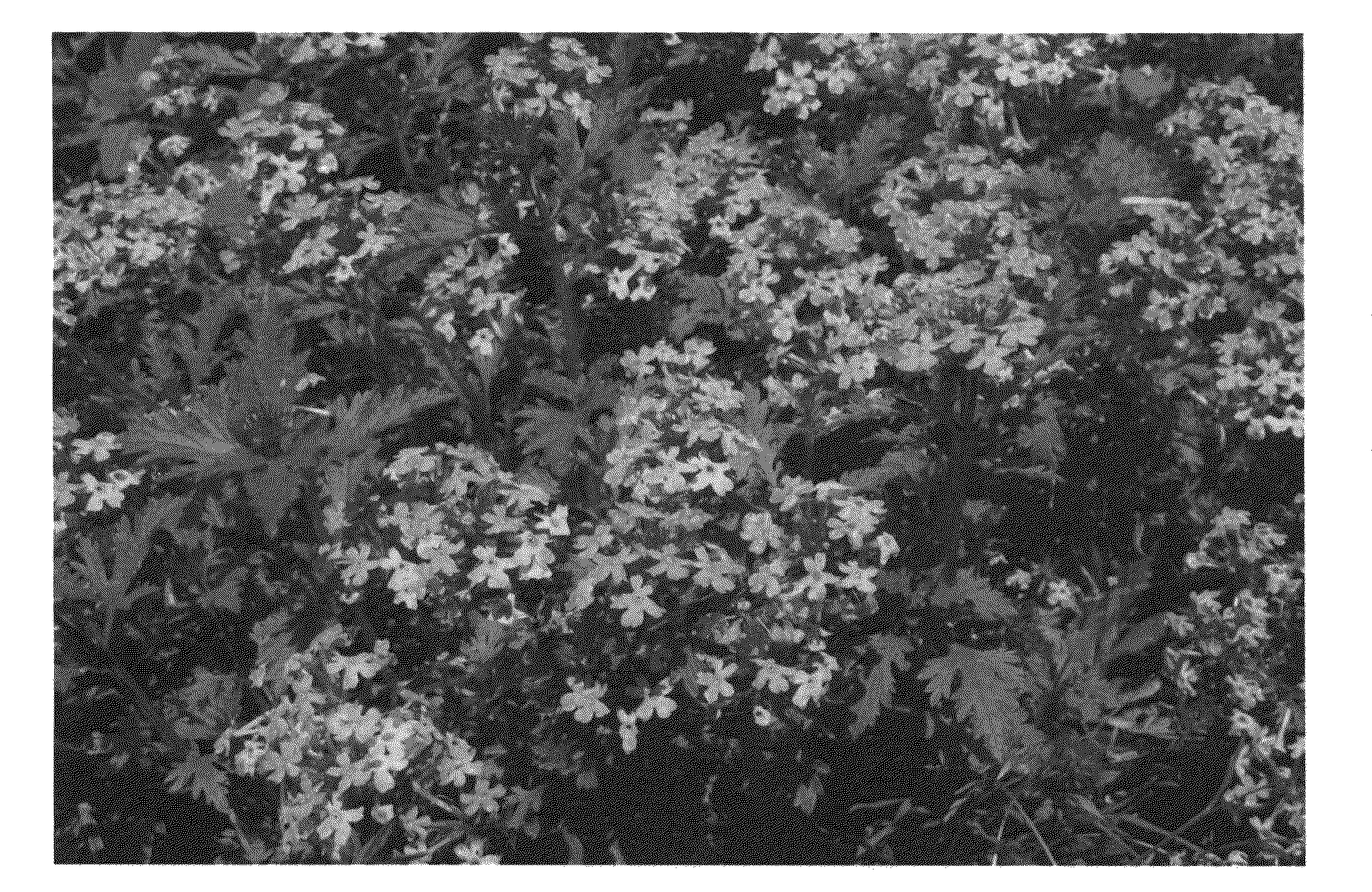
Figure 1 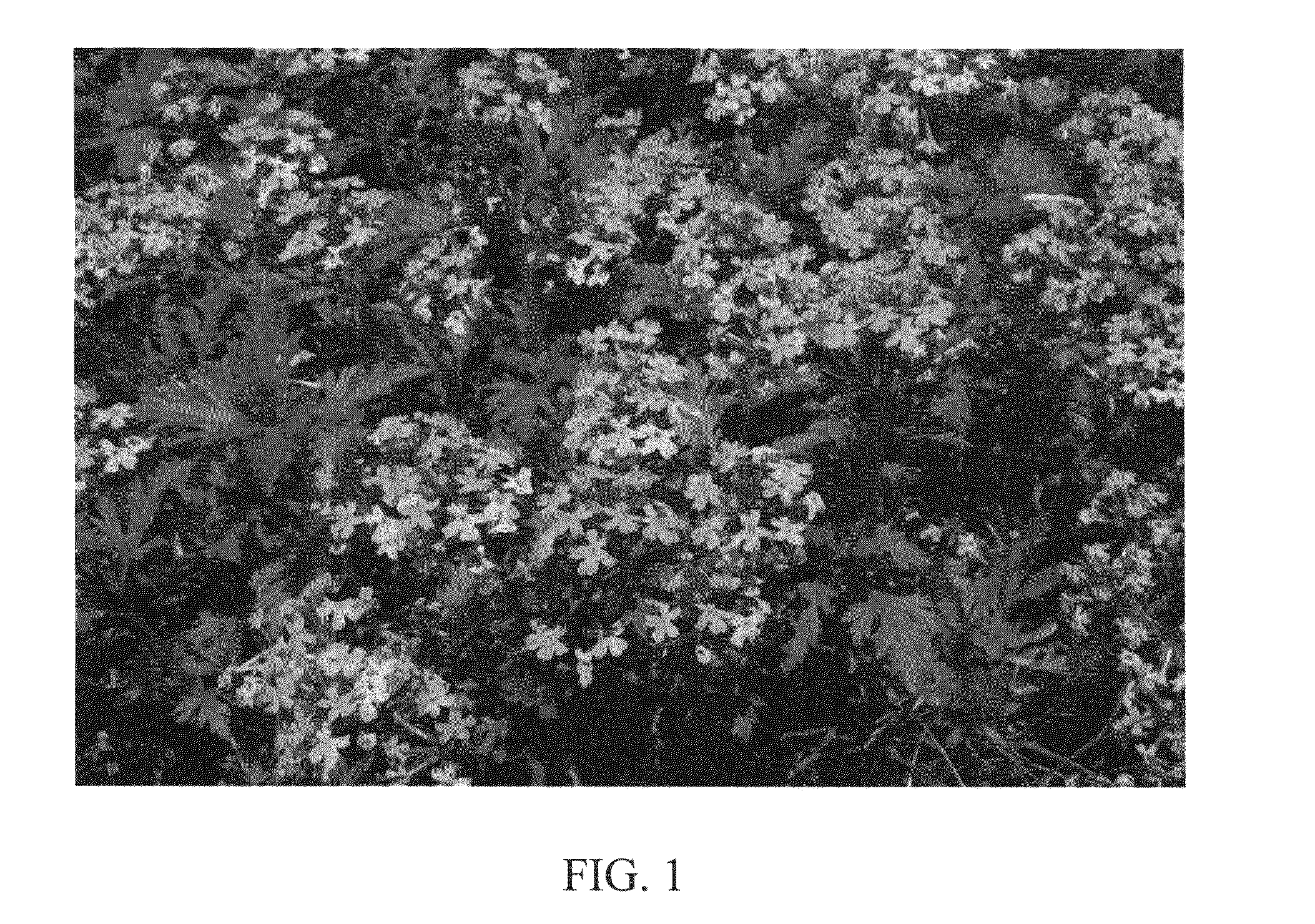
Figure 2
Abstract
Description
BOTANICAL / COMMERCIAL CLASSIFICATION
[0001] Verbena hybrida / Verbena PlantVARIETAL DENOMINATION cv. RadverbSUMMARY OF THE INVENTION
[0002] A new and distinct highly ornamental perennial Verbena cultivar is provided.
[0003] During 1995 an unusual Verbena plant of unknown parentage was discovered while growing in a residential setting at Rockford, Ill., U.S.A. An open-pollinated progeny of this plant was transplanted to a growing site at Greenfield, Wis., U.S.A. The new cultivar of the present invention is a selection of open-pollinated progeny of the plant being grown at Greenfield, Wis., U.S.A. The new cultivar was selected primarily in view of the appearance of the blossoms, foliage, and the manifest superior hardiness. Had the single plant of the new cultivar not been discovered and preserved it would have been lost to mankind. The new cultivar further has been grown and evaluated near West Grove, Pa., U.S.A.
[0004] It was found that the new perennial Verbena plant displays the following co...
Examples
Embodiment Construction
[0017]The chart used in the identification of colors is that of The Royal Horticultural Society (R.H.S. Colour Chart—2001 Edition), London, England. Color terminology in common terms sometimes is included as an aid to the reader. Such color terminology is to be accorded its customary dictionary significance. The description is based on the observation of typical specimens of the new cultivar during the month of August while growing outdoors in containers near West Grove, Pa., U.S.A. Such specimens had been asexually reproduced by the rooting of cuttings.[0018]Plant:[0019]Form.—moderately vigorous, trailing and spreading.[0020]Growth habit.—perennial.[0021]Height.—approximately 24 cm on average.[0022]Width.—approximately 50 cm on average.[0023]Strength.—relatively strong.[0024]Branch length.—commonly approximately 25 cm on average.[0025]Branch number.—commonly approximately 18 main branches on average.[0026]Branch cross-section.—commonly somewhat square.[0027]Branch thickness.—common...