
Cell proliferation-promoting peptide and use thereof
a cell proliferation and peptide technology, applied in the field of peptides, can solve the problems of increasing the cost of cell manufacturing and tissue regeneration, difficult to use the growth factor in a relatively large quantity for cell proliferation, and high cost of current bfgf, so as to reduce the use of an expensive cell growth factor, reduce the cost, and suppress the effect of cost increas
Patent Information
- Authority / Receiving Office
- US · United States
- Current Assignee / Owner
- Publication Date
- 2012-08-16
Smart Images
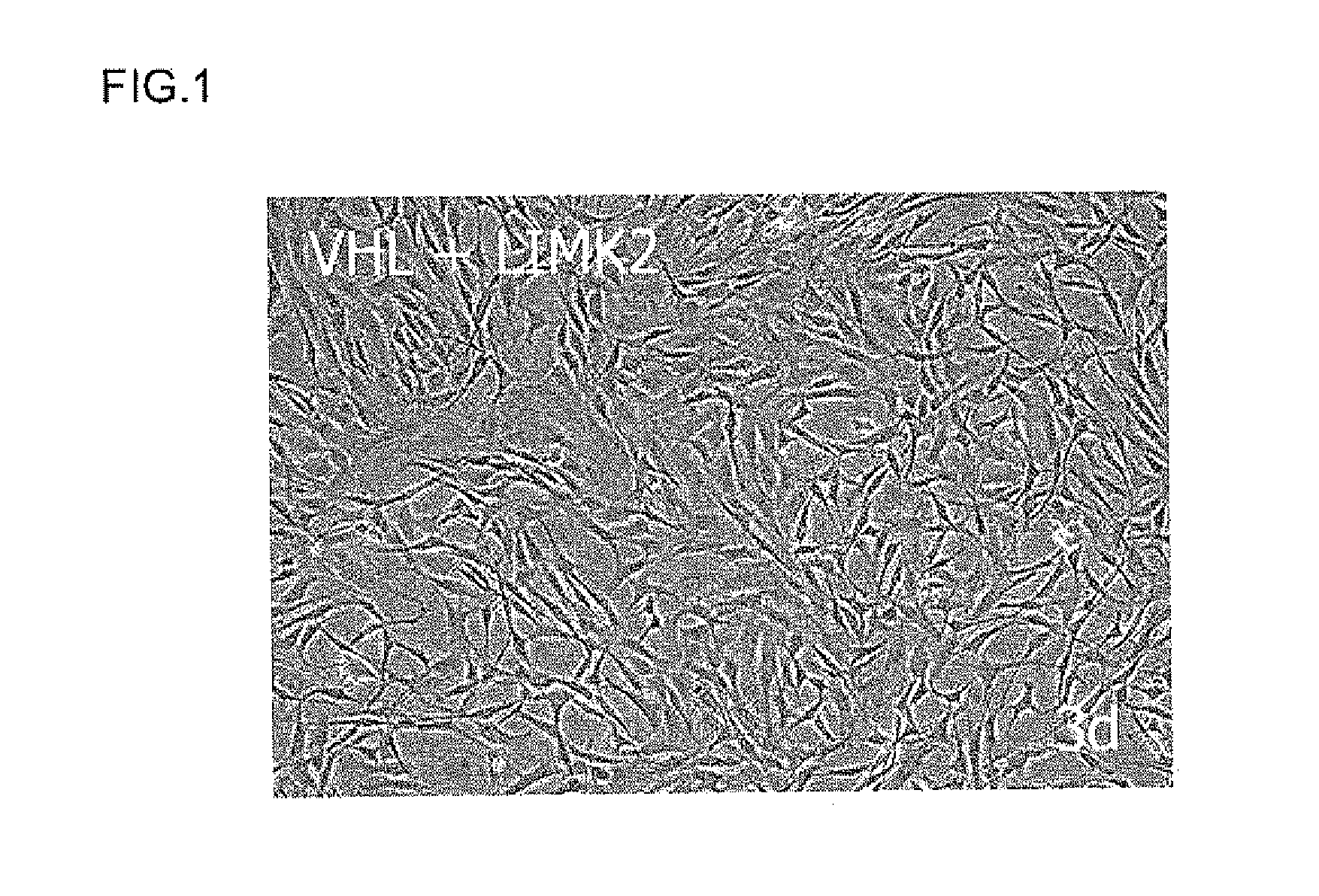
Figure 1 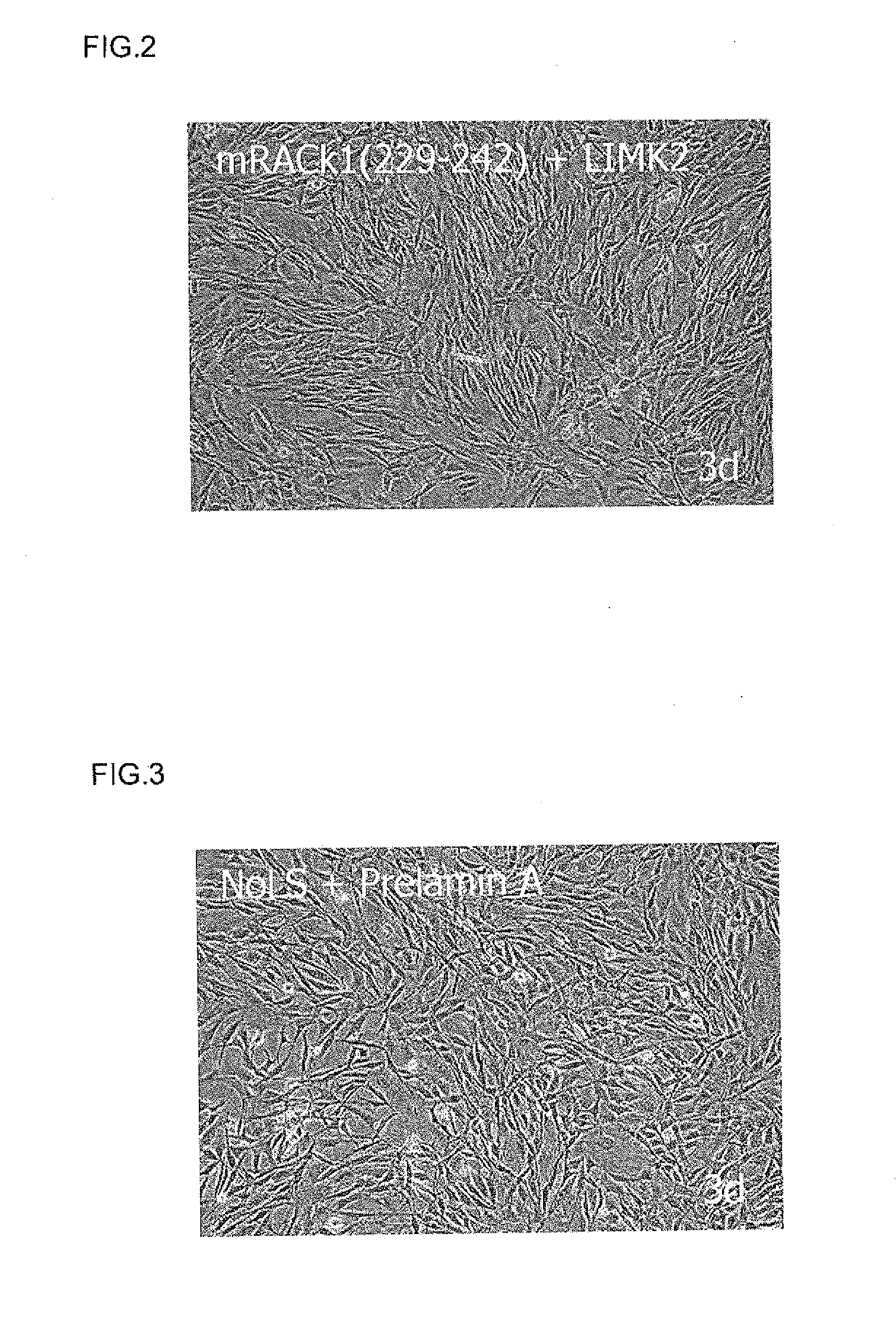
Figure 2 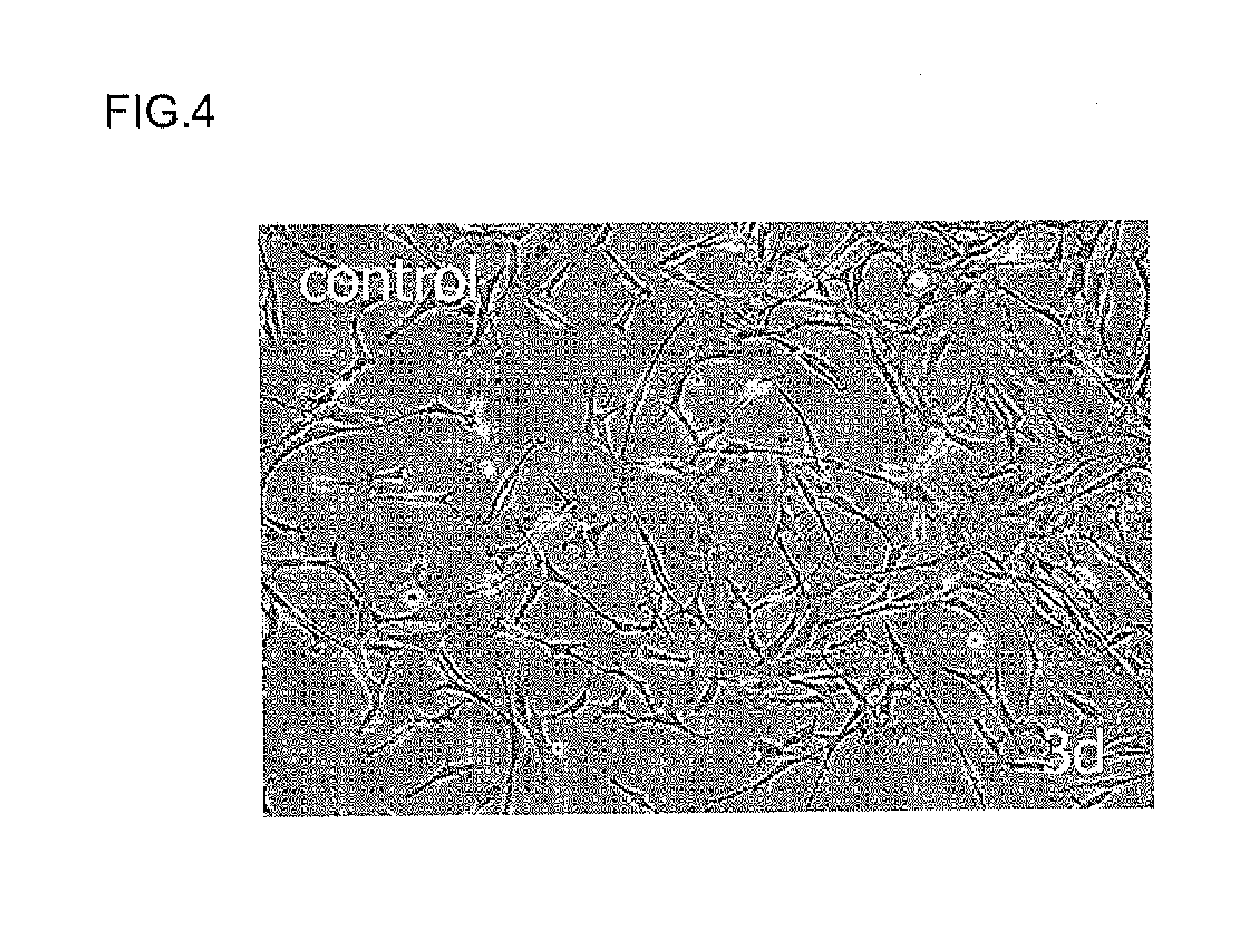
Figure 3
Abstract
Description
TECHNICAL FIELD
[0001] The present invention relates to a peptide capable of promoting proliferation of stem and other cells; and use thereof. Especially, it relates to a cell proliferation promoter (a composition) containing the peptide and a method to produce cells of interest at an increased proliferation rate using the peptide.
[0002] The present application claims priority from Japanese Patent Application No. 2009-252010, filed on Nov. 2, 2009, the entire contents of which are hereby incorporated by reference.BACKGROUND ART
[0003] In the field of regenerative medicine, it has been a challenge to establish a method to proliferate cells of interest at a higher rate. In the fields of cell engineering and fermentation engineering, in order to increase the yield of the cells of interest themselves or to increase the efficiency of the cells (or tissue) of interest to produce products, it is desired to proliferate more efficiently the subject cultured cells (or cells constituting cultured t...
Examples
example 1
Peptide Synthesis
[0111]A total of eleven different peptides (Samples 1 to 11) were prepared using the subsequently described peptide synthesizer. Table 1 lists the details of the amino acid sequences of these synthesized peptides.
TABLE 1Totalnumberof aminoSampleacidNo.Amino acid sequenceresidues1TLKERCLQVVRSLVK KKRTLRKNDRKKR28(SEQ ID NO: 104)2TLDGGDIINALCFS KKRTLRKNDRKKR27(SEQ ID NO: 105)3KKRTLRKNDRKKR LLGNSSPRTQSPQNC28(SEQ ID NO: 106)4KKRTLRKNDRKKR TLKERCLQVVRSLVK28(SEQ ID NO: 107)5YARAAARQARA TLKERCLQVVRSLVK26(SEQ ID NO: 108)6WRRQARFK TLKERCLQVVRSLVK23(SEQ ID NO: 109)7YGRKKRRQRRRTLKERCLQVVRSLVK26(SEQ ID NO: 110)8YARAAARQARA SLQYLCRFVIRQYTR26(SEQ ID NO: 111)9KKRTLRKNDRKKR13(SEQ ID NO: 14)10YARAAARQARA11(SEQ ID NO: 17)11WRRQARFK8(SEQ ID NO: 15)
[0112]As shown in Table 1, Sample 1 (SEQ ID NO: 104) is a peptide composed of 28 total amino acid residues, having as the (B) part sequence at the N-terminus the amino acid sequence derived from a VHL protein, which is denoted as SEQ ID NO: 9...
example 2
Evaluation of Synthesized Peptides On Cell Proliferation-Promoting Activity
[0124]The cell proliferation-promoting peptides (Samples 1 to 8) obtained in Example 1 and the peptides composed of only a (A) part sequence (Samples 9 to 11) which had been prepared for comparison were evaluated, respectively, on the cell proliferation-promoting activity. Sample 12 was an experimental control where a commercial bFGF was used as the cell proliferation promoter. Sample 13 was an experimental control where no peptide was added (bFGF was not added, either). The evaluation assay is described in detail below. Each synthesized peptide sample was dissolved in PBS (phosphate buffered saline) to prepare a stock solution having a peptide concentration of 1 mM.
[0125]Rat bone marrow stem cells (mesenchymal stem cells) were used as the test cells. In particular, the test stem cells were subcultured in Dulbecco MEM (DMEM: a Gibco product) containing 10% fetal bovine serum (FBS: a Gibco product), 2 mM of L...
example 3
Preparation of Granular Formulation
[0132]50 mg of Sample 1 peptide was mixed with 50 mg of crystalized cellulose and 400 mg of lactose. 1 mL of an ethanol-water solution was added thereto and the resultant was mixed well. The resulting mixture was prepared into granules according to a conventional method and a granular formulation containing as the primary ingredient, a cell proliferation-promoting peptide (i.e., a cell proliferation promoter in granules) was obtained.