
Method and system for painting a part of a motor vehicle body
a motor vehicle and body technology, applied in the direction of nuclear engineering, transportation and packaging, railway signalling, etc., can solve the problems of not being able to meet the needs of a large number of customers, not being able to deposit parts in waiting areas, etc., and achieve the effect of improving the quality and reducing the cos
Patent Information
- Authority / Receiving Office
- US · United States
- Patent Type
- Applications(United States)
- Current Assignee / Owner
- Publication Date
- 2013-08-29
- Estimated Expiration
- Not applicable · inactive patent
Smart Images
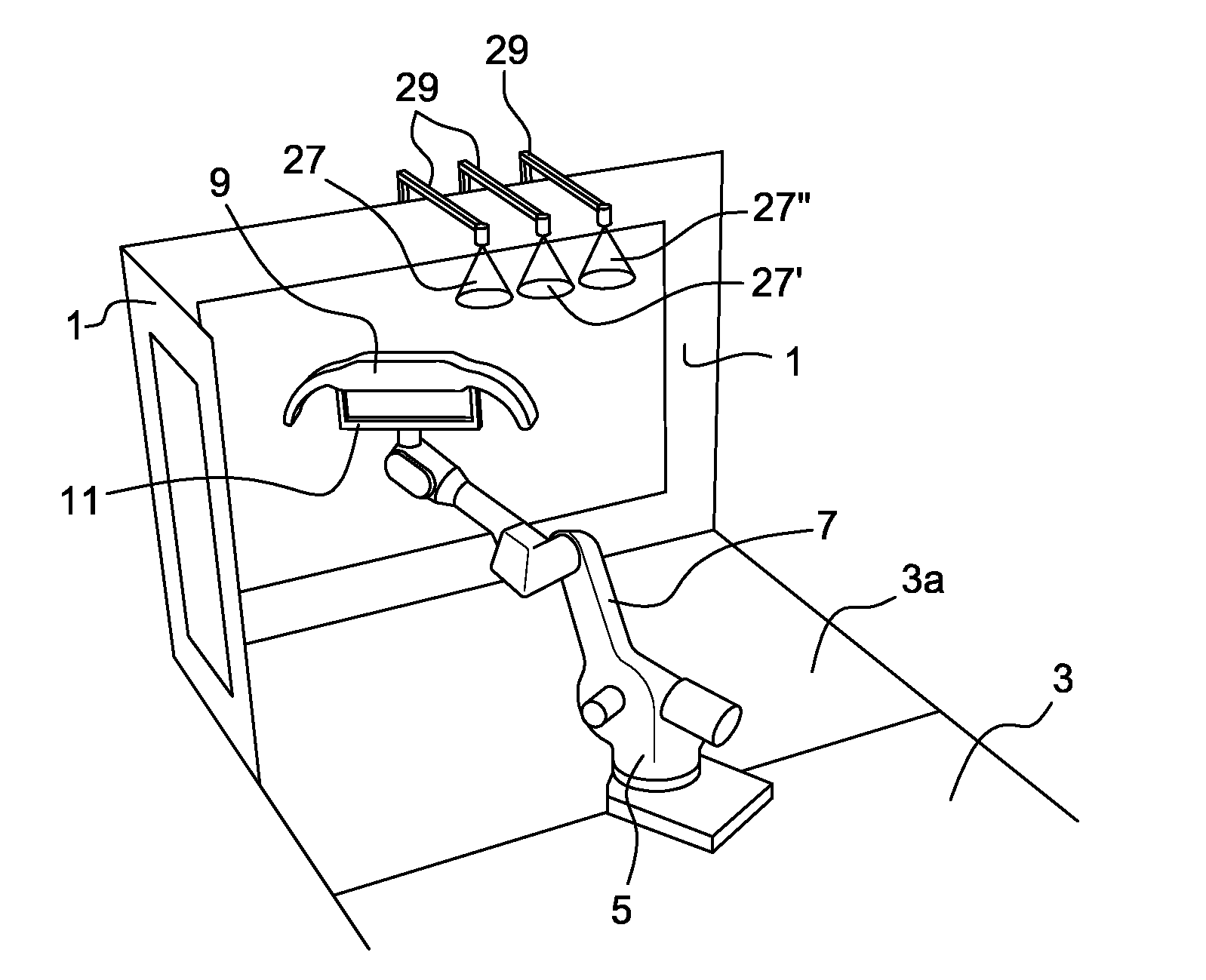
Figure 1 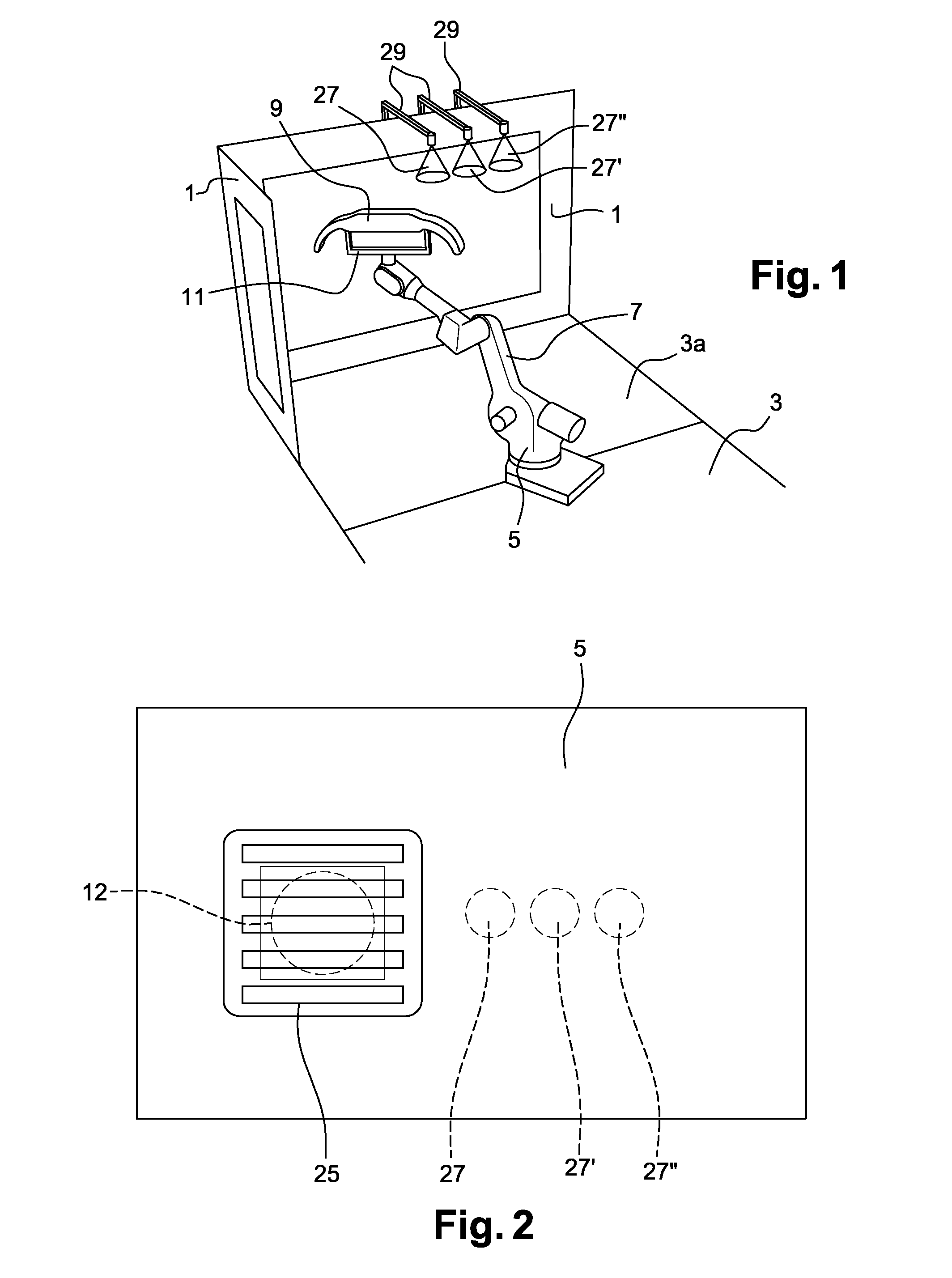
Figure 2
Abstract
Description
FIELD OF THE INVENTION
[0001] The invention relates to the field of painting motor vehicle bodywork parts.BACKGROUND OF THE INVENTION
[0002] Motor vehicle parts are often painted in a painting production line that is in the form of an installation in which hangers carrying a plurality of parts for painting travel one after another through a succession of workstations. A painting line may also comprise workstations for performing the following actions in succession:
[0003] flaming;
[0004] applying a primer;
[0005] possibly stoving for drying if the primer uses water as its solvent (the primer is then said to be water-based, otherwise it is solvent-based);
[0006] applying a base;
[0007] possibly stoving once more for drying if the base is a water-based base;
[0008] applying varnish; and
[0009] heating for baking.
[0010] The substances referred to as “primer”, “base”, and “varnish”, are also referred to as “paint components”.
[0011] Transferring parts between two workstations takes the length of time needed...
Examples
Embodiment Construction
[0044]In order to begin by explaining the advantage of the invention, it is appropriate to recall that it differs from a more conventional solution consisting in placing a freshly-painted part in a waiting zone to allow it a flash-off time between two applications of paint components.
[0045]However, leaving a part to perform its flash-off in a waiting zone implies firstly a significant increase in the tasks to be performed by the robot (e.g. placing a first part in the waiting zone, placing a second part in the waiting zone, taking back the first part, taking back the second part, etc.), and implies secondly investments and surface areas in installations that are reserved for this waiting zone (e.g.: a second booth fitted with stacking means, a ventilation system and a communicating airlock controlled together with the painting booth).
[0046]These observations are summarized in the comparative table below which lists the operations and the movements performed by the robot under two co...