
Intravascular Functional Element and Method of Manufacture and Use of a Salt Bath for Warming Treatment
Patent Information
- Authority / Receiving Office
- US · United States
- Current Assignee / Owner
- Publication Date
- 2014-08-14
Smart Images
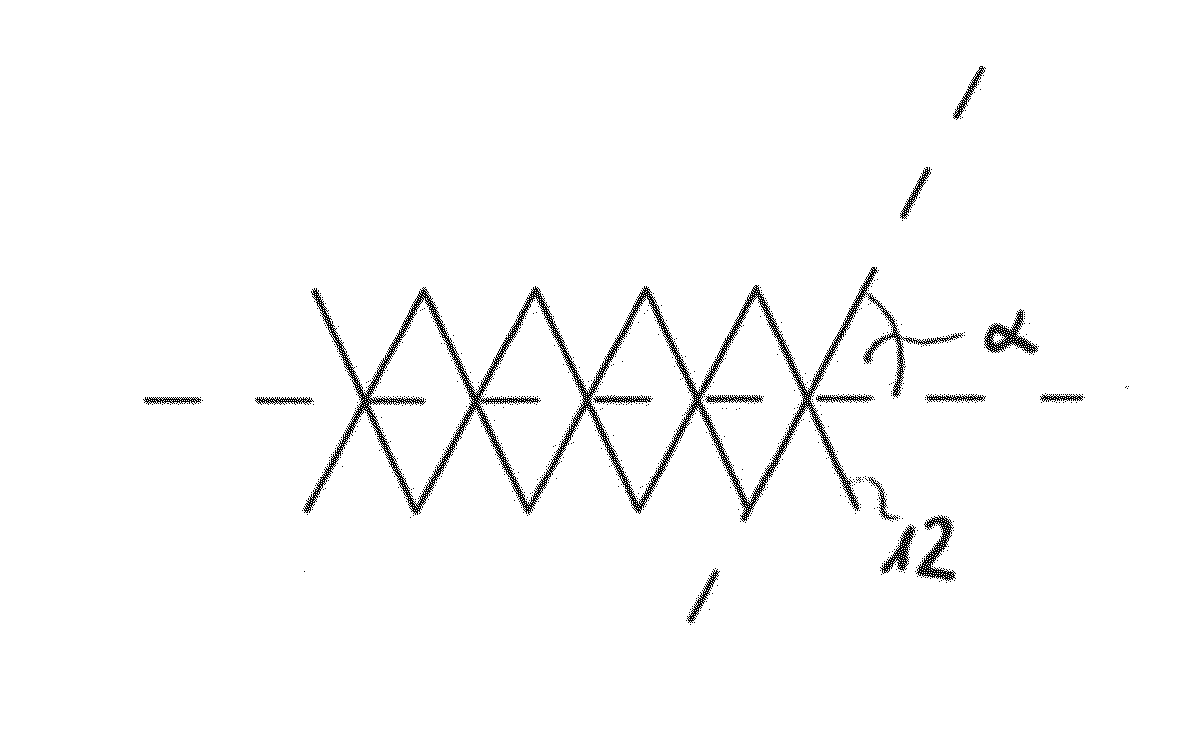
Figure 1 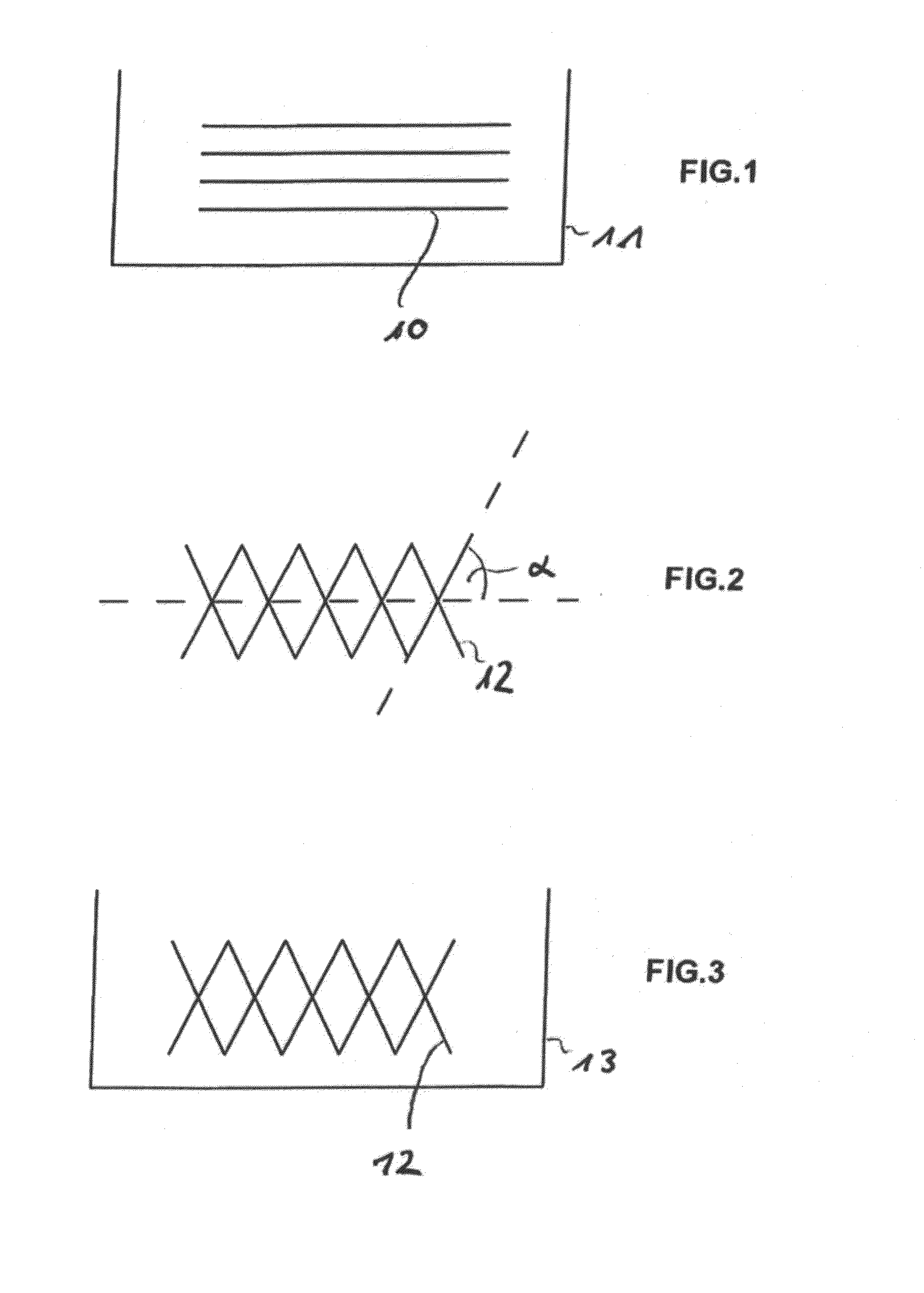
Figure 2 
Figure 3
Abstract
Description
CROSS-REFERENCE TO RELATED APPLICATIONS
[0001] This application claims priority to German patent application DE 10 2013 101 334.1 filed on Feb. 11, 2013 and which is hereby incorporated by reference in its entirety for all purposes.BACKGROUND OF THE INVENTION
[0002] 1. Field of the Invention
[0003] The invention relates to a method of manufacture of a functional element, especially a stent, as well as to the use of a salt bath for heat treatment of an intravascular functional element. The invention also relates to an intravascular functional element, especially a stent.
[0004] 2. Discussion of the Background of the Invention
[0005] In medical technology, stents are usually produced by laser methods. However, braids of Nitinol wires are also used for implants (e.g. stents or occluders). In contrast to stents produced by laser methods, the wires of wire braids slide over one another and therefore permit good shape adaptation of the stent structures. In principle, (vascular) implants may be manu...
Examples
example
[0068]The invention will be explained by means of an example of a functional element produced from a binary NiTi alloy, such as Nitinol. Other NiTi-containing alloys are possible. In this case the modification of the surface is represented by the thermal treatment in the salt bath, which treatment is responsible for adjusting the nitrogen concentration in the TiO2 mixed oxide layer. The basic component of the functional element, namely the wire, is electropolished in the first step. The electropolishing may be carried out as is usual in the prior art, for example at a temperature T<20° C., using a methanolic sulfuric acid solution. A homogeneous natural oxide layer with a layer thickness of approximately 5 nm is spontaneously formed on the electropolished wire upon contact with the ambient air.
[0069]In the second step, a functional element, a stent, is braided using the electropolished wire.
[0070]In the third step, the functional element is heat-treated in the salt bath in order to ...