
Recombinant human naglu protein and uses thereof
a technology of naglu protein and naglu protein, which is applied in the field of recombinant human naglu protein, can solve the problems of reducing slow speech acquisition, and affecting the quality of speech, so as to reduce the level of substrate, increase the activity of -n-acetylglucosaminidase, and increase the enzymatic activity
Patent Information
- Authority / Receiving Office
- US · United States
- Patent Type
- Applications(United States)
- Current Assignee / Owner
- Publication Date
- 2014-09-11
- Estimated Expiration
- Not applicable · inactive patent
Smart Images
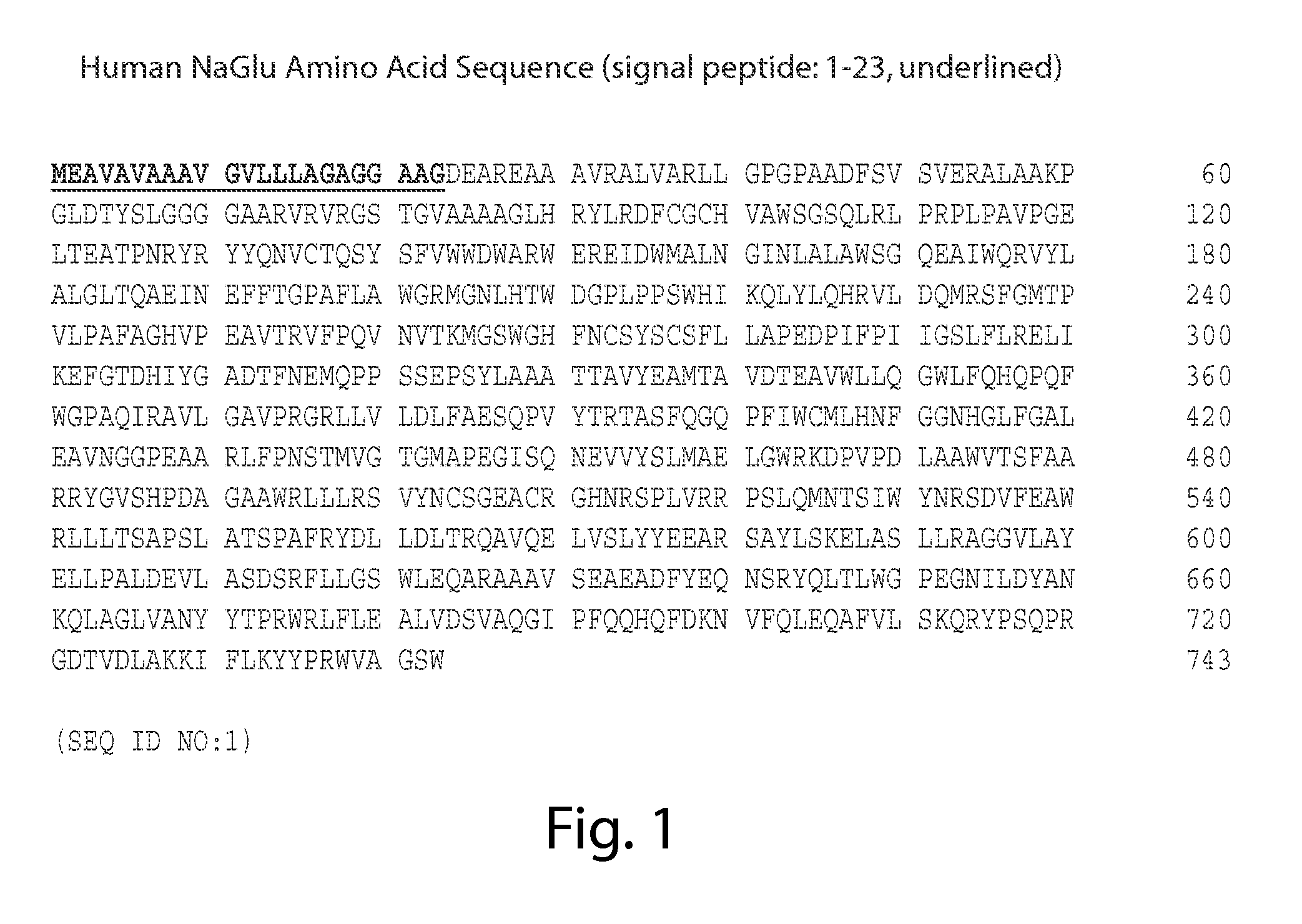
Figure 1 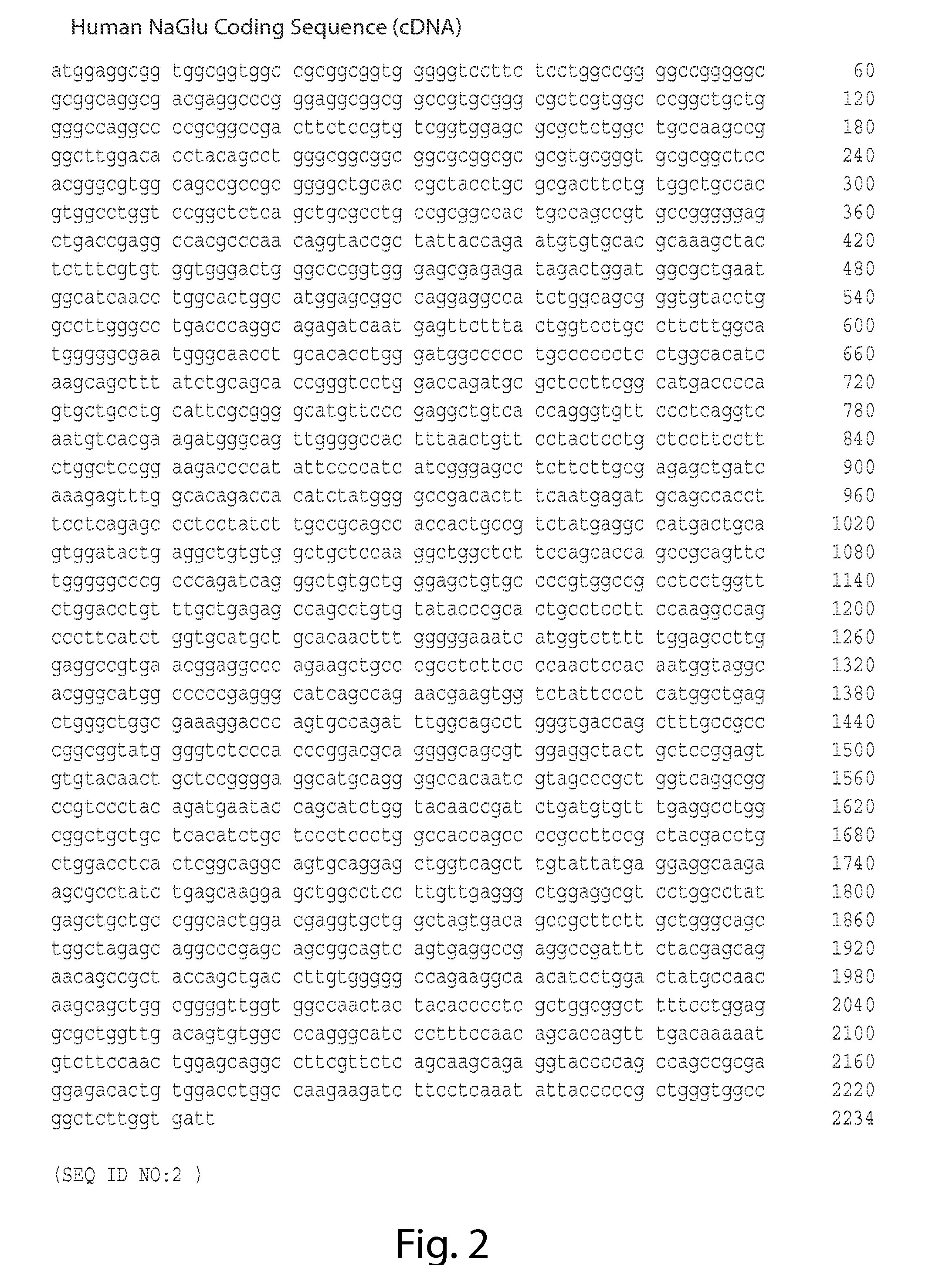
Figure 2 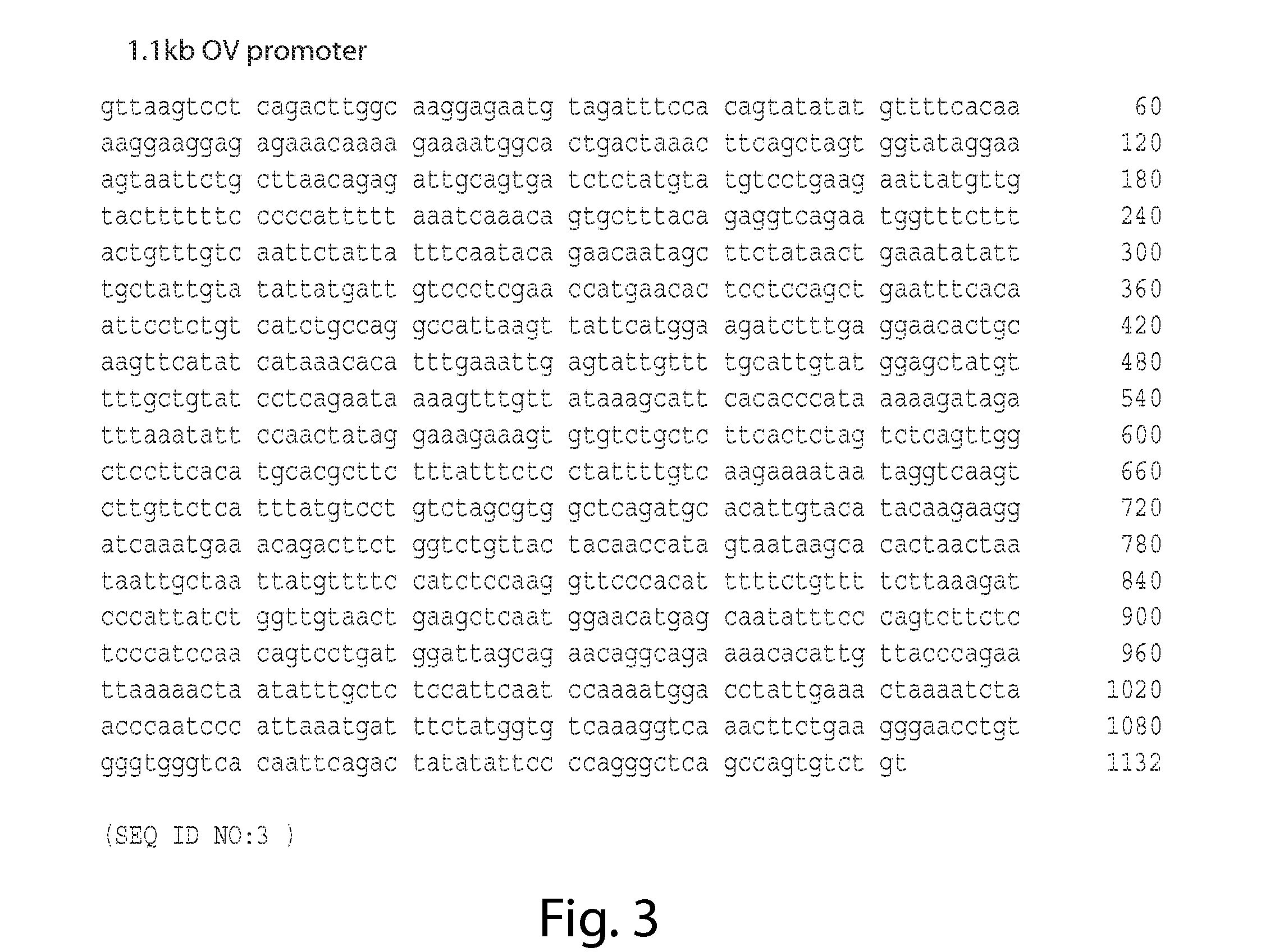
Figure 3
Abstract
Description
CROSS-REFERENCE TO RELATED APPLICATIONS
[0001] This application is related and claims priority to U.S. Provisional Application Ser. No. 61 / 546,248, filed Oct. 12, 2011, the entire contents of which are expressly incorporated herein by this reference.BACKGROUND OF THE INVENTION
[0002] Sanfilippo Syndrome B is an autosomal recessive lysosomal storage disease (LSD) caused by a deficiency in a lysosomal enzyme known as N-acetyl-alpha-D-glucosaminidase (NaGlu). NaGlu is required for the degradation of heparan sulfate as part of the stepwise breakdown of glycosaminoglycans (GAG) in the lysosome. The deficiency or absence of NaGlu leads to accumulation and urinary excretion of heparan sulfate. With over 70 different mutations identified to date, Sanfilippo Syndrome B exhibits extensive molecular and genetic heterogeneity.
[0003] Approximately 1 out of 200,000 births is affected by Sanfilippo Syndrome B and the deficiency mainly manifests in young children. After initial symptom-free interval, pa...
Examples
example 1
Purification of rhNaGlu
[0266]rhNaGlu protein was purified by using methods known in the art. Egg white (EW) containing rhNaGlu was solubilized at pH 6 overnight and clarified through centrifugation and / or depth filtration. The EW was adjusted with 1 M NaOAc buffer (pH 4) to pH 6. For the depth filtration process, T2600 filter (Pall™, 40 um) was used as a 1st filtration and then PDF1 (Pall™, K200P, 15 um+EKS, 0.22 um) as a 2nd filtration step. The filters are single-use membrane with an optimized capacity 60 L EW / m2 for each filter. The hold volume of membrane is 2 L / m2 for T2600 and 4-5 L / m2 for PDF1. In the process, the hold volume was discarded before the filtered EW collected. The buffer (20 mM Phosphate / 137 mM NaCl, pH 6) equivalent to the membrane hold volume was used to chase EW left on the filters.
[0267]A phenyl-HIC (hydrophobic interaction chromatography) column was applied as a capture step. Since most of egg white proteins are hydrophilic, 99% of egg white proteins passed ...
example 2
Stability of rhNaGlu in Egg White
[0271]A single egg was cracked 7 days post-lay and analyzed for activity. Contents were divided in half and each half was subject to standard egg white clarification. Both untreated and clarified egg whites were aliquoted and stored at 4° C. and −20° C. for enzyme activity stability. rhNaGlu in egg white showed stable enzyme activity at least up to 50 days.
[0272]Freeze / thaw cycle stability was assessed. The purified rhNaGlu was frozen in liquid nitrogen for 10 seconds and thawed at 37° C. for 2 min. The enzyme activity showed no change for 10 cycles.
[0273]The purified rhNaGlu was dialyzed into different pH buffers to measure the stability of pure enzyme. The results showed that pure rhNaGlu was stable between pH 5-8 for 12 days.
example 3
Oligosaccharide Profiling
[0274]Mannose-6-phosphate (M6P) is a terminal monosaccharide of N-linked oligosaccharides that is an important part of the tertiary structure of glycoprotein and, when incorporated in the glycoprotein's final oligosaccharide, is recognized by and bound to the M6P receptors present on the cell surface, subsequently allowing internalization into the lysosomes. Thus, M6P is an effective epitope for the targeting of glycoproteins to the lysosomes.
[0275]Analysis of protein glycosylation is an important part of glycoprotein characterization. Oligosaccharides can be linked to a protein through a serine or a threonine as O-lined glycans or through an asparagine as N-linked glycans.
[0276]To analyze the structure of oligosaccharides, various chromatographic and spectroscopic techniques were performed. High-performance anion exchange chromatography with pulsed amperometric detection (HPAEC-PAD) was employed. Using this technique, oligosaccharides were quickly separated...