
Remote station protection
a remote station and protection technology, applied in the field of wireless communication, can solve the problems that the dsss sta may experience trouble in accessing the wlan served by the ap, and achieve the effect of reducing/eliminating the number of collisions
Patent Information
- Authority / Receiving Office
- US · United States
- Patent Type
- Applications(United States)
- Current Assignee / Owner
- Publication Date
- 2015-10-29
- Estimated Expiration
- Not applicable · inactive patent
Smart Images
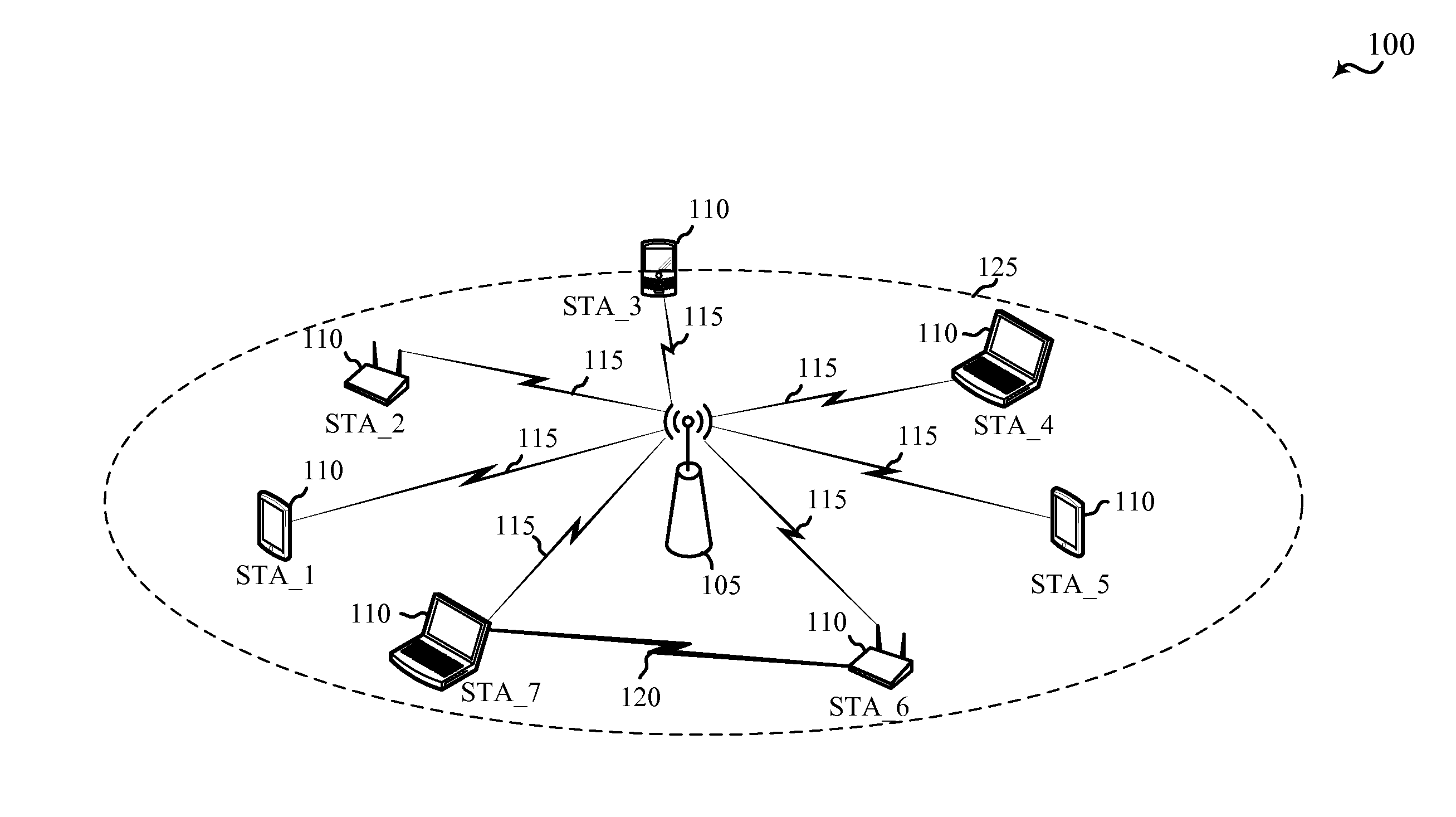
Figure 1 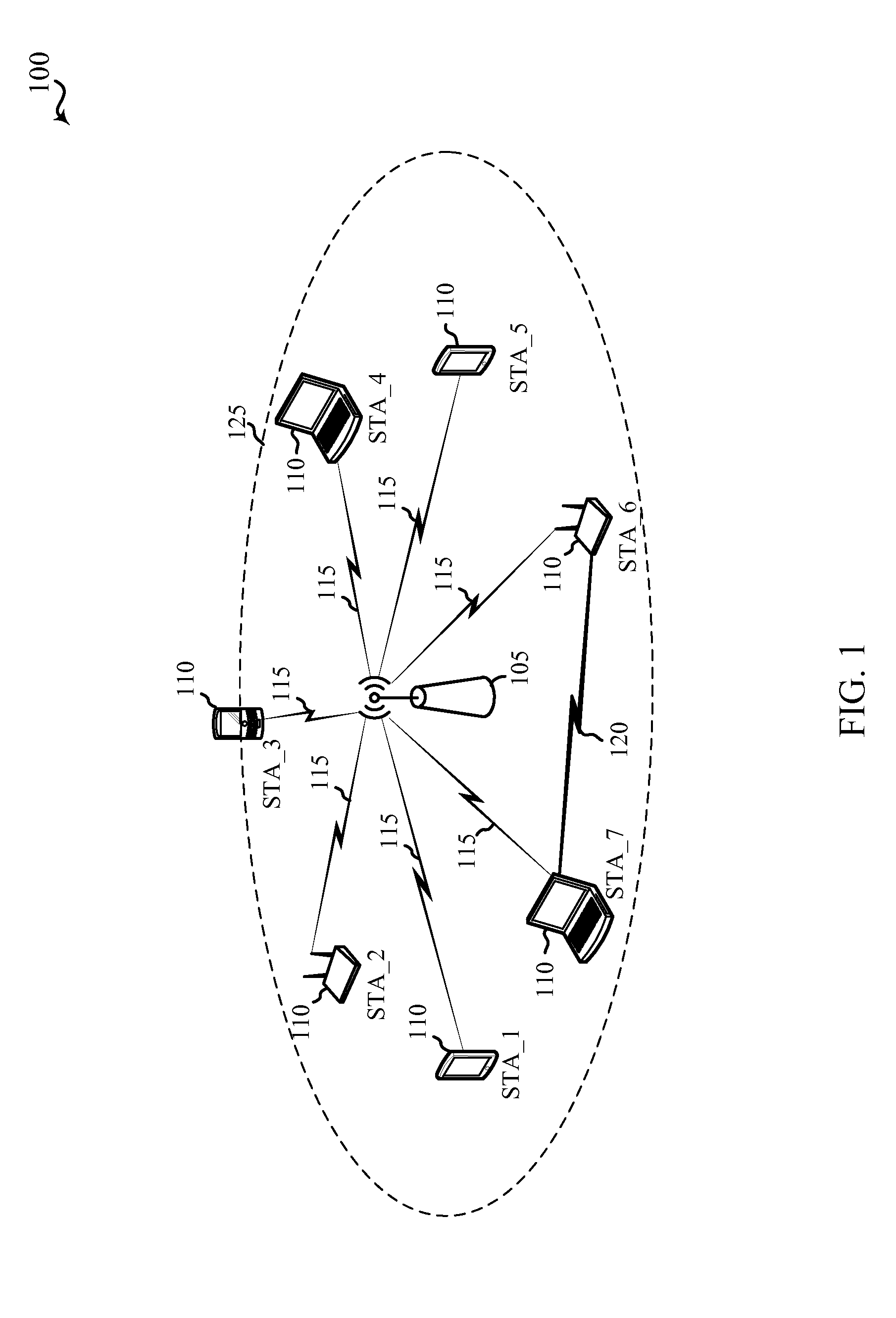
Figure 2 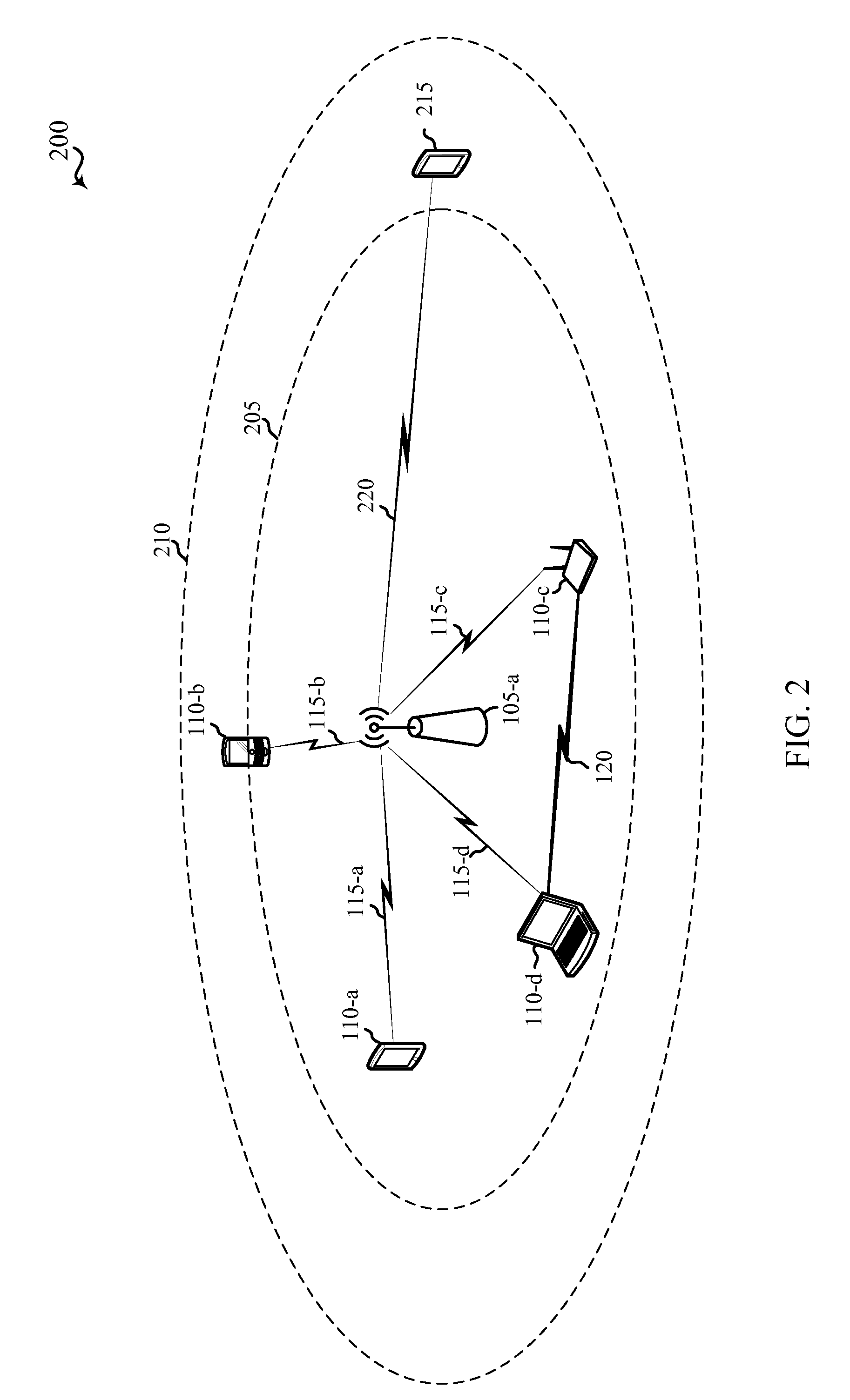
Figure 3
Abstract
Description
CROSS REFERENCES
[0001] The present Application for Patent claims priority to U.S. Provisional Patent Application No. 61 / 986,079 by Wentink et al., entitled “Remote Station Protection,” filed Apr. 29, 2014; U.S. Provisional Patent Application No. 62 / 024,905 by Wentink et al., entitled “Remote Station Protection,” filed Jul. 15, 2014; and U.S. Provisional Patent Application No. 62 / 026,460 by Wentink et al., entitled “Remote Station Protection,” filed Jul. 18, 2014 assigned to the assignee hereof, and expressly incorporated by reference herein.BACKGROUND
[0002] 1. Field of the Disclosure
[0003] The following relates generally to wireless communication, and more specifically to activating legacy protection based on receiving a Direct Sequence Spread Spectrum (DSSS) signal from a wireless station (STA).
[0004] 2. Description of Related Art
[0005] Wireless communications systems are widely deployed to provide various types of communication content such as voice, video, packet data, messaging, broa...
Examples
Embodiment Construction
[0036]The described features generally relate to one or more improved systems, methods, or apparatuses for activating legacy protection based on receiving a Direct Sequence Spread Spectrum (DSSS) signal from a station (STA). An access point (AP) may receive a first DSSS signal from a STA, and based at least in part on the received first DSSS signal, activate legacy protection in the wireless local area network (WLAN) served by the AP. The AP may compare a received signal strength of the first DSSS signal to a threshold and activate legacy protection based on the comparison, e.g., if the received signal strength is less than a threshold, indicating that the STA is beyond Orthogonal Frequency Division Multiplexing (OFDM) communication or Clear Channel Assessment (CCA) range. In this way, the AP may not unnecessarily activate legacy protection, for instance, when a STA in OFDM range is communicating via DSSS or when no STA is outside of OFDM communication or CCA range. By enabling lega...