
Pressure-sensitive adhesive mass for low energy or rough surfaces
a technology of pressure-sensitive adhesives and rough surfaces, applied in the direction of adhesive types, film/foil adhesives, lamination, etc., can solve the problems of inability to adjust the parameters independently of one another, block copolymer adhesives generally exhibit poor temperature stability, and the proportion of resins is limited
Patent Information
- Authority / Receiving Office
- US · United States
- Patent Type
- Applications(United States)
- Current Assignee / Owner
- Publication Date
- 2016-08-18
Smart Images
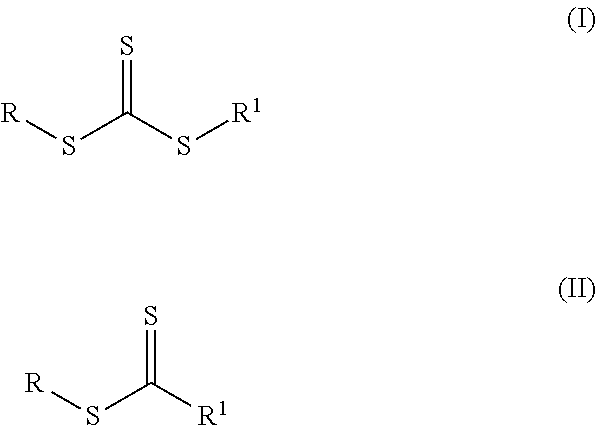
Figure 1 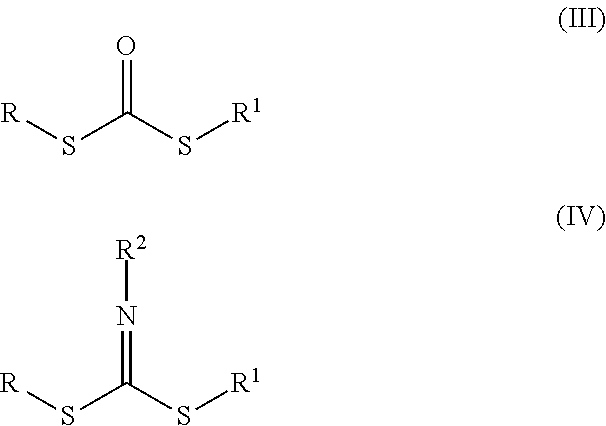
Figure 2 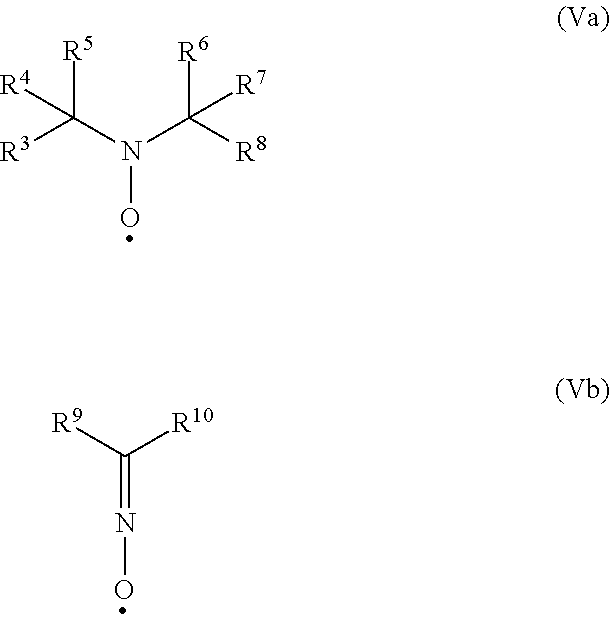
Figure 3
Abstract
Description
[0001] This is a 371 of PCT / EP2014 / 069626 filed 15 Sep. 2014, which claims foreign priority benefit under 35 U.S.C. 119 of German Patent Application 10 2013 219 495.1 filed Sep. 27, 2013, the entire contents of which are incorporated herein by reference.
[0002] The invention relates to a pressure sensitive adhesive, an adhesive tape comprising a pressure sensitive adhesive of this kind, and their production methods, the use of the pressure sensitive adhesive, and the use of monomers.BACKGROUND OF THE INVENTION
[0003] The industrial demand for pressure-sensitive adhesives (PSAs) with significantly improved adhesion to substrates of low surface energy (LSE) has risen sharply in recent times. Substrates considered to be of low energy generally have a surface energy of less than 40 dyn / cm2, typically less than 35 dyn / cm2. Considered particularly critical are materials which as well as a low surface energy also possess rough surfaces and, furthermore, low Shore A hardnesses of less than 50, t...
Examples
##ventive example 1
Inventive Example 1
Polymer 1
[0167]A 2 L glass reactor conventional for radical polymerizations was charged with 8 g of acrylic acid, 196 g of 2-ethylhexyl acrylate, 196 g of a mixture of monomers A for which R2═R3═H and R1 is a C17 alkyl chain having three branching sites and the glass transition temperature of the homopolymer is −72° C., 133 g of special-boiling-point spirit 69 / 95, and 133 g of acetone. After nitrogen gas had been passed through the reaction solution with stirring for 45 minutes, the reactor was heated to 58° C. and 0.2 g of 2,2′-azodi(2-methylbutyronitrile) (Vazo 67™ from DuPont) was added. The external heating bath was then heated to 75° C. and the reaction was carried out constantly at this external temperature. After a reaction time of 1 hour, 20 g of isopropanol were added. After 2.5 hours, the batch was diluted with 100 g of acetone. After a reaction time of 4 hours, a further 0.2 g of Vazo 67™ was added. After a polymerization time of 7 hours, the batch was ...
##ventive example 2
Inventive Example 2
Polymer 2
[0168]A 2 L glass reactor conventional for radical polymerizations was charged with 8 g of acrylic acid, 392 g of a mixture of monomers A for which R2═R3═H and R1 is a C17 alkyl chain having three branching sites and the glass transition temperature of the homopolymer is −72° C., 133 g of special-boiling-point spirit 69 / 95, and 133 g of acetone. After nitrogen gas had been passed through the reaction solution with stirring for 45 minutes, the reactor was heated to 58° C. and 0.2 g of Vazo 67™ (from DuPont) was added. The external heating bath was then heated to 75° C. and the reaction was carried out constantly at this external temperature. After a reaction time of 1 hour, 20 g of isopropanol were added. After 2.5 hours, the batch was diluted with 100 g of acetone. After a reaction time of 4 hours, a further 0.2 g of Vazo 67™ was added. After a polymerization time of 7 hours, the batch was diluted with 100 g of special-boiling-point spirit 60 / 95, and afte...