
Methods and pharmaceutical compositions for the treatment of pulmonary bacterial inffections
a technology for pulmonary bacterial infections and pharmaceutical compositions, which is applied in the direction of antibacterial agents, immunoglobulins, peptides, etc., can solve the problems of mild to life-threatening illnesses that require immediate intervention, large economic burden on our society, and inability to metabolize bacterial proteins
Patent Information
- Authority / Receiving Office
- US · United States
- Patent Type
- Applications(United States)
- Current Assignee / Owner
- Publication Date
- 2019-05-16
Smart Images
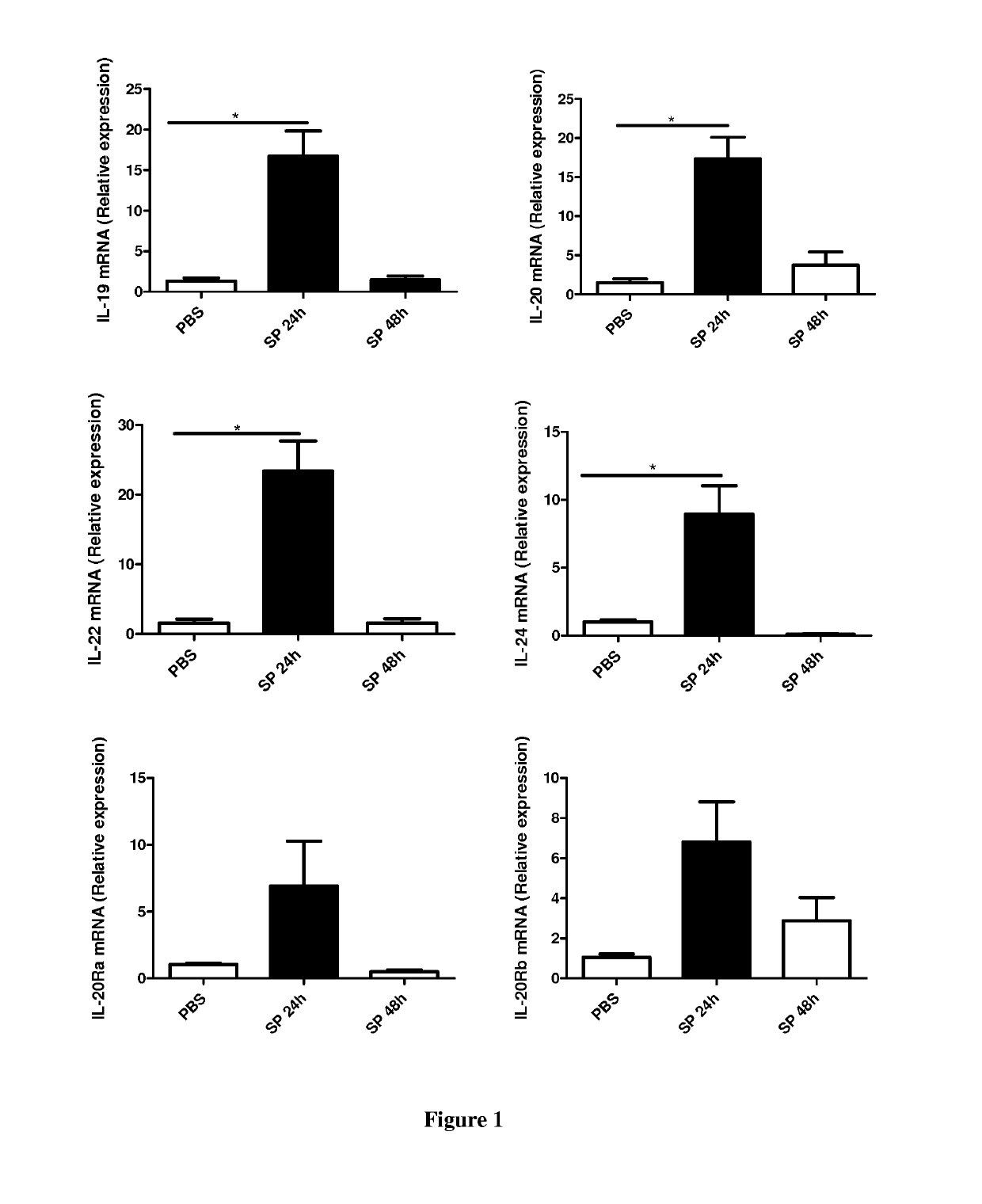
Figure 1 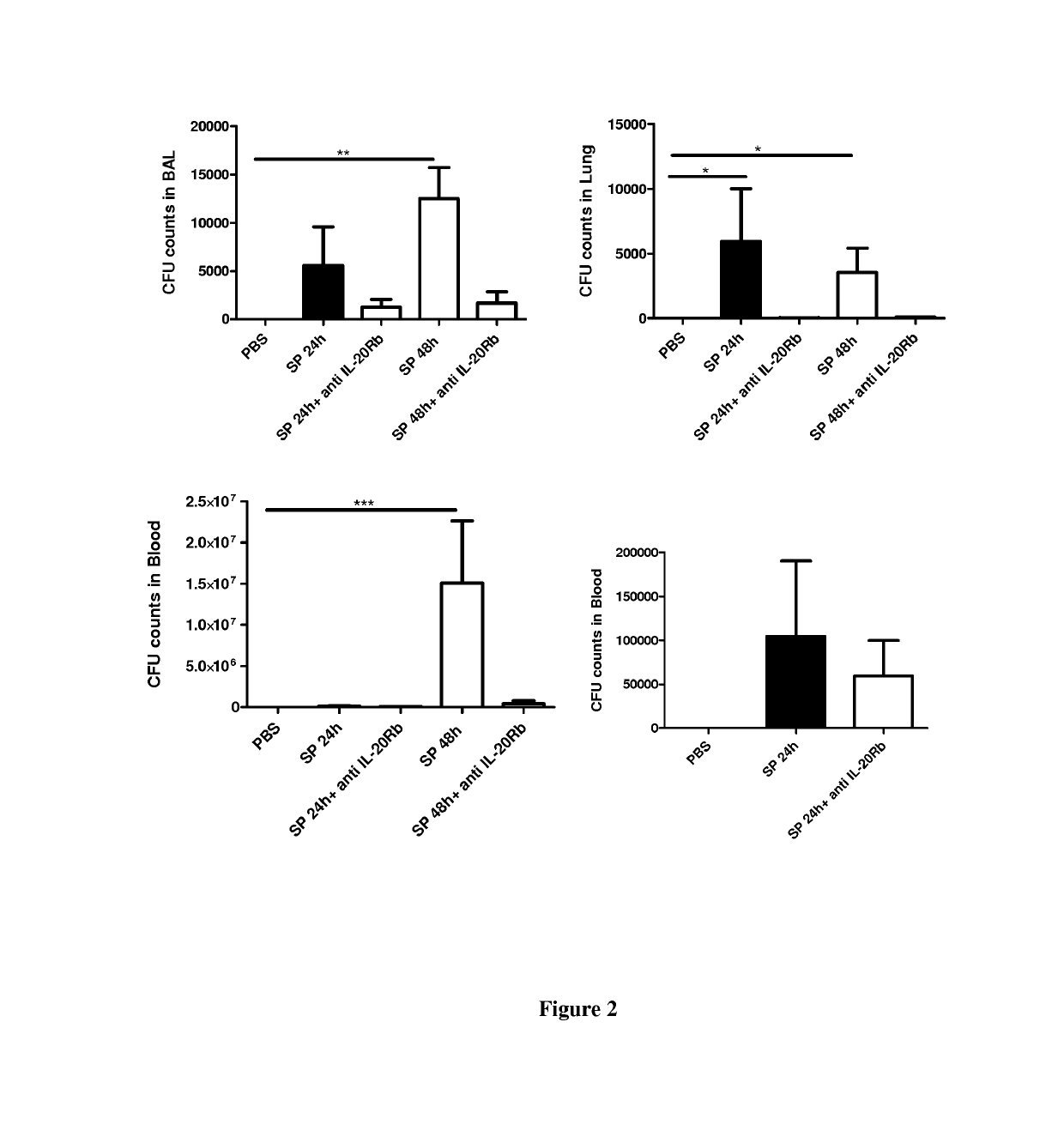
Figure 2 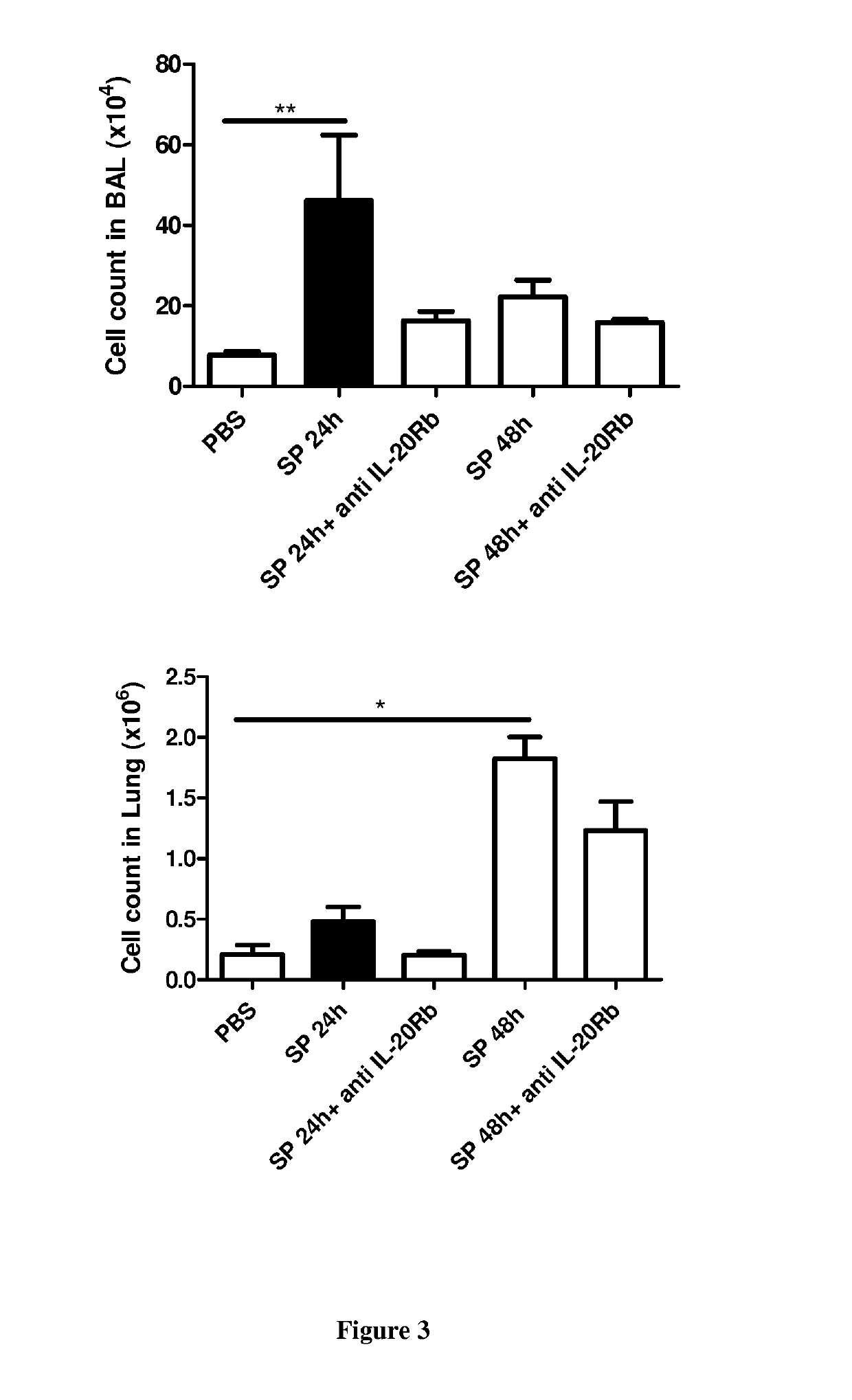
Figure 3
Abstract
Description
FIELD OF THE INVENTION
[0001] The present invention relates to methods and pharmaceutical compositions for the treatment of pulmonary bacterial infections.BACKGROUND OF THE INVENTION
[0002] Pulmonary bacterial infections are a major health problem and pose a large economic burden on our society. Pulmonary bacterial infections can be caused by a wide range of bacteria, resulting in mild to life-threatening illnesses that require immediate intervention.
[0003] For example, Streptococcus pneumoniae (pneumococcus) causes respiratory tract infections among infants and the elderly worldwide. Capsular polysaccharide is the main virulence factor, and its composition defines 91 serotypes of pneumococcus. Certain serotypes colonize asymptomatically the human nasopharynx representing a reservoir for inter-individual transmission of the bacteria. In some individuals colonization may progress to pneumococcal pneumonia and invasive disease.
[0004] The treatment of pulmonary bacterial infections is most o...
Examples
example
[0058]Material & Methods
[0059]Six- to eight-week-old male wild-type (WT) C57BL / 6 (H-2Db) mice were purchased from Janvier (Le Genest-St-Isle, France). All animal work conformed to the guidelines of Animal Care and Use Committee from Nord Pas-de-Calais (agreement no. AF 16 / 20090). Mice were inoculated by the intranasal route with a clinical isolate of Streptococcus pneumoniae (Sp) serotype 1 described elsewhere (Marques, J. M. et al 2012. Immunobiology 217:420-429). Mice were anesthetized and administered intranasally with 106 Colony-forming units (CFU) of Streptococcus pneumoniae in 50 μl. When indicated mice were treated 24 h before and 24 h after the infection with 50 μg / mice of a blocking rat monoclonal anti-IL-20RB antibody (Clone 20RNTC, Affymetrix) by the intra-peritoneal route.
[0060]Mice were daily monitored for illness and mortality. Bacterial burden in the broncho-alveolar lavages (BAL), lungs and blood was measured by plating samples onto chocolate plates collected after 2...