
Detection of flu using thermal imaging
a technology of thermal imaging and flu, applied in the field of flu detection using thermal imaging, can solve the problems of limited utility toward identifying the specific timeline of fever onset, the requirement of (1) a standalone measurement device, and the connection of it to a smartphone, so as to accurately track and predict migration patterns, and improve the clinical relevance of deep learning exercis
Patent Information
- Authority / Receiving Office
- US · United States
- Current Assignee / Owner
- Publication Date
- 2019-06-27
- Estimated Expiration
- Not applicable · inactive patent
Smart Images
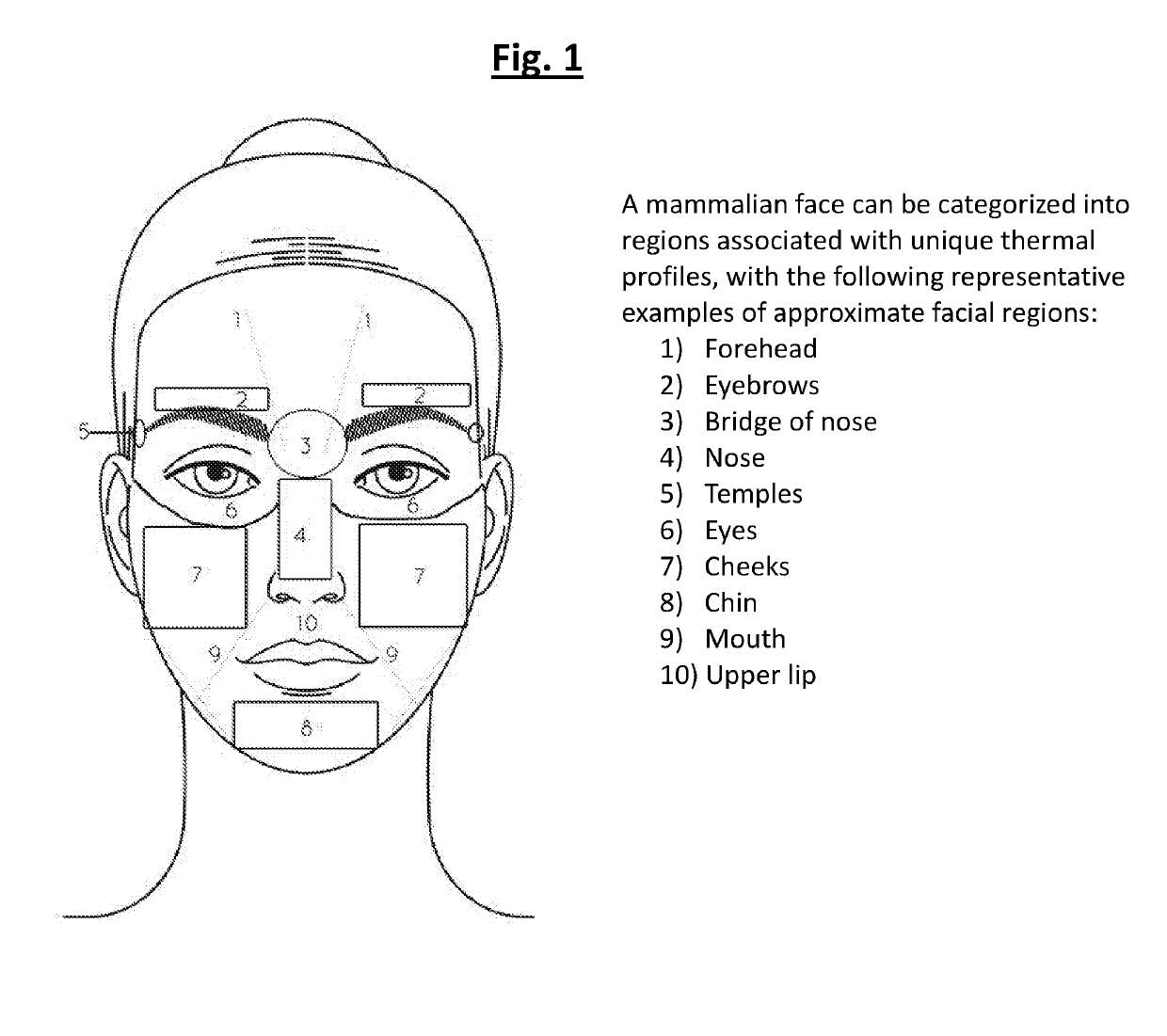
Figure 1 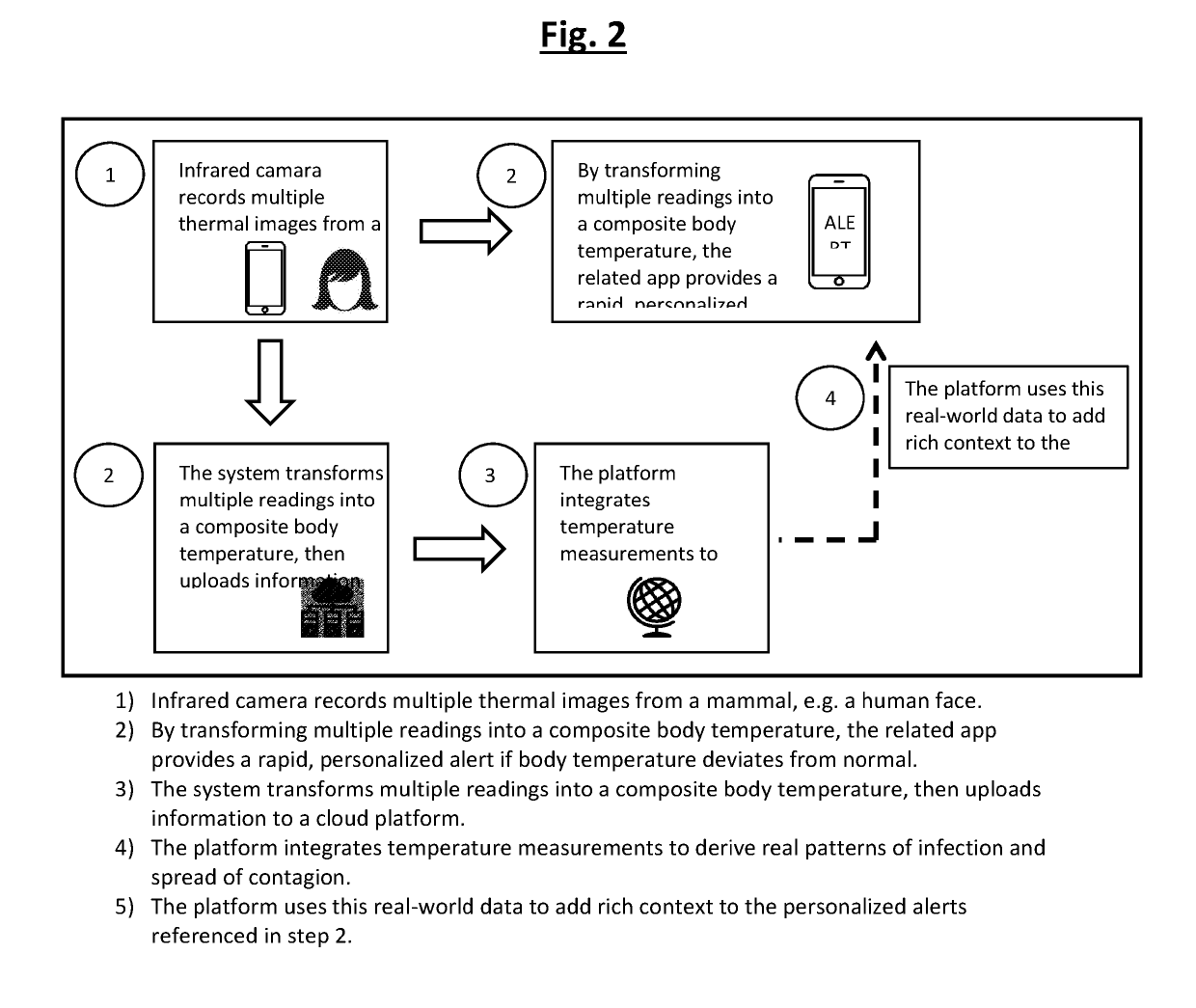
Figure 2
Abstract
Description
FIELD OF INVENTION
[0001] The field of the invention relates to determining the presence of influenza (flu) and other diseases or conditions with body temperature correlations in a locale, and extrapolating epidemiological data, by obtaining thermal imaging and associated data contained in user devices.BACKGROUNDInfrared Measurement
[0002] Infrared is the next longest wavelength of light past visible light. Infrared wavelengths extend from approximately 700 nanometers (frequency 430 THz), to 1 millimeter (300 GHz). Currently, certain smartphone manufacturers use infrared emitters in their commercially-available smartphones (such as for example, iPhones from Apple Inc.) to project 30,000 infrared dots onto a user's face, capture the resulting infrared image, and compare it against reference images to verify the facial characteristics of the user in a biometric authentication protocol such as, for example, Face ID (Apple, 2018). In addition to this facial mapping application, however, it ...
Examples
Embodiment Construction
[0020]Example embodiments of the present disclosure will be apparent to those of ordinary skill in the art from a review of the following detailed descriptions in conjunction with the drawings.
[0021]Example embodiments of the present disclosure are not limited to any particular operating system, electronic device architecture, server architecture or computer programming language.
Regions of a Mammalian Face
[0022]By reference to FIG. 1, a mammalian face can be categorized into regions associated with unique thermal profiles, with the following representative examples of approximate facial regions:[0023]1) Forehead[0024]2) Eyebrows[0025]3) Bridge of nose[0026]4) Nose[0027]5) Temples[0028]6) Eyes[0029]7) Cheeks[0030]8) Chin[0031]9) Mouth[0032]10) Upper lip,
[0033]Where the numbered facial regions above correspond to the numbered areas in FIG. 1.
Schematic of Invention Workflow
[0034]By reference to FIG. 2, a graphical schematic is provided by which the bidirectional flow of data occurs. Th...