
Discriminate among and estimate velocities of multiple objects using multi-node radar system
a radar system and multi-node technology, applied in the direction of reradiation, measurement devices, instruments, etc., can solve the problems of difficult associating reflections at each of the nodes of the same object, and challenging the correct determination of the velocity of each of the objects
Patent Information
- Authority / Receiving Office
- US · United States
- Patent Type
- Applications(United States)
- Current Assignee / Owner
- Publication Date
- 2020-10-15
Smart Images
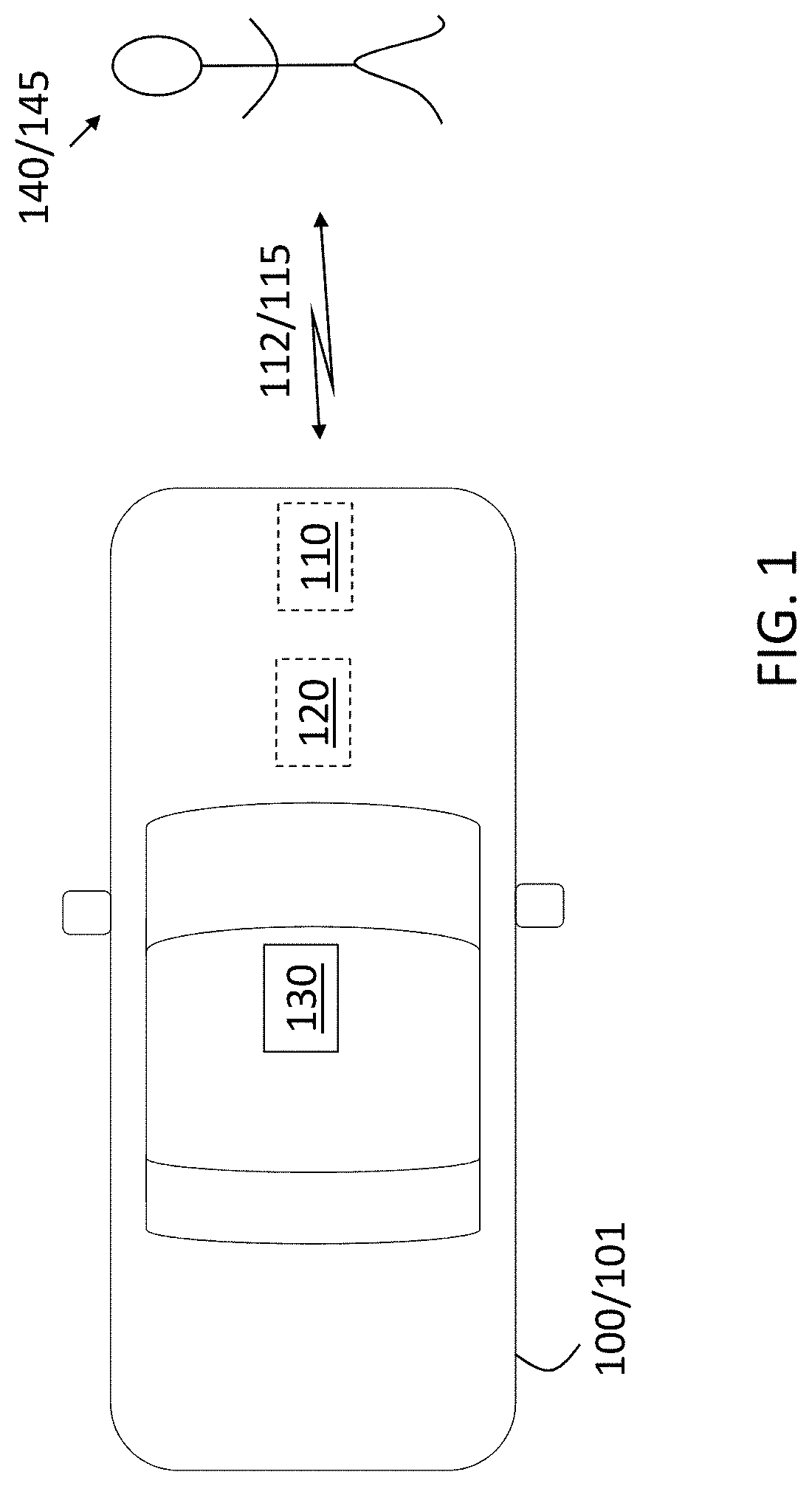
Figure 1 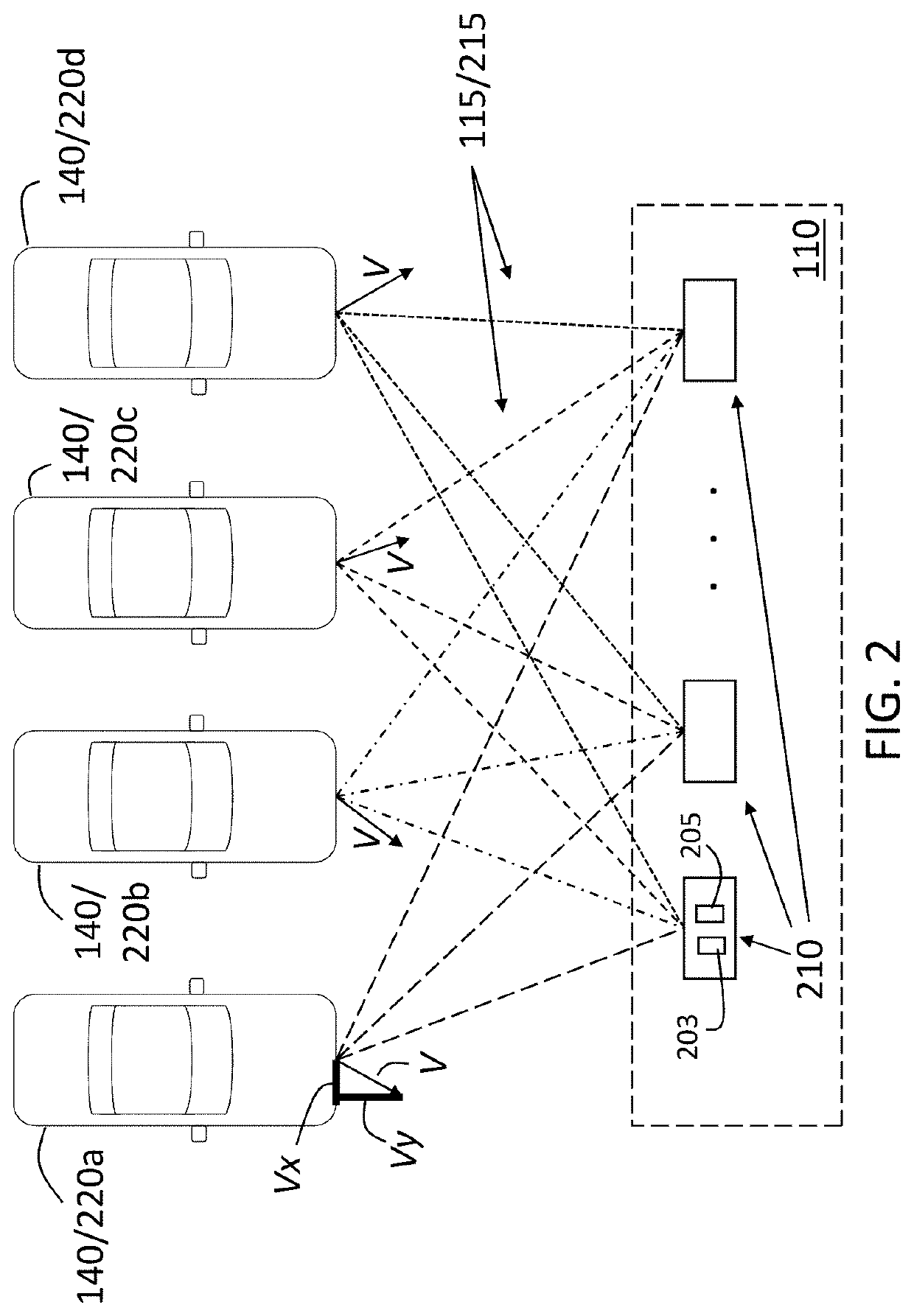
Figure 2 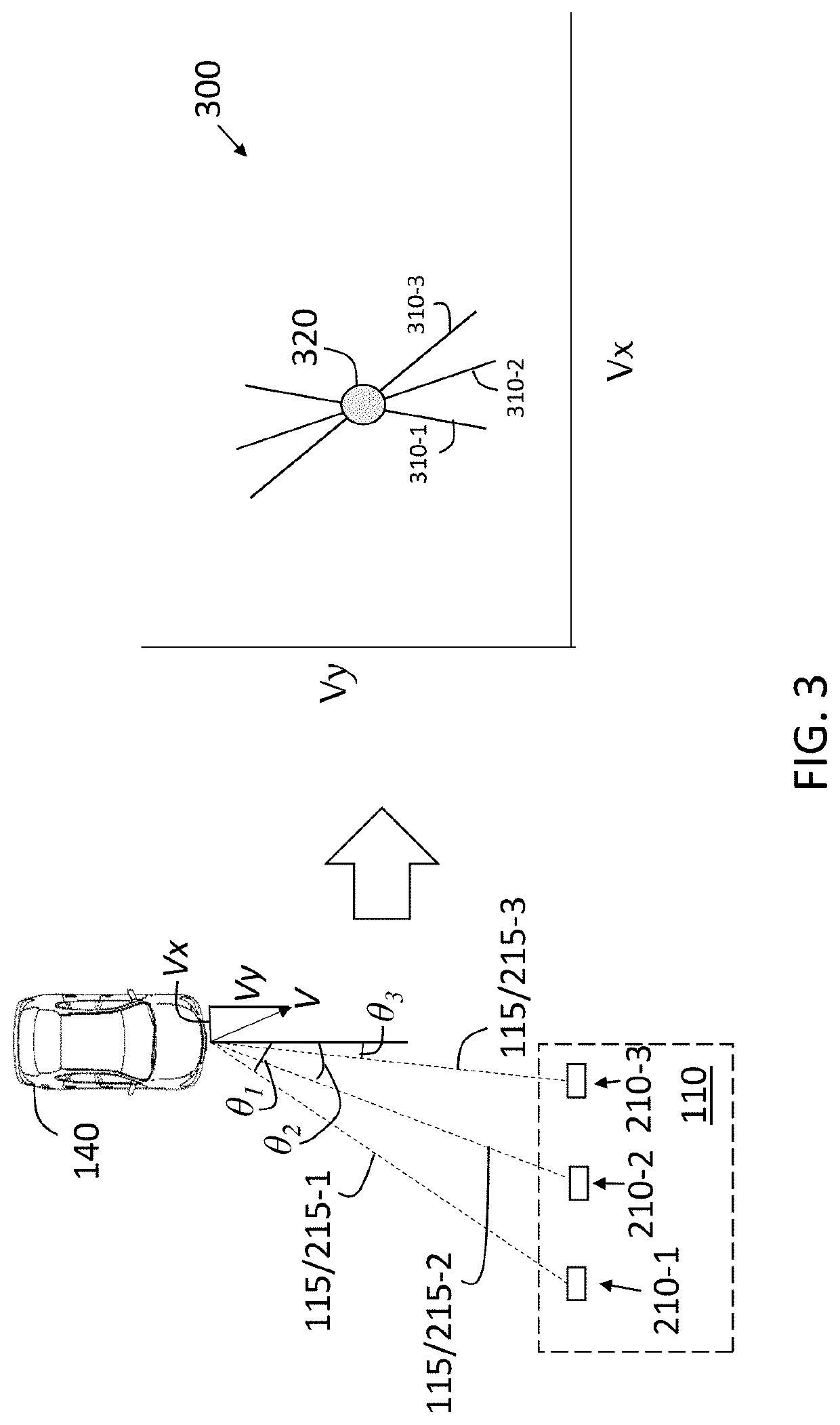
Figure 3
Abstract
Description
INTRODUCTION
[0001] The subject disclosure relates to discriminating among multiple objects and estimating their velocities using a multi-node radar system.
[0002] Radar systems and other sensors are increasingly used in vehicles (e.g., automobiles, trucks, farm equipment, construction equipment, automated factories) to obtain information about the vehicle and its surroundings. A radar system may identify objects in the path of the vehicle, for example, and facilitate autonomous or semi-autonomous vehicle operation. The radar system having a wide field of view (i.e., wide aperture) facilitates obtaining more information about the surroundings of the vehicle. Thus, an array of multiple nodes may be used. Each node may include one or more transmit and receive antenna elements or transceivers. However, when there are multiple objects at similar ranges to the radar system, correctly determining the velocity of each of the objects is challenging. This is because the angle of arrival of refle...
Examples
Embodiment Construction
[0031]The following description is merely exemplary in nature and is not intended to limit the present disclosure, its application or uses. It should be understood that throughout the drawings, corresponding reference numerals indicate like or corresponding parts and features.
[0032]As previously noted, a multi-node radar system expands the field of view but presents challenges in a scenario involving multiple objects at similar ranges from the radar system. This is because the reflections from each of the objects appear at a different angle of arrival at each of the nodes. Further, there may be an overlap in the angle of arrival determined for different objects at the different nodes. As such, the information obtained at all of the nodes is difficult to parse in order to identify each of the multiple objects and estimate each of their velocities. Velocity refers to the relative velocity between the object and the radar system. Embodiments of the systems and methods detailed herein r...