
Spectrally encoded miniature endoscopic imaging probe
a technology of endoscope and imaging probe, which is applied in the field of endoscopy, can solve the problems of limitations, disadvantages and limitations of using conventionally available endoscopes, and currently available probes limiting their use to certain procedures and locations,
Patent Information
- Authority / Receiving Office
- US · United States
- Patent Type
- Applications(United States)
- Current Assignee / Owner
- Publication Date
- 2011-11-10
- Estimated Expiration
- Not applicable · inactive patent
Smart Images
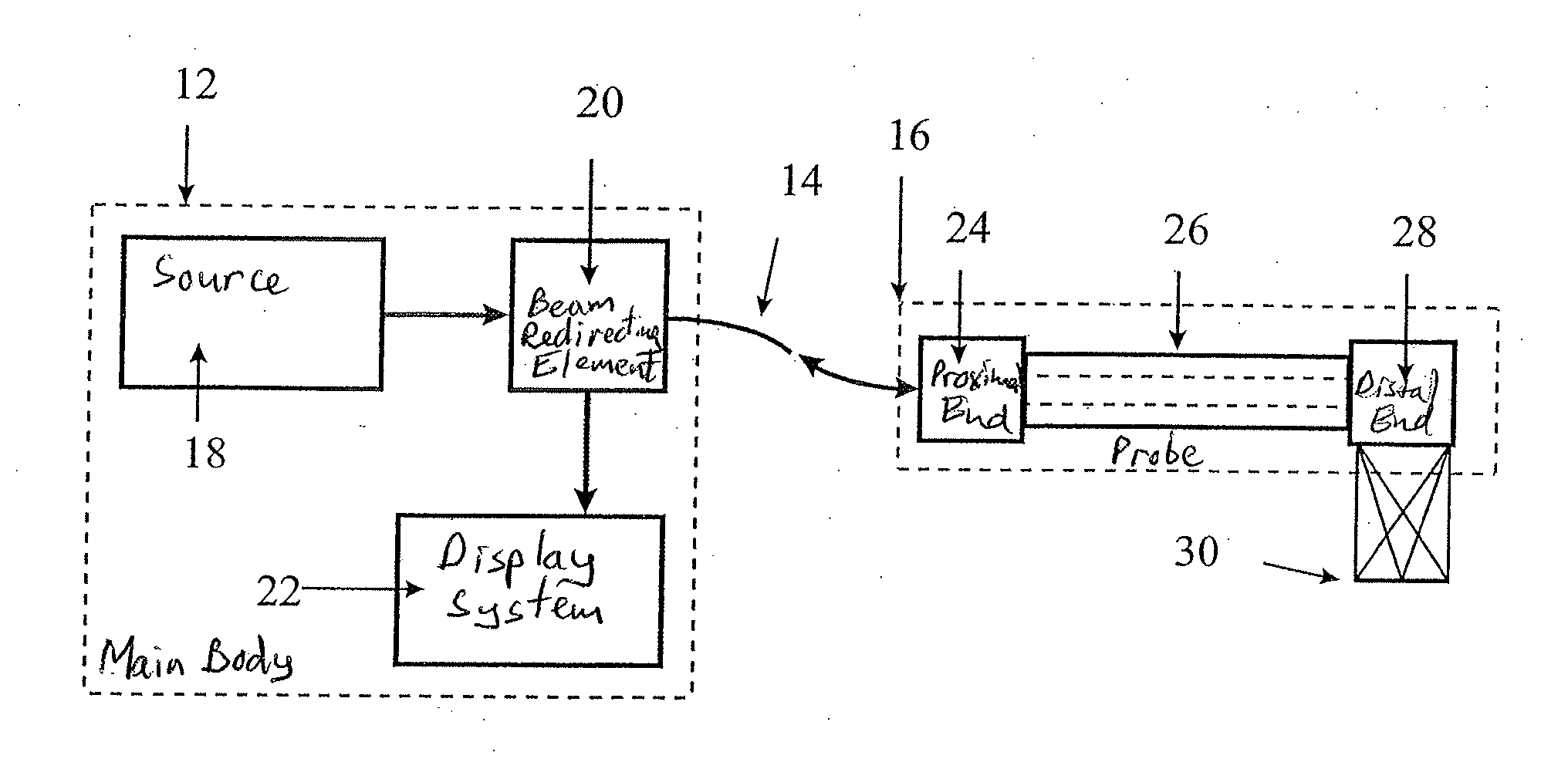
Figure 1 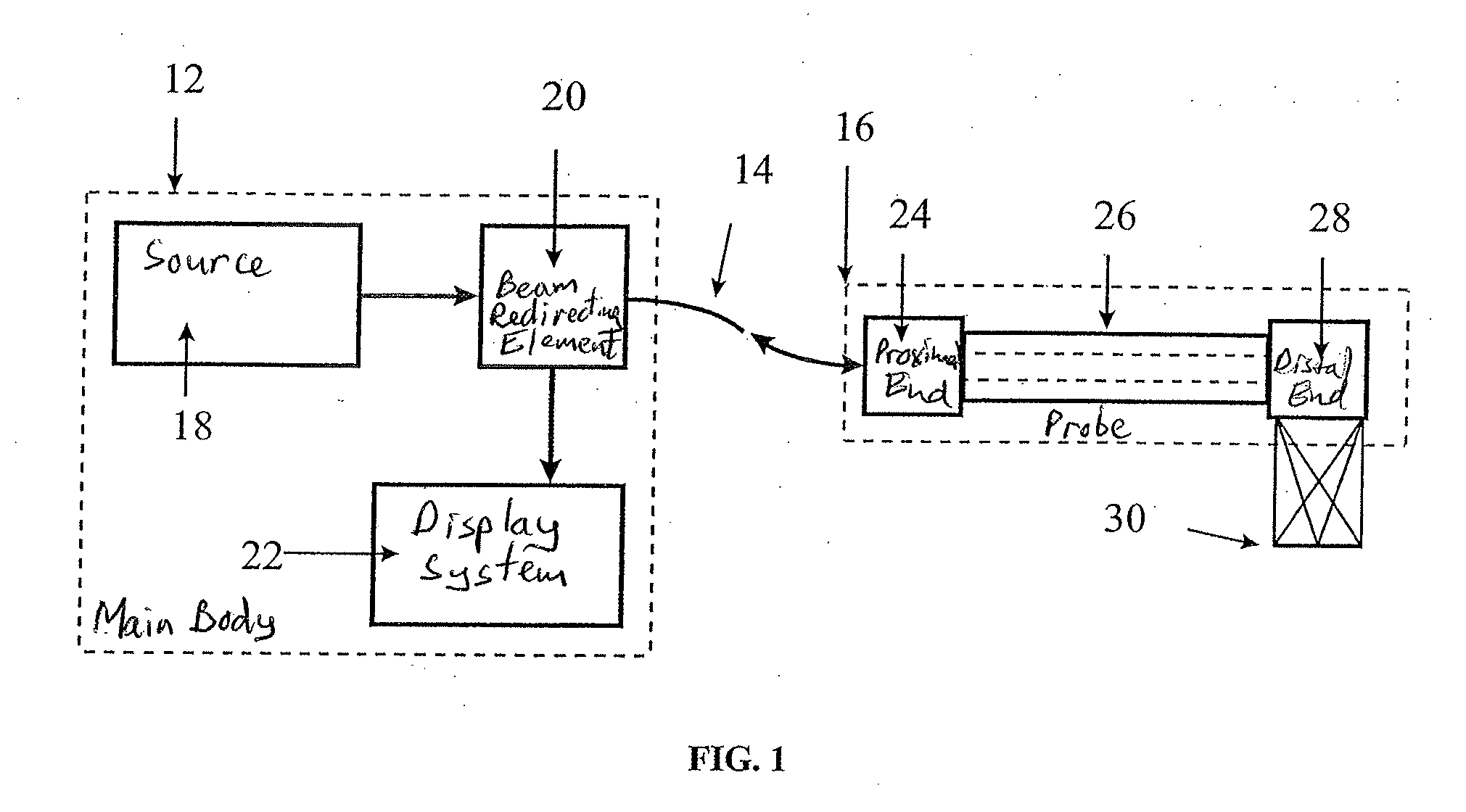
Figure 2 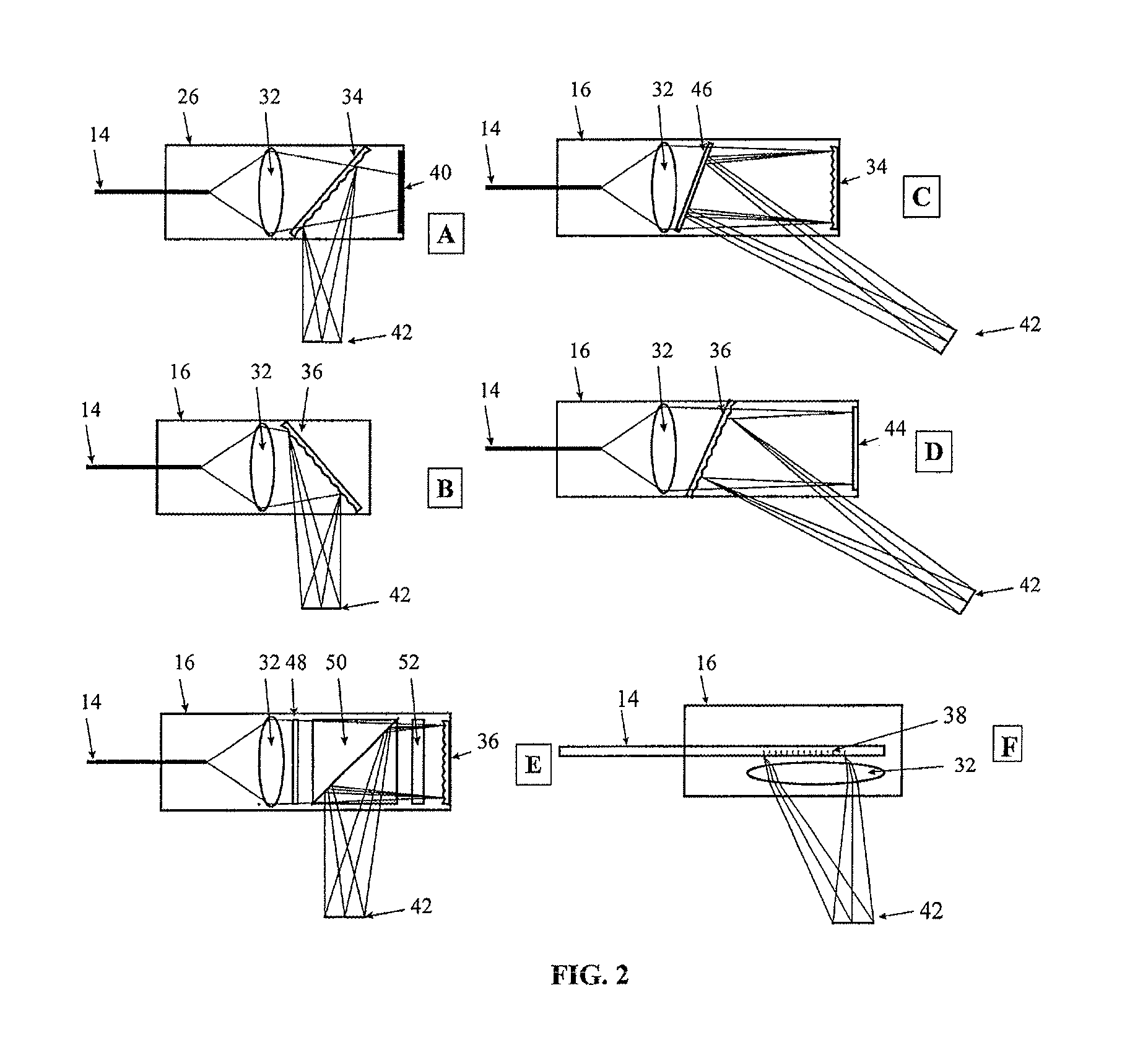
Figure 3
Abstract
Description
FIELD OF THE INVENTION
[0001] The present invention relates to the field of endoscopy in general and to an endoscope having a combination of high number of resolvable points using spectral encoding and contained in a diameter / space small enough to perform desired procedures.BACKGROUND OF THE INVENTION
[0002] Clinical use of endoscopic devices and probes has permitted physicians to view and diagnose target bodies, such as tumors, deposits, tears, thrombi, and the like. Unfortunately, there are still a number of disadvantages and limitations of using conventionally available endoscopes. The diameter of currently available probes limits their use to certain procedures and locations that can accommodate the large diameter of the endoscope. Consequently, many procedures currently done surgically could be done endoscopically, if a small enough probe was available with a sufficient number of resolvable points.
[0003] Current endoscopic procedures generally require administration of anesthesia an...
Examples
color embodiment
[0058]In an alternative embodiment of the present invention, shown in FIG. 5, a device 100 can be constructed that uses at least two and preferably three or more separate broadband source modules 110, for example, three sources centered at red (630 nm) 102, green (540 nm) 104, and blue (480 nm) 106 to produce color images using this technique. It is to be understood that other colors, wavelengths and number of separate sources can be selected depending on various factors, including, but not limited to, the imaging environment, imaging target, measurements to be obtained, and the like. The three energy components can be separated after reflection from the sample 30 and recombined to form an image. Each of the source / detector modules 102, 104 and 106 for the three spectral bands transmits selected wavelength light to an optical mixer / separator 108, which selectively transmits the light toward the imaging head 109 and to the imaging optics 110 for the different colors. The light reflec...