
Method for long-term storage of chlorophyll-containing extract
a chlorophyll and extract technology, applied in the field of chlorophyll long-term storage, can solve the problems of not being suitable for commercial use, using solvents, complex and long processing of chlorophyll, etc., and achieve the effects of long-term stability, increased light blocking, and stable storag
Patent Information
- Authority / Receiving Office
- US · United States
- Patent Type
- Applications(United States)
- Current Assignee / Owner
- Publication Date
- 2021-12-30
Smart Images
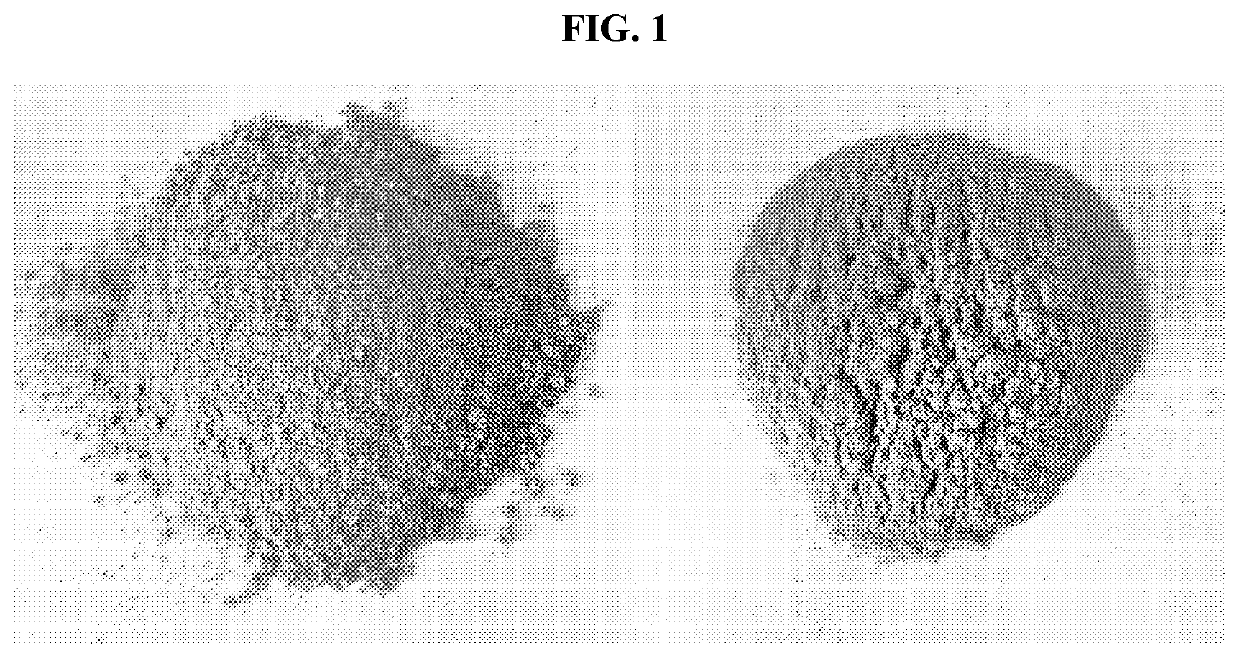
Figure 1 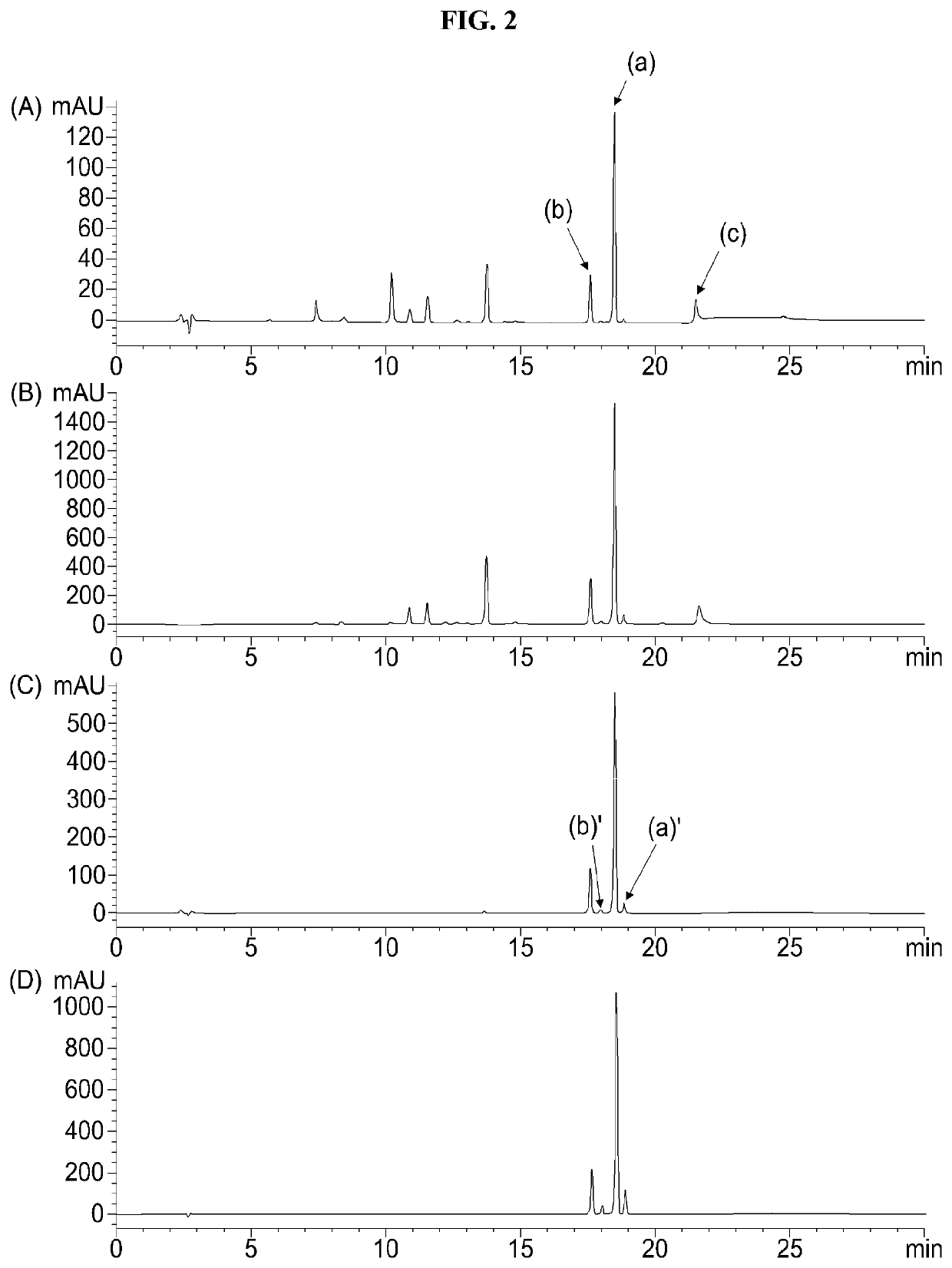
Figure 2 
Figure 3
Abstract
Description
CROSS REFERENCE TO RELATED APPLICATIONS AND CLAIM OF PRIORITY
[0001] This application claims benefit under 35 U.S.C. 119(e), 120, 121, or 365(c), and is a National Stage entry from International Application No. PCT / KR2019 / 014999, filed Nov. 6, 2019, which claims priority to the benefit of Korean Patent Application No. 10-2018-0134973 filed in the Korean Intellectual Property Office on Nov. 6, 2018, the entire contents of which are incorporated herein by reference.BACKGROUND1. Technical Field
[0002] The present invention relates to a method for long-term storage of chlorophyll, which is unstable in the surrounding environment, wherein a stabilizer employing oils having long-chain unsaturated lipid structures, of which squalene is representative, is used to stabilize chlorophyll.2. Background Art
[0003] Unlike synthetic pigments which have toxicity and carcinogenicity, natural pigments derived from food have a variety of physiologically active ingredients such as vitamins, minerals, and pol...
Examples
example 1
ical Extraction Step
[0119]50 g of freeze-dried wheatgrass powder (Dreams, South Korea) was extracted for 60 minutes under the conditions of 350 bar, 50° C., and a supercritical carbon dioxide flow rate of 60 ml / min to remove impurities, and then re-extracted for 120 minutes under the conditions of 350 bar, 50° C., a supercritical carbon dioxide flow rate of 60 mf / min, and a co-solvent ethanol flow rate of 5 ml / min to analyze the content of chlorophyll a. According to the analysis result, the amount of chlorophyll a was 235 mg, and the mass of total solids remaining after ethanol was removed by vacuum distillation was confirmed to be 4250 mg.
preparation example 1
purity Removal Step
[0120]50 g of freeze-dried wheatgrass powder (Dreams, South Korea) and 2.5 g of grapeseed oil as shown in (A) of FIG. 1 were mixed well with a mixer to be prepared. The prepared mixture of wheatgrass and grapeseed oil was extracted for 120 minutes under the conditions of 350 bar, 50° C., and a supercritical carbon dioxide flow rate of 60 mf / min to obtain wheatgrass powder with improved clarity of green color by removing impurities as shown in (B) of FIG. 1.
example 2
on Example 1+Example 1
[0122]The content of chlorophyll a obtained through the step of Example 1 was analyzed with respect to the wheatgrass powder obtained through the steps of Preparation Example 1. According to the analysis result, the amount of chlorophyll a was 240 mg, and the mass of total solids remaining after ethanol was removed by vacuum distillation was confirmed to be 3116 mg.
[0123]The result of converting the amount of chlorophyll a analyzed in each of Comparative Examples 1 and 2 and Examples 1 and 2 with respect to 1 g of dry wheatgrass powder and the extraction efficiency (=mass of chlorophyll a / mass of total solids) are shown in Table 1 below. Also, the results of high-performance liquid chromatography of each thereof are shown in FIG. 2.
TABLE 1ComparativeComparativeWheatgrass powderExample 1Example 1Example 2Example 2Chlorophyll (mg)3.84.74.24.8Extraction2.35.54.87.2efficiency (%)
[0124]According to FIG. 2 above, a characteristic peak of chlorophyll b and a character...