
Sorting method and apparatus using a CAM
a sorting method and cam technology, applied in the field of well-known algorithms implemented in software for sorting data, can solve the problems of not having a universal algorithm with constant performance over a wide range of conditions and number distributions, and achieve the effect of the same speed and the same performan
Patent Information
- Authority / Receiving Office
- US · United States
- Patent Type
- Patents(United States)
- Current Assignee / Owner
- Publication Date
- 2006-01-24
Smart Images
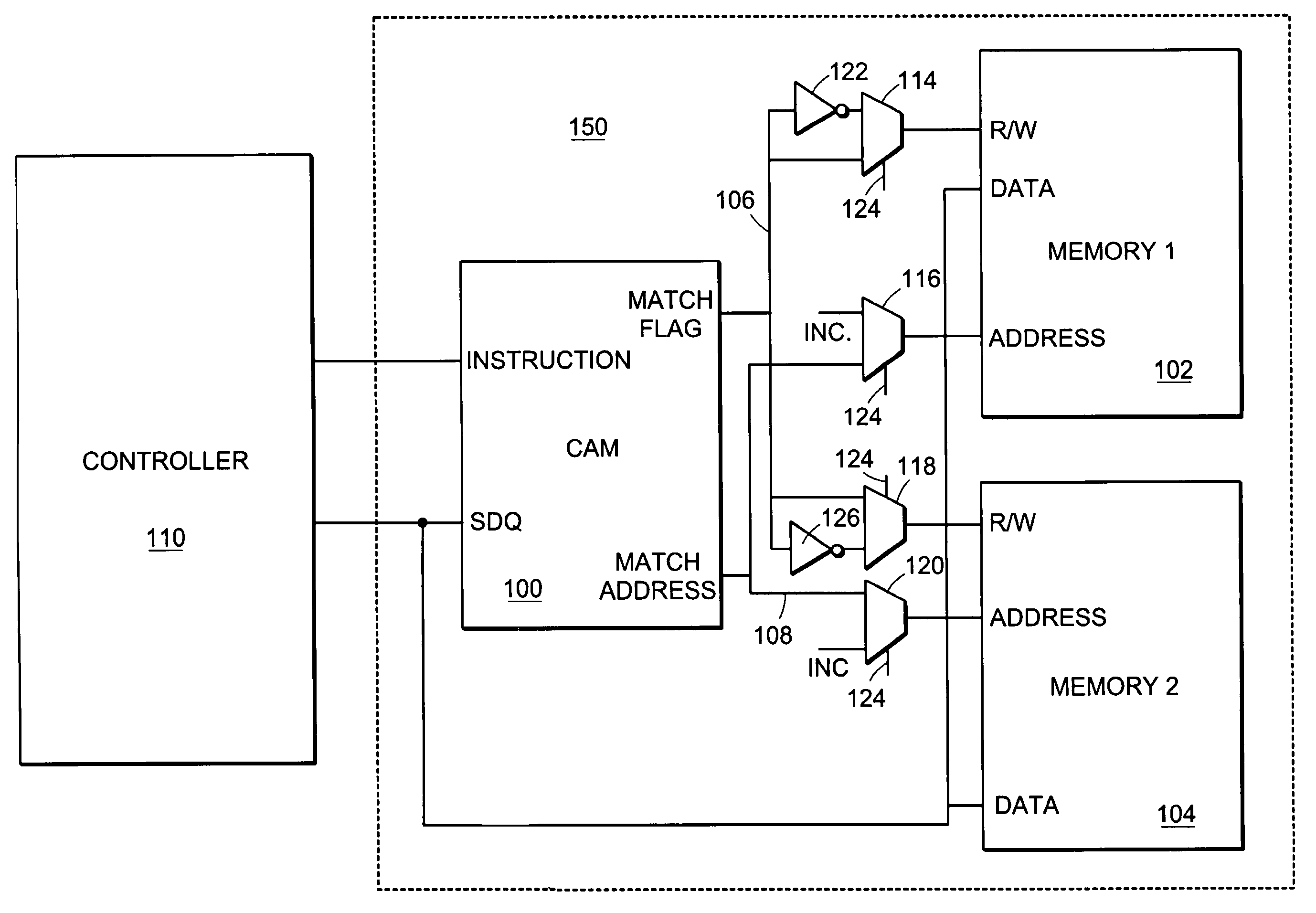
Figure 1 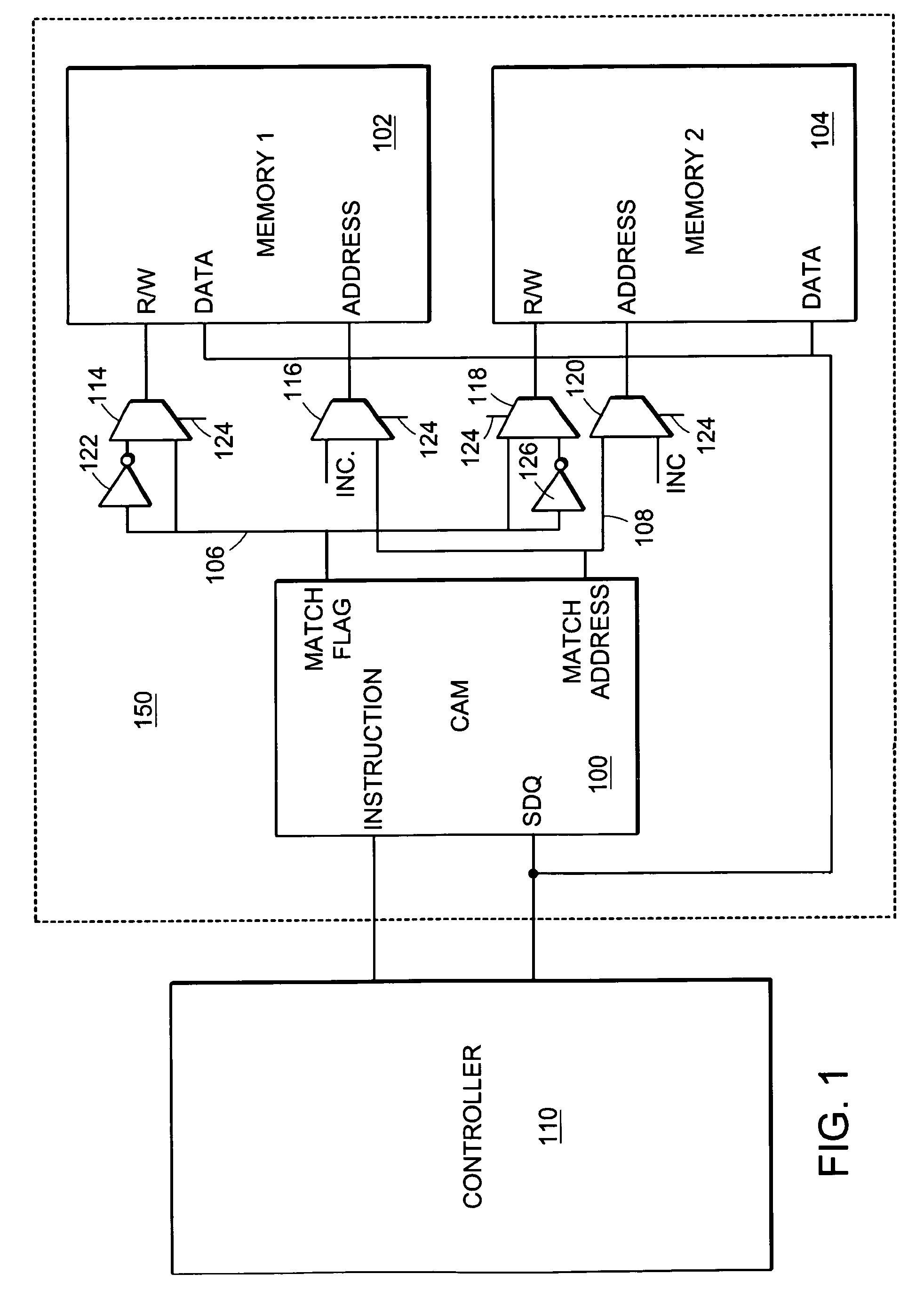
Figure 2 
Figure 3
Abstract
Description
BACKGROUND OF THE INVENTION
[0001] There are many well-known algorithms implemented in software for sorting data, such as numbers or strings. Relative performance can vary dependent on the initial order of the data to be sorted. Most of the data may be in the correct order, all of the data may be mixed up in random order or the data may be in reverse order.
[0002] One well-known algorithm implemented in software is the exchange (bubble) sort algorithm. The exchange sort algorithm is dependent on the order of the data. This algorithm compares adjacent data items and exchanges the order of the data items so that the largest data item “bubbles” through to the end of the list. For n data items, the sort continues until no exchanges are made in a pass through the list or until all data items have been compared (that is, n−1 passes for n data items).
[0003] Another well-known sorting algorithm, implemented in software is the selection sort. This algorithm requires n−1 passes to sort a list of n...
Examples
Embodiment Construction
[0024]A description of preferred embodiments of the invention follows.
[0025]FIG. 1 is a block diagram of an embodiment of a sorting apparatus 150 according to the principles of the present invention. The sorting apparatus 150 includes a Content Addressable Memory (“CAM”) 100 and two read / write memories 102, 104. In one embodiment, the CAM is a Class-IC™ DC9288 9 Megabit Ternary CAM from Mosaid Technologies, Inc., incorporated herein by reference in its entirety. The DC9288 CAM allows bits to be masked in a search key and provides a multiple match output in response to a burst search command (search and output all), both of which are used to perform the sort. However, the invention is not limited to the DC9288. The invention applies to any CAM that provides a multiple match output function and search mask function (allowing bits to be masked in the search key).
[0026]As opposed to a conventional memory, in a CAM data is supplied to the memory via a special comparand register. The memo...