
High efficiency, peak power reducing, domestic hot water heater
a technology of high efficiency and peak power, which is applied in the direction of water heaters, climate sustainability, and immersion heating arrangements, can solve the problems of high instantaneous demand, high instantaneous demand, and high power demand on the electrical distribution network, so as to reduce the propagation of harmful bacteria and reduce the kilowatt demand of domestic hot water heaters
Patent Information
- Authority / Receiving Office
- US · United States
- Patent Type
- Patents(United States)
- Current Assignee / Owner
- Publication Date
- 2009-11-17
Smart Images
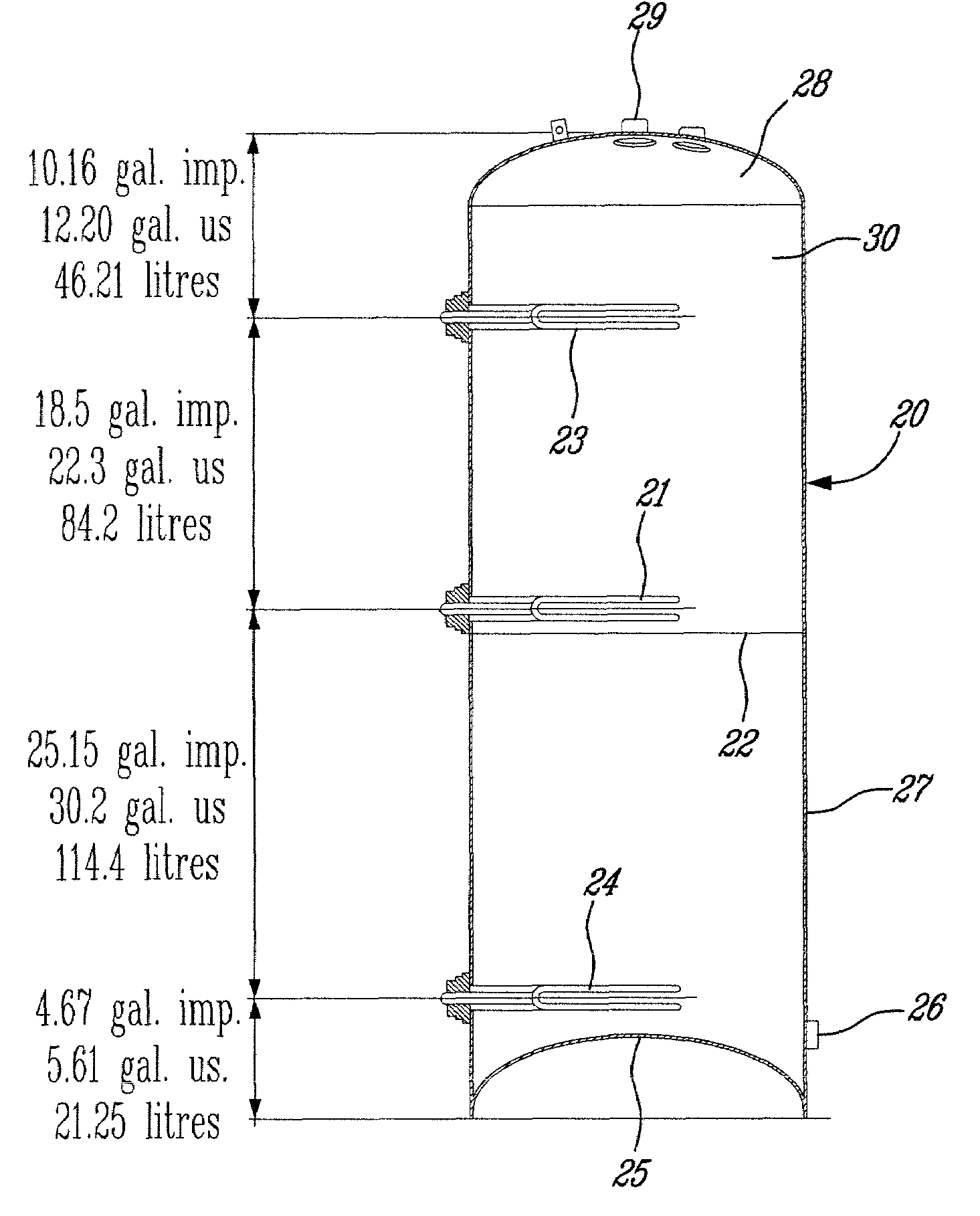
Figure 1 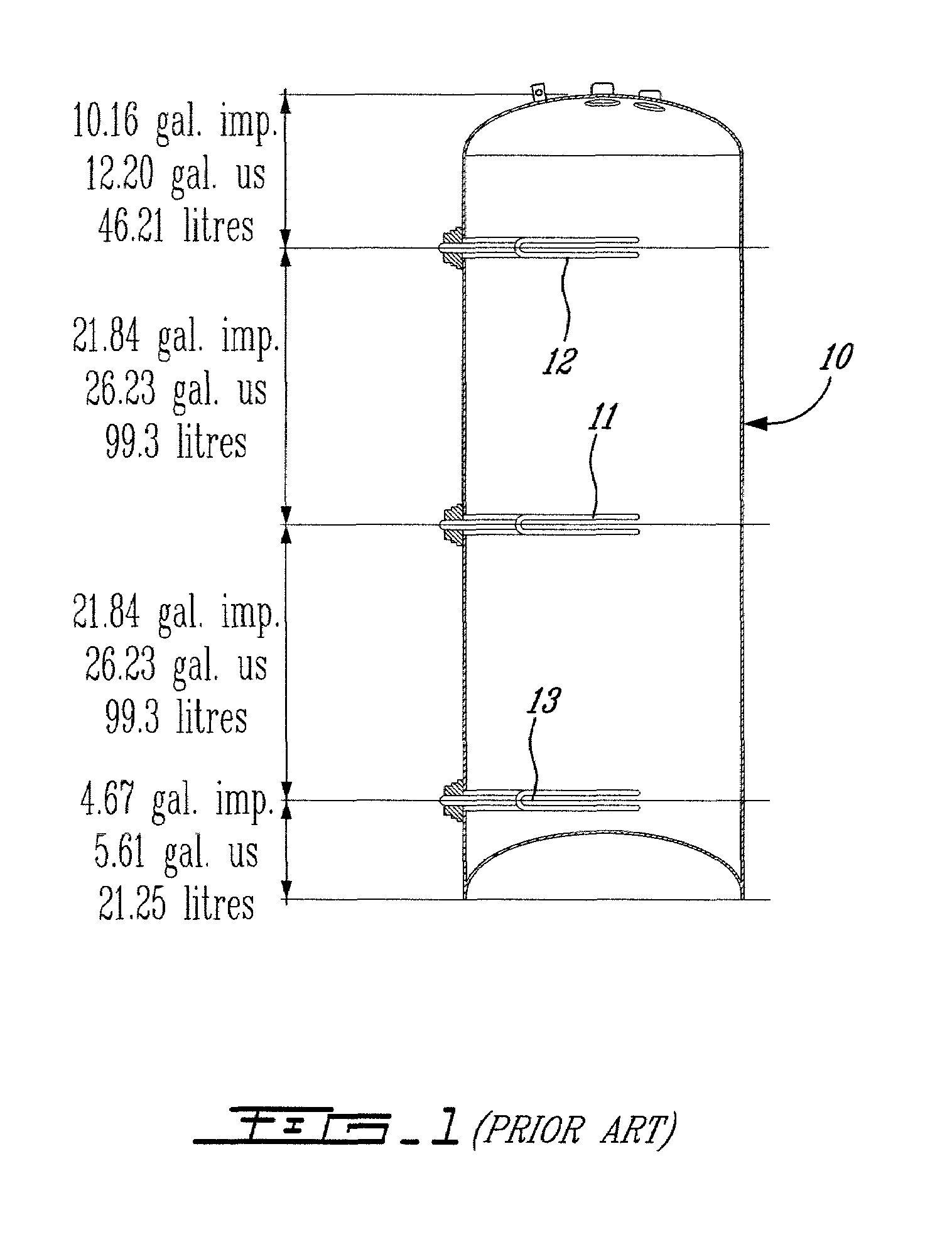
Figure 2 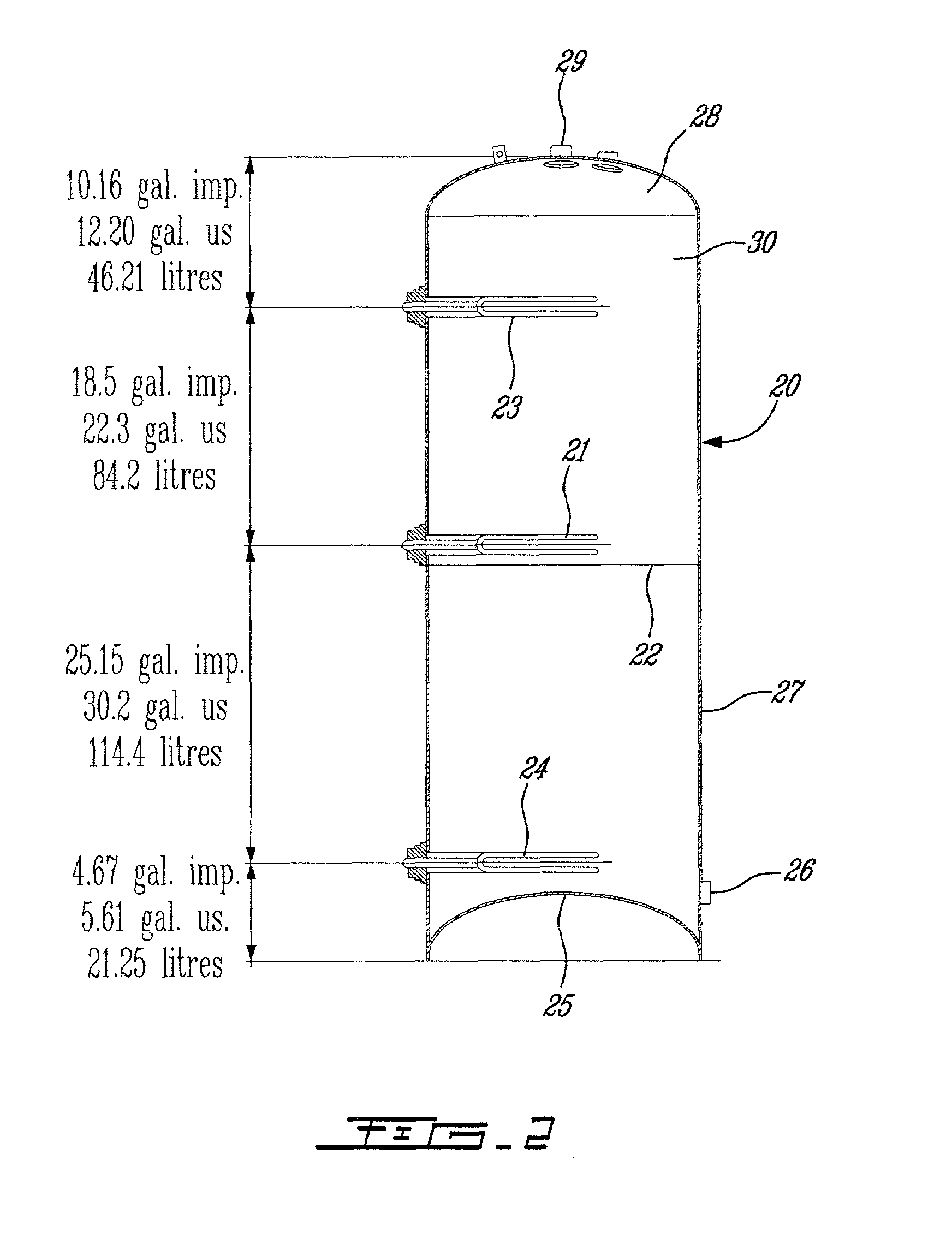
Figure 3
Abstract
Description
TECHNICAL FIELD
[0001] The present invention relates to a high efficiency, peak-power reducing, domestic hot water heater provided with three resistive heating elements and wherein a middle one of these elements is disposed at a predetermined level in the tank of the hot water heater, which level exceeds the average maximum water consumption volume drawn during a peak power demand time period. The method of operation is also part of the invention.BACKGROUND ART
[0002] In U.S. Pat. No. 4,948,948, there is described a water heater with multiple heating elements having different power factors and wherein these elements are controlled by a control circuit so that the elements are switched on at different periods of a day, outside peak hours, in order to reduce the power loads on an electrical distribution network during peak electrical power demand periods. During peak hours when hot water is used, normally between 6:00 a.m. and 9:00 a.m. and 6:00 p.m. to 9:00 p.m., there is an excessive de...
Examples
Embodiment Construction
[0015]Although it is stated in the referred-to U.S. Patent that any size of tank can be used, one must be careful in the actual position of the elements in order to insure that end users do not run out of hot water and that the intermediate element does not activate unless absolutely necessary. Furthermore, it is not recommendable that the actual size of the tank be less than 270 liters in cold climate geographical areas due to the fact that a smaller tank will not provide the appropriate amount of hot-water requested by a user during peak periods. Warmer climates where tank inlet water temperatures are higher than in northern areas of North-America, could most likely allow smaller volume tanks such as 180 liters. Nonetheless, hot water drawing trends must be looked at. As such, the following table exposes figures of the average hot water consumption. These were taken from ASHRAE Standard.
[0016]
Average Hot Water Use, LHourlyDailyWeeklyMonthlyGroupOVLPeakOVLPeakOVLPeakOVLPeakAll fami...