
Dipole flow driven resonators for fan noise mitigation
a technology of dipole flow and resonators, applied in the field of acoustic resonators, can solve the problems of axial turbomachinery noise, broadband noise, and tip clearance noise,
Patent Information
- Authority / Receiving Office
- US · United States
- Patent Type
- Patents(United States)
- Current Assignee / Owner
- Publication Date
- 2011-08-09
Smart Images
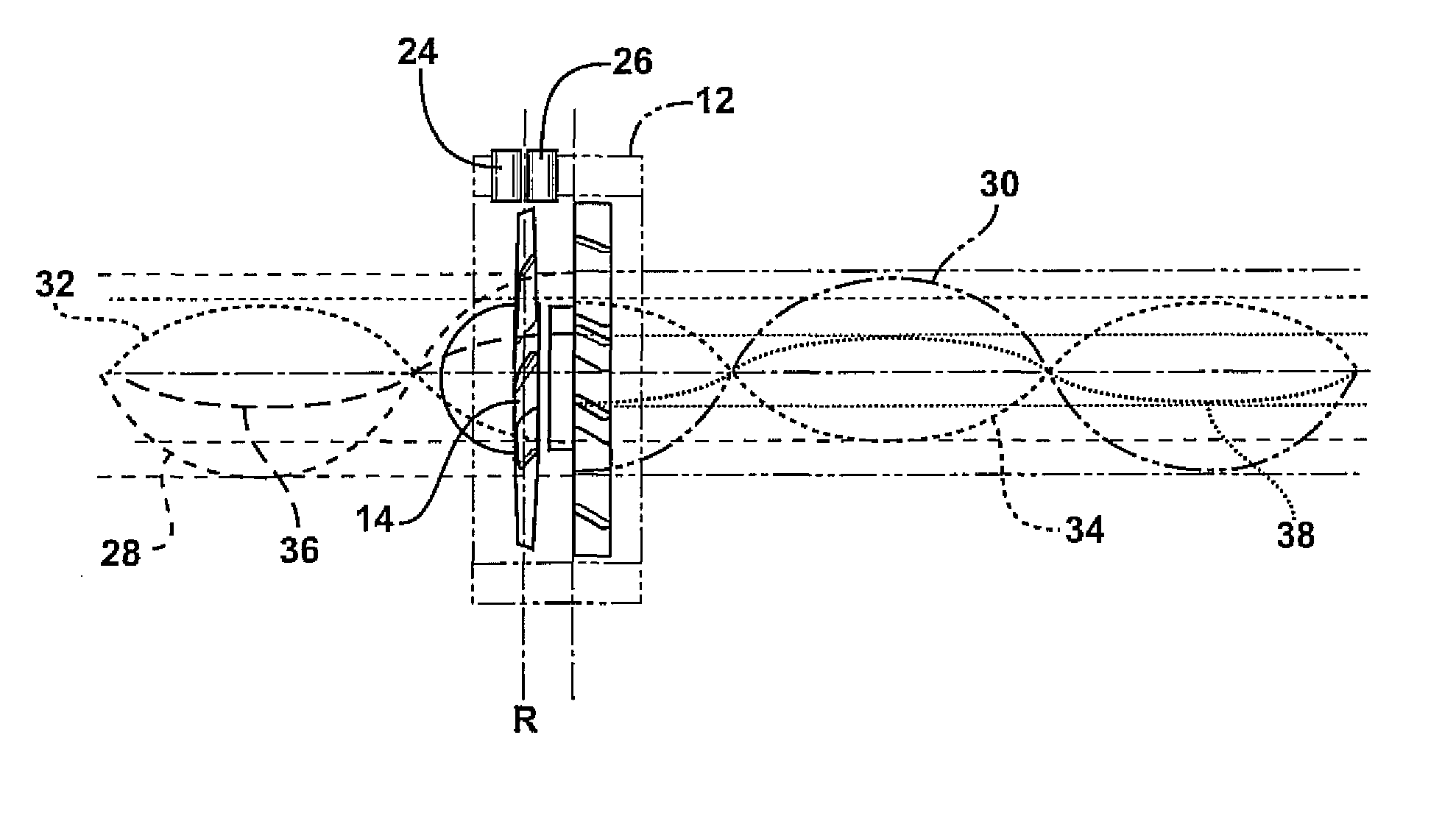
Figure 1 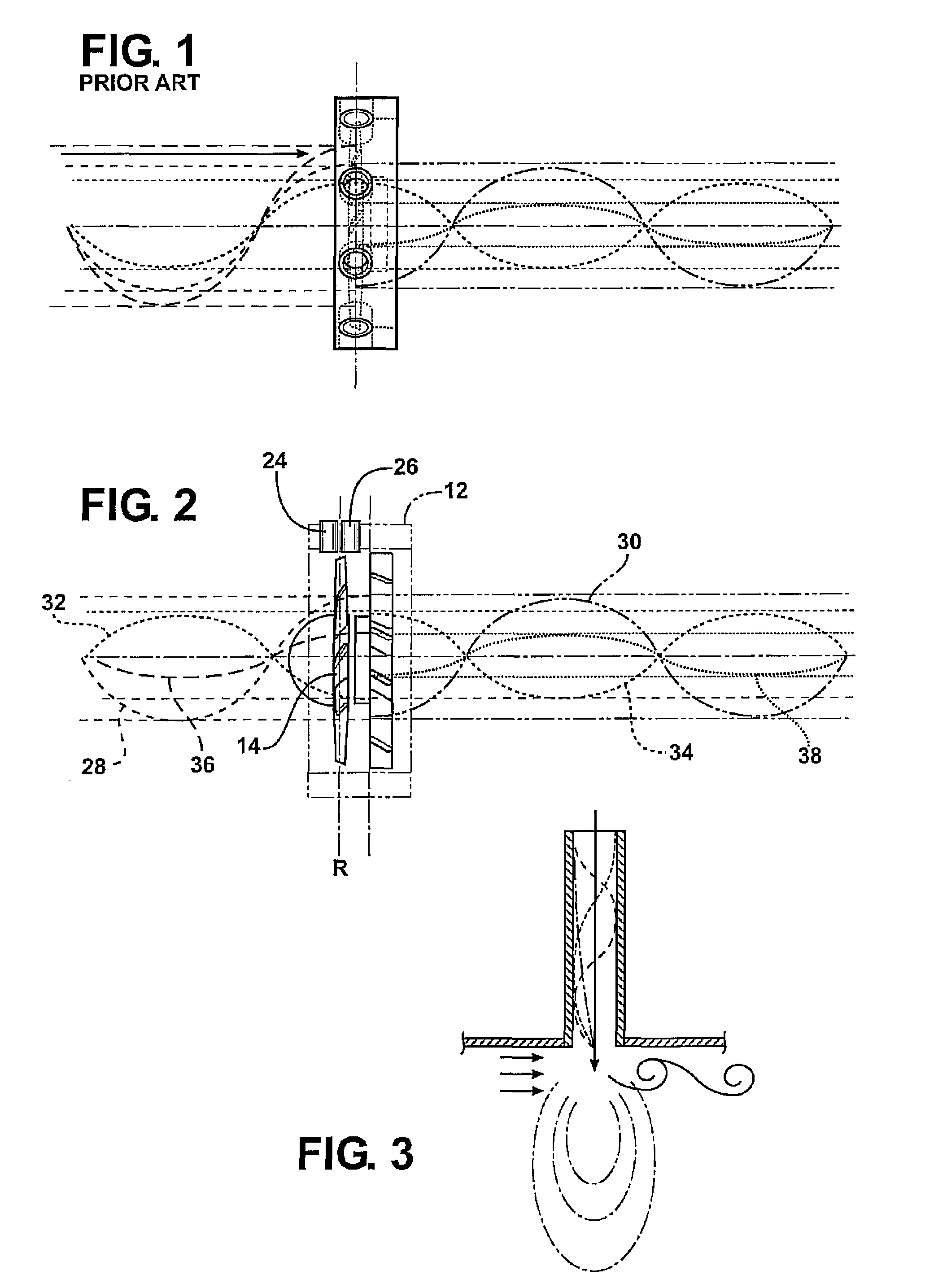
Figure 2 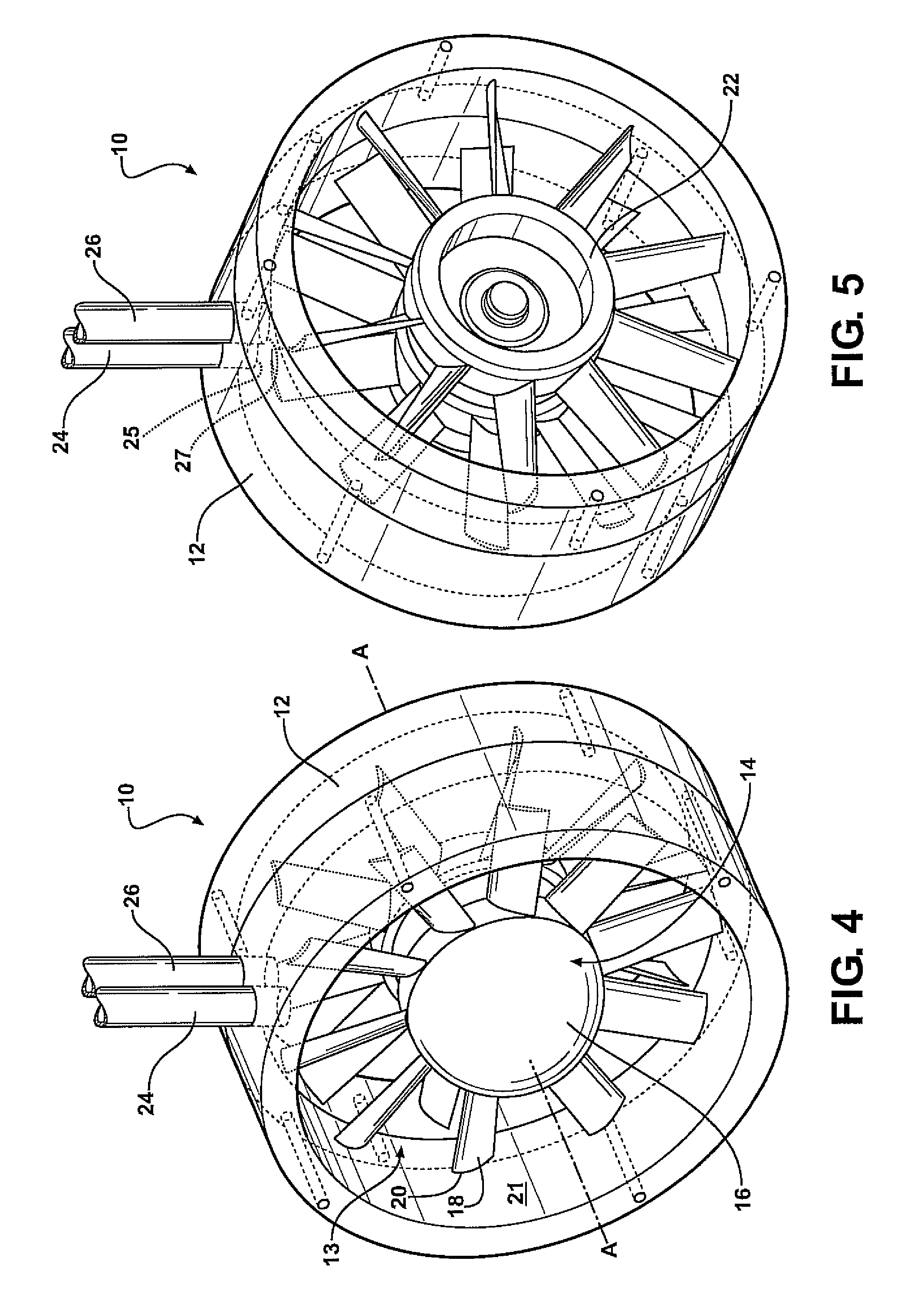
Figure 3
Abstract
Description
CROSS REFERENCE TO RELATED APPLICATIONS
[0001] This application claims priority to U.S. provisional patent application Ser. No. 61 / 061,352, filed Jun. 13, 2008 the entire content of which is incorporated herein by reference.FIELD OF THE INVENTION
[0002] The present invention relates generally to acoustic resonators for use with fans.BACKGROUND OF THE INVENTION
[0003] Axial turbomachinery noise is prevalent in many products ranging from large scale turbofan engines and compressor / turbine arrays to HVAC systems and computer cooling fans. Noise generated by turbomachinery has both broadband (due to the randomness of turbulent flow and its interaction with blade structures) and tonal components (due to periodic excitation of rotor blades and resonance sources). For subsonic axial fans, broadband noise results primarily from turbulent boundary layer scattering over a blade's trailing edge (TE), tip clearance noise and, potentially, from stall. Tonal noise results from rotor / stator interactions...
Examples
Embodiment Construction
[0030]The present invention provides a dipole acoustic resonator configuration for use with or as part of a fan system so as to provide attenuation of bi-directional fan noise propagations, potentially locally canceling the entirety or a substantial portion of the tonal output of an axial fan.
[0031]Referring to FIGS. 4 and 5, an axial fan system 10 according to an embodiment of the present invention includes a shroud 12 that generally defines a passage 13 having a fan axis A. A rotor 14 is disposed in the passage and rotates about the axis A. As shown, the rotor 14 has a central hub 16 and a plurality of rotor blades 18 extending outwardly from the hub 16 to tips 20 near an inner surface 21 of the shroud 12. The system 10 also includes a stator 22 that is adjacent the rotor 14. The stator 22 supports the rotor hub so that the rotor can rotate about the axis. The stator may take a variety of forms. In the illustrated embodiment, the stator 22 has a plurality of blades that extend bet...