

Detector array for use in a laser imaging apparatus
Patent Information
- Authority / Receiving Office
- US · United States
- Current Assignee / Owner
- Publication Date
- 2011-07-12
- Estimated Expiration
- Not applicable · inactive patent
Smart Images
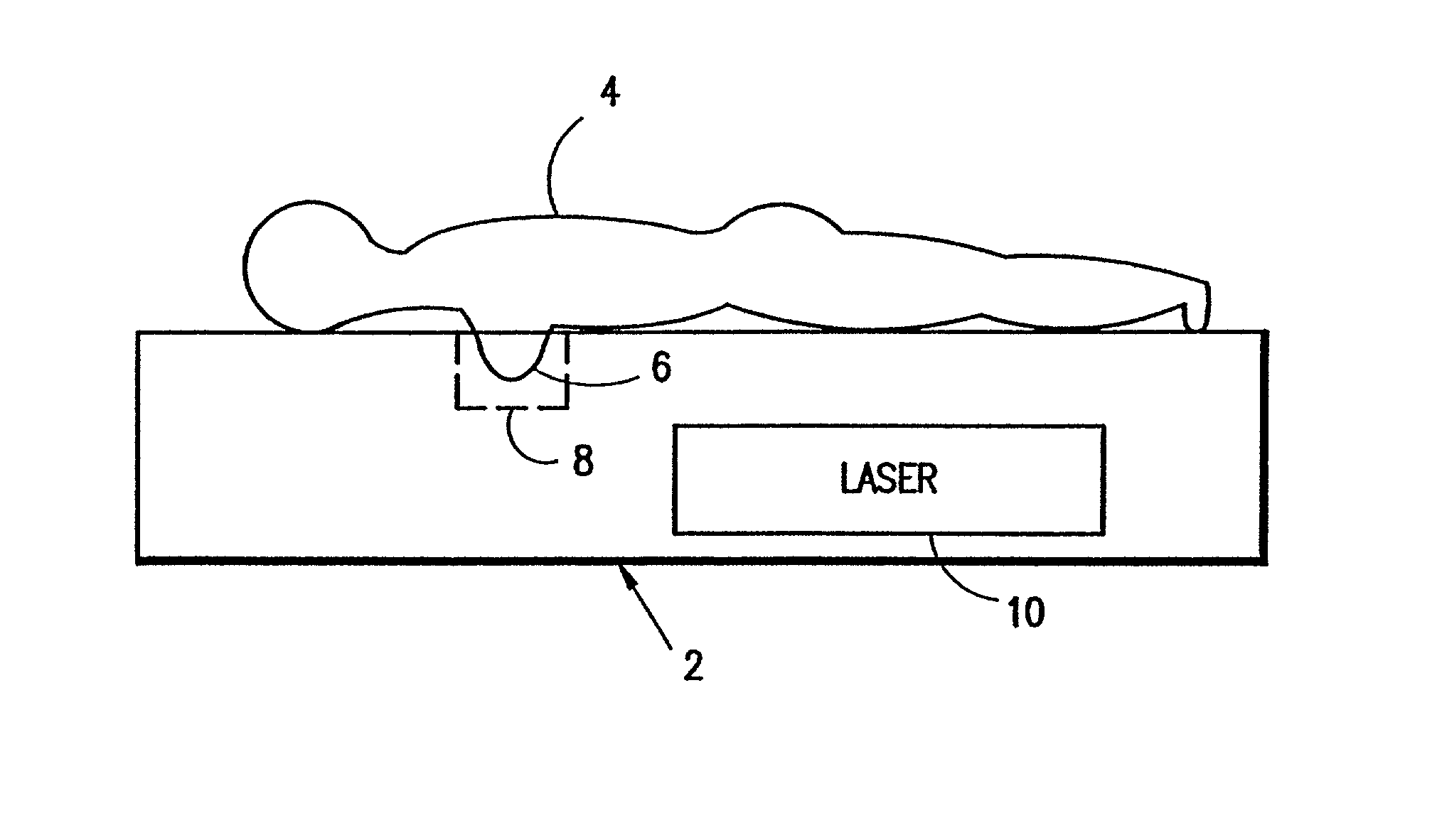
Figure 1 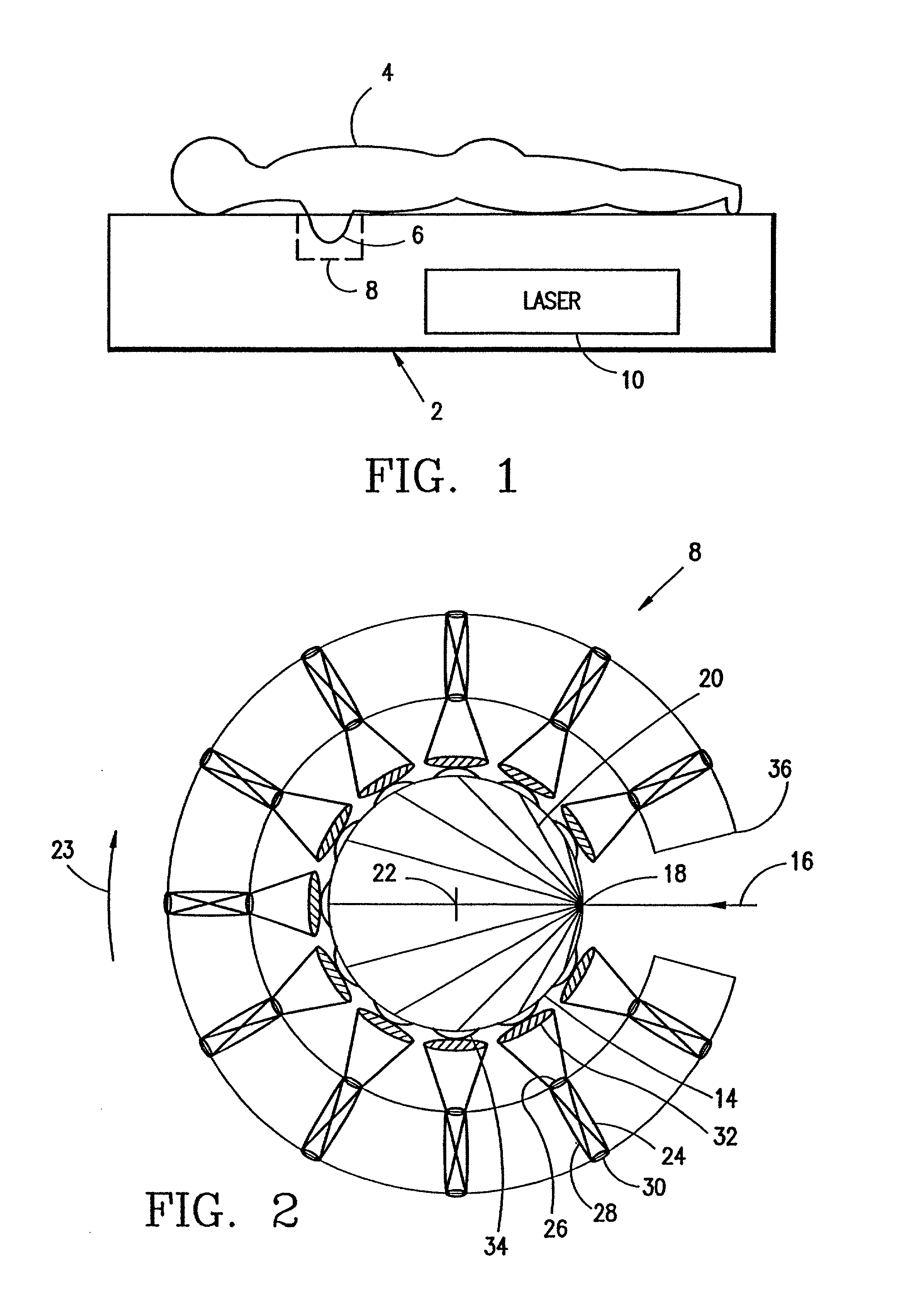
Figure 2 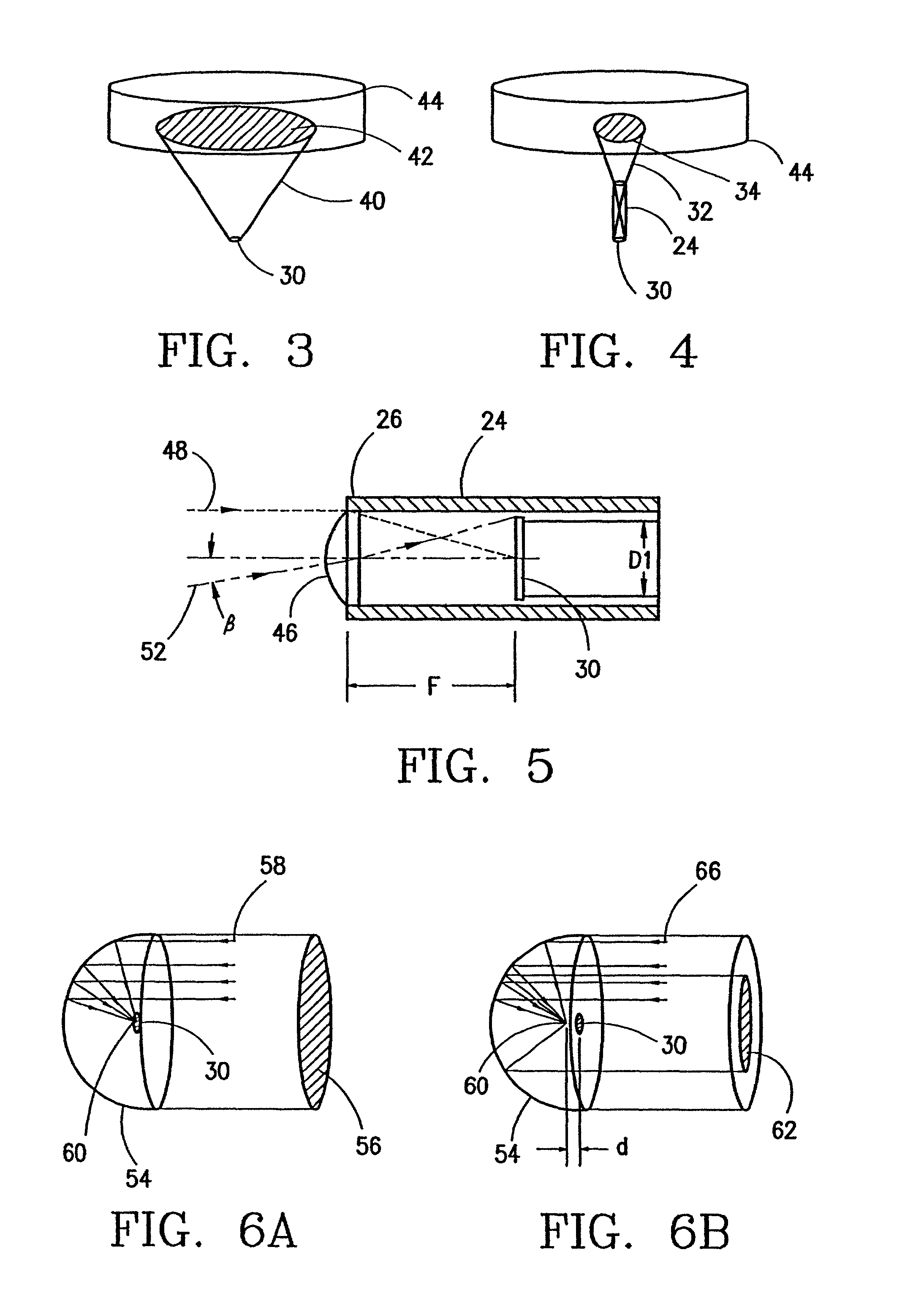
Figure 3
Abstract
Description
RELATED APPLICATIONS
[0001] This is a division of application Ser. No. 09 / 627,148, filed Jul. 27, 2000, now U.S. Pat. No. 6,211,512, which is a division of application Ser. No. 08 / 963,760, filed Nov. 4, 1997, now U.S. Pat. No. 6,100,520, which is a nonprovisional application claiming the benefits of provisional application Nos. 60 / 032,591, 60 / 032,592 and 60 / 032,593, all filed Nov. 29, 1996, all of which are hereby incorporated by reference.
[0002] This application is related to provisional applications Ser. Nos. 60 / 032,591, 60 / 032,592 and 60 / 032,593, all filed on Nov. 29, 1996, which are hereby incorporated by reference.
[0003] This application is also related to copending application Ser. No. 08 / 484,904, filed Jun. 7, 1995, which is hereby incorporated by reference.FIELD OF THE INVENTION
[0004] The present invention relates generally to a diagnostic medical imaging apparatus that employs a near-infrared laser as a radiation source and a detector array with restricted fields of views direct...
Examples
Embodiment Construction
[0034]A scanning apparatus 2, such as that described in copending application Ser. No. 08 / 484,904, filed Jun. 7, 1995, now U.S. Pat. No. 5,692,511, is schematically disclosed in FIG. 1. A patient 4 is positioned prone on a top surface of the apparatus 2 with her breast 6 pendent within a scanning chamber 8. A laser beam from a laser source 10 is operably associated with the scanning chamber 8 to illuminate the breast 6.
[0035]The scanning chamber 8 is shown schematically in plan view in FIG. 2. The scanning chamber includes a plurality of detector assemblies 12 disposed in an arc to define an opening in which an object 14 to be scanned is positioned. A laser beam 16 impinges the object at point 18. Light exiting from the object 18, such as the rays 20 is picked up by the respective detector assembly 12, which is then used to provide an image of the scanned object. The rays 20 are represented as chords originating from the point of entry 18 of the laser beam 16 and exiting at various ...