

Restricting the display of information with a physical object
Patent Information
- Authority / Receiving Office
- US · United States
- Current Assignee / Owner
- Publication Date
- 2005-11-24
- Estimated Expiration
- Not applicable · inactive patent
Smart Images
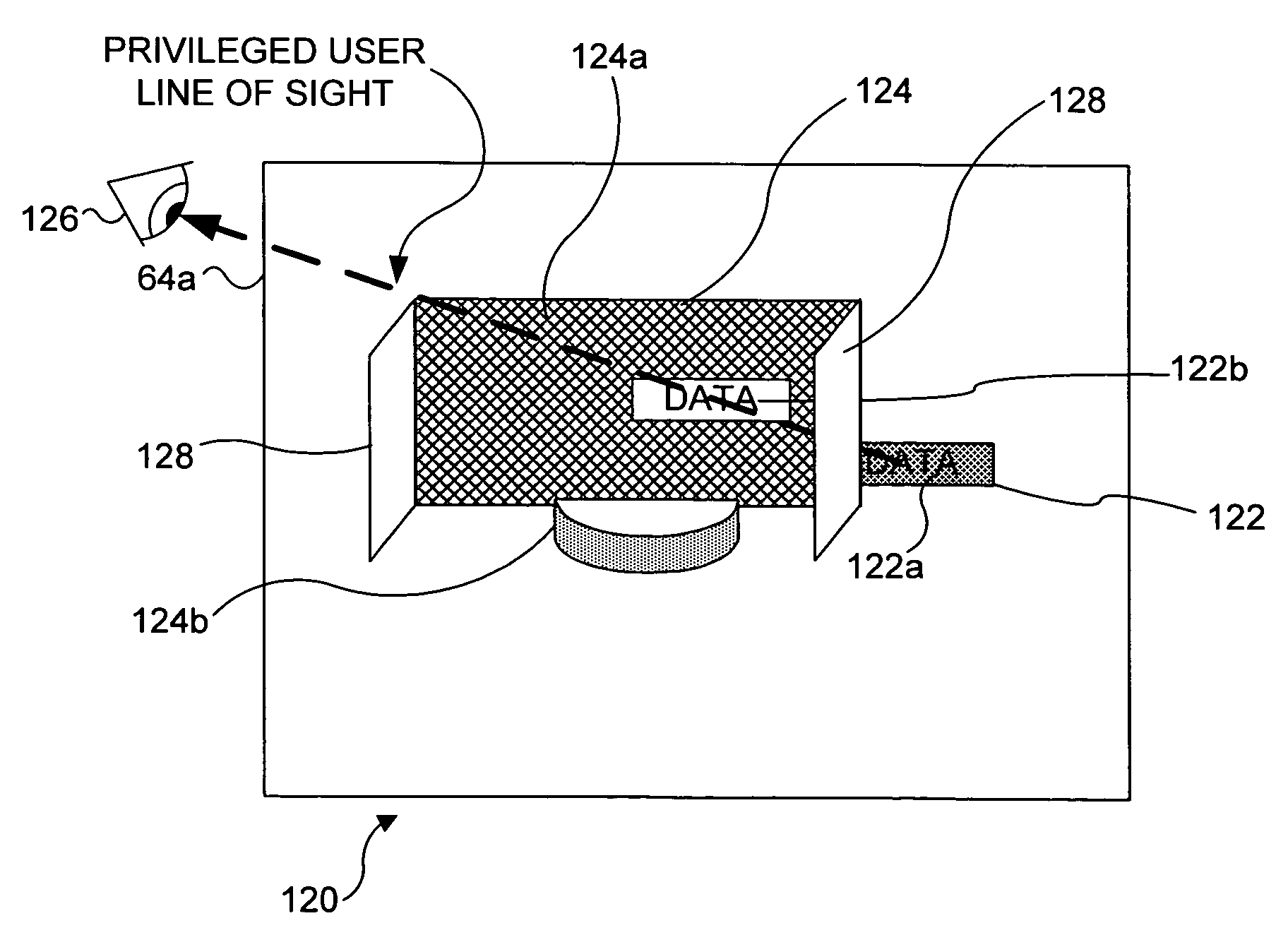
Figure 1 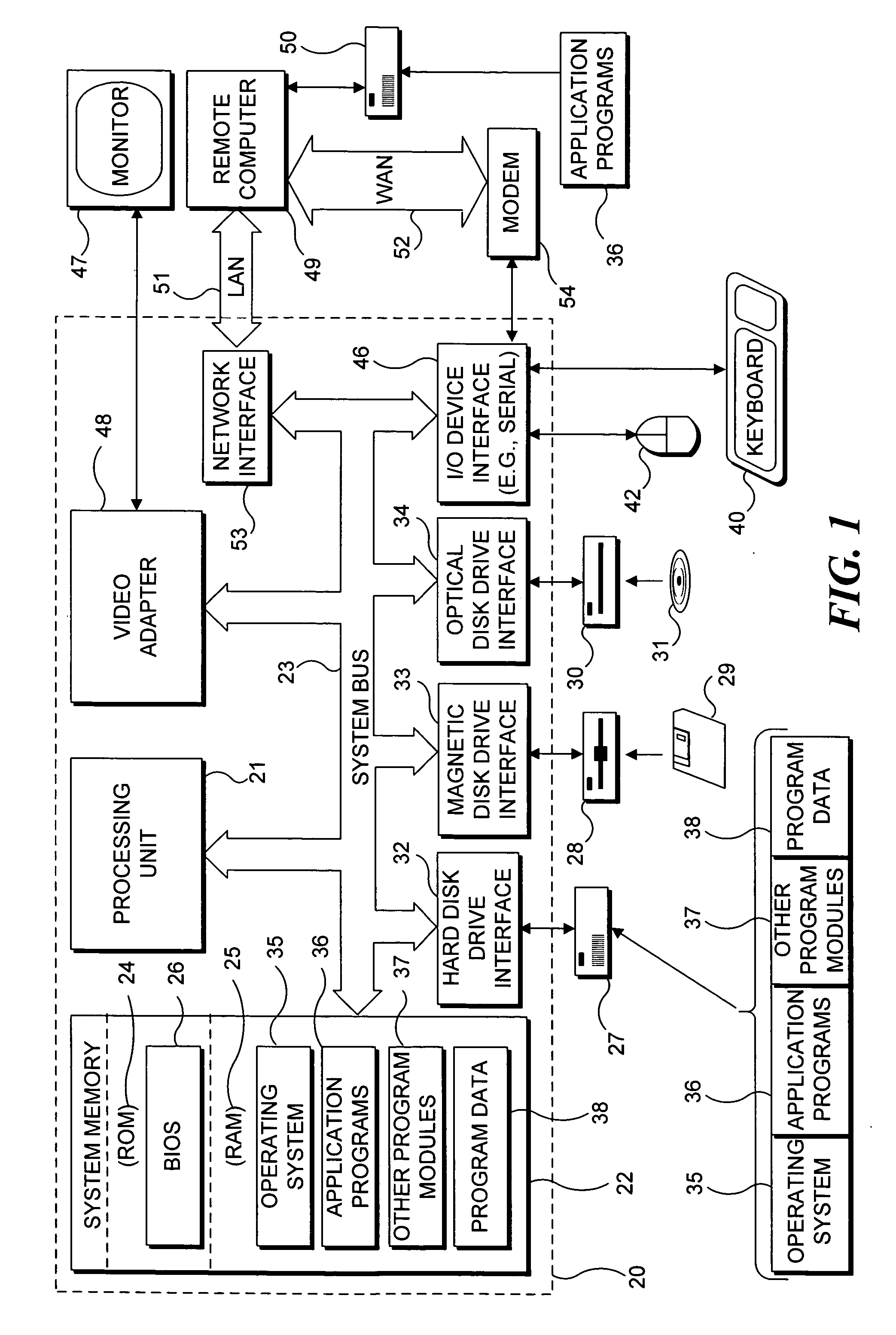
Figure 2 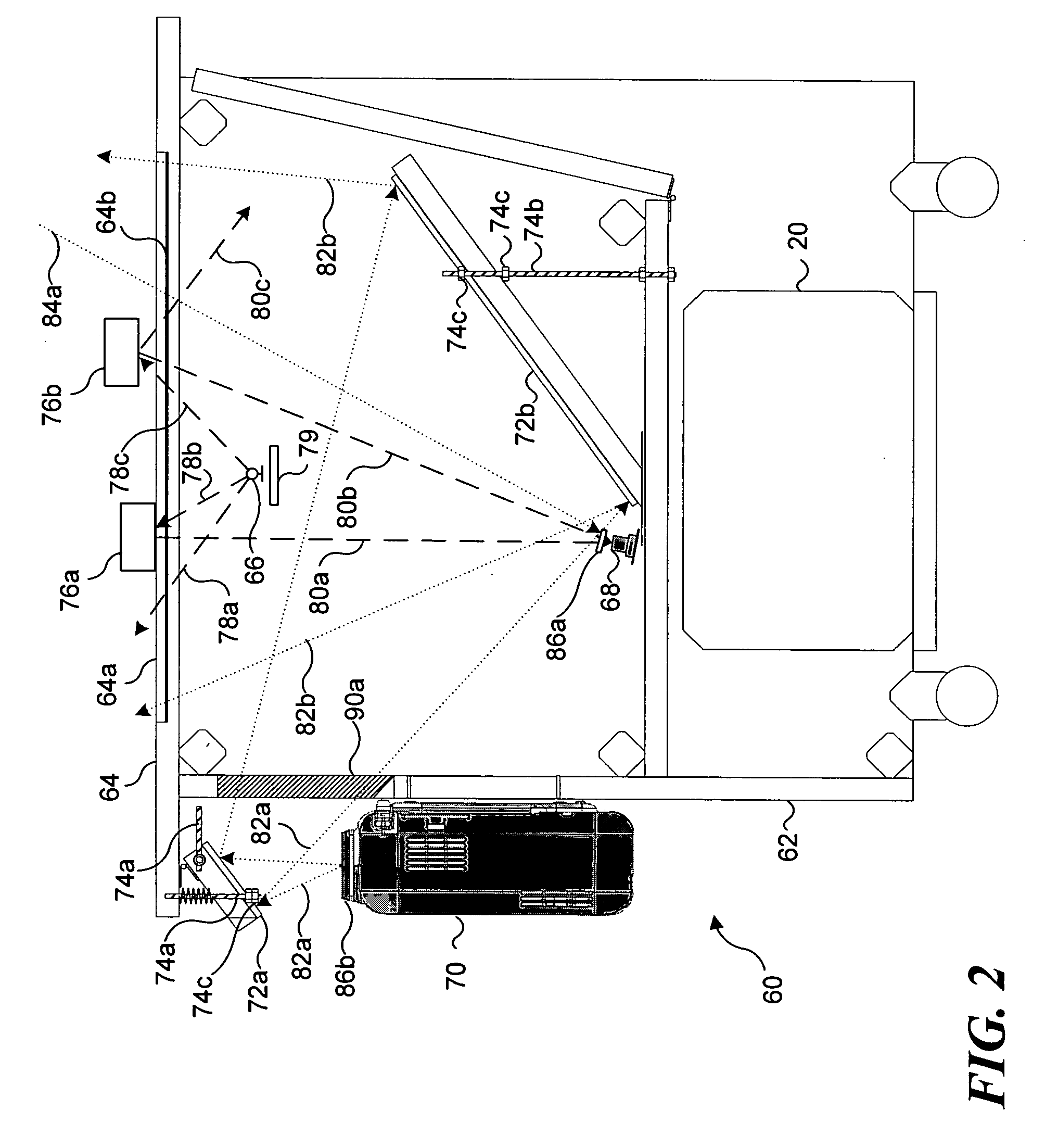
Figure 3
Abstract
Description
FIELD OF THE INVENTION
[0001] This invention generally pertains to a method and system that limits the visible perception of private data on a display surface only to a privileged viewer, and more specifically, pertains to a method and system to ensure that only a privileged viewer is able to see private data displayed on an interactive display by preventing non-privileged users from visually seeing or perceiving the private data. BACKGROUND OF THE INVENTION
[0002] Several interactive displays are known in the prior art. For example, a user interface platform was developed in the MIT Media Lab, as reported by Brygg Ullmer and Hiroshi Ishii in “The metaDESK: Models and Prototypes for Tangible User Interfaces,”Proceedings of UIST 10 / 1997:14-17. This article describes how the metaDESK includes a near-horizontal graphical surface that is used to display two-dimensional (2D) geographical information. A computer vision system inside the desk unit (i.e., below the graphical surface) includ...
Examples
Embodiment Construction
Exemplary Computing System for Implementing Present Invention
[0031] With reference to FIG. 1, an exemplary system suitable for implementing various portions of the present invention is shown. The system includes a general purpose computing device in the form of a conventional PC 20, provided with a processing unit 21, a system memory 22, and a system bus 23. The system bus couples various system components including the system memory to processing unit 21 and may be any of several types of bus structures, including a memory bus or memory controller, a peripheral bus, and a local bus using any of a variety of bus architectures. The system memory includes read only memory (ROM) 24 and random access memory (RAM) 25. A basic input / output system 26 (BIOS), containing the basic routines that help to transfer information between elements within the PC 20, such as during start up, is stored in ROM 24. PC 20 further includes a hard disk drive 27 for reading from and writing to a hard disk ...