
Test strip with flared sample receiving chamber
a test strip and receiving chamber technology, applied in the field of test strips or biosensors, can solve the problems of difficult for this segment to accurately align their fingers, and difficulty in accurately applying (or “targeting”) a small sample volume to the capillary of the test strip, and achieves a robust but flexible manufacturing process and easy-to-dose
Patent Information
- Authority / Receiving Office
- US · United States
- Patent Type
- Patents(United States)
- Current Assignee / Owner
- Publication Date
- 2011-12-06
Smart Images
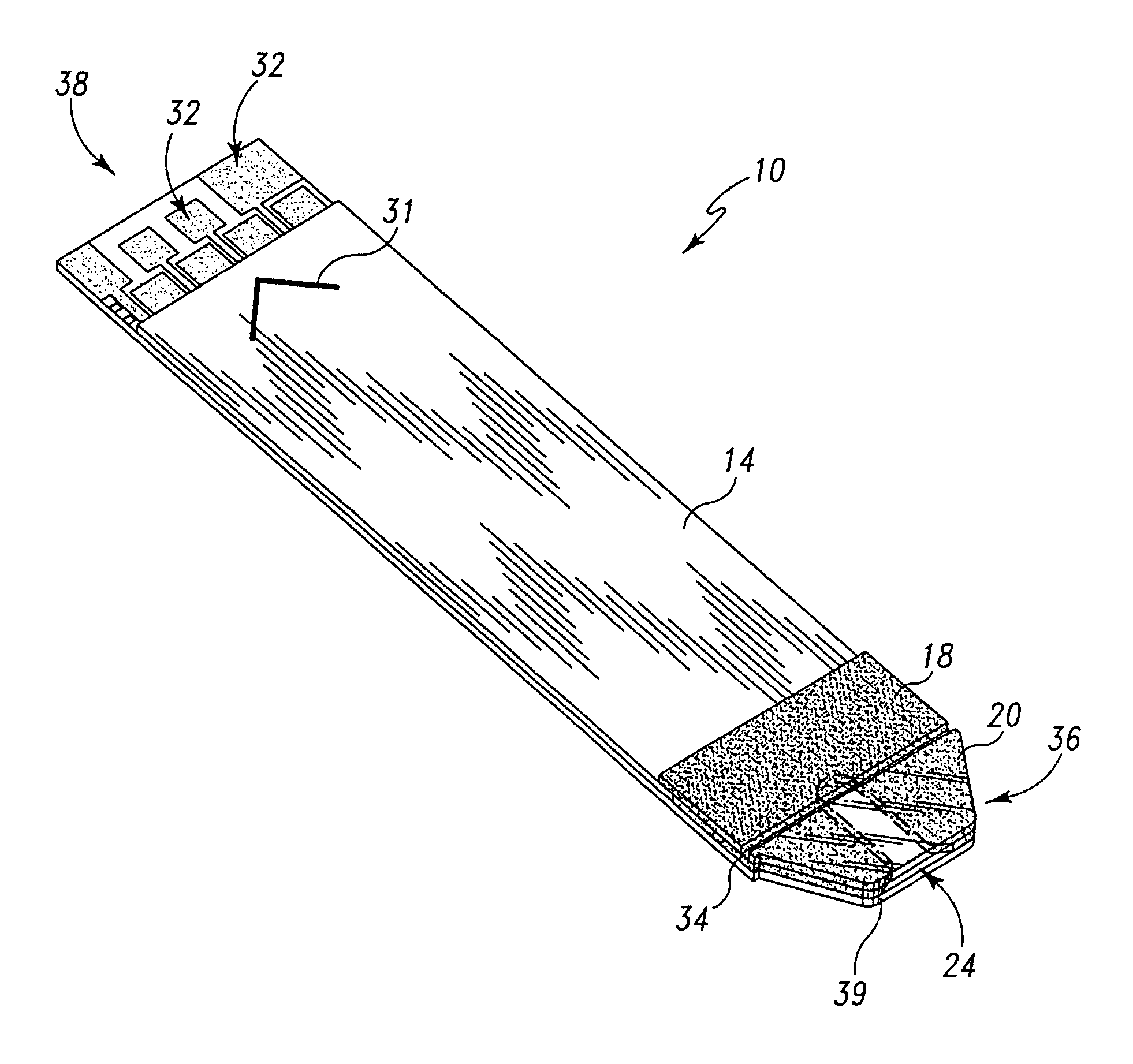
Figure 1 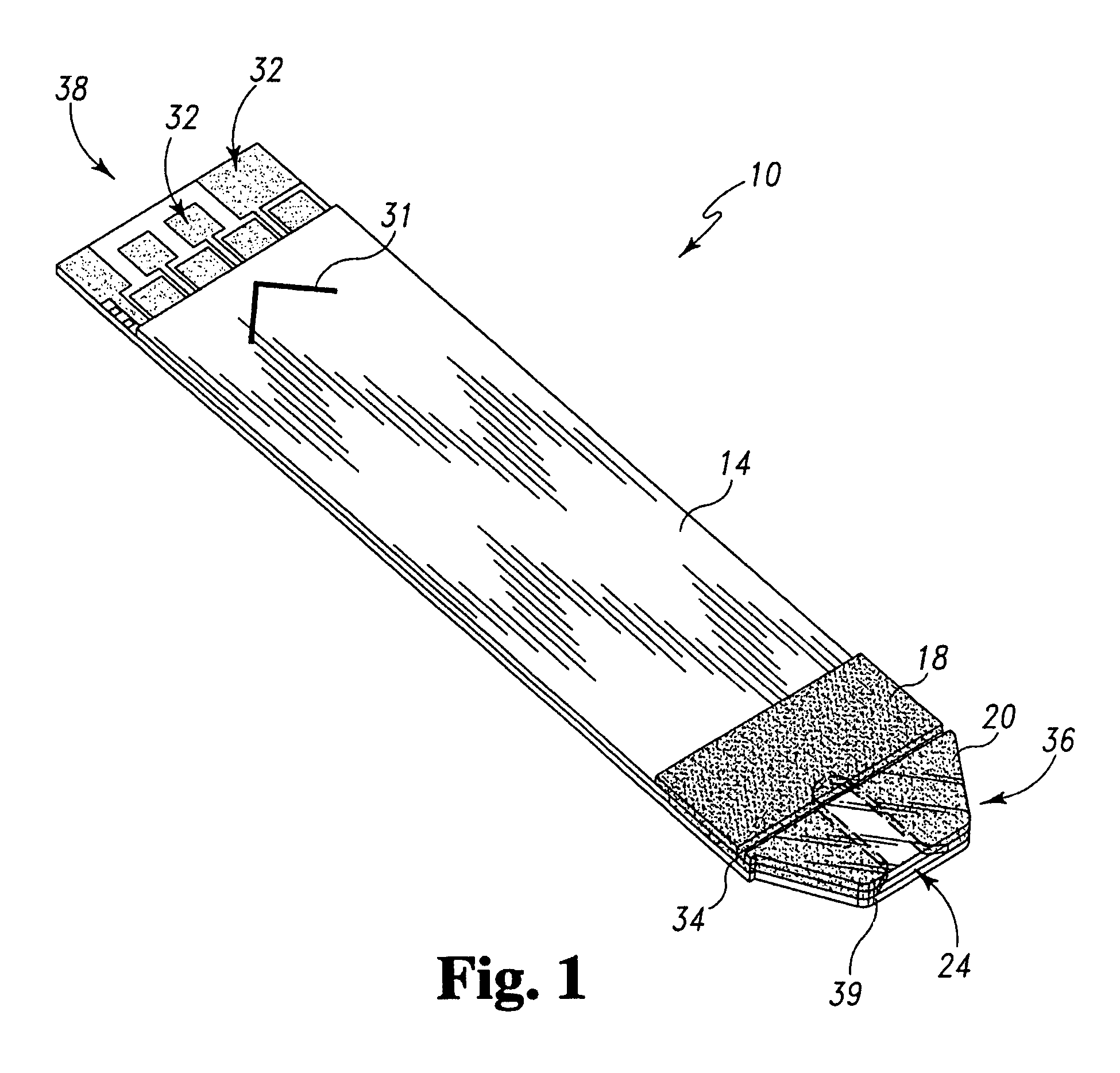
Figure 2 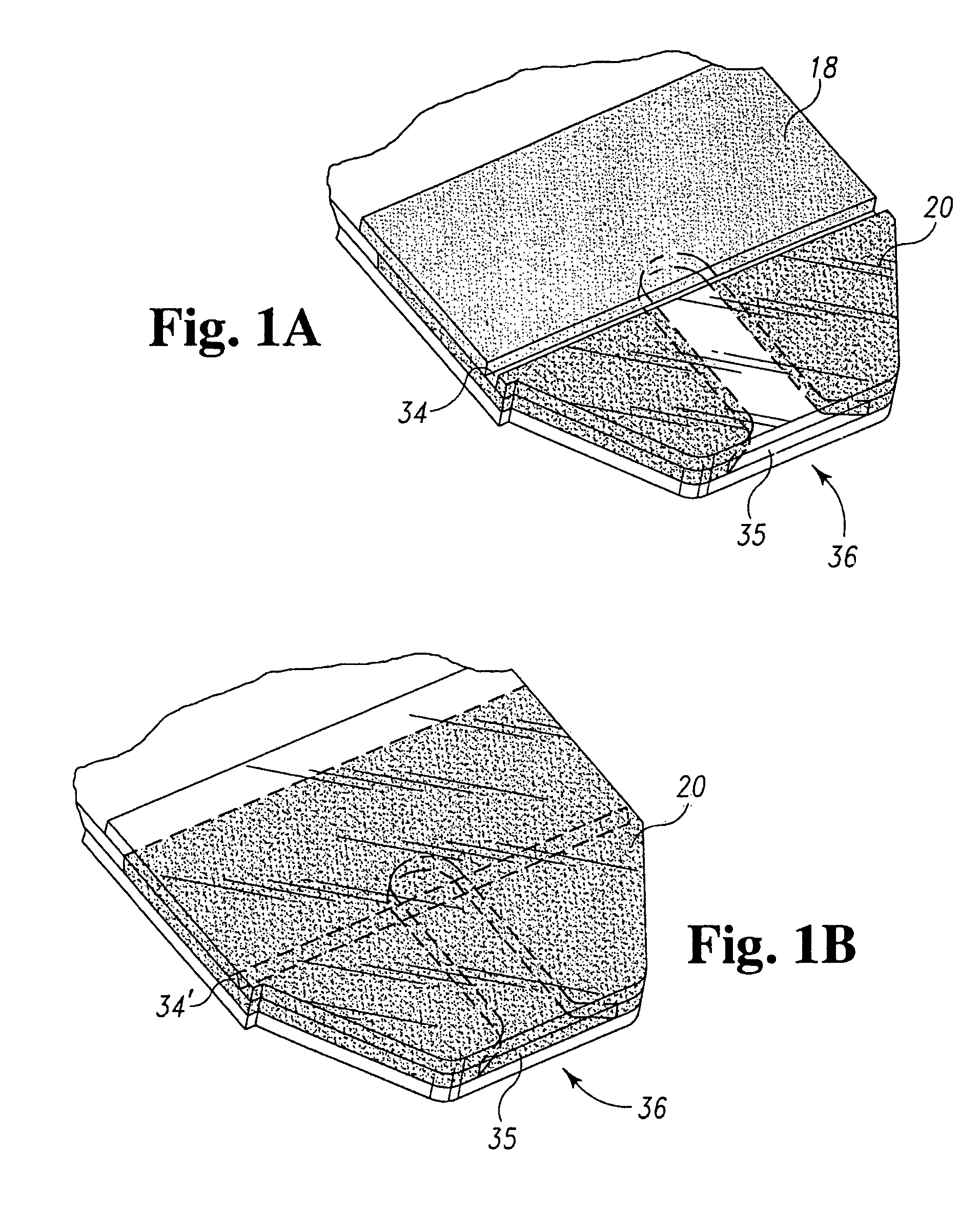
Figure 3
Abstract
Description
RELATED APPLICATIONS
[0001] This application claims priority to U.S. Provisional Patent Application Ser. No. 60 / 480,397, filed Jun. 20, 2003.FIELD OF THE INVENTION
[0002] The present invention relates generally to the testing of body fluids for concentration of analytes and more particularly to a test strip or biosensor for such testing.BACKGROUND
[0003] Test strips are often used to measure the presence and / or concentrations of selected analytes in test samples. For example, a variety of test strips are used to measure glucose concentrations in blood to monitor the blood sugar level of people with diabetes. These test strips include a reaction chamber into which a reagent composition has been deposited. Current trends in test strips require smaller test samples and faster analysis times. This provides a significant benefit to the patient, allowing the use of smaller blood samples that can be obtained from less sensitive areas of the body. Additionally, faster test times and more accurate...
Examples
example
[0205]By way of specific example, a test strip is formed based on the described method and using materials as follows. The bottom substrate is surface coated with a 50 nm layer of gold, and is slit to widths of 43-45 mm. Laser ablation (308 nm) is performed using a field size of approximately 40 mm×10 mm. The spacing layer assembly includes a spacing layer film of white Melinex™ 339, and a thickness of 0.1016 or 0.127 mm (4 or 5 mil). The bottom and top adhesives are an Adhesive Research Arcare 90132 adhesive at 0.0254 or 0.0127 mm (1 or ½ mil), sandwiched between release liners having a thickness of 0.0508 mm (2 mil). The capillary channels are formed with a width of 1.500 mm, + / −0.050 mm, and a pitch (spacing) of 9 mm, + / −0.150 mm.
[0206]The body cover 18 comprises a strip of Melinex 454, 453 or 339 material, 0.127 mm (5 mil) thick. The chamber cover 20 comprises a polyester or polyethylene naphthate material formed, for example, from Melinex 454 or 453, 0.1016 mm (4 mil) thick. As...