
Method for detecting a sonic imprint of a three-dimensional object and related apparatus
a three-dimensional object and imprint technology, applied in the direction of analyzing solids using sonic/ultrasonic/infrasonic waves, processing detected response signals, etc., can solve the problems of inability to obtain a reliable and univocal identification of artifacts, their generally high cost, and their general high invasivity
Patent Information
- Authority / Receiving Office
- US · United States
- Patent Type
- Patents(United States)
- Current Assignee / Owner
- Publication Date
- 2012-05-01
- Estimated Expiration
- Not applicable · inactive patent
Smart Images
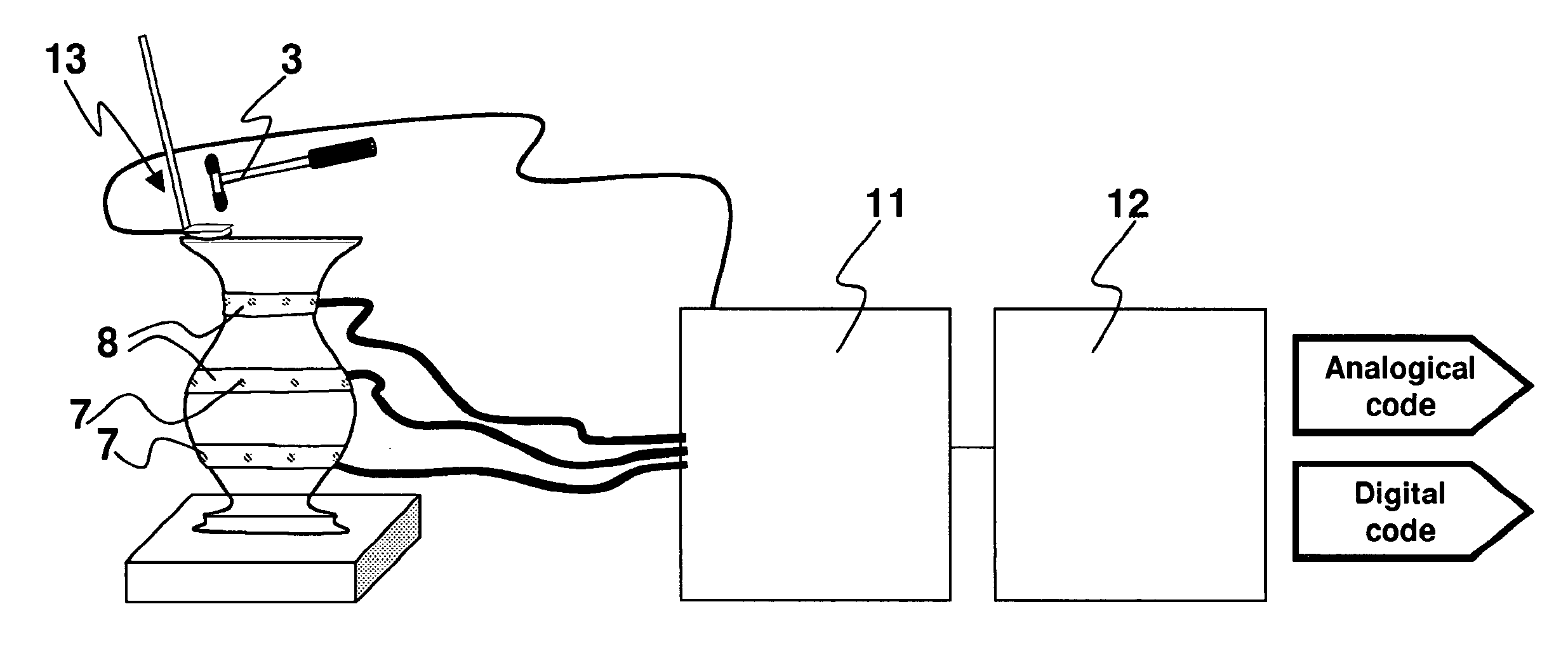
Figure 1 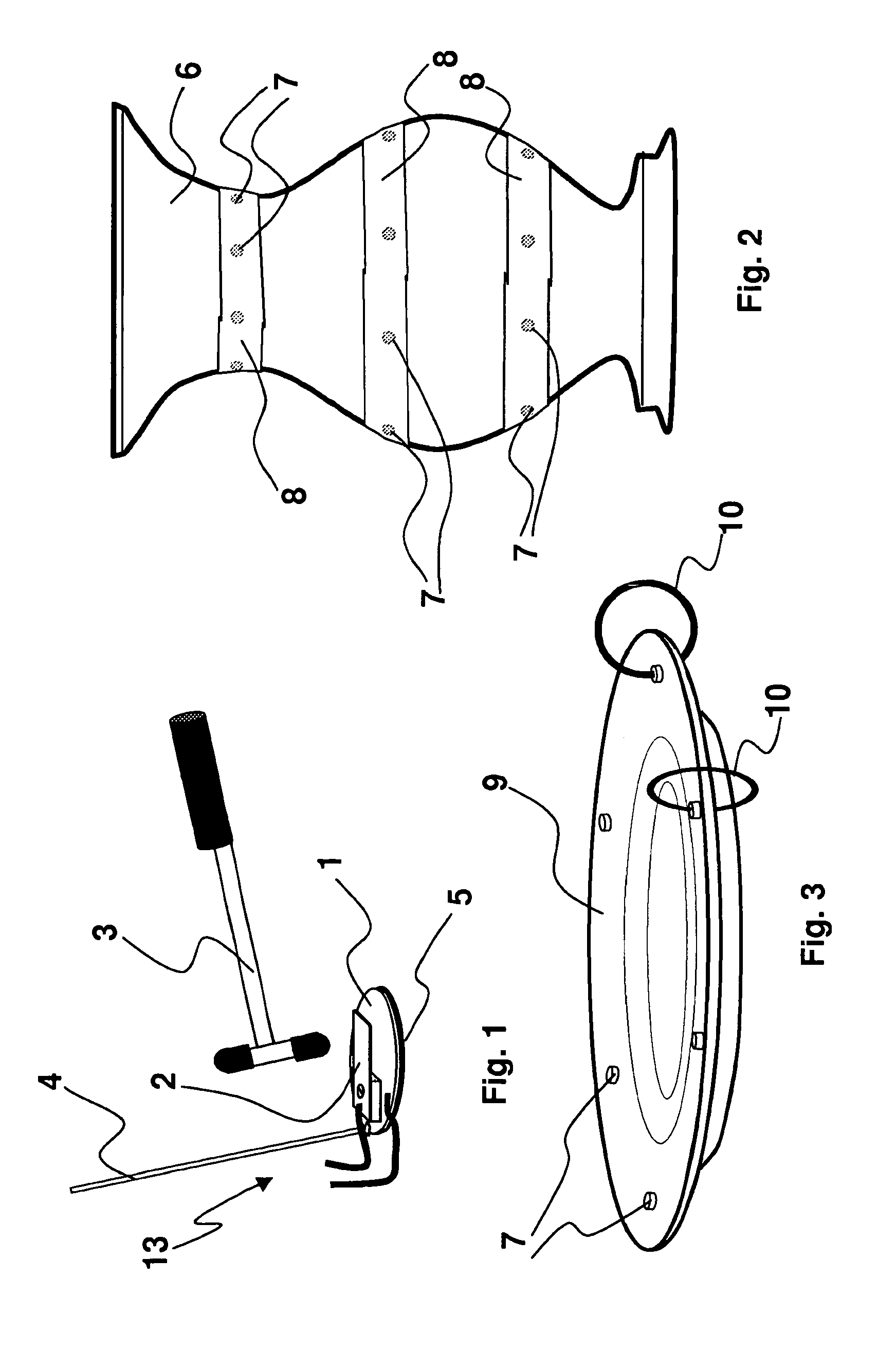
Figure 2 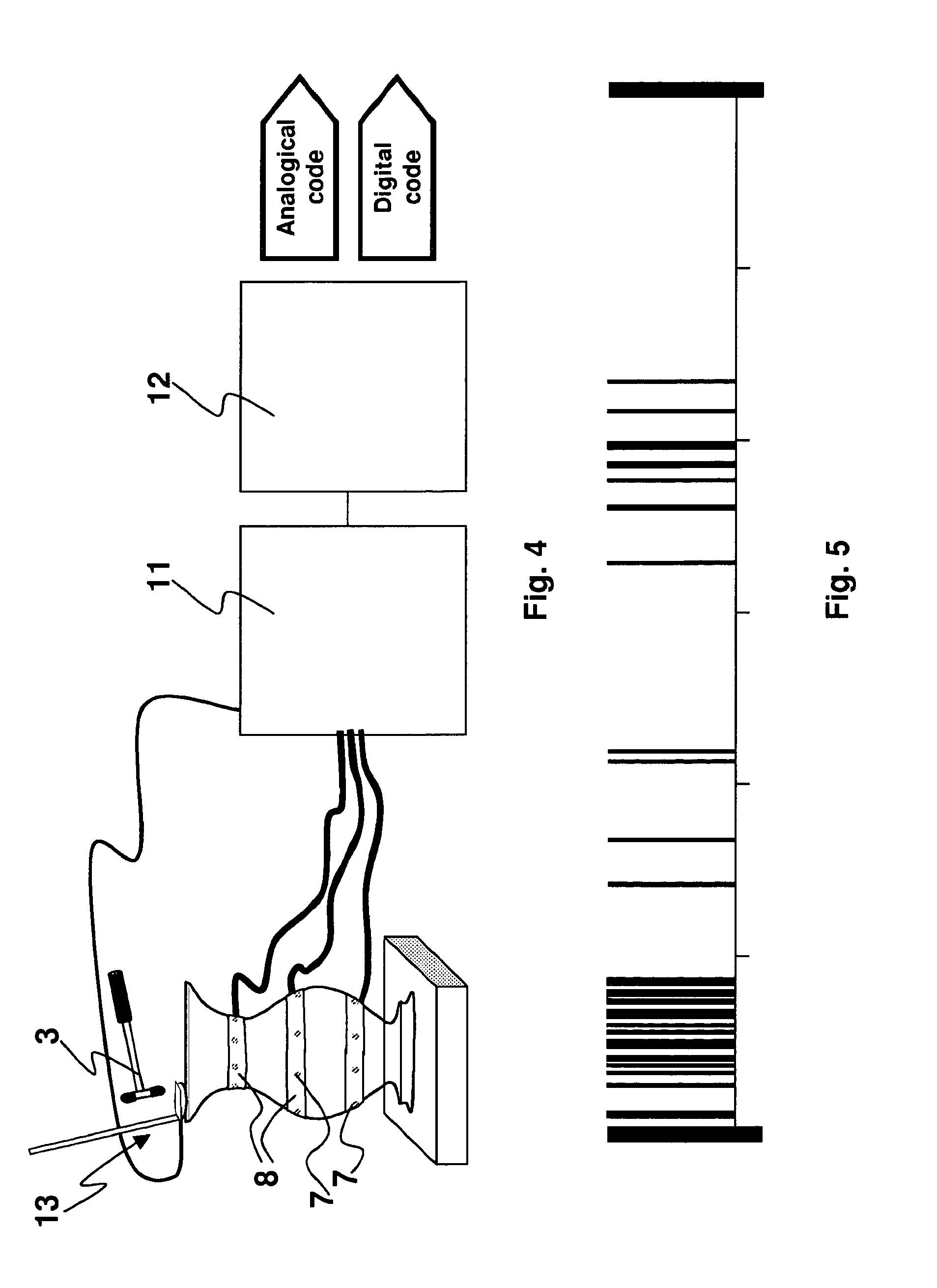
Figure 3
Abstract
Description
FIELD OF THE INVENTION
[0001] This invention deals with a method for detecting a “sonic imprint” of three-dimensional objects, in particular artworks, and a related detecting apparatus.STATE OF THE ART
[0002] Study and analysis of cultural goods (statues, vessels, pottery, brass objects, various furnishing, paintings, etc.) is more and more important and urgent, due to the abundance of cultural heritage in various countries as well as to the state of decay of most of the artworks.
[0003] Nowadays, a large number of artworks are transferred from one museum to another, and from one country to another, so that people all over the world can appreciate them. However, this can be very dangerous for a myriad reasons, not least for problems that could arise in connection with transportation and related risks, thieves, unauthorized cloning, etc. For this reason check of the goods before and after the displacement are very important. Furthermore, checks are important to fix the protection level bas...
Examples
Embodiment Construction
[0039]The method of the present invention allows the identification of some physical characteristics of objects made of different types of material—namely natural or artificial lapideous, metallic, glass, crystal, wood, corneous, etc. —by means of the detection technique of the free or forced vibrations, following a mechanical strain or during the application of a driving force, and the successive analysis of the vibration frequencies in order to recognize the resonance frequencies. In such a way the object can be identified in univocal and certain way, monitoring the possible time decay of the mechanical characteristics as well as its integrity.
[0040]The vibrational movements of an object depend on the geometrical shape of the object, on its physical composition, on the elasticity modules and its internal defects, which are unique for each piece to analyze, especially if it is handmade. The analysis of resonances allows to obtain, by means of the method of the invention, a vibratio...