
Synthesis of rare earth metal extractant
a rare earth metal and extractant technology, applied in the preparation of carboxylic acid amides, chemistry apparatus and processes, organic chemistry, etc., can solve the problems of low extraction capacity, cumbersome operation, and inability to effectively synthesize rare earth resources, so as to improve separation factor, effective synthesized, and high yield
Patent Information
- Authority / Receiving Office
- US · United States
- Patent Type
- Patents(United States)
- Current Assignee / Owner
- Publication Date
- 2013-08-27
Smart Images
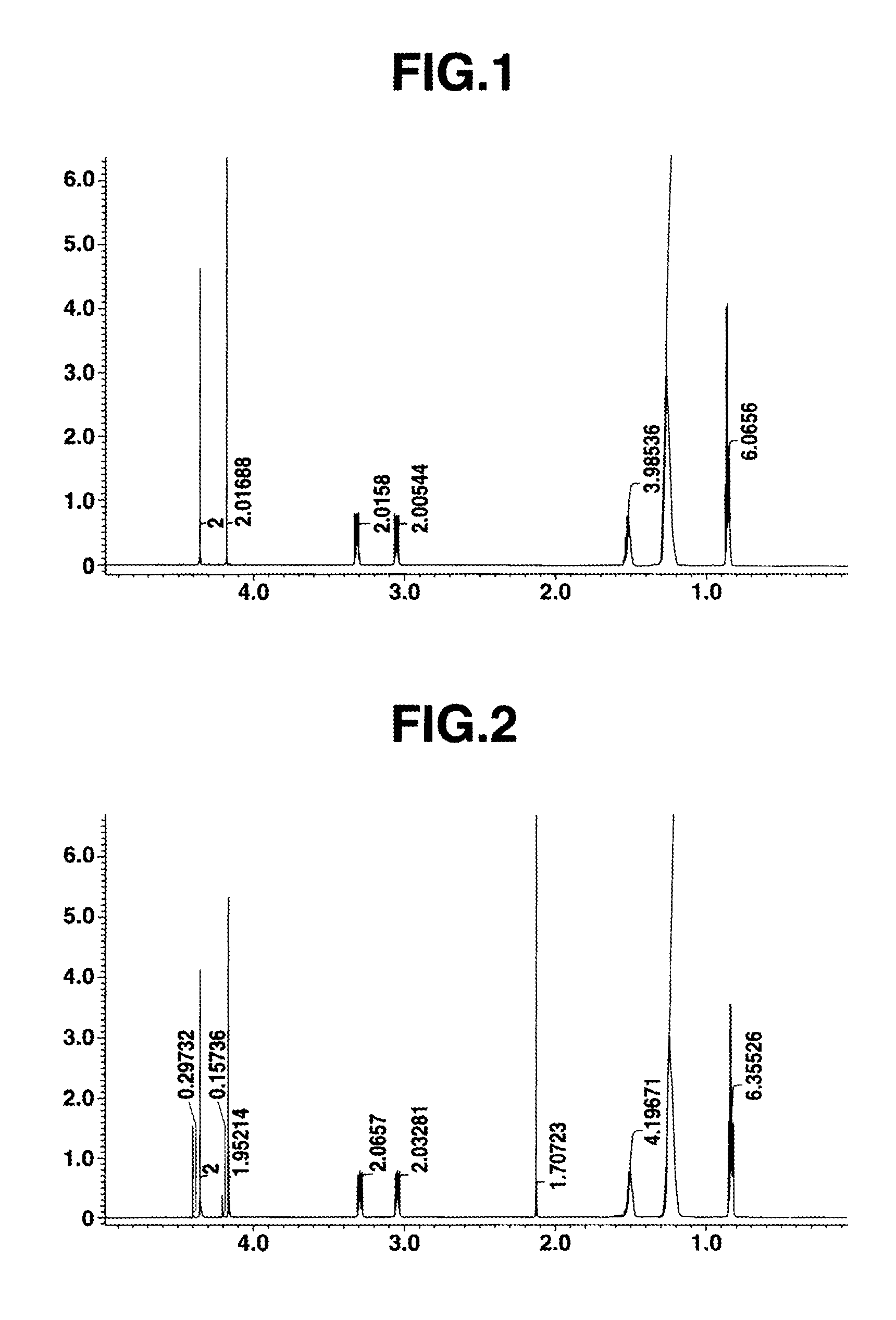
Figure 1 
Figure 2 
Figure 3
Abstract
Description
CROSS-REFERENCE TO RELATED APPLICATION
[0001] This non-provisional application claims priority under 35 U.S.C. §119(a) on patent application Ser. No. 2010-153161 filed in Japan on Jul. 5, 2010, the entire contents of which are hereby incorporated by reference.TECHNICAL FIELD
[0002] This invention relates to a method for synthesizing an extractant for extracting and separating a selected rare earth element from a mixture of rare earth elements, specifically from a mixture of at least two light rare earth elements (La, Ce, Pr, Nd, Sm, and Eu) or from a mixture of at least one light rare earth element and at least one other rare earth element inclusive of yttrium.BACKGROUND ART
[0003] In the modern society, rare earth elements are used in a wide variety of applications, for example, as rare earth magnets, phosphors, and electronic and electric materials in nickel hydrogen batteries. With respect to the supply of rare earth elements, a crisis of the rare earth resource is highlighted because ...
Examples
examples 6 to 9
[0057]Diglycolic anhydride, 46.4 g (0.4 mol), was suspended in X mL of hexane. Separately, 96.6 g (0.4 mol) of dioctylamine was dissolved in Y mL of hexane. With stirring, the dioctylamine solution was added dropwise to the diglycolic anhydride suspension. Stirring was continued at room temperature until it was confirmed that the solution became clear as a result of reaction of diglycolic anhydride. The reaction product was obtained in hexane solution. The amounts X and Y of hexane as the reaction medium are shown in Table 3.
[0058]Samples of the reaction products were taken out and vacuum dried for hexane removal, before they were analyzed by 1H-NMR spectroscopy, with DODGAA detected in all the products. The concentration C0 of the reaction product (DODGAA) in the hexane solution is shown in Table 3.
[0059]An extraction / separation test was performed using the hexane solution of the reaction product (DODGAA) directly as an organic solution which might become an organic phase.
[0060]An ...