
Storage unsharing
a storage and memory technology, applied in the field of partitioning memory, can solve the problems of large memory scalability problems, memory system performance cannot scale as well as the processing elements, and large memory access latencies, etc., to achieve the effect of reducing the average number of ports per memory, reducing the number of ports, and reducing the number of cache interconnection networks
Patent Information
- Authority / Receiving Office
- US · United States
- Patent Type
- Patents(United States)
- Current Assignee / Owner
- Publication Date
- 2014-09-02
Smart Images
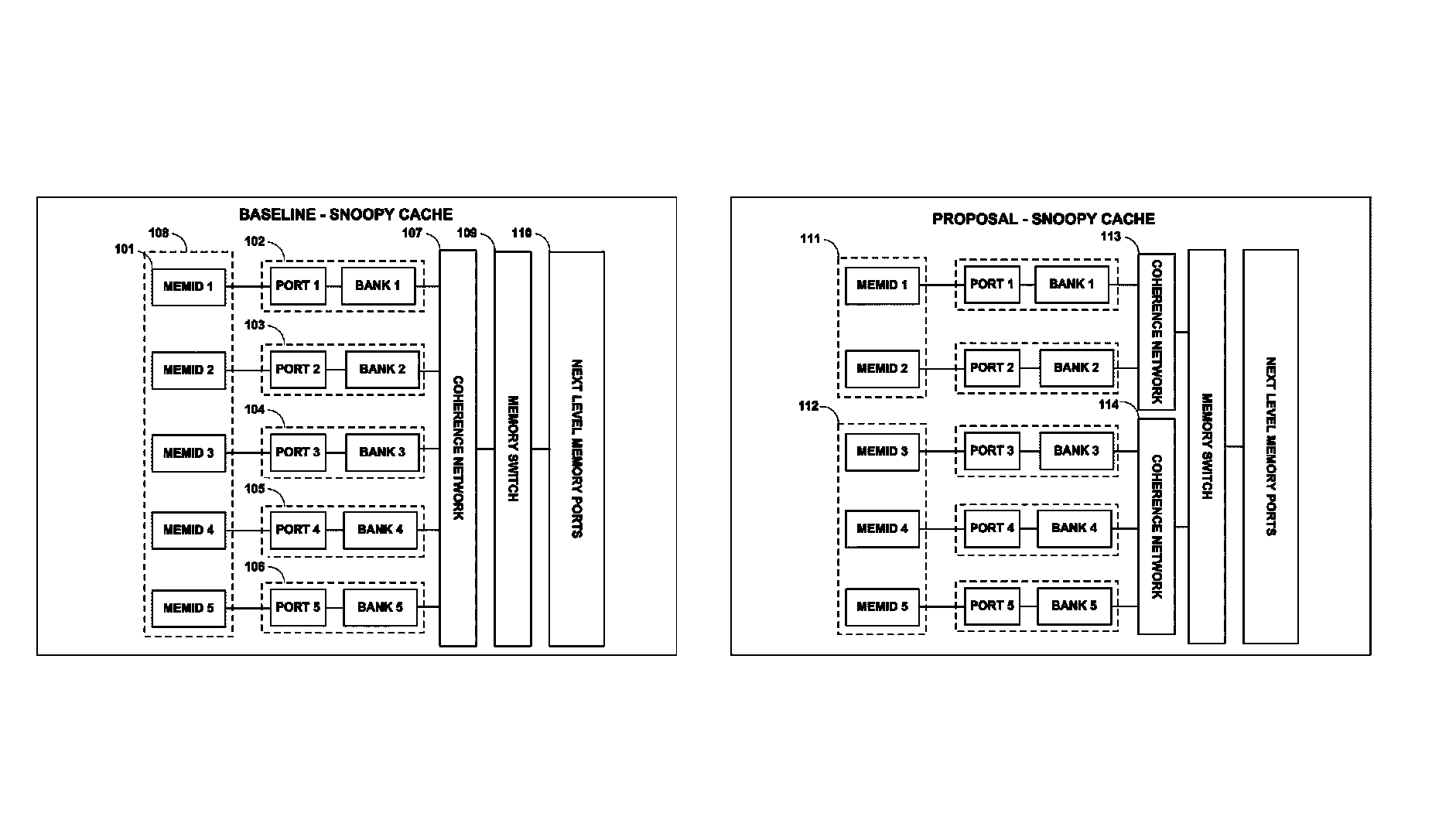
Figure 1 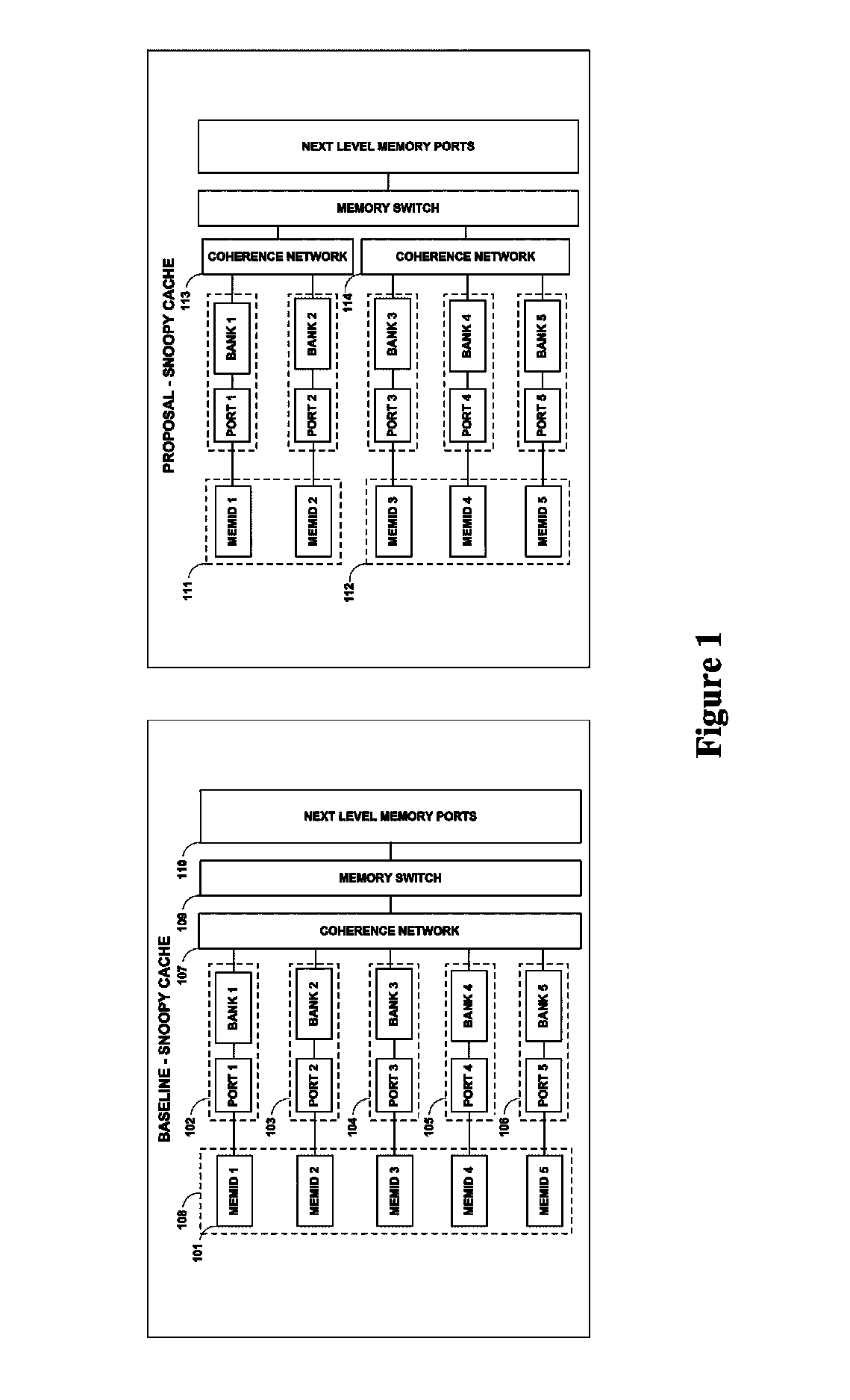
Figure 2 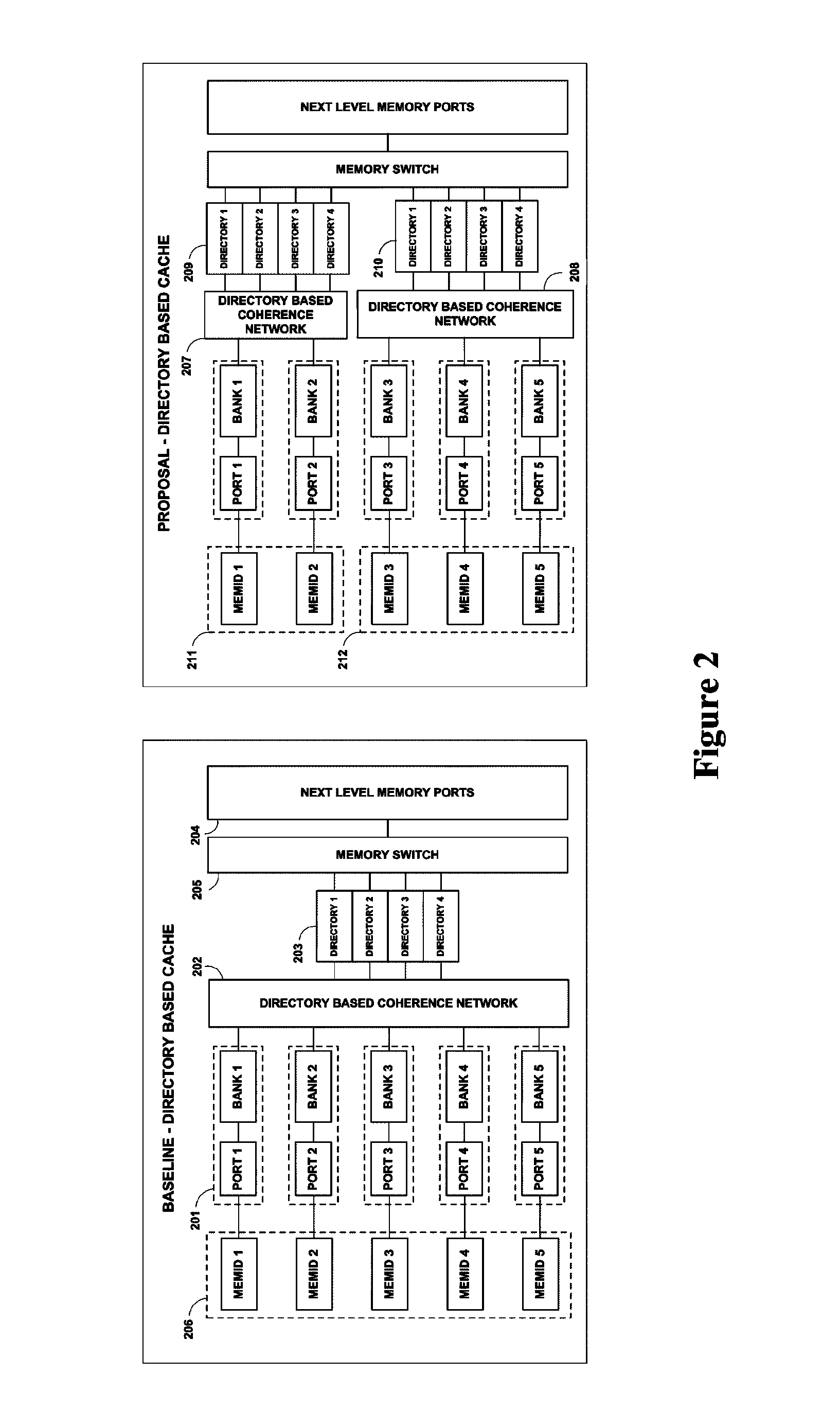
Figure 3
Abstract
Description
FIELD OF THE INVENTION
[0001] The invention relates to partitioning memory for the purpose of improving the performance of application-specific hardware compiled from a software program.BACKGROUND OF THE INVENTION
[0002] With the improvements in process technology and computer architecture, higher number of processing elements are being packed into a single chip in the form of more cores in a multicore, more LUTs in an FPGA, or more special purpose blocks in an ASIC. As a result of this increase in the computational capacity, coupled with highly parallel processing, the pressure on the memory system is also increased. However, memory system performance cannot scale as well as the processing elements and is becoming the major bottleneck in application-specific hardware performance as well as general-purpose computing system performance. As a result, there is a need for scalable memory systems that can provide lower access latency and higher bandwidth within a power budget, in order to ca...
Examples
example
[0205]As a comprehensive example to illustrate the operation of the invention, consider the following program fragment that corresponds to a matrix multiply-add operation C=C+A*B. The three N×N matrices A,B,C in this code are assumed to be laid out in Fortran style column-major order. We will first perform maximal storage unsharing.
[0206]
/ / Original code:for(i=0 to N−1) for(j=0 to N−1) load r3 = MEM[ C[i,j]] for(k=0 to N−1) load r1 = MEM[ A[i,k]] load r2 = MEM[ B[k,j]] mul r4 = r1 * r2 add r3 = r3 + r4 end store MEM[ C[i,j]] = r3 endend
[0207]FIG. 7 shows the memory hierarchy of matrix multiply-add as a result of recursive storage unsharing applied at different scopes (701). Before applying storage unsharing, all memory instructions access a single memory that contains all three of the A, B, and C matrices (702). After applying storage unsharing at the procedure scope, accesses to the three matrices are detected to be independent and they are separated, in order to use the...