
Conduits for enhancing tissue regeneration
a tissue regeneration and tissue technology, applied in the field of tissue regeneration bundles, can solve the problems of affecting the function of the body, so as to and enhance the regeneration of the body
Patent Information
- Authority / Receiving Office
- US · United States
- Patent Type
- Patents(United States)
- Current Assignee / Owner
- Publication Date
- 2015-09-22
Smart Images
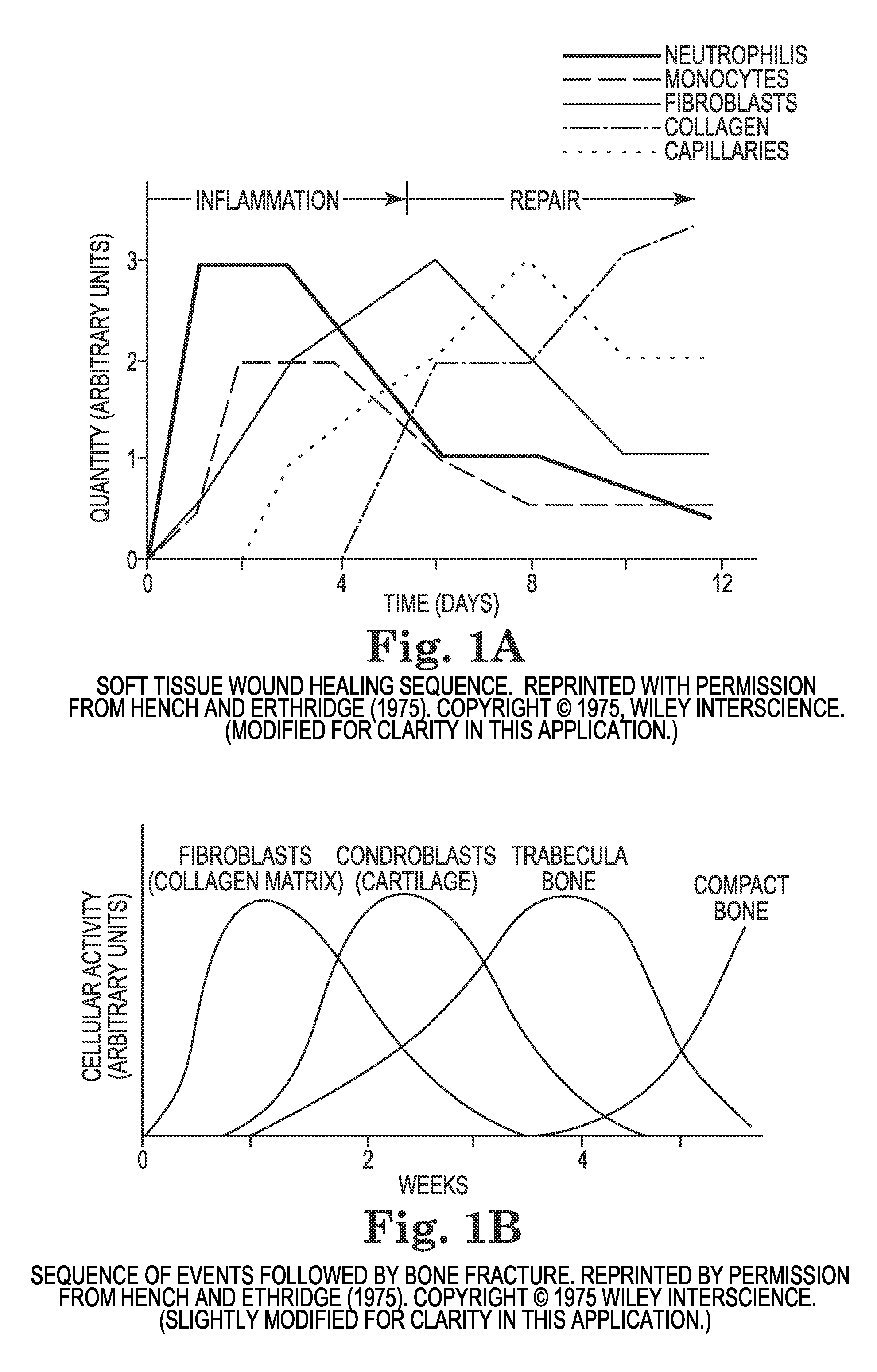
Figure 1 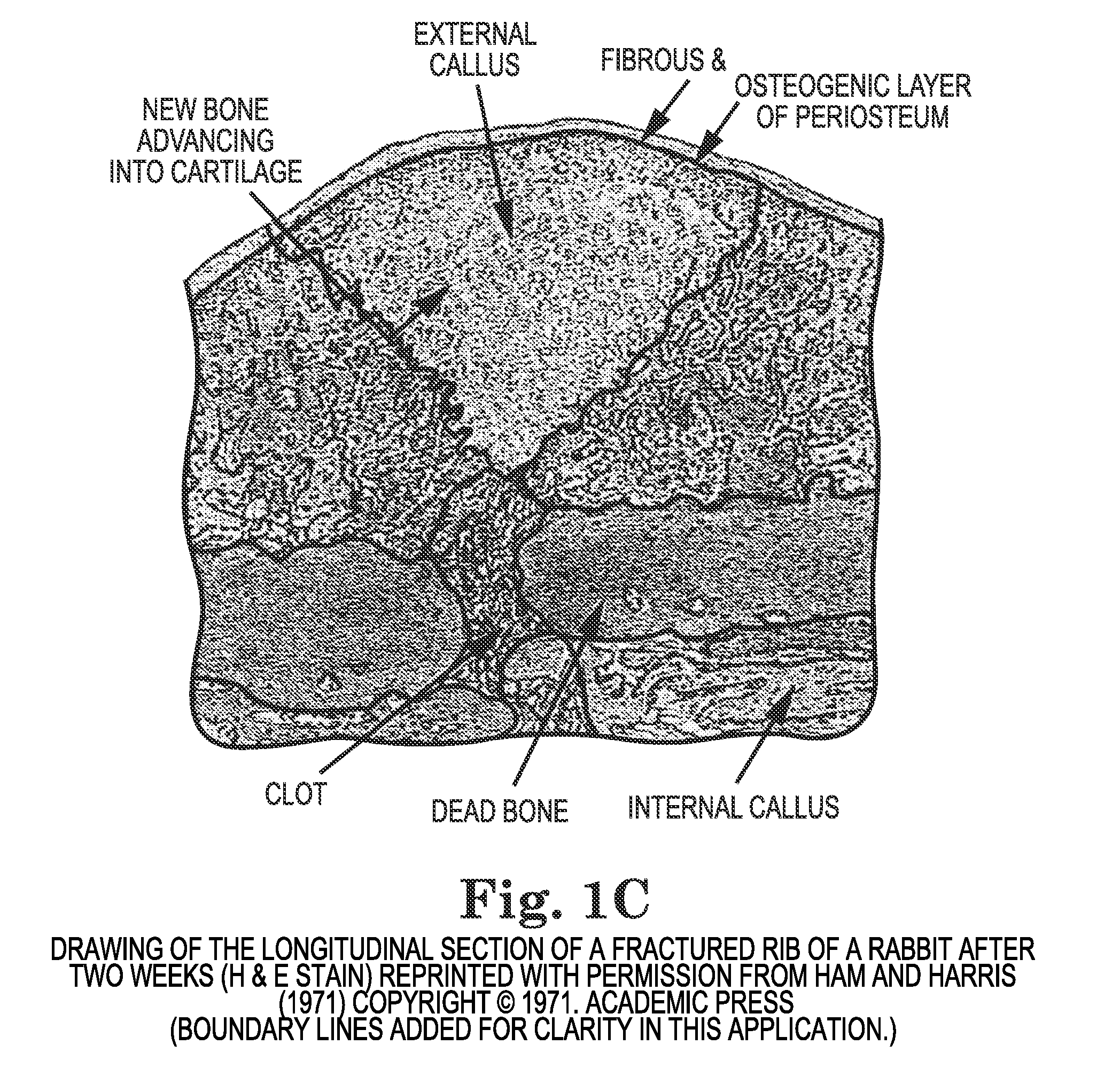
Figure 2 
Figure 3
Abstract
Description
BACKGROUND
[0001] During orthopedic surgery, a soft tissue wound must be made to gain access to the bones to be repaired and a bone wound is present from the original defect and from the process of treating the bone. Both types of wounds cause tissue responses that are well characterized but not well understood. Park and Lakes describe these processes in their Biomaterials book, Vol. 3, as follows, with the figure numbers being revised for consistency with the present patent application:10-1. Normal Wound-Healing Processes10.1.1. Inflammation
[0002] Whenever tissues are injured or destroyed, the adjacent cells respond to repair them. An immediate response to any injury is the inflammatory reaction. Soon after injury, constriction of capillaries occurs (stopping blood leakage); then dilation. Simultaneously there is greatly increased activity in the endothelial cells lining the capillaries. The capillaries become covered by adjacent leukocytes, erythrocytes, and platelets (formed element...
Examples
example 1
Perthes Disease Repair
[0057]Perthes disease can occur when the femoral artery to the ball of the hip joint is destroyed or blocked. Perthes disease occurs most frequently in children and young adults, especially to highly athletic young men who are using non-steroidal anti-inflammatory medication. Alcoholic consumption may contribute. When the blood supply to the ball is interrupted, necrosis of the bone in the ball can set in. This can weaken the ball and fracturing can occur. This tends to flatten the ball. Pain is usually present and movement becomes more difficult. The contact area of the acetabular cup loses its spherical shape as it conforms to the misshapen ball and the patient has serious impairment of the function of the joint. It is possible for the ball to recover sufficient for nearly normal function in patients that are young enough to be still growing when spontaneous recovery and remodeling is complete. If the patient reaches puberty before the remodeling is complete,...
example 2
Tibia Tuberosity Advancement
[0071]FIG. 4 illustrates an example of another condition for which enhanced tissue regeneration can be implemented consistent with the present disclosure. When a canine, for example, suffers an injury that weakens, tears, or breaks an anterior cruciate ligament (ACL), the knee joint can become unstable with the tibia sliding too far forward below the femur. This is a serious injury in all mammals. The example of ACL damage illustrated in FIGS. 4 and 5 represents damage to one knee of a canine patient by way of example and not by way of limitation. That is, the aspects of utilizing conduits for enhancing tissue regeneration described herein are not limited to treatment of knee joints and / or canines, and multiple injured soft tissues and / or bones could be treated simultaneously or sequentially if needed (e.g., in contrast to the applications shown in FIGS. 3-5 in which treatment of one joint is illustrated).
[0072]FIG. 4 illustrates a lateral picture of a no...