
Gateway functionality for mobile relay system
a technology of mobile relay and gateway, which is applied in active radio relay systems, wireless communication, network topologies, etc., can solve problems such as problems such as the inability to cover one base station, the inability to control the backhaul link between the relay node and the base station, and the inability to control the backhaul
Patent Information
- Authority / Receiving Office
- US · United States
- Patent Type
- Patents(United States)
- Current Assignee / Owner
- Publication Date
- 2016-04-12
Smart Images
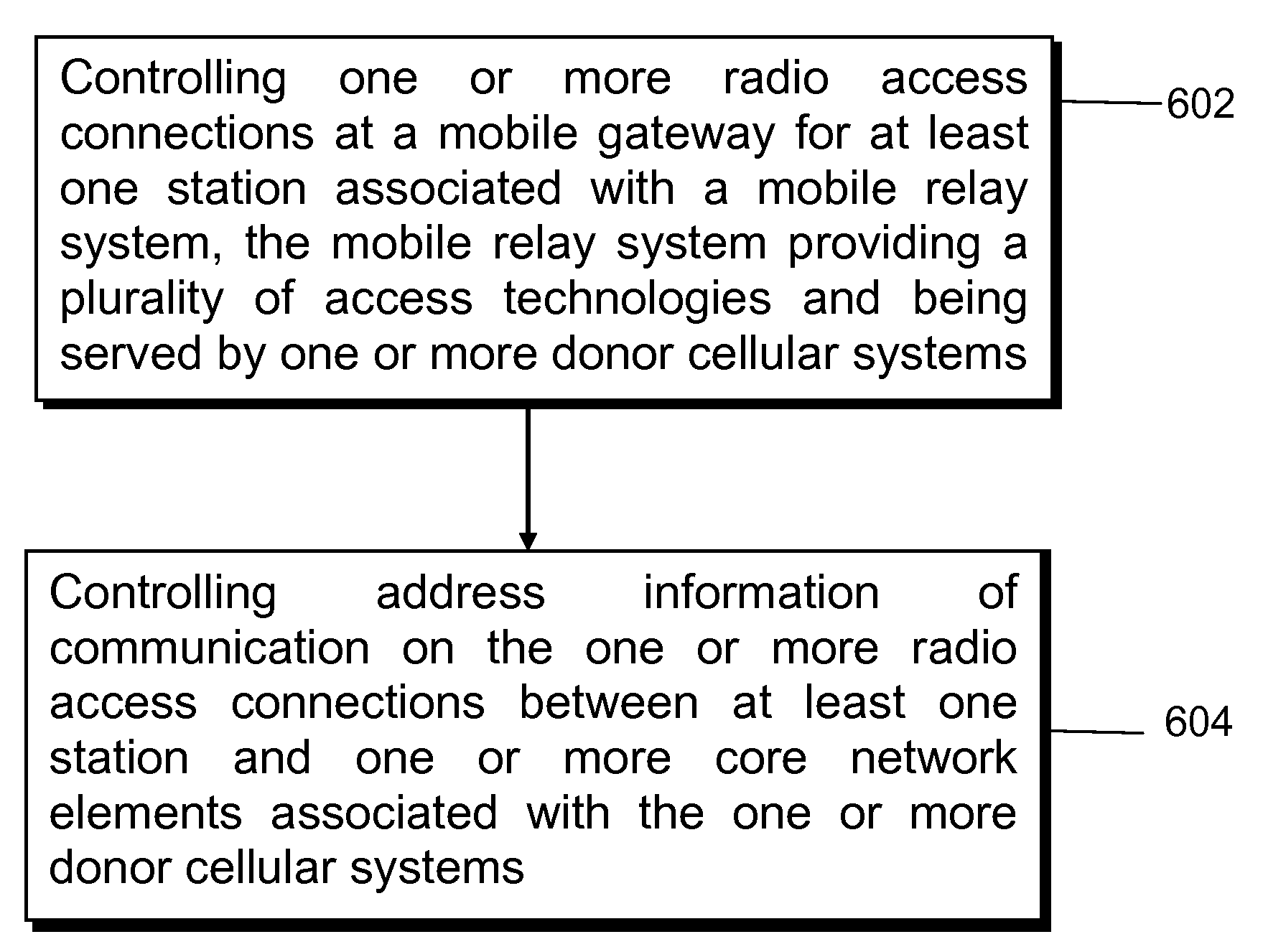
Figure 1 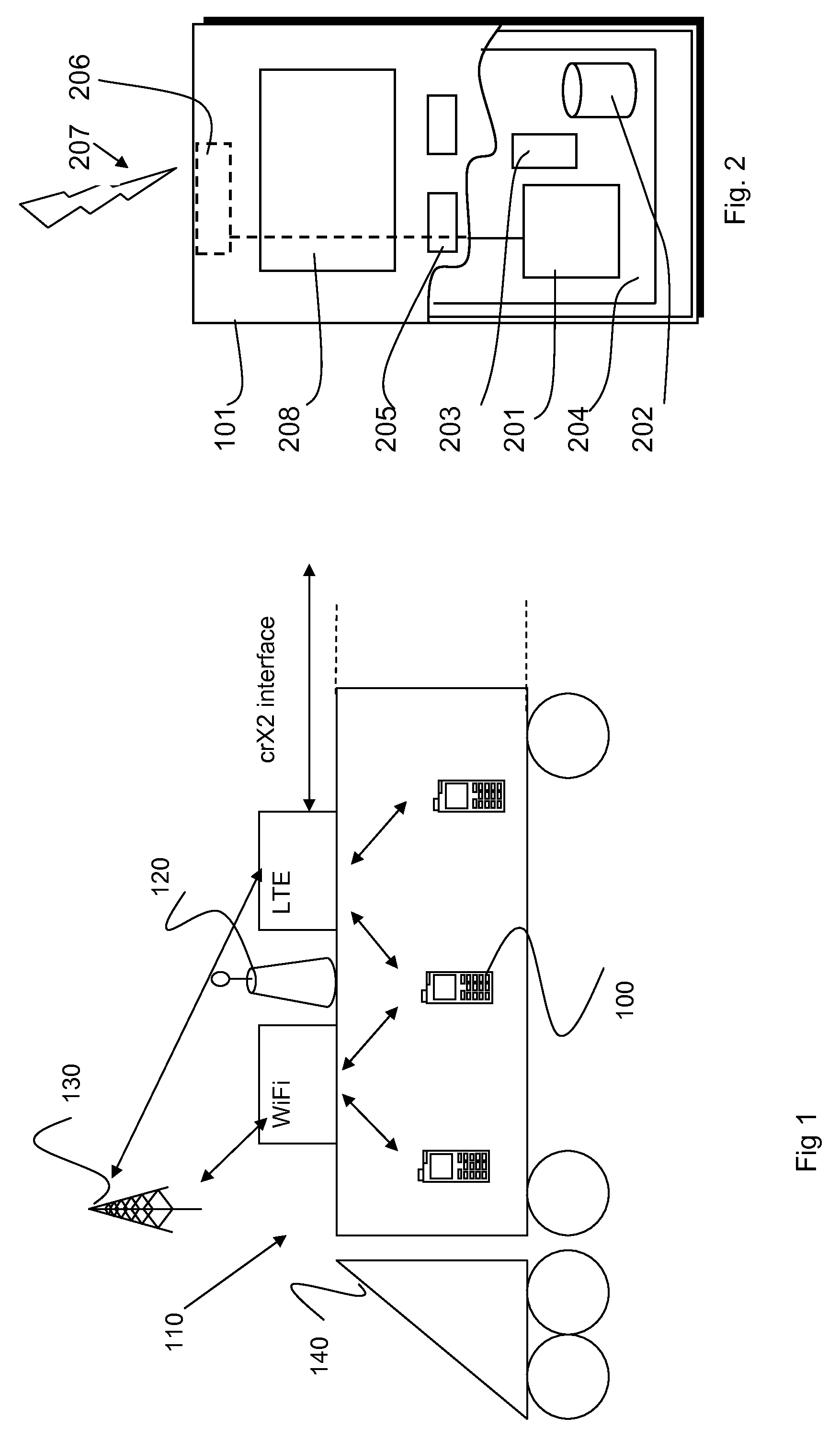
Figure 2 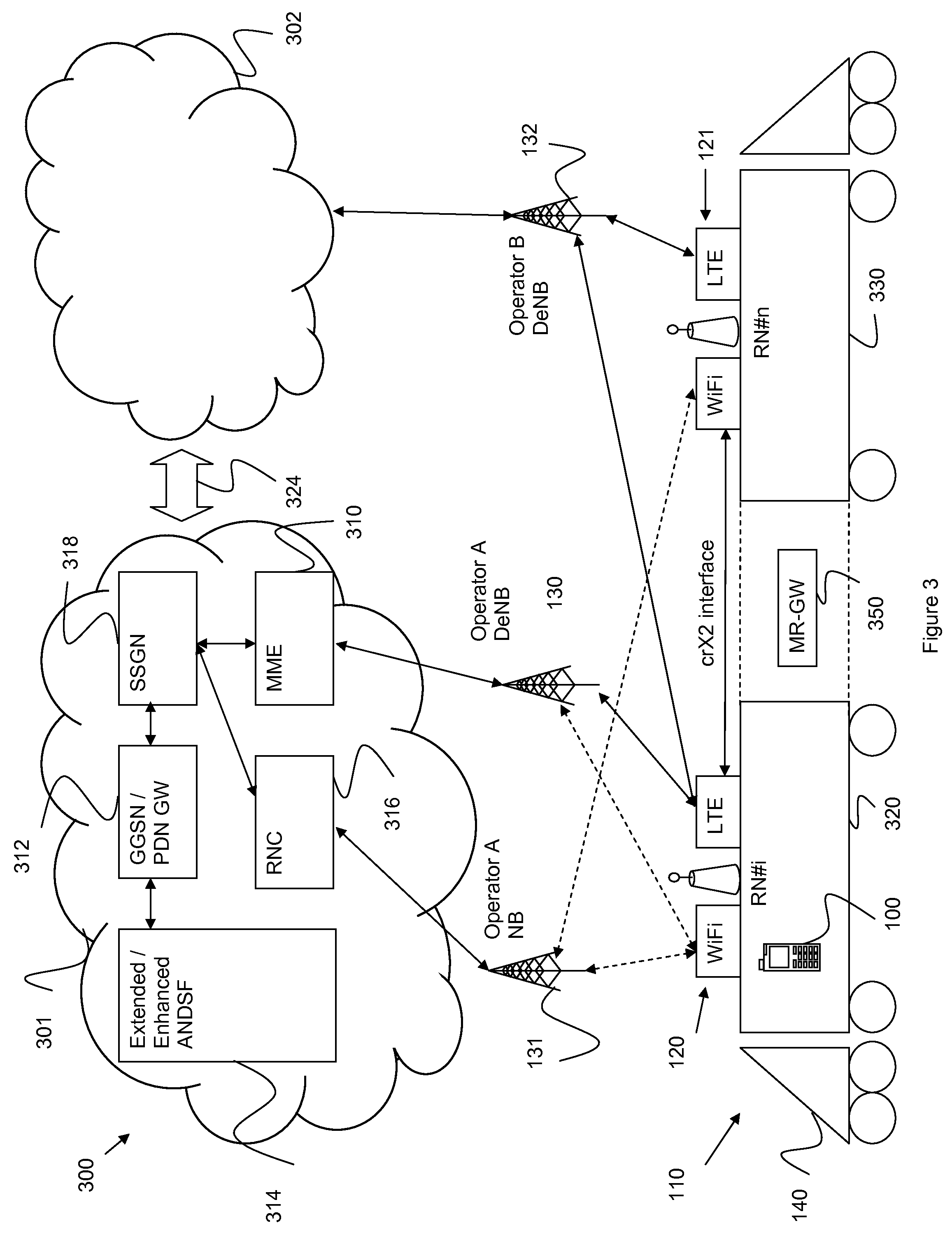
Figure 3
Abstract
Description
[0001] The invention relates to mobile gateway functionality for a mobile relay system and in particular, but not exclusively limited to controlling one or more radio access connections and controlling communication on the one or more radio access connections with the mobile gateway.
[0002] An example of a communication system attempting to satisfy increased demands for capacity is an architecture that is being standardized by the 3rd Generation Partnership Project (3GPP). 3rd Generation Partnership Project (3GPP) is standardizing an architecture that is known as the long-term evolution (LTE) of the Universal Mobile Telecommunications System (UMTS) radio-access technology. The aim is to achieve, inter alia, reduced latency, higher user data rates, improved system capacity and coverage, and reduced cost for the operator. A further development of the LTE is referred to herein as LTE-Advanced (LTE-A). The LTE-Advanced aims to provide further enhanced services by means of even higher data ...
Examples
Embodiment Construction
[0045]In the following certain exemplifying embodiments are explained with reference to a wireless or mobile communication system serving mobile communication devices. Before explaining in detail the exemplifying embodiments, certain general principles of a wireless communication system, access systems thereof, and mobile communication devices are briefly explained with reference to FIGS. 1 to 4 to assist in understanding the technology underlying the described examples.
[0046]FIG. 1 shows a schematic representation of a mobile access system or mobile relay system 110 and part of a radio access network (RAN) including a base station 130. A mobile station 100, mobile communication device or user equipment (mobile station will be used hereinafter for the purposes of simplicity) can be provided with wireless access via at least one relay node 120 or relay station or similar wireless transmitter and / or receiver node of the mobile relay system 110. In FIG. 1 wireless access is provided to...