
Computer vision qualified infrared temperature sensor
a technology of infrared temperature sensor and computer vision, which is applied in the field of computer vision qualified infrared temperature sensor, can solve the problems of inability to accurately and precisely determine the surface temperature of equipment, unfavorable producers' irrigation management, etc., and achieves the effects of reducing false positive irrigation scheduling, increasing plant yield, and increasing efficiency and cost efficacy
Patent Information
- Authority / Receiving Office
- US · United States
- Current Assignee / Owner
- Publication Date
- 2018-01-09
Smart Images
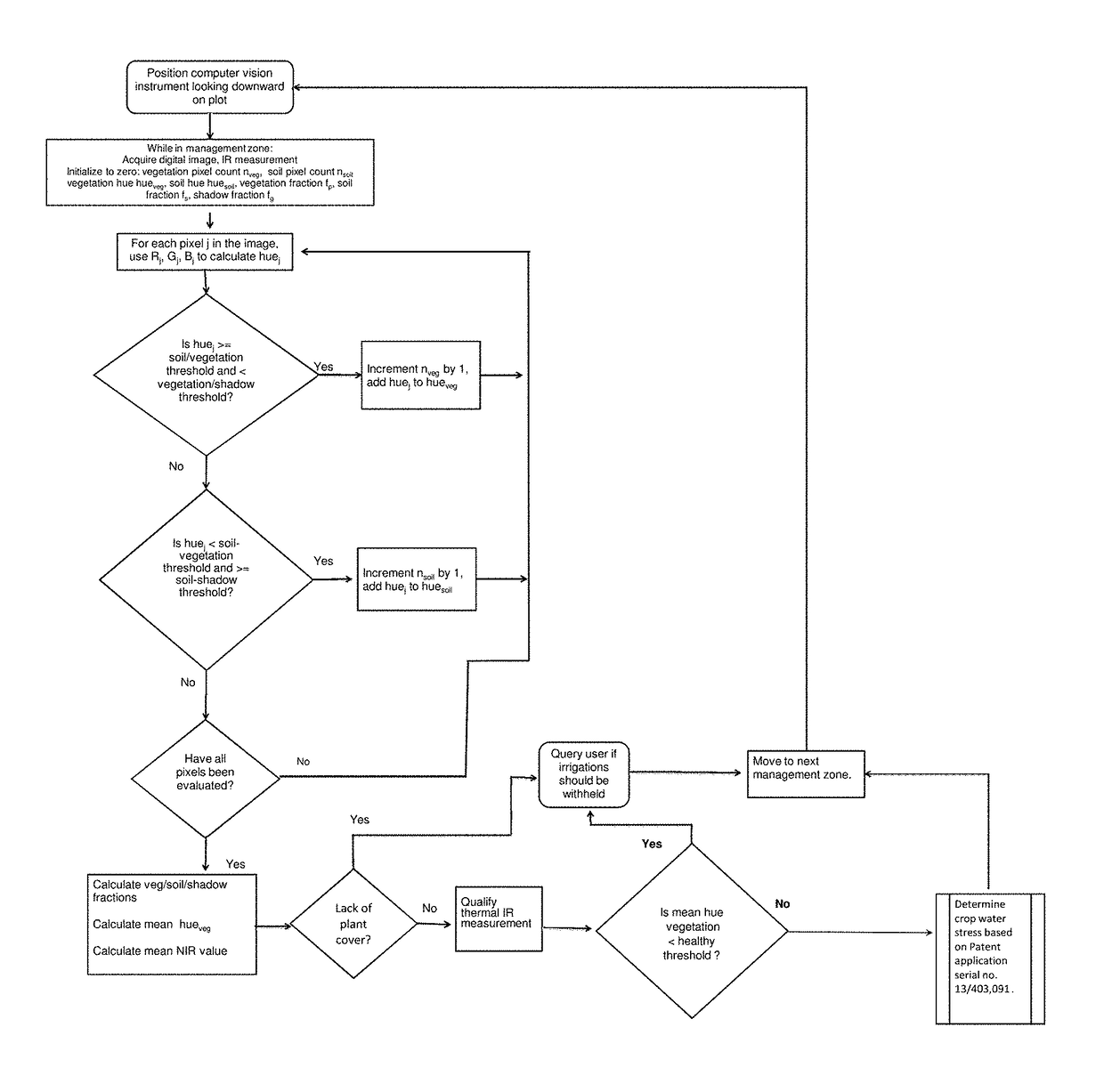
Figure 1 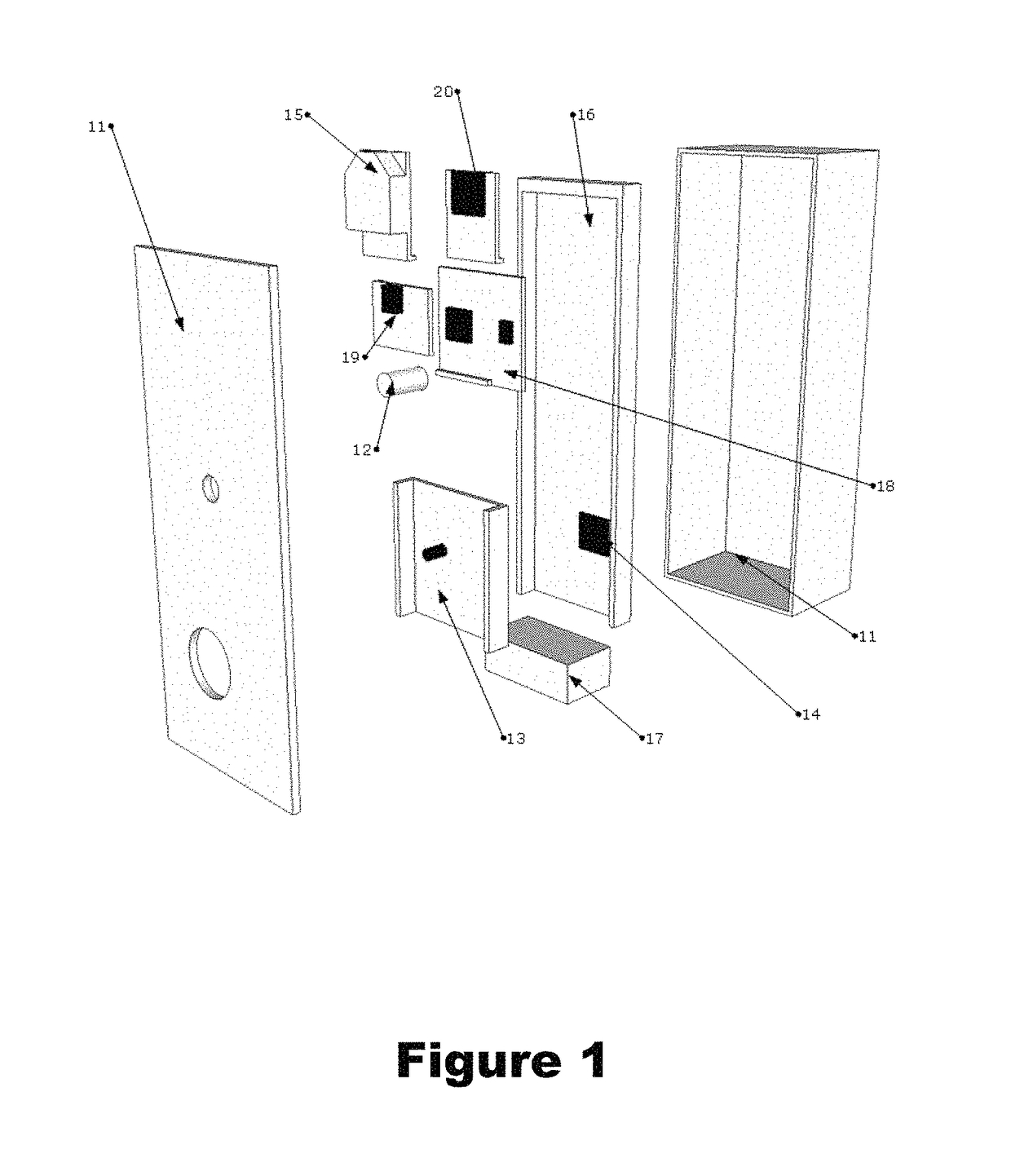
Figure 2 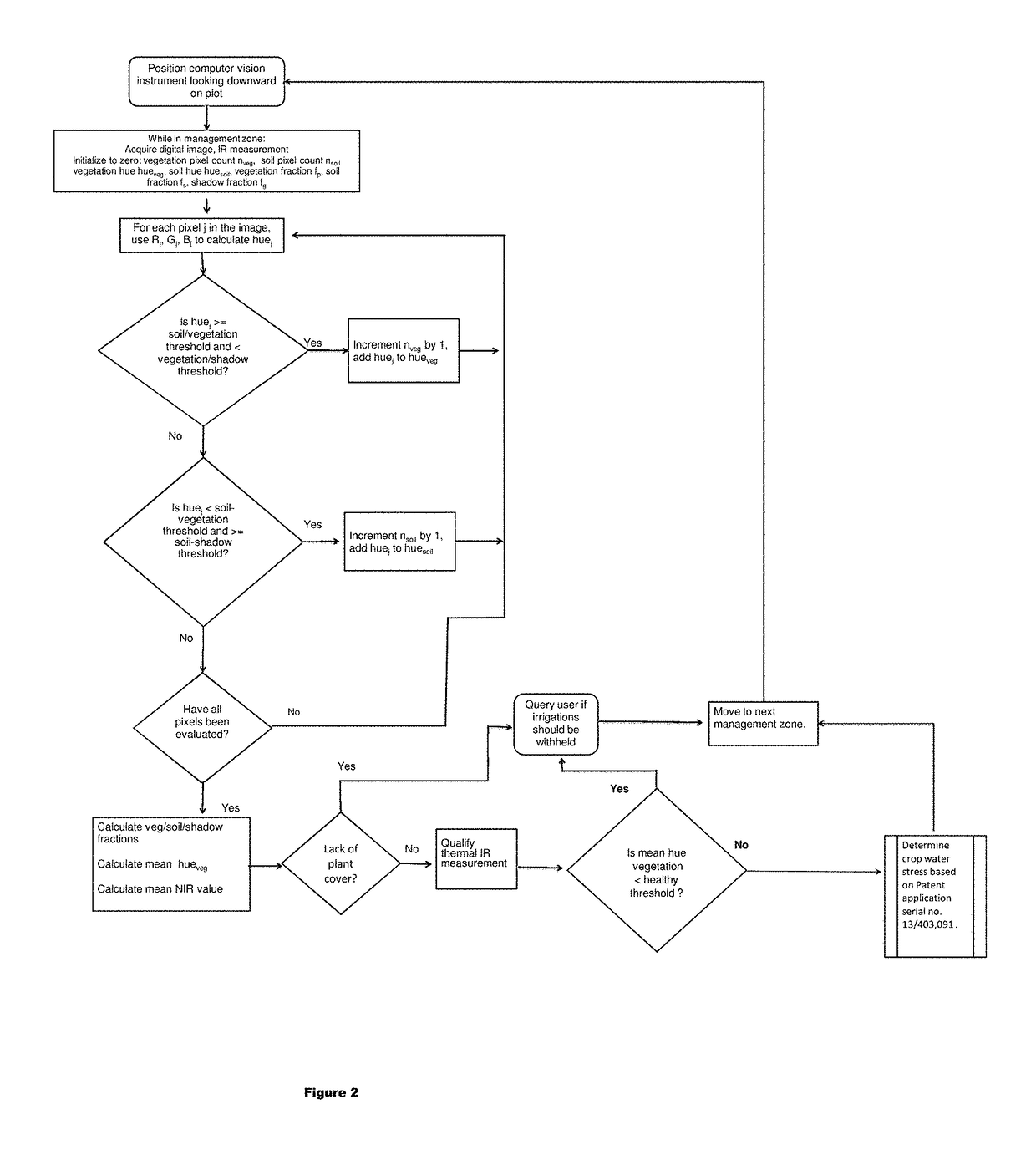
Figure 3
Abstract
Description
REFERENCE TO RELATED APPLICATIONS
[0001] This application claims the benefit of U.S. Provisional Application No. 61 / 816,900, filed Apr. 29, 2013, which is incorporated herein by reference in its entirety.BACKGROUND OF THE INVENTIONField of the Invention
[0002] The invention is drawn to a method and apparatus for acquiring digital images and composite surface temperature measurement of the image and managing irrigation.Description of the Prior Art
[0003] Computer vision technology refers to image acquisition and image data processing and analysis. Image processing algorithms are developed for pattern recognition, feature extraction, and classification. Computer vision sensors contain an imaging sensor that converts light into digital values representing light intensity and color. Pixels refer to the smallest addressable area of an image and can be represented by a vector of red (R), green (G), blue (B) and near-infrared (NIR) intensity values and possibly additional components depending on...
Examples
Embodiment Construction
[0021]The instrument herein was designed as a single, self-contained unit with an infrared (IR) thermometer for making measurements of plant canopy temperature and a camera acquiring digital images in the NIR range (NIR pass filter), red, green and blue color values (which images provide data representative of the reflected light in all of the NIR, red, green and blue bands). The instrument is capable of processing the R, G, B, NIR and thermal IR intensity data using a microprocessor, storing the data in computer memory and wirelessly transmitting the data to a receiver at a remote location. As shown in FIG. 1, the instrument includes a housing or casing (11) of sufficient size as to contain all of the components therein. The housing may be constructed from a variety of materials, but should be weather-proof to prevent damage to the detectors therein. In a preferred embodiment, the housing is constructed from two or more pieces of rigid sunlight resistant plastic for ease of access....