

Coating composition that cannot be wetted by liquid zinc
A coating composition of nickel, chromium, silicon, and phosphorus, applied to steel parts, addresses the inefficiencies in protecting attachment parts during galvanizing by reducing zinc adhesion and enhancing corrosion resistance, resulting in cost and environmental savings.
Patent Information
- Application Number
- PCT/EP2024/059833
- Authority / Receiving Office
- WO · WO
- Patent Type
- Applications
- Current Assignee / Owner
- Priority Date
- 2023-04-11
- Filing Date
- 2024-04-11
- Publication Date
- 2024-10-17
AI Technical Summary
Current methods for protecting steel attachment parts during the galvanizing process are inefficient due to high zinc consumption, corrosion, and environmental concerns, with existing solutions being either too expensive or having short lifespans.
A coating composition comprising nickel, chromium, silicon, phosphorus, and optionally boron, applied via a suspension followed by high-temperature heat treatment, which creates a non-wettable and corrosion-resistant surface for steel parts, reducing zinc adhesion and extending part lifespan.
The coating significantly reduces zinc consumption, eliminates the need for dezincification, and enhances the durability and corrosion resistance of attachment parts, leading to economic and environmental benefits in the galvanizing process.
Smart Images
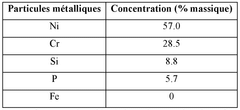
Figure IMGF000018_0001 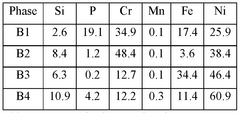
Figure IMGF000019_0001 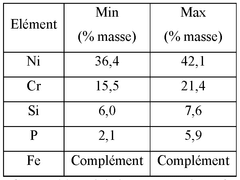
Figure IMGF000019_0002
Abstract
Description
[0001] LIQUID ZINC NON-WETTABLE COATING COMPOSITION
[0002] TECHNICAL FIELD
[0003] The present invention relates to a metal coating composition that is not wettable by liquid zinc and to the coating obtained from such a composition. The coating according to the invention is intended in particular to cover metal attachment parts used during the implementation of a galvanizing process.
[0004] TECHNOLOGICAL BACKGROUND
[0005] Steel galvanization involves coating a piece of steel with a protective layer of zinc to protect it from the effects of corrosion. The galvanization process involves immersing steel pieces in various treatment baths, including liquid zinc. To process the pieces, they are attached to hangers, also called lifting beams, which allow them to be handled. To be used, these hangers must not be coated with zinc; it is therefore necessary to pickle (dezinc) them in an acid bath (hydrochloric acid, sulfuric acid, etc.) between two galvanization cycles.
[0006] Several issues are related to the hanging parts and the fact that they are loaded with zinc during each galvanizing cycle. One issue is related to a high loss of liquid zinc during the galvanizing process. This unnecessary material consumption has a strong environmental and economic impact. Another issue is related to a shortened lifespan of these hanging parts due to corrosion by liquid zinc. Another issue is related to high acid consumption during the dezincification stage of these hanging parts. Another issue is related to a Seveso classification of galvanizing installations given the salt concentrations and the volumes involved in the acid baths, as well as the evacuation and reprocessing of the acid baths.
[0007] To date, these problems have not been resolved on an industrial scale: the hanging parts are made of uncoated steel which, on the one hand, gradually corrodes and, on the other, becomes loaded with zinc.
[0008] It is possible to use stainless steel attachment parts. In the case of a continuous galvanizing process, this material is used for parts immersed in the liquid zinc alloy (tank bottom roller for example). However, stainless steel carries a significant layer of zinc on its surface. Stainless steel therefore does not allow for any gain in terms of lost zinc, which greatly limits the interest of this solution. In addition, stainless steel is not used industrially in custom galvanizing because this material is too expensive compared to the gains obtained for this process. Typically, in February 2023, the cost of steel is estimated at €720 / tonne while the cost of stainless steel is estimated at €3,370 / tonne.A solution already tested industrially is the use of titanium alloy parts, but the lifespan of these parts has proven to be very random and the cost of the material is very high (in February 2023, the cost of titanium is estimated at €4,790 / tonne), not to mention its environmental impact (it is the metal that emits the most CO2 for its production: 50 tonnes of CCMtonnc).
[0009] Cobalt-based alloys, called "stellites," have good resistance to corrosion by liquid zinc but are very expensive (as of February 2023, the cost of cobalt is estimated at €45,000 / tonne). The entrainment of zinc to the surface of a part of these alloys has not been documented.
[0010] Similarly, ceramic or similar coatings (carbides, borides, etc.) are used in continuous galvanizing, but they do not resist the thermal and mechanical shocks encountered in the custom galvanizing process.
[0011] Boron nitride paints or sprays can be used to limit the reaction with the liquid zinc in the steel, but these are temporary solutions that only withstand a single immersion in the liquid zinc alloy.
[0012] Thus, the methods of protecting the attachment parts used during a custom galvanizing process are, to date, very limited because they are too expensive and / or have too short a lifespan.
[0013] There is therefore a strong need for steel hanging parts suitable for use in a custom galvanizing process, with the following properties:
[0014] - Surface very little or not wetted by liquid zinc or liquid zinc alloys;
[0015] - Particularly high mechanical resistance and compatible with support applications involving repeated impacts;
[0016] - High thermal shock resistance allowing use in custom galvanizing (Batch hot dip galvanizing);
[0017] - High corrosion resistance in liquid zinc or liquid zinc alloys; and
[0018] - Good corrosion resistance at the various stages used in custom galvanizing (degreasing, pickling, fluxing, steaming), and more generally in corrosive environments.
[0019] SUMMARY OF THE INVENTION
[0020] The coating composition according to the invention meets all of these needs. The hanging parts coated according to the invention release very little liquid zinc, which results in a major economic gain on this material. In addition, the hanging parts coated according to the invention no longer need to be dezincified before being reused, which eliminates the use of an acid bath highly loaded with metallic salts, resulting in both a direct reduction in costs and HQSE risks (up to the declassification of the Seveso site). The use of the coating composition according to the invention therefore results in an economic and environmental gain from the custom galvanizing process.
[0021] The present invention relates in particular to the preparation of a coating via a coating composition, also called a liquid precursor, such as a suspension, followed by a high-temperature heat treatment. This preparation method may thus comprise one or more steps associated with the preparation of the surface(s) on which this coating is fixed and with the preparation of the coating composition in question. In this invention, the coating may be used on simple, flat, internal or external surfaces or on complex surfaces of convex or concave types such as those encountered in the attachment parts of parts to be galvanized.
[0022] The coating composition according to the invention also makes it possible to obtain a continuous coating of uniform thickness on a surface of a metal part, in particular steel, and guarantees the lasting adhesion of this coating to said surface.
[0023] A first aspect of the present invention relates to a coating composition which is not wettable by liquid zinc, characterized in that said composition comprises metallic elements nickel (Ni), chromium (Cr), silicon (Si), phosphorus (P) and optionally boron (B), in the following proportions: Ni 50%-60%, Cr 20%-30%, Si 5%-12%, P 4%-8%, and B 0%-1.5%, by mass relative to the total mass of metallic elements present in the coating composition.
[0024] Advantageously, the elements Ni, Cr, Si, P and B are in the following proportions: Ni 55%-58%, Cr 27%-30%, Si 8%-10%, P 5%-6%, and B 0.4%-0.8%, by mass relative to the total mass of the metallic elements present in the coating composition.
[0025] Advantageously, the metallic elements Ni, Cr, Si, P and possibly B are in the form of particles, advantageously with an average diameter of between 5 pm and 200 pm, more advantageously between 10 pm and 106 pm.
[0026] Advantageously, said metal particles are dispersed in a solvent selected from the group consisting of aprotic solvents such as acetone, practical solvents such as alcohols, aqueous solvents such as water and distilled water, and apolar organic solvents such as toluene; advantageously the solvent is selected from the group consisting of distilled water, acetone, alcohols, and mixtures thereof.
[0027] Advantageously, said coating composition further comprises at least one binder, advantageously chosen from the group consisting of polymers such as polyvinyl alcohol (PVA), acids, cellulose, and mixtures thereof.
[0028] A second aspect of the present invention relates to a method for coating at least one surface of a metal part comprising at least the following steps: a) Preparation of a coating composition comprising the metallic elements, nickel (Ni), chromium (Cr), silicon (Si), phosphorus (P) and optionally boron (B); and optionally a binder, the metallic elements advantageously being in the form of particles dispersed in a solvent; b) Application of the coating composition obtained in step a) to at least one surface of the metal part to be coated; c) Evaporation of the solvent; and d) Heat treatment of the coated part obtained in step c), advantageously at a temperature between 1000°C and 1150°C, characterized in that the coating composition comprises the metallic elements in the following proportions: Ni 50-60%, Cr 20-30%, Si 5-12%, P 4-8%, and B 0-1.5%, by mass relative to the total mass of metallic elements present in the coating composition.
[0029] Advantageously, the coating composition prepared in step a) of the process according to the invention is as defined above.
[0030] Advantageously, the application step b) of the method according to the invention is carried out by spraying, projection, injection or immersion, more advantageously by immersion.
[0031] Advantageously, the heat treatment step d) of the process according to the invention is carried out for a period of between 5 and 120 minutes.
[0032] A third aspect of the present invention relates to a metallic coating which is not wettable by liquid zinc, characterized in that said coating is obtained from a coating composition according to the invention, or capable of being obtained by the coating method according to the invention.
[0033] Advantageously, the coating according to the invention is characterized by a thickness of between 5 μm and 250 μm, preferably between 10 μm and 150 μm, more preferably between 50 μm and 100 μm.
[0034] A fourth aspect of the present invention relates to the use of a coating composition according to the invention, for the preparation of a coating which is not wettable by liquid zinc and / or for the preparation of a metal part, in particular made of steel, comprising at least one surface which is not wettable by liquid zinc. Advantageously, the metal part is a hanging part for a part to be galvanized.
[0035] A fifth aspect of the present invention relates to a hot-dip galvanizing process by immersion, comprising at least the following steps: a) Attaching the parts to be galvanized by attachment parts; b) Immersing the parts to be galvanized in a treatment bath comprising liquid zinc or a liquid zinc alloy; and c) Removing the galvanized parts from the treatment bath, then detaching the parts, characterized in that the attachment parts are coated with a metal coating which is not wettable by the liquid zinc according to the invention.
[0036] A sixth aspect of the present invention relates to a metal part, characterized in that said metal part comprises at least one surface coated with a metal coating which cannot be wetted by liquid zinc according to the invention, advantageously said metal part being a hanging part for a part to be galvanized.
[0037] DESCRIPTION OF FIGURES
[0038] Figure 1 shows an example of a cross-sectional microstructure of a coating observed by scanning electron microscopy (SEM image) on a metallographic section. The coating is polyphase. The compositions of different phases are listed in Table 3.
[0039] Figure 2 shows the mass loss of the studied materials as a function of the number of cycles for 3-minute galvanizing cycles. The behaviors of steel, stainless steel, and steel coated according to the invention are compared. The slopes of the curves indicate the mass losses per minute of immersion in a liquid zinc alloy.
[0040] Figure 3 shows the mass of zinc deposited on the surface of the parts as a function of the number of 5-minute galvanizing cycles. It can be seen that for the steel coated according to the invention, the quantity of zinc deposited is reduced by approximately 85% compared to the quantity of zinc deposited on the uncoated steel.
[0041] DETAILED DESCRIPTION
[0042] Definition
[0043] In the context of the invention, the term "coating composition" means a composition, preferably fluid, intended to be applied to at least one metal surface, then subjected to a heat treatment in order to give a coating. The coating composition is preferably in the form of a suspension comprising metal particles dispersed in a solvent or a solvent mixture.
[0044] In the context of the invention, the "coating" is therefore obtained by applying the coating composition to at least one metal surface, then by heat treatment of the coating layer. The coating therefore corresponds to the dry coating film which covers the treated metal surface.
[0045] In the context of the invention, "continuous coating" means a coating as defined above which covers the entirety of said metal surface. The treated metal surface therefore does not include any part without coating. In the context of the invention, "metal surface" means at least one of the surfaces of the object to be treated having at least one layer of metal. The object to be treated being in particular a hanging part for a part to be galvanized.
[0046] In the context of the invention, "coating not wettable by liquid zinc" means a coating which prevents the adhesion of liquid zinc or a liquid zinc alloy to the coated surface. Thus, when the coated surface is in contact with liquid zinc or a liquid zinc alloy, it does not become charged with zinc.
[0047] In the context of the invention, "zinc anti-corrosion coating" means a coating that protects the coated metal part from corrosion by liquid zinc or a liquid zinc alloy. In other words, this type of coating prevents the coated metal surface from corroding in the presence of liquid zinc or a liquid zinc alloy.
[0048] For the purposes of the present invention, the term “particle size” means the maximum dimension of the particle in question.
[0049] Unless otherwise indicated, all percentages indicated within the framework of the present description are percentages expressed by mass relative to the total mass of the metallic elements present in said coating composition according to the invention.
[0050] In the context of the invention, the expression "between x and y" means that the values x and y are inclusive.
[0051] Coating composition
[0052] According to a first aspect, the present invention relates to a coating composition which is not wettable by liquid zinc, characterized in that said composition comprises metallic elements nickel (Ni), chromium (Cr), silicon (Si), phosphorus (P) and optionally boron (B), in the following proportions: Ni 50%-60%, Cr 20%-30%, Si 5%-12%, P 4%-8%, and B 0%-1.5%, by mass relative to the total mass of the metallic elements present in the coating composition.
[0053] Advantageously, the composition according to the invention is a coating composition which is non-wettable by liquid zinc and also anti-corrosion by liquid zinc.
[0054] According to the invention, the coating composition comprises nickel, in a content of between 50% and 60% by mass, relative to the total mass of the metallic elements present in the coating composition. In particular, the coating composition may comprise between 50% and 59% by mass, between 50% and 58% by mass, between 51% and 60% by mass, between 52% and 60% by mass, between 53% and 60% by mass, between 54% and 60% by mass, between 55% and 60% by mass, between 55% and 59% by mass, or between 55% and 58% by mass, of Ni relative to the total mass of the metallic elements present in the coating composition. In the context of the invention, a minimum Ni content of 50% by mass relative to the total mass of the metallic elements present in the coating composition is necessary to give the coating according to the invention properties of resistance to corrosion by liquid zinc.
[0055] According to the invention, the coating composition comprises chromium, in a content of between 20% and 30% by mass, relative to the total mass of the metallic elements present in the coating composition. In particular, the coating composition may comprise between 21% and 30% by mass, between 22% and 30% by mass, between 23% and 30% by mass, between 24% and 30% by mass, between 25% and 30% by mass, between 26% and 30% by mass, between 27% and 30% by mass, between 20% and 29% by mass, or between 20% and 28% by mass, of Cr relative to the total mass of the metallic elements present in the coating composition. In the context of the invention, a minimum Cr content of 20% by mass relative to the total mass of the metallic elements present in the coating composition is necessary to give the coating according to the invention properties of resistance to corrosion by liquid zinc.
[0056] In the context of the present invention, the nickel and chromium content ranges are chosen so as to obtain an optimized coating composition. Lower or higher Ni and Cr contents would lead to changing the balances and destabilizing the properties of the coating obtained from the coating composition.
[0057] According to the invention, the coating composition comprises silicon, in a content of between 5% and 12% by mass, relative to the total mass of the metallic elements present in the coating composition. In particular, the coating composition may comprise between 5% and 11% by mass, between 5% and 10% by mass, between 6% and 12% by mass, between 7% and 12% by mass, between 8% and 12% by mass, between 8% and 11% by mass, or between 8% and 10% by mass, of Si relative to the total mass of the metallic elements present in the coating composition. In the context of the invention, the presence of silicon has the effect of producing, after the heat treatment of the coating composition, a surface oxide film rich in Si Oi which gives the properties of non-wetting by liquid zinc.Thus, a minimum Si content of 5% by mass relative to the total mass of the metallic elements present in the coating composition is necessary to give the coating according to the invention properties of resistance to corrosion by liquid zinc as well as low wetting by liquid zinc. Below 5% Si by mass, the coating according to the invention would be wettable by liquid zinc and would not resist corrosion by liquid zinc. On the other hand, an Si content strictly greater than 12% by mass relative to the total mass of the metallic elements present in the coating composition would lead to the formation of a large quantity of fragile silicides causing a reduction in the impact resistance of the coated part.
[0058] According to the invention, the coating composition comprises phosphorus, in a content of between 5% and 8% by mass, relative to the total mass of the metallic elements present in the coating composition. In particular, the coating composition may comprise between 5% and 7% by mass, or between 5% and 6% by mass, of P relative to the total mass of the metallic elements present in the coating composition. In the context of the invention, a minimum P content of 5% by mass relative to the total mass of the metallic elements present in the coating composition is necessary to lower the melting temperature of the coating composition and facilitate interdiffusion between the deposited powder particles and the metal part to be coated. Below 5% P by mass, the coating according to the invention would have too high a refractivity which could lead to severe degradation of the metal part to be coated.On the other hand, a P content strictly greater than 8% by mass relative to the total mass of metallic elements present in the coating composition, would lead to embrittlement of the coating obtained associated with the formation of phosphides.
[0059] According to the invention, the coating composition may further comprise boron, in a content of between 0% and 1.5% by mass, relative to the total mass of metallic elements present in the coating composition. In particular, the coating composition may comprise between 0.1% and 1.5% by mass, between 0.2% and 1.5% by mass, between 0.3% and 1.5% by mass, between 0.4% and 1.5% by mass, between 0.1% and 1.4% by mass, between 0.1% and 1.3% by mass, between 0.1% and 1.2% by mass, between 0.1% and 1.1% by mass, between 0.1% and 1% by mass, between 0.1% and 0.9% by mass, between 0.1% and 0.8% by mass, or between 0.4% and 0.8% by mass, of B relative to the total mass of the metallic elements present in the coating composition.In the context of the invention, the presence of boron makes it possible in particular to lower the melting temperature of the coating composition and facilitate interdiffusion between the deposited powder particles and the metal part to be coated. On the other hand, a B content strictly greater than 1.5% by mass relative to the total mass of the metallic elements present in the coating composition would lead to embrittlement of the coating obtained associated with the formation of borides.
[0060] Advantageously, the coating composition according to the invention comprises in particular the elements Ni, Cr and Si in the following proportions: Ni 55%-58%, Cr 27%-30%, and Si 8%-10%, by mass relative to the total mass of the metallic elements present in the coating composition.
[0061] Advantageously, the coating composition according to the invention comprises the elements Ni, Cr, Si, P and B in the following proportions: Ni 55%-58%, Cr 27%-30%, Si 8%-10%, P 5%-6%, and B 0.4%-0.8%, by mass relative to the total mass of the metallic elements present in the coating composition.
[0062] According to the invention, the metallic elements Ni, Cr, Si, P and optionally B are preferably in the form of particles. In particular, the particles of metallic elements may be particles of each of the pure metallic elements, or may be alloys involving at least two of the metallic elements Ni, Cr, Si, P and B. When alloys are used, they are preferably made of at least two of the metallic elements selected from Ni, Cr, Si, P and B, i.e. they do not comprise other metallic elements.
[0063] Advantageously, the particles of metallic elements have an average diameter of between 5 pm and 200 pm, more advantageously between 10 pm and 106 pm. The particle size is in particular measured using the wet or dry laser granulometry method. In particular, the particle size of each of the metallic elements Ni, Cr, Si, P and possibly B may be between 5 pm and 180 pm, between 5 pm and 160 pm, between 5 pm and 140 pm, between 5 pm and 120 pm, between 5 pm and 110 pm, between 5 pm and 108 pm, between 5 pm and 106 pm, between 6 pm and 200 pm, between 7 pm and 200 pm, between 8 pm and 200 pm, between 9 pm and 200 pm, between 10 pm and 200 pm, between 10 pm and 180 pm, between 10 pm and 160 pm, between 10 pm and 140 pm, between 10 pm and 120 pm, between 10 pm and 110 pm, between 10 pm and 108 pm, or between 10 pm and 106 pm.
[0064] According to the invention, the coating composition comprises the metal particles as defined above, dispersed in a solvent. The solvent may in particular be chosen from the group consisting of aprotic solvents such as acetone, practical solvents such as alcohols, aqueous solvents such as water and distilled water, apolar organic solvents such as toluene, and mixtures thereof. Advantageously, the solvent is chosen from the group consisting of distilled water, acetone, alcohols, and mixtures thereof. The coating composition according to the invention may then have the form of a suspension. In the context of the invention, the nature of the solvent is in particular chosen so as to allow it to dry under the condition(s) determined by the final coating, taking into account the practical limits of the support. More specifically, the solvent may be chosen so as to be easily removed and to avoid runoff phenomena.Thus, the solvent or mixture of solvents is preferably chosen from acetone, alcohols and their mixtures, in order to limit runoff phenomena. More specifically, the solvent can be anhydrous or hydrated.
[0065] To ensure the cohesion and the holding of the metal particles after evaporation of the solvent, a binder can be added before or after mixing the metal particles Ni, Cr, Si, P and possibly B in the solvent. This binder is chosen so that it does not hinder the surface reactivity of the part to be coated during the heat treatment. Thus, advantageously, the coating composition according to the invention further comprises at least one binder, in particular chosen from the group consisting of polymers such as polyvinyl alcohol (PVA), carboxylic acids, cellulose, and mixtures thereof.
[0066] Advantageously, the volume ratio between the binder / solvent mixture and the coating composition is preferably between 10% and 80% by volume. In particular, the volume ratio between the binder / solvent mixture and the coating composition may be between 10% and 70% by volume, between 10% and 60% by volume, between 10% and 55% by volume, between 10% and 50% by volume, between 10% and 45% by volume, between 10% and 40% by volume, between 10% and 35% by volume, between 10% and 30% by volume, between 15% and 45% by volume, between 20% and 45% by volume, or between 25% and 45% by volume. Typically, the volume ratio between the binder / solvent mixture and the coating composition may be 30% by volume.
[0067] According to a particular aspect of the invention, the coating composition may further comprise an adjuvant making it possible to ensure a homogeneous distribution of the coating composition, in particular to stabilize the mixture of particles suspended in the solvent, and / or allowing the maintenance and overall cohesion of the deposit of the coating composition on the substrate to be coated. The adjuvant may in particular be chosen from lubricating agents, stabilizers, anti-foaming agents, wetting agents, rheological agents, surfactants and combinations thereof. As examples of lubricating agents, mention will in particular be made of synthetic organic polymers such as polytetrafluoroethylene, polyethylene, polyethylene glycol or natural organic polymers such as Carnauba wax or paraffins, as well as mixtures thereof.Examples of stabilizers include, in particular, organophilic clays (natural or synthetic), silica derivatives, cellulose derivatives, xanthan gum or associative thickeners of the polyurethane or acrylic type, as well as mixtures thereof. Examples of rheological agents include, in particular, organophilic clays (natural or synthetic), silica derivatives, cellulose derivatives such as hydroxymethylcellulose, hydroxyethylcellulose, hydroxypropylcellulose, cellulose acetobutyrate, cellulose micro- or nano-fibrils, xanthan gum or associative thickeners of the polyurethane or acrylic type, modified ureas, as well as mixtures thereof. Examples of antifoaming agents include mineral oils, non-ionic surfactants, polysiloxanes, silicone resins and mixtures thereof.Examples of wetting agents that may be mentioned include polysiloxanes, oxirane derivatives, fluorosurfactants, and mixtures thereof.
[0068] The adjuvant is advantageously added to the coating composition in a content of between 0.05% and 80% by volume, relative to the total volume of the coating composition.
[0069] Within the scope of the invention, the coating composition may, for example, be prepared by carrying out the following steps:
[0070] - stirring the chosen solvent, in particular to create a vortex;
[0071] - possibly, dissolution of the binder in the solvent, while maintaining agitation;
[0072] - possibly, dissolution of one or more adjuvants, while maintaining agitation;
[0073] - addition of the metallic particles Ni, Cr, Si, P and possibly B in the chosen proportions, while maintaining agitation;
[0074] - maintain stirring until a suspension is obtained.
[0075] Advantageously, the coating composition according to the invention does not comprise iron (Fe) and / or copper (Cu). Advantageously, the metal particles present in the coating composition according to the invention consist of metal particles of Ni, Cr, Si, P and optionally pure B.
[0076] Coating and coating process
[0077] According to another aspect, the invention relates to a method for coating at least one surface of a metal part comprising at least the following steps: a) Preparation of a coating composition comprising the metallic elements, nickel (Ni), chromium (Cr), silicon (Si), phosphorus (P) and optionally boron (B); and optionally a binder, the metallic elements advantageously being in the form of particles dispersed in a solvent; b) Application of the coating composition obtained in step a) to at least one surface of the metal part to be coated; c) Evaporation of the solvent; and d) Heat treatment of the coated part obtained in step c), advantageously at a temperature between 1000°C and 1150°C, characterized in that the coating composition comprises the metallic elements in the following proportions: Ni 50-60%, Cr 20-30%, Si 5-12%, P 4-8%, and B 0-1.5%, by mass relative to the total mass of metallic elements present in the coating composition.
[0078] Advantageously, the coating composition prepared in step a) is as defined in the present description. Step a) may therefore, for example, comprise the following sub-steps:
[0079] - stirring the chosen solvent, in particular to create a vortex;
[0080] - possibly, dissolution of the binder in the solvent, while maintaining agitation;
[0081] - possibly, dissolution of one or more adjuvants, while maintaining agitation;
[0082] - addition of the metallic particles Ni, Cr, Si, P and possibly B in the chosen proportions, while maintaining agitation;
[0083] - maintain stirring until a suspension is obtained.
[0084] During step a), the stirring can be maintained by any means known to those skilled in the art, for example by magnetic stirring, by mechanical stirring, by three-dimensional stirring, or by the use of ultrasonic waves.
[0085] During step a), ultrasound can be applied to facilitate obtaining a homogeneous mixture.
[0086] At the end of step a), a rheological control of the coating composition obtained can be carried out via a rheometer so as to ensure the good flow properties of the composition. In addition, an operation to control the good dispersion can be carried out by taking a portion of the composition and depositing it on a transparent support. If the absence of agglomerate is observed, step a) can be considered finished. Advantageously, the application step b) is carried out by any means known to those skilled in the art, for example by spraying, projection, injection or immersion, advantageously by immersion. In particular, the application step b) makes it possible to deposit the coating composition according to the invention on the surface to be coated in a homogeneous and continuous manner. The coating composition according to the invention thus forms a fdm, preferably a continuous fdm, on said surface.The thickness of the coating composition fdm can notably be between 5 pm and 250 pm.
[0087] In a preferred embodiment, application step b) is carried out by immersion. According to this embodiment, the metal part to be coated is immersed in the coating composition according to the invention and then removed at a constant speed. The removal speed of the metal part may in particular be between 1 mm / s and 100 mm / s, for example 10 mm / s. During immersion, the coating composition according to the invention may be kept stirring in order to maintain a homogeneous suspension.
[0088] The solvent evaporation step c) may be carried out by any means known to those skilled in the art, in particular under a controlled or uncontrolled atmosphere. For example, the solvent evaporation step c) may be carried out by drying with pulsed hot air, in an oven at a temperature between 20°C and 150°C, by infrared heating, or under primary vacuum. Advantageously, the solvent evaporation step c) is carried out by oven drying.
[0089] The heat treatment step d) is advantageously carried out at a temperature between 1000°C and 1150°C, more advantageously between 1020°C and 1055°C. In particular, the heat treatment step d) may be carried out between 1000°C and 1140°C, between 1000°C and 1130°C, between 1000°C and 1120°C, between 1000°C and 1110°C, between 1000°C and 1100°C, between 1000°C and 1090°C, between 1000°C and 1080°C, between 1000°C and 1070°C, between 1000°C and 1060°C, between 1000°C and 1055°C, between 1000°C and 1050°C, between 1000°C and 1040°C, between 1010°C and 1140°C, between 1020°C and 1140 °C, or between 1020 °C and 1055 °C.
[0090] During the heat treatment step d), the temperature rise and fall rates are advantageously controlled. In particular, the temperature rise and fall rates may respectively be greater than 1°C / minute. More particularly, the temperature rise and fall rates may respectively be between 1°C / minute and 20°C / minute. On an industrial scale, the temperature rise and fall rates may be higher. For example, on an industrial scale, the temperature rise and fall rates may respectively be between 1°C / minute and 500°C / minute.
[0091] Heat treatment step d) may, in addition, be carried out under a controlled atmosphere. For example, heat treatment step d) may be carried out under atmospheric pressure or under vacuum, i.e. at a pressure between 1000 mbar and 1.10 -6mbar. Still as an example, the heat treatment step d) can be carried out under controlled pressure between 50 and 1000 mbar, or under vacuum at pressures between 8.10' 4 mbar and 1.10' 6 mbar. On an industrial scale, step d) can be carried out under controlled atmospheric pressure.
[0092] Advantageously, the heat treatment step d) is carried out for a period of between 5 and 120 minutes. In particular, step d) may be carried out for a period of between 5 and 100 minutes, between 5 and 80 minutes, between 5 and 60 minutes, between 5 and 40 minutes, between 5 and 30 minutes, between 5 and 25 minutes, between 5 and 20 minutes, or between 5 and 15 minutes. For example, step d) may be carried out for a period of 15 minutes.
[0093] At the end of step d), a dry coating film covers the surface thus coated. This coating corresponds in particular to the coating according to the invention. The coating thus obtained gives the coated surface properties of non-wetting by liquid zinc and possibly anti-corrosion by liquid zinc.
[0094] In the context of the present invention, the method for coating at least one surface of a metal part may further comprise a prior step of preparing the surface to be coated, i.e. the surface on which the coating will be fixed. When carried out, this step is done before the application step a). For example, this step may be chosen from at least one selected from the group consisting of mechanical stripping of the surface to be coated, media projection, chemical stripping, and ultrasonic cleaning.
[0095] This preliminary step has the advantage of allowing better adhesion of the coating composition and the coating according to the invention to the surface to be coated.
[0096] According to another aspect, the present invention relates to a metallic coating not wettable by liquid zinc capable of being obtained, or as obtained, by the method of coating at least one surface of a metallic part as described in the present description.
[0097] According to another aspect, the present invention relates to a metallic coating which is not wettable by liquid zinc, characterized in that said coating is obtained from a coating composition according to the invention and as defined in the present description.
[0098] Advantageously, the coating according to the invention is a coating which is not wettable by liquid zinc and also anti-corrosion by liquid zinc.
[0099] Advantageously, the coating according to the invention is characterized by a thickness of between 5 μm and 250 μm, preferably between 10 μm and 150 μm, more preferably between 50 μm and 100 μm. A minimum thickness of 5 μm makes it possible in particular to ensure the longevity of the coated metal part. The coating according to the invention advantageously has a microstructure composed of several phases. Each of the phases may comprise different metallic elements, in different contents.
[0100] By way of example, the coating according to the invention applied to a steel part may comprise the metallic elements Ni, Cr, Si, P, Fe and possibly B, in particular in the following proportions: Ni[35-43%], Cr[15-22%], Si[6-8%], P[2-6%], B[0-1.5%] and Fe [complement], by mass relative to the total mass of the metallic elements present in the coating. The iron present in the coating according to the invention comes from the diffusion between the metallic particles of the coating composition and the iron present in the coated steel part, in particular during the heat treatment step.
[0101] According to the invention, the coating can be used on simple, flat, internal or external surfaces or on complex surfaces of convex or concave types such as those encountered in the attachment parts of parts to be galvanized.
[0102] According to another aspect, the invention relates to the use of a coating composition according to the invention, in particular a coating composition as defined in the present description, for the preparation of a coating which is not wettable by liquid zinc, in particular a coating according to the invention. The coating obtained is in particular as defined in the present description. In particular, the coating obtained is a coating for a metal part, in particular for a steel part.
[0103] Advantageously, the invention relates to the use of a coating composition according to the invention, in particular a coating composition as defined in the present description, for coating at least one surface of a metal part, in particular a steel part, and obtaining, after heat treatment, a non-wettable coating with liquid zinc according to the invention.
[0104] According to another aspect, the invention relates to the use of a coating composition according to the invention, in particular a coating composition as defined above, for the preparation of a metal part, in particular made of steel, comprising at least one surface which is not wettable by liquid zinc. In particular, the coating composition according to the invention is applied to at least one surface of the metal part, then a heat treatment is carried out in order to obtain a coating which is not wettable by liquid zinc, such as that defined in the present description.
[0105] According to another aspect, the invention relates to a hot-dip galvanizing method by immersion, comprising at least the following steps: a) Attaching the parts to be galvanized by attachment parts; b) Immersion of the parts to be galvanized in a treatment bath based on liquid zinc; and c) Removal of the treatment bath based on liquid zinc, then detachment of the parts, characterized in that the attachment parts are coated with a metal coating which cannot be wetted by liquid zinc according to the invention.
[0106] According to a particular embodiment of the invention, the galvanizing process may further comprise steps of preparation for galvanizing, such as a degreasing, pickling and / or fluxing step.
[0107] According to another aspect, the invention relates to a metal part, characterized in that said metal part comprises at least one surface coated with a metal coating that cannot be wetted by liquid zinc according to the invention. In particular, the metal coating is as defined in the present description. Advantageously, said metal part is a steel part, more advantageously a hanging part for a part to be galvanized.
[0108] Advantageously, the invention relates to a hanging piece for a part to be galvanized, characterized in that said hanging piece is coated with a metallic coating which cannot be wetted by liquid zinc according to the invention.
[0109] In the context of the invention, the metal part advantageously comprises iron or an iron alloy. The metal part may further comprise carbon, sulfur, nitrogen and / or any conventional metal element or metal alloy of low-alloy structural steels, such as copper (Cu), silicon (Si), chromium (Cr), nickel (Ni), manganese (Mn), titanium (Ti), tungsten (W), vanadium (V), aluminum (Al), and / or phosphorus (P). Advantageously, the metal part comprises mainly iron and may comprise between 0% and 3% carbon. Advantageously, the metal part is a steel part, such as a hanging part for a part to be galvanized. The metal part according to the invention may have simple, flat, internal or external surfaces or complex surfaces of convex or concave types, such as those encountered in hanging parts for parts to be galvanized.According to the invention, the metal part is preferably a hanging part for the part to be galvanized.
[0110] Examples refer to the description of the invention and are presented below. These examples are given for illustration purposes and do not limit the scope of the invention. The examples are an integral part of the present invention. EXAMPLES
[0111] Example 1: Coating of a steel part with the coating composition according to the invention
[0112] Materials
[0113] The following metallic particles of Ni, Cr, Si, and P were obtained commercially:
[0114] • Ni powder, purity 99.8%, 325 mesh
[0115] • Cr powder, purity 99.0%, 325 mesh
[0116] • Ponde Si, purity 99.0%, 325 mesh
[0117] • CrP powder, purity 99.0%, 1 to 5 pm
[0118] • Ni2Si powder, purity 99.9%, 325 mesh
[0119] • All particle sizes were less than 50 pm.
[0120] • Polyvinyl alcohol (PVA) was supplied by Sigma Aldrich: CAS No. 9002-89-5 (99% + hydrolyzed)
[0121] Steel sample: The steel samples are 12 mm diameter and 70 mm long rods. The chemical compositions of C22 carbon steel and 316L stainless steel used in this study are shown in Table 1. The 316L stainless steel was supplied by Aperam and its composition was obtained by sequential X-ray fluorescence.
[0122] C22 C Si Mn PS Cr Mo Ni Cr+Mo+Ni
[0123] (wt.%) 0.17-0.24 <0.40 0.40-0.70 <0.045 <0.045 <0.40 <0.10 <0.40 <0.63
[0124] C Co Cr Cu Mn Mo Nb Ni
[0125] 316L <0.02 0.14 18.08 0.34 1.52 0.24 0.017 8.13
[0126] (wt.%) P Si Sn Ta Ti VW Zr
[0127] 0.029 0.33 0.009 0.005 0.001 0.11 0.098 0.003
[0128] Table 1: Composition (% by mass - balance: iron): C22 and 316L
[0129] Preparation of the coating composition
[0130] The metal particles Ni, Cr, Si, and P in powder form were mixed together in the contents indicated in Table 2, in a Turbula T2-F agitator-mixer. Stirring was maintained for 2 hours to obtain a homogeneous mixture.
[0131] An aqueous solution was prepared by dissolving 12% by mass of polyvinyl alcohol (PVA) binder in distilled water. Y1
[0132] The metal powder mixture obtained above was then dispersed in 200 mL of the aqueous solution, still in a Turbula T2-F stirrer-mixer. Stirring was maintained for 1 hour.
[0133] Table 2: Concentration (% m.) in elements in the coating
[0134] Process for coating a piece of steel
[0135] The surfaces of the C22 steel rods were sanded using P240 and P600 SiC papers and ultrasonically cleaned in acetone at room temperature.
[0136] The C22 steel rods were then immersed in the coating composition obtained above and then withdrawn at a constant speed of approximately 1 mm / s. A solvent evaporation operation was then carried out in air.
[0137] The parts coated with the coating composition were then heat treated in a TAV THF 80 / 80 / 250 industrial vacuum furnace. The heat treatment consisted of a debinding step at 350°C and a 10-minute high-temperature step at 1040°C. The heating rate is 10°C / minute. The vacuum control is close to 10' 5 mbar and cooling is slow (the average speed between 1040°C and 100°C is 1°C. min 1 ), thanks to the inertia of the oven.
[0138] Characterization of the coating obtained
[0139] The characterization of the C22 steel coating obtained above was carried out by electron microscopy and XRD platform, on the facilities of the Advanced Characterization Platform of the Chevreul Institute.
[0140] The microstructure of the coated steel was observed with a scanning electron microscope (SEM, JEOL JSM-7800F LV) and analyzed with an energy dispersive X-ray spectrometer (EDX, Bruker - Quantax). The EDX results presented are the average values of nearly 5 spot analyses with a standard deviation of the order of magnitude of 5 at.%.
[0141] Subsequently, the chemical composition was analyzed with an electron probe microanalyzer (EPMA, Cameca SX 100) for greater accuracy. All elements were calibrated with pure metals, except for B for which the NB standard was used. The EPMA results are the average values of 2 spot analyses. The crystal structures of both samples were also characterized by X-ray diffractometry (XRD, Rigaku Smartlab) in the Bragg-Brentano geometry, with Cu Ka radiation (X=1.54 Å). The phase assignment was confirmed by electron backscatter diffraction (EBSD, SEM Hitachi SU5000 with EBSD Oxford Symmetry camera).
[0142] After heat treatment, the microstructure of the coating obtained is made up of several phases as illustrated in Figure 1.
[0143] The average composition of each of the phases shown in Figure 1 is shown in Table 3 below. In addition, the average overall composition of the tested coating is shown in the following Table 4.
[0144] Table 3: Average composition of each of the phases presented in Figure 1
[0145] Table 4: Average overall composition of the tested coating
[0146] Example 2: Laboratory test of corrosion resistance and wettability by liquid zinc
[0147] The corrosion resistance test was carried out to reproduce what suspended structures undergo during custom hot-dip galvanizing. In this cyclic test, the samples underwent the steps chosen according to the galvanizing process at each cycle. First, the samples were pickled in a bath of HCl (15%) with 2% hexamethylenetetramine corrosion inhibitor until the zinc layer was completely removed. After rinsing with water and drying in an oven at 110°C, a weight measurement was taken (the value considered is the average value of 20 measurements per sample). Then, the samples were melted in a flux of aqueous salts ZnCh (280 g.1-1) + NH4Cl (220 g.1-1), and then dried in an oven at 110°C for at least 10 minutes. Galvanizing was carried out for 3 minutes in a 10-liter bath of liquid zinc-based alloy (EN 1461) at 450°C + / -2°C.Finally, the samples were cooled to room temperature in ambient air.
[0148] 2 carbon steel samples, 2 stainless steel samples, 1 steel sample with coating as obtained in Example 1 were subjected to a cyclic galvanizing test for a cumulative residence time of 60 min (20 cycles of 3 min).
[0149] Corrosion resistance
[0150] The results of weight loss per unit area in contact with the liquid zinc alloy are shown in Figure 2. The corrosion rate is described by the slope of the trend line. It is observed that C22 carbon steel corrodes the fastest with 0.44 mg.cm 2 .min -1 in the first part of the curve and 0.66 mg.cm 2 .min -1 in the last part. 316L stainless steel has better strength with an average weight loss rate of 0.17 mg.cm 2 .min -1. The coated steel sample with the tested coating with only 6 mg.cm -2 weight loss after 20 cycles have better resistance than stainless steel (10 mg.cm -2 weight loss).
[0151] Wettability by liquid zinc
[0152] The gain in entrained zinc was assessed by weighing before and after the dezincification operation. Figure 3 shows the results for an uncoated C22 carbon steel and for a steel sample coated with the coating composition obtained in Example 1. The amount of zinc extracted from the zinc bath increases and then stabilizes for the uncoated steel samples. On the other hand, for the samples coated with coating B, it is during the first cycle that the zinc is extracted the most (approximately 6 g.cm -2 ), and from the second cycle, the quantity is lower and is around 3 g. cm -2. After extrapolation for uncoated steel samples, up to 85% of the zinc can be saved after 20 cycles if the tested coating is used.
[0153] Example 3: Industrial site test of wetting by liquid zinc
[0154] Steel hooks supplied by Aximum were coated with the coating obtained in Example 1 and were used on an industrial site for 18 cycles. These tests showed that the coated hooks released very little zinc, which means that dezincification can be avoided before reusing them for the next cycle. This therefore eliminates the need for an acid bath loaded with metal salts, which leads to the Seveso classification of the installation.
Claims
CLAIMS 1. Coating composition not wettable by liquid zinc, characterized in that said composition comprises metallic elements nickel (Ni), chromium (Cr), silicon (Si), phosphorus (P) and optionally boron (B), in the following proportions: Ni 50%-60%, Cr 20%-30%, Si 5%-12%, P 4%-8%, and B 0%-1.5%, by mass relative to the total mass of metallic elements present in the coating composition.
2. Composition according to claim 1, characterized in that the elements Ni, Cr, Si, P and B are in the following proportions: Ni 55%-58%, Cr 27%-30%, Si 8%-10%, P 5%-6%, and B 0.4%-0.8%, by mass relative to the total mass of the metallic elements present in the coating composition.
3. Composition according to claim 1 or 2, characterized in that the metallic elements Ni, Cr, Si, P and B are in the form of particles, advantageously with an average diameter of between 5 pm and 200 pm, more advantageously of between 10 pm and 106 pm.
4. Composition according to claim 3, characterized in that the metal particles are dispersed in a solvent chosen from the group consisting of aprotic solvents such as acetone, practical solvents such as alcohols, aqueous solvents such as water and distilled water, and apolar organic solvents such as toluene; advantageously the solvent is chosen from the group consisting of distilled water, acetone, alcohols, and mixtures thereof.
5. Composition according to any one of claims 1 to 4, characterized in that said composition further comprises at least one binder, advantageously chosen from the group consisting of polymers such as polyvinyl alcohol (PVA), carboxylic acids, cellulose, and mixtures thereof.
6. Method for coating at least one surface of a metal part comprising at least the following steps: a) Preparation of a coating composition comprising the metallic elements, nickel (Ni), chromium (Cr), silicon (Si), phosphorus (P) and optionally boron (B); and optionally a binder, the metallic elements advantageously being in particulate form dispersed in a solvent; b) Application of the coating composition obtained in step a) to at least one surface of the metal part to be coated; c) Evaporation of the solvent; and d) Heat treatment of the coated part obtained in step c), advantageously at a temperature between 1000°C and 1150°C, characterized in that the coating composition comprises the metallic elements in the following proportions: Ni 50-60%, Cr 20-30%, Si 5-12%, P 4-8%, and B 0-1.5%, by mass relative to the total mass of the metallic elements present in the coating composition.
7. Method according to claim 6, characterized in that the coating composition prepared in step a) is as defined in any one of claims 1 to 5.
8. Method according to claim 6 or 7, characterized in that the application step b) is carried out by spraying, projection, injection or immersion, advantageously by immersion.
9. Method according to any one of claims 6 to 8, characterized in that the heat treatment step d) is carried out for a duration of between 5 and 120 minutes.
10. Metallic coating not wettable by liquid zinc, characterized in that said coating is obtained from a coating composition as defined in any one of claims 1 to 5, or capable of being obtained by the coating process as defined in any one of claims 6 to 9.
11. Coating according to claim 10, characterized by a thickness of between 5 μm and 250 μm, preferably between 10 μm and 150 μm, more preferably between 50 μm and 100 μm.
12. Use of a coating composition as defined in any one of claims 1 to 5, for the preparation of a coating which is not wettable by liquid zinc and / or for the preparation of a metal part comprising at least one surface which is not wettable by liquid zinc.
13. Use according to claim 12, characterized in that the metal part is a hanging part for a part to be galvanized.
14. Hot-dip galvanizing process by immersion, comprising at least the following steps: a) Attaching the parts to be galvanized by attachment parts; b) Immersion of the parts to be galvanized in a treatment bath based on liquid zinc; and c) Removal of the treatment bath based on liquid zinc, then detachment of the parts, characterized in that the attachment parts are coated with a metallic coating which is not wettable by liquid zinc as defined in any one of claims 10 and 11.
15. Metal part, characterized in that said metal part comprises at least one surface coated with a metal coating which cannot be wetted by liquid zinc as defined in any one of claims 10 and 11, advantageously said metal part being a hanging part for a part to be galvanized.
Citation Information
Patent Citations
Process for the protection of devices for galvanizing metallic products
EP0029629A1
Boron nitride-silicate sealant
EP0684323B1