
An artificial leather containing a BIO-based raw material and a method for the production thereof
By integrating pomegranate peel as a bio-based component in the production of artificial leather, the environmental and health concerns associated with petroleum-based materials are addressed, resulting in an antibacterial and biodegradable alternative that can be produced from recyclable waste.
Patent Information
- Application Number
- PCT/TR2024/050559
- Authority / Receiving Office
- WO · WO
- Patent Type
- Applications
- Current Assignee / Owner
- Filing Date
- 2024-05-29
- Publication Date
- 2025-04-10
AI Technical Summary
Existing artificial leathers derived from petroleum-based materials pose environmental and health hazards, necessitating the development of biodegradable and antibacterial alternatives.
The use of pomegranate peel as a bio-based raw material in combination with polyurethane and other bio-based components to produce antibacterial and biodegradable artificial leather, with pomegranate peel comprising 5% to 25% by weight of the final product.
The resulting bio-based artificial leather exhibits antibacterial properties, reduces environmental impact, and can be produced from recyclable waste, offering a cost-effective and sustainable alternative to traditional artificial leathers.
Smart Images
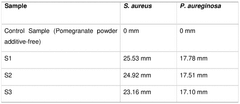
Figure IMGF000012_0001
Abstract
Description
[0001] DESCRIPTION
[0002] AN ARTIFICIAL LEATHER CONTAINING A BIO-BASED RAW MATERIAL AND A METHOD FOR THE PRODUCTION THEREOF
[0003] TECHNICAL FIELD
[0004] The invention relates to an antibacterial and biodegradable bio-leather with natural content suitable for use in, including but not limited to, accessories such as bags, wallets, belts, shoes, phone cases, textile products such as wearable jackets and trousers, seat covers in the automotive industry, and leather covers of airplanes, and to methods for the production thereof.
[0005] PRIOR ART
[0006] Artificial leather is a type of leather produced from polyvinyl chloride, known as PVC, and raw materials called polyurethane (PU). It is also called synthetic or imitation leather. Artificial leather is used in most of the textile industry as an alternative to authentic leather.
[0007] PVC (Polyvinyl Chloride) is a plastic polymer produced in the petrochemical industry and is produced from many chemical components derived from petroleum. The production of PVC is carried out by the reaction of ethylene and chloride, the two main components obtained from petroleum. The production of PVC begins with components derived from petroleum. Ethylene and chloride are used in the production of vinyl chloride, which forms the basic building blocks of PVC. This shows that PVC is an important product in the petrochemical industry and is produced with raw materials derived from petroleum. Petroleum-derived PVC and similar polymers are used in the production of artificial leather. These polymers are harmful to the environment and human health.
[0008] In the relevant technical field, since the use of petroleum-derived raw materials in obtaining leather is harmful to the environment and human health, research and development activities are carried out on the obtainment of artificial leathers to eliminate technical disadvantages. It is necessary for the artificial leathers obtained to have technical features similar to the products of the present art, according to the technical fields in which they are used. Accordingly, the subject of study is the obtainment of products that are not harmful to the environment and human health and have similar technical features to the products used in the present art.
[0009] In addition to the mentioned technical features, obtaining artificial leather products with antibacterial properties for the relevant technical fields will be an important development for human health.
[0010] As a result, all the above-mentioned problems have made it imperative to make an innovation in the relevant technical field.
[0011] SUMMARY OF THE INVENTION
[0012] In related technical fields, artificial leathers are used as raw materials in accessories such as bags, wallets, belts, shoes, phone cases, textile products such as wearable jackets and trousers, seat covers in the automotive industry, and leather covers of airplanes. In the present art, these artificial leathers are mostly obtained from petroleum- derived raw materials. Said artificial leathers pose a danger to both human and environmental health. In order to eliminate these technical disadvantages, the inventors of the present invention are carrying out studies for the relevant technical field. In order to achieve this, the inventors of the present invention provide an artificial leather containing bio-based raw materials for the relevant technical field and the production methods providing the same.
[0013] Further, the inventors of the present invention have carried out studies to give the artificial leathers used in various technical applications antibacterial properties. Accordingly, the inventors of the present invention disclose the obtainment of artificial leather with antibacterial properties and the production method providing the same.
[0014] It is important that the bio-based artificial leathers that the inventors of the present invention aim to obtain have technical features similar to the artificial leathers used in the present art. In this way, the obtained bio-based artificial leathers can be used instead of other artificial leather applications in the present art. Another object of the inventors of the present invention is being able to choose the raw material to be used in obtaining bio-based artificial leather from recyclable waste. In this way, it makes it possible both to reduce product costs and to recycle waste products into value-added products.
[0015] DETAILED DESCRIPTION OF THE INVENTION
[0016] In this detailed description, the subject of the invention relates to obtainment of a biobased artificial leather, and is described only with the examples that will not create any limiting effect for a better understanding of the subject.
[0017] Artificial leather is a type of leather produced from polyvinyl chloride, known as PVC, and raw materials called polyurethane (PU). It is also called synthetic or imitation leather. Artificial leather is used in most of the textile industry as an alternative to authentic leather. The conventional artificial leather used in the prior art is produced from polymers such as PVC, solvent-based polyurethanes, etc. These chemicals are harmful to the environment and human health. For this reason, in order to prevent the mentioned disadvantages, studies are carried out on the bio-leather subject to the present invention.
[0018] As a solution to the aforementioned technical problem, the inventors of the present invention have introduced a bio-based artificial leather containing at least the determined weight ratios of components in their bio-based raw materials.
[0019] In this invention, pomegranate peel is used as a bio-based raw material to obtain biobased artificial leather.
[0020] In the preferred embodiment, pomegranate peel is used as ground powders as a component to obtain bio-based artificial leather.
[0021] In another preferred embodiment, the extract of pomegranate peel is used as a component to obtain bio-based artificial leather.
[0022] Here, the expression "at least in the determined weight ratios" is important. In the studies, the inventors of the present invention have carried out studies on the amount of pomegranate peel that can be used to obtain artificial leather and have determined an effective amount range. What is critical here is that bio-based artificial leathers using pomegranate peel as a raw material should have similar technical features in order to be used in fields where artificial leathers of the present art are used. The person skilled in the art knows that the preferability of new artificial leathers that do not have similar technical features will be low in the relevant technical field.
[0023] Accordingly, the bio-based artificial leather subject to the present invention contains pomegranate peel powders and / or extracts with a value of 5% to 25% by weight as a component. It should be known that the bio-based raw material used in the value ranges mentioned herein replaces the petroleum-derived components used as raw materials in the present art. In this way, the use of petroleum-derived components as raw materials to obtain artificial leather is reduced.
[0024] As it is known, there is more than one auxiliary component in the obtainment of the biobased artificial leather subject to the present invention. In the art, many of these auxiliary components consist of synthetic chemical or petroleum-derived raw materials. If these auxiliary components also consist of bio-based components, the final product can be a bio-based artificial leather obtained from bio-based components up to 90% by weight. When considered in this way, it is clear that the amount of pomegranate peel component in the bio-based artificial leather product which contains a pomegranate peel component in the range of 5% to 25% by weight is substantial.
[0025] Another innovative aspect of the present invention is that said bio-based raw material has antibacterial properties. As it is known, bio-based raw materials contain phenolic components and these provide antibacterial properties to the raw material. In this way, it is clear that the final product containing this raw material will be a product with antibacterial properties. The inventors of the present invention have found that as the particle size decreases, the antibacterial property of the bio-based raw material increases. In the studies in accordance with this, it is presented as a technical teaching that bio-based raw materials with particle size below 400 microns provide better antibacterial property results. Accordingly, in a preferred embodiment in the present invention, pomegranate peel with a value in the range of 1 to 400 microns is used as a bio-based raw material. In this invention, polyurethane is used as a component in determined quantities. The function of polyurea in the production of artificial leather is well known by those skilled in the art. The aim of the present invention is to reduce the amount of use of petroleum- derived products such as polyurethane. In this way, the amount of polyurethane in the final product artificial leather is in the range of 60% to 80% by weight.
[0026] As mentioned before, in addition to components such as polyurethane and pomegranate peel, components such as at least one cross-linker for increasing mechanical strength, at least one thickener for achieving targeted consistency, at least one dye for obtaining targeted color, and other chemicals such as benzenesulfonyl hydrazide can be included in the production of artificial leather. These components are the components used in the production of artificial leather, as it is known in the art, and the scope of protection of the invention is not limited to what these components are. The technical teaching in the present invention is that if these components used are also from bio-based raw materials, it is possible to obtain artificial leathers containing high amounts of bio-based components.
[0027] As it is known in the art, fabrics are used to obtain artificial leathers. The function of these fabrics is very well known by those skilled in the art. Woven, knitted, nonwoven fabrics containing cotton, viscose, linen, polyester, recycled polyester, nylon, acrylic, rayon, polypropylene, etc. can be used as fabrics in preferred embodiments.
[0028] In a preferred embodiment, pomegranate peel, which is used as a raw material in the production of bio-based artificial leather can also be obtained from inert wastes. The use of waste pomegranate peels as raw materials to obtain artificial leather can reduce the production costs of the final products.
[0029] The present invention also provides a method for the production of artificial leather comprising pomegranate peel as a bio-based raw material for the relevant technical field. As mentioned before, pomegranate peel can also be added to the composition in the form of ground powder as a component or added to the component in the form of extracts. In the following lines, technical details about these production methods are provided. Method 1: Bio-based artificial leather production in the case that pomegranate peels are in powder form
[0030] The production of bio-based artificial leather in the case that pomegranate peels are in powder form is characterized in that it comprises the following processing steps:
[0031] - grinding pomegranate peels by means of a grinder and obtaining pomegranate peels with a particle size of less than 400 microns,
[0032] - obtaining a mixture solution by adding the obtained pomegranate peels to waterbased polyurethane,
[0033] - conveying the mixture solution to the single-blade coating device to be coated on the fabric,
[0034] - determining the coating thickness with a blade-fabric distance at a value in the range of 0.2 to 0.4 mm and coating the fabric by pouring the solution from the back of the blade onto the fabric,
[0035] - removing the fabric from the coating device and subjecting it to drying processes,
[0036] - returning the fabric to the single-blade coating device after the drying processes, and this time determining the coating thickness with a blade-fabric distance at a value in the range of 0.35 to 0.55 mm and coating the fabric by pouring the solution from the back of the blade onto the fabric,
[0037] - after this process, performing the second drying process.
[0038] The particle sizes of the pomegranate peels mentioned herein are at a value of 1 to 400 microns in a preferred embodiment.
[0039] In a preferred embodiment, pomegranate peel in powder form is added to water-based polyurethane in the range of 5% to 25% by weight. This value determined for pomegranate peel was determined as a result of research and development activities based on the targeted viscosity value of the mixture solution obtained and the applicability of the coating.
[0040] The mixture solution mentioned herein preferably contains a water-based polyurethane dispersion and other auxiliary components at a value in the range of 95% to 75% by weight. The most preferred embodiment is water-based polyurethane dispersion and other components at a value in the range of 95% to 85% by weight. In this way, the amount of water-based polyurethane and auxiliary chemicals used can be reduced.
[0041] In a preferred embodiment, the mixture solution is mixed by means of a mixer. This mixing process is preferably carried out between 15 and 30 minutes. In this way, a homogeneous mixture can be obtained.
[0042] Blade-fabric spacing is important in the fabric coating device. Depending on the desired coating thickness, the thickness amounts can be changed by changing the distance between the blade and the fabric and / or by making a progressive coating in succession. According to the researches done, the average value of coating thickness for artificial leathers, for example, shoes, flooring, clothing, etc., is in the range of 0.5-2.5 mm. Therefore, this product can be produced in the range of 0.8-2.5, becoming an alternative to artificial leathers used in these fields. In the example embodiment, this value is preferably 0.35 mm for the first coating process, while this value is preferably 0.45 mm for the second coating. In this way, a coated fabric with a thickness of 0.8 mm was obtained in the final product. In addition to thin coatings such as 0.105 mm, thick coating values such as 2.5 mm can be achieved with the prepared additive-containing PU mixtures. Applications can also be made by increasing the number of coating layers applied by two, three, four etc.
[0043] The temperature value determined for said drying processes is between 105 and 110 °C. Drying processes are preferably carried out for a period of 8 to 15 minutes.
[0044] Method 2: Bio-based artificial leather production in the case that pomegranate peels are in extract form
[0045] In this method, the application is carried out in 3 layers with a coating foulard device. Each coat process is technically detailed in this production method.
[0046] The production of bio-based artificial leather in the case that pomegranate peels are in extract form is characterized in that it comprises the following processing steps:
[0047] Preparing the first coating solution for performing the first coat process, the coating solution mentioned herein contains pomegranate extract at a value in the range of 3% to 25% by weight and water-based paint at a value in the range of 5% to 10% by weight, and the rest is water-based polyurethane and auxiliary components adding the obtained coating solution to the transfer paper, the thickness of the transfer paper mentioned herein is at a value in the range of 0.2 to 0.3 mm, adding the transfer paper to the foulard device, the distance between the two rollers in the foulard device mentioned herein is at a value in the range of 0.3 to 0.4 mm, coating the transfer paper as the first layer by means of a foulard device, subsequently performing the first drying processes,
[0048] - obtaining the second coating solution in parallel for the second coating processes, said second coating solution contains bio-based polyurethane with a high solids content at a value in the range of 25% to 40% by weight, cross-linker at a value in the range of 1% to 2% by weight, PVC pigment at a value in the range of 1% to 2% by weight, blowing agents at a value in the range of 0.1% to 1% by weight,
[0049] - and pomegranate peel powder at a value in the range of 3% to 15% by weight,
[0050] - replacing the transfer paper coated with the first layer on the foulard device to coat the second layer, and coating the second layer on the first layer with the foulard device, the distance between the two rollers in the foulard device mentioned herein is at a value in the range of 0.4 to 0.5 mm, subsequently performing the second drying processes, obtaining the third coating solution in parallel for the third coating processes, said third coating solution contains bio-based polyurethane at a value in the range of 25% to 40% by weight, cross-linker at a value in the range of 1% to 2% by weight, thickener at a value in the range of 0.5% to 1% by weight,
[0051] - replacing the transfer paper coated with the first and second layer on the foulard device to coat the third layer, and coating the third layer on the first layer with the foulard device, the distance between the two rollers in the foulard device mentioned herein is at a value in the range of 0.35 to 0.45 mm, subsequently performing the third drying processes, ensuring the adhesion of fabric and the transfer paper obtained as a result of the processes,
[0052] - subsequently, obtaining the artificial leather product with the separation of fabric and transfer paper.
[0053] The pomegranate peels contained in said second coating solution were ground to a particle size at a value in the range of 1 to 400 microns by means of a grinder. In this way, the highest efficiency has been achieved for its antibacterial properties. the final fabric coating thickness is aimed to be 0.8-1 .0 mm coating thickness, which is the most preferred in the artificial leather industry and has a wide usage area such as bags, clothing and accessories. In this regard, the distance between the two cylinders used in the foulard device was selected as 0.35 mm and a fabric with a coating thickness of 0.8-0.9 mm was obtained. Depending on the usage area and preferred material properties, it is possible to increase the coating thickness up to 2.5 mm thickness. The preferred temperature for drying the first layer of transfer paper after processing with the foulard device is at a value in the range of 120 to 130 °C. Said drying process is carried out for a period of 1 to 5 minutes.
[0054] The preferred temperature in the drying process of the transfer paper for obtaining the second layer is at a value in the range of 160 to 170 °C. Said drying process is carried out between 1 and 5 minutes.
[0055] The preferred temperature in the drying process of transfer paper for obtaining the third layer is at a value in the range of 120 to140 °C. Said drying process is carried out between 1 and 5 minutes.
[0056] In both of the mentioned methods, pomegranate peel powders or pomegranate peel extracts can be obtained from waste pomegranate peels.
[0057] In this invention, the extraction processes are not elaborated as they are carried out with components and methods known in the art. The scope of protection of the invention relates to the use of pomegranate peel extracts as a bio-based raw material to obtain artificial leather.
[0058] The inventors claim that the artificial leathers obtained by the aforementioned methods have antibacterial efficiency. The aforementioned claims are illustrated by the test, the technical details of which are given below.
[0059] Two common pathogenic bacteria, Staphylococcus aureus ATCC 6538 (a gram positive bacteria) and Pseudomonas aeruginosa ATCC 15442 (a gram negative bacteria) were used in the tests to evaluate the antibacterial activity of the fabrics. First, the bacteria were cultured on solid agar plates. A bacterial colony was then transferred to a tube filled with sterile Tryptic soy broth (TSB) and the culture was incubated in an incubator at 37 °C for 18 hours. Then, the bacterial solution was thoroughly mixed and 1 mL was transferred to a sterile Eppendorf tube and centrifuged. The resulting bacterial pellets were mixed with fresh culture medium (TSB) and transferred to a glass tube containing TSB and diluted to achieve a bacterial concentration of approximately 106CFU / mL. Individual microbial strains were inoculated onto separate culture plates by the smear method, and PPE-enriched fabric discs (S1 , S2 and S3) were prepared with 6 mm diameters and placed on the surface of petri dishes. After 24 hours of incubation at 37 °C, the diameter of the inhibition zones was measured using a digital micrometer (Absolute Digimatic, Germany). The diameter of the inhibition zone is expressed as 'mm'.
[0060] As can be seen in the table, the fabrics subject to the invention showed a strong antibacterial effect against both bacteria. However, it was observed that the PU coated fabric without pomegranate powder additive, which was determined as the control sample, did not form any inhibition zone and therefore did not show any antibacterial properties. Table 1 lists the antibacterial activities in S1 , S2 and S3 fabric discs. The inhibition zones formed by the samples Staphylococcus aureus ATCC 6538 and Pseudomonas aeruginosa ATCC 15442 in media at the end of 24 hours reveal the efficiency of the fabrics against both bacteria, and their efficiency against the grampositive group Staphylococcus aureus bacteria is higher than that of the gram-negative Pseudomonas aeruginosa.
[0061] Table 1. Measurement of antibacterial efficiency against samples
[0062] The scope of protection of the invention is specified in the appended claims and cannot be limited to what is described for illustrative purposes in this detailed description. It is clear that a person skilled in the art can produce similar embodiments in the light of what is explained above, without deviating from the main theme of the invention.
Claims
CLAIMS1. A method for the production of artificial leather comprising bio-based raw materials, especially suitable for use in accessories such as bags, wallets, belts, shoes, phone cases, textile products such as wearable jackets and trousers, seat covers in the automotive industry, and leather covers of airplanes, characterized in that it comprises the following process steps:- grinding pomegranate peels by means of a grinder and obtaining pomegranate peels with a particle size of less than 400 microns,- obtaining a mixture solution by adding the obtained pomegranate peels to a mixture of water-based polyurethane and an auxiliary component,- conveying the mixture solution to the single-blade coating device to be coated on the fabric,- determining the coating thickness with a blade-fabric distance at a value in the range of 0.2 to 0.4 mm and first coating the fabric by pouring the mixture solution from the back of the blade onto the fabric,- removing the fabric from the coating device and subjecting it to drying processes,- returning the fabric to the single-blade coating device after the drying processes, and this time determining the coating thickness with a blade-fabric distance at a value in the range of 0.35 to 0.55 mm and second coating the fabric by pouring the mixture solution from the back of the blade onto the fabric,- after this process, performing the second drying process.
2. A method according to Claim 1 , characterized in that said mixture solution contains powdered pomegranate peel at a value in the range of 5% to 25% by weight.
3. A method according to Claim 1 or 2, characterized in that the mixture solution contains water-based polyurethane and at least one auxiliary component at a value in the range of 25% to 95% by weight.
4. A method according to one of the preceding claims, characterized in that said auxiliary component is at least one selected from the group cross-linker forincreasing mechanical strength, thickener for achieving the targeted consistency, dye for obtaining targeted color or benzenesulfonyl hydrazide.
5. A method according to one of the preceding claims, characterized in that the mixing process is carried out for a period of 15 to 30 minutes.
6. A method according to one of the preceding claims, characterized in that the knife-fabric distance for the first coating is 0.35 mm.
7. A method according to one of the preceding claims, characterized in that the knife-fabric distance for the second coating is 0.45 mm.
8. A method according to one of the preceding claims, characterized in that said drying process is carried out at a temperature of 105 to 110 °C.
9. A method according to claim 8, characterized in that the drying process is carried out for 8 to 15 minutes.
10. A method for the production of artificial leather comprising bio-based raw materials, especially suitable for use in accessories such as bags, wallets, belts, shoes, phone cases, textile products such as wearable jackets and trousers, seat covers in the automotive industry, and leather covers of airplanes, characterized in that it comprises the following process steps:- preparing the first coating solution for performing the first coat process, the coating solution mentioned herein contains pomegranate extract at a value in the range of 3% to 25% by weight and water-based paint at a value in the range of 5% to 10% by weight, and the rest is water-based polyurethane and auxiliary components adding the obtained coating solution to the transfer paper, the thickness of the transfer paper mentioned herein is at a value in the range of 0.2 to 0.3 mm,adding the transfer paper to the foulard device, the distance between the two rollers in the foulard device mentioned herein is at a value in the range of 0.3 to 0.4 mm, coating the transfer paper as the first layer by means of a foulard device, subsequently performing the first drying processes,- obtaining the second coating solution in parallel for the second coating processes, said second coating solution contains bio-based polyurethane with a high solids content at a value in the range of 25% to 40% by weight, cross-linker at a value in the range of 1% to 2% by weight, PVC pigment at a value in the range of 1% to 2% by weight, blowing agents at a value in the range of 0.1% to 1% by weight, and pomegranate peel powder at a value in the range of 3% to 15% by weight,- replacing the transfer paper coated with the first layer on the foulard device to coat the second layer, and coating the second layer on the first layer with the foulard device, the distance between the two rollers in the foulard device mentioned herein is at a value in the range of 0.3 to 0.4 mm, subsequently performing the second drying processes, obtaining the third coating solution in parallel for the third coating processes, said third coating solution contains bio-based polyurethane at a value in the range of 25% to 40% by weight, cross-linker at a value in the range of 1% to 2% by weight, thickener at a value in the range of 0.5% to 1% by weight,replacing the transfer paper coated with the first and second layer on the foulard device to coat the third layer, and coating the third layer on the first layer with the foulard device, the distance between the two rollers in the foulard device mentioned herein is at a value in the range of 0.35 to 0.45 mm,- subsequently performing the third drying processes,- ensuring the adhesion of fabric and the transfer paper obtained as a result of the processes,- subsequently, obtaining the artificial leather product with the separation of fabric and transfer paper.
11. A method according to Claim 10, characterized in that the distance between the two rollers of the foulard device used in the first coating processes is at a value of 0.35 mm.
12. A method according to Claims 10-1 1 , characterized in that in first coat processes, the drying processes are carried out at a value in the range of 120 to 130 0C.
13. A method according to claim 12, characterized in that said drying process is carried out for a period of 1 to 5 minutes.
14. A method according to claims 10-13, characterized in that in second coat processes, the drying processes are carried out at a value in the range of 160 to 170 0C.
15. A method according to claim 14, characterized in that said drying process is carried out for a period of 1 to 5 minutes.
16. A method according to Claims 10-15, characterized in that in third coat processes, the drying processes are carried out at a value in the range of 120 to 140 0C.
17. A method according to claim 16, characterized in that said drying process is carried out for a period of 1 to 5 minutes.
18. A bio-based artificial leather containing pomegranate peels at a value in the range of 5% to 25% by weight as a component, obtained by a method according to one of the preceding claims.
Citation Information
Patent Citations
Low-smell and high-strength durable PVC artificial leather and production method thereof
CN103981728A
Low-odor no-formaldehyde PVC (Polyvinyl Chloride) artificial leather for vehicular seats and preparation method thereof
CN108894004A
Leather-like waterlaid sheets containing particulate fillers
US4011130A