ATR-FTIR ATR Correction: Effective Path Length, Dispersion Models And Accuracy
SEP 22, 20259 MIN READ
Generate Your Research Report Instantly with AI Agent
Patsnap Eureka helps you evaluate technical feasibility & market potential.
ATR-FTIR Technology Background and Objectives
Attenuated Total Reflection Fourier Transform Infrared Spectroscopy (ATR-FTIR) has evolved significantly since its inception in the 1960s, becoming an indispensable analytical technique across numerous scientific and industrial domains. This technology leverages the principle of total internal reflection, where an infrared beam passes through a crystal with high refractive index, creating an evanescent wave that penetrates the sample in contact with the crystal surface. The resulting spectrum provides valuable molecular composition information without extensive sample preparation.
The evolution of ATR-FTIR technology has been marked by continuous improvements in instrumentation, materials science, and data processing capabilities. Early systems suffered from limited sensitivity and reproducibility issues, while modern instruments offer enhanced spectral resolution, improved signal-to-noise ratios, and greater analytical precision. The development of advanced ATR crystals, including diamond, germanium, and zinc selenide, has expanded the application range of this technology across diverse sample types and environmental conditions.
Recent technological advancements have focused on miniaturization, portability, and integration with other analytical techniques, enabling real-time, in-situ measurements in previously inaccessible environments. These developments have positioned ATR-FTIR as a versatile tool for applications ranging from pharmaceutical quality control to environmental monitoring and materials characterization.
Despite these advances, significant challenges remain in the quantitative interpretation of ATR-FTIR spectra. The effective path length of the evanescent wave varies with wavelength, sample properties, and experimental conditions, introducing complexities in spectral analysis and quantification. Current correction methods often rely on simplified dispersion models that may not adequately account for all physical phenomena occurring at the crystal-sample interface.
The primary objective of our technical investigation is to comprehensively evaluate existing ATR correction methodologies, with particular emphasis on effective path length calculations and dispersion models. We aim to assess the accuracy, applicability, and limitations of current approaches across diverse sample matrices and experimental conditions. This evaluation will serve as the foundation for developing more robust correction algorithms that enhance the quantitative reliability of ATR-FTIR spectroscopy.
Additionally, we seek to explore emerging computational approaches, including machine learning and advanced mathematical modeling, that may offer novel solutions to longstanding challenges in ATR correction. By integrating theoretical advancements with practical implementation strategies, we aim to establish standardized protocols that improve measurement accuracy and facilitate cross-laboratory comparability of ATR-FTIR data.
The ultimate goal is to enhance the analytical power of ATR-FTIR technology, enabling more precise quantitative analysis and expanding its application scope in emerging fields such as biomedical diagnostics, advanced materials characterization, and process analytical technology.
The evolution of ATR-FTIR technology has been marked by continuous improvements in instrumentation, materials science, and data processing capabilities. Early systems suffered from limited sensitivity and reproducibility issues, while modern instruments offer enhanced spectral resolution, improved signal-to-noise ratios, and greater analytical precision. The development of advanced ATR crystals, including diamond, germanium, and zinc selenide, has expanded the application range of this technology across diverse sample types and environmental conditions.
Recent technological advancements have focused on miniaturization, portability, and integration with other analytical techniques, enabling real-time, in-situ measurements in previously inaccessible environments. These developments have positioned ATR-FTIR as a versatile tool for applications ranging from pharmaceutical quality control to environmental monitoring and materials characterization.
Despite these advances, significant challenges remain in the quantitative interpretation of ATR-FTIR spectra. The effective path length of the evanescent wave varies with wavelength, sample properties, and experimental conditions, introducing complexities in spectral analysis and quantification. Current correction methods often rely on simplified dispersion models that may not adequately account for all physical phenomena occurring at the crystal-sample interface.
The primary objective of our technical investigation is to comprehensively evaluate existing ATR correction methodologies, with particular emphasis on effective path length calculations and dispersion models. We aim to assess the accuracy, applicability, and limitations of current approaches across diverse sample matrices and experimental conditions. This evaluation will serve as the foundation for developing more robust correction algorithms that enhance the quantitative reliability of ATR-FTIR spectroscopy.
Additionally, we seek to explore emerging computational approaches, including machine learning and advanced mathematical modeling, that may offer novel solutions to longstanding challenges in ATR correction. By integrating theoretical advancements with practical implementation strategies, we aim to establish standardized protocols that improve measurement accuracy and facilitate cross-laboratory comparability of ATR-FTIR data.
The ultimate goal is to enhance the analytical power of ATR-FTIR technology, enabling more precise quantitative analysis and expanding its application scope in emerging fields such as biomedical diagnostics, advanced materials characterization, and process analytical technology.
Market Applications and Demand Analysis for ATR-FTIR
The global market for ATR-FTIR spectroscopy continues to expand significantly, driven by increasing demand across multiple industries. The pharmaceutical sector represents the largest market segment, where ATR-FTIR is extensively utilized for drug discovery, formulation development, and quality control processes. The technology's ability to provide accurate molecular characterization without sample preparation makes it invaluable for pharmaceutical manufacturers seeking to meet stringent regulatory requirements.
In the chemical industry, ATR-FTIR has become an essential analytical tool for material identification, purity assessment, and reaction monitoring. Companies are increasingly adopting this technology to optimize production processes and ensure product consistency. The polymer industry similarly benefits from ATR-FTIR for composition analysis and quality control, with growing applications in recycling operations where rapid material identification is crucial.
Environmental monitoring represents a rapidly expanding application area, with ATR-FTIR systems being deployed for water quality analysis, soil contamination assessment, and air pollution monitoring. The technology's portability and ability to detect trace contaminants have made it particularly valuable for field applications and continuous monitoring systems.
The food and beverage industry has embraced ATR-FTIR for authentication, adulteration detection, and quality control. As food safety regulations tighten globally, demand for rapid, non-destructive testing methods continues to grow. ATR-FTIR meets this need by providing immediate compositional analysis without complex sample preparation.
Academic and research institutions constitute another significant market segment, utilizing ATR-FTIR for fundamental research across disciplines including materials science, biochemistry, and environmental studies. The technology's versatility makes it a cornerstone analytical method in research laboratories worldwide.
Market analysis indicates the global ATR-FTIR market is projected to grow at a compound annual growth rate of approximately 6-7% through 2028. This growth is particularly pronounced in emerging economies where industrial expansion and increasing regulatory oversight are driving adoption of advanced analytical technologies.
The demand for more accurate ATR correction methods, improved effective path length calculations, and refined dispersion models is intensifying as applications become more sophisticated. End-users increasingly require higher precision for quantitative analysis, particularly in regulated industries where analytical accuracy directly impacts compliance and product quality.
In the chemical industry, ATR-FTIR has become an essential analytical tool for material identification, purity assessment, and reaction monitoring. Companies are increasingly adopting this technology to optimize production processes and ensure product consistency. The polymer industry similarly benefits from ATR-FTIR for composition analysis and quality control, with growing applications in recycling operations where rapid material identification is crucial.
Environmental monitoring represents a rapidly expanding application area, with ATR-FTIR systems being deployed for water quality analysis, soil contamination assessment, and air pollution monitoring. The technology's portability and ability to detect trace contaminants have made it particularly valuable for field applications and continuous monitoring systems.
The food and beverage industry has embraced ATR-FTIR for authentication, adulteration detection, and quality control. As food safety regulations tighten globally, demand for rapid, non-destructive testing methods continues to grow. ATR-FTIR meets this need by providing immediate compositional analysis without complex sample preparation.
Academic and research institutions constitute another significant market segment, utilizing ATR-FTIR for fundamental research across disciplines including materials science, biochemistry, and environmental studies. The technology's versatility makes it a cornerstone analytical method in research laboratories worldwide.
Market analysis indicates the global ATR-FTIR market is projected to grow at a compound annual growth rate of approximately 6-7% through 2028. This growth is particularly pronounced in emerging economies where industrial expansion and increasing regulatory oversight are driving adoption of advanced analytical technologies.
The demand for more accurate ATR correction methods, improved effective path length calculations, and refined dispersion models is intensifying as applications become more sophisticated. End-users increasingly require higher precision for quantitative analysis, particularly in regulated industries where analytical accuracy directly impacts compliance and product quality.
Current ATR Correction Challenges and Limitations
Despite significant advancements in ATR-FTIR spectroscopy, current ATR correction methodologies face several persistent challenges that limit their accuracy and reliability. The fundamental issue lies in the complexity of accurately determining the effective path length, which varies with wavelength, angle of incidence, refractive indices, and sample characteristics. This wavelength-dependent behavior creates a non-linear relationship that most correction algorithms struggle to address comprehensively.
Commercial software packages often implement simplified correction models that fail to account for the full range of optical phenomena occurring at the crystal-sample interface. These simplifications lead to systematic errors, particularly in quantitative analysis where precise concentration measurements are required. The dispersion effects of both the ATR crystal and sample material further complicate corrections, as refractive indices change across the spectral range.
Another significant limitation is the inadequate handling of anomalous dispersion near absorption bands. When the sample's refractive index changes rapidly near strong absorption features, standard correction models often produce artifacts or distortions in the corrected spectra. This phenomenon is particularly problematic for samples with sharp, intense absorption bands where the Kramers-Kronig relations significantly influence the optical properties.
The accuracy of ATR corrections is also compromised by assumptions about sample homogeneity and perfect contact with the crystal. In practice, many samples exhibit heterogeneity or incomplete contact, leading to variations in penetration depth that are not accounted for in standard models. This becomes especially problematic for rough surfaces, powders, or samples with varying density.
Current mathematical models also struggle with the trade-off between computational complexity and accuracy. More sophisticated models that incorporate comprehensive optical physics require significant computational resources and specialized knowledge to implement correctly, limiting their widespread adoption in routine analytical settings.
Validation of correction methods presents another challenge, as there is no universal standard for evaluating the accuracy of ATR corrections across different sample types. This leads to inconsistencies in how corrections are applied and interpreted across different laboratories and research groups.
Finally, the integration of advanced correction algorithms into user-friendly software remains limited. Many researchers must develop custom solutions or rely on approximations, creating barriers to the standardization of ATR correction methodologies in industrial and research applications. This fragmentation hinders the broader adoption of more accurate correction approaches and complicates cross-laboratory comparisons of spectral data.
Commercial software packages often implement simplified correction models that fail to account for the full range of optical phenomena occurring at the crystal-sample interface. These simplifications lead to systematic errors, particularly in quantitative analysis where precise concentration measurements are required. The dispersion effects of both the ATR crystal and sample material further complicate corrections, as refractive indices change across the spectral range.
Another significant limitation is the inadequate handling of anomalous dispersion near absorption bands. When the sample's refractive index changes rapidly near strong absorption features, standard correction models often produce artifacts or distortions in the corrected spectra. This phenomenon is particularly problematic for samples with sharp, intense absorption bands where the Kramers-Kronig relations significantly influence the optical properties.
The accuracy of ATR corrections is also compromised by assumptions about sample homogeneity and perfect contact with the crystal. In practice, many samples exhibit heterogeneity or incomplete contact, leading to variations in penetration depth that are not accounted for in standard models. This becomes especially problematic for rough surfaces, powders, or samples with varying density.
Current mathematical models also struggle with the trade-off between computational complexity and accuracy. More sophisticated models that incorporate comprehensive optical physics require significant computational resources and specialized knowledge to implement correctly, limiting their widespread adoption in routine analytical settings.
Validation of correction methods presents another challenge, as there is no universal standard for evaluating the accuracy of ATR corrections across different sample types. This leads to inconsistencies in how corrections are applied and interpreted across different laboratories and research groups.
Finally, the integration of advanced correction algorithms into user-friendly software remains limited. Many researchers must develop custom solutions or rely on approximations, creating barriers to the standardization of ATR correction methodologies in industrial and research applications. This fragmentation hinders the broader adoption of more accurate correction approaches and complicates cross-laboratory comparisons of spectral data.
Existing ATR Correction Models and Implementations
01 Effective path length determination in ATR-FTIR spectroscopy
Accurate determination of effective path length is crucial for quantitative analysis in ATR-FTIR spectroscopy. Various methods have been developed to calculate and calibrate the effective path length, which depends on factors such as the refractive indices of the ATR crystal and sample, angle of incidence, and wavelength of light. These calculations enable more precise concentration measurements and improved accuracy in spectroscopic analysis.- Effective path length determination in ATR-FTIR spectroscopy: Methods and systems for determining effective path length in ATR-FTIR spectroscopy, which is crucial for quantitative analysis. The effective path length depends on factors such as the refractive indices of the ATR crystal and sample, angle of incidence, and wavelength of light. Accurate determination of this parameter enables precise concentration measurements and improves the overall accuracy of spectroscopic analysis.
- Enhancing accuracy through calibration techniques: Various calibration techniques are employed to enhance the accuracy of ATR-FTIR spectroscopy measurements. These include the use of reference standards, multivariate calibration methods, and algorithms that compensate for variations in sample properties. Proper calibration accounts for instrumental drift, environmental factors, and sample-to-sample variations, resulting in more reliable and reproducible spectroscopic data.
- Advanced ATR crystal designs for improved path length control: Innovations in ATR crystal design focus on optimizing the effective path length and improving measurement accuracy. These designs include multi-reflection ATR elements, variable angle ATR accessories, and specialized crystal geometries. Advanced crystal materials with optimal refractive indices and surface treatments enhance the interaction between the evanescent wave and the sample, leading to better sensitivity and more accurate spectral data.
- Computational methods for path length correction: Computational approaches are developed to correct for variations in effective path length across different wavelengths in ATR-FTIR spectroscopy. These methods include mathematical models that account for the wavelength dependence of penetration depth, algorithms that normalize spectra based on calculated path lengths, and software solutions that apply appropriate correction factors. These computational techniques significantly improve the accuracy of quantitative analysis, especially when comparing measurements across different spectral regions.
- Real-time monitoring and adjustment of effective path length: Systems for real-time monitoring and adjustment of effective path length in ATR-FTIR spectroscopy enable dynamic optimization of measurement conditions. These systems incorporate feedback mechanisms that detect changes in sample properties or environmental conditions and automatically adjust measurement parameters. Real-time monitoring ensures consistent path length throughout the analysis, leading to more accurate and reliable spectroscopic data, particularly for samples that change over time or heterogeneous materials.
02 Enhancing accuracy through advanced calibration techniques
Advanced calibration techniques significantly improve the accuracy of ATR-FTIR spectroscopic measurements. These include multi-point calibration methods, reference material standardization, and algorithmic correction of systematic errors. By implementing these calibration approaches, researchers can minimize measurement uncertainties and achieve more reliable quantitative results, particularly when analyzing complex samples or when high precision is required.Expand Specific Solutions03 Innovations in ATR crystal design for improved path length control
Novel ATR crystal designs have been developed to provide better control over the effective path length. These innovations include specialized crystal geometries, multi-reflection systems, and variable-angle ATR accessories. Such designs allow for adjustable penetration depths of the evanescent wave, enabling optimization for different sample types and concentration ranges, ultimately leading to enhanced measurement accuracy and sensitivity.Expand Specific Solutions04 Computational methods for path length correction and accuracy enhancement
Computational approaches have been developed to correct for variations in effective path length and improve measurement accuracy. These include mathematical models that account for wavelength-dependent penetration depth, software algorithms that compensate for sample-specific optical properties, and machine learning techniques that optimize spectral interpretation. These computational methods enable more accurate quantitative analysis across diverse sample matrices.Expand Specific Solutions05 Real-time monitoring and adjustment of effective path length
Systems for real-time monitoring and adjustment of effective path length during ATR-FTIR measurements have been developed to maintain consistent accuracy. These systems incorporate feedback mechanisms that detect changes in measurement conditions and automatically adjust parameters to compensate. This approach is particularly valuable for in-process monitoring, quality control applications, and when analyzing samples with changing properties during measurement.Expand Specific Solutions
Leading Manufacturers and Research Institutions
ATR-FTIR ATR Correction technology is currently in a mature development stage, with a global market estimated at $1.2 billion and growing at 5-7% annually. The competitive landscape features established analytical instrument manufacturers alongside emerging specialized players. Leading companies like Thermo Fisher Scientific (through Thermo Electron Scientific Instruments) and Shimadzu Corp. dominate with comprehensive spectroscopy solutions, while Bruker Optik Holding maintains significant market share through specialized ATR-FTIR technologies. Emerging players like Spectrolytic GmbH and Irubis GmbH are driving innovation with application-specific solutions for oil condition monitoring and bioprocess analysis, respectively. Academic institutions including Heriot-Watt University and Université Catholique de Louvain contribute significantly to advancing correction algorithms and dispersion models, enhancing measurement accuracy across diverse applications.
Thermo Electron Scientific Instruments LLC
Technical Solution: Thermo Scientific has developed a comprehensive ATR correction framework called "Advanced ATR Correction" that addresses the wavelength-dependent penetration depth in ATR-FTIR spectroscopy. Their approach incorporates both empirical and theoretical models to calculate effective path length variations across the spectral range. The technology employs a multi-layer optical model that accounts for the complex refractive indices of both the ATR crystal and sample materials. Thermo's algorithms implement adaptive dispersion models that can be optimized based on sample characteristics, providing more accurate corrections for materials with varying optical properties. Their OMNIC software suite includes specialized modules for ATR correction that handle both the λ (wavelength) dependency and the refractive index variations, enabling more accurate quantitative analysis. The company has also developed methods to address the challenges of highly absorbing samples where traditional correction methods often fail[4][7].
Strengths: Highly integrated software solution with user-friendly implementation; excellent performance across diverse sample types; robust validation in pharmaceutical and polymer applications. Weaknesses: Some advanced features require significant user expertise; correction accuracy may be limited for extremely complex dispersion behaviors.
Shimadzu Corp.
Technical Solution: Shimadzu has developed an innovative approach to ATR-FTIR correction that combines theoretical optical models with machine learning algorithms to optimize correction parameters. Their technology addresses the challenges of effective path length calculations through a hybrid approach that incorporates both first-principles physics and empirical calibration. Shimadzu's LabSolutions IR software implements multiple dispersion models (including Cauchy, Sellmeier, and proprietary variants) that can be automatically selected based on spectral characteristics. The company has pioneered methods for handling anomalous dispersion near absorption bands, which traditionally cause significant errors in ATR corrections. Their approach includes specialized algorithms for correcting spectra of thin films and layered materials, where traditional ATR corrections often fail due to complex optical interactions. Shimadzu has also developed validation protocols to quantify correction accuracy across different material types and spectral regions[6][8].
Strengths: Advanced machine learning integration improves correction accuracy; excellent performance with thin films and layered materials; comprehensive validation methodology. Weaknesses: Machine learning components require extensive training data; complex implementation may be challenging for non-expert users.
Critical Patents and Literature on Effective Path Length
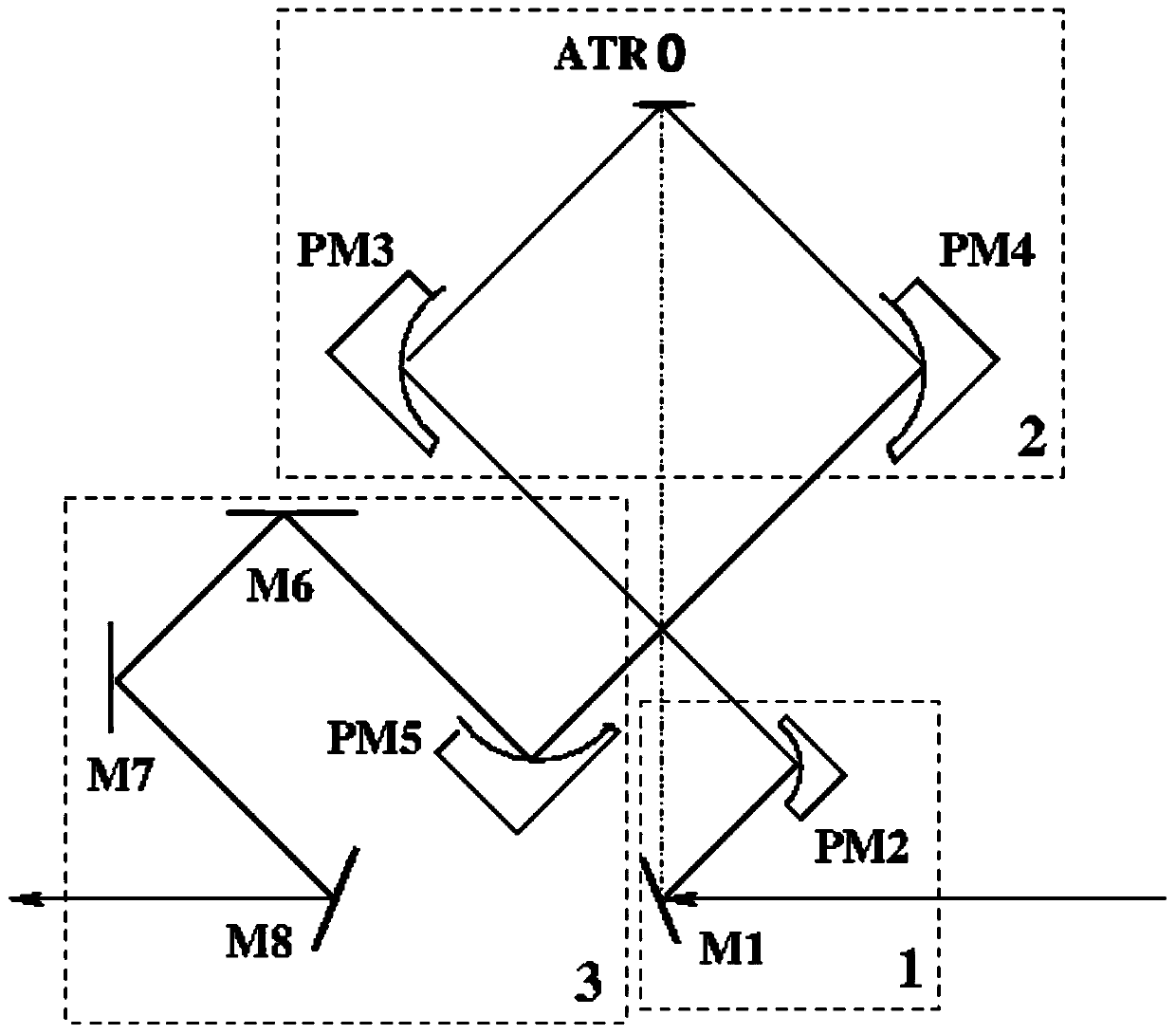
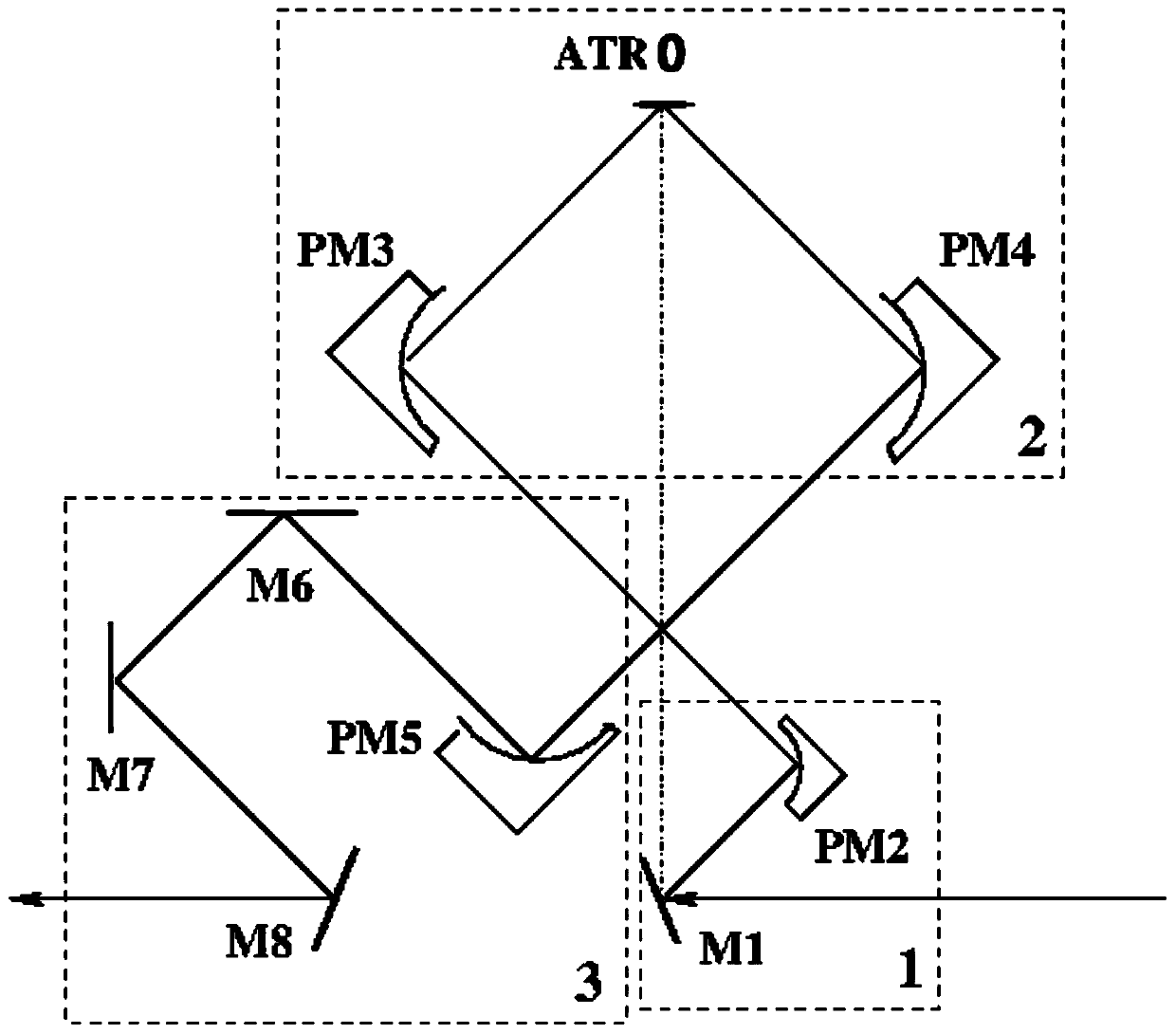
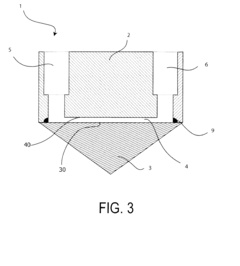
Attenuated total reflection device applied to Fourier transform spectrograph
PatentInactiveCN109975209A
Innovation
- A combination of off-axis parabolic mirrors and plane reflectors are used to achieve beam convergence and collimation, which improves the utilization of the spectrometer's output light flux. The optical signal coupling is enhanced through a symmetrical arrangement of dual off-axis parabolic mirrors to avoid optical signal loss caused by hollow light pipes. , simplifying the device structure.
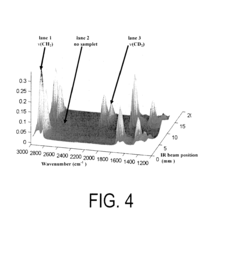
Device for multiple ATR analysis
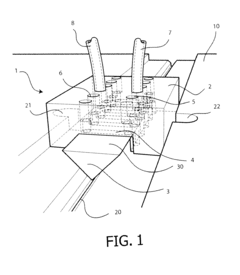
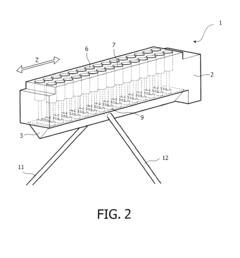
PatentInactiveEP2116839A1
Innovation
- A device with an ATR element featuring a sample compartment with multiple chambers, allowing for the analysis of multiple samples, and an organic compound for grafting the ATR element to stabilize it against hydrolysis, enabling simultaneous analysis of multiple samples and improving surface stability.
Standardization Efforts in ATR-FTIR Spectroscopy
The field of ATR-FTIR spectroscopy has witnessed significant efforts toward standardization in recent years, driven by the need for consistent and comparable analytical results across different laboratories and instrument platforms. These standardization initiatives primarily focus on addressing the variability in ATR correction methodologies, particularly concerning effective path length calculations and dispersion model applications.
International organizations such as ASTM International and the International Organization for Standardization (ISO) have developed specific guidelines for ATR-FTIR measurements. ASTM E2412 provides standardized practices for condition monitoring of in-service lubricants using FTIR spectroscopy, including ATR techniques, while ISO has established protocols for sample preparation and data processing in ATR-FTIR analysis.
The National Institute of Standards and Technology (NIST) has contributed significantly by developing reference materials specifically designed for validating ATR correction algorithms. These materials exhibit well-characterized optical properties across relevant spectral ranges, enabling researchers to benchmark their correction methodologies against established standards.
Academic-industrial consortia have emerged to address the challenges in ATR correction standardization. Notable examples include the Infrared and Raman Users Group (IRUG) and the Coblentz Society, which have established spectral databases with standardized ATR-corrected spectra for various materials. These resources serve as valuable references for validating correction algorithms and ensuring consistency in spectral interpretation.
Commercial instrument manufacturers have also played a crucial role by implementing standardized ATR correction algorithms in their software packages. Companies like Bruker, Thermo Fisher Scientific, and PerkinElmer have developed proprietary solutions that adhere to emerging standards while offering user-friendly interfaces for applying appropriate corrections based on sample characteristics.
Round-robin testing initiatives have been instrumental in evaluating the performance of different ATR correction methodologies across multiple laboratories. These collaborative studies have highlighted the variability in results when different dispersion models and effective path length calculations are employed, underscoring the need for harmonized approaches.
Recent standardization efforts have increasingly focused on machine learning approaches for optimizing ATR corrections. These methods leverage large datasets of well-characterized samples to develop adaptive correction algorithms that can account for sample-specific variations in refractive index and absorption characteristics, potentially offering more accurate corrections than traditional dispersion models.
International organizations such as ASTM International and the International Organization for Standardization (ISO) have developed specific guidelines for ATR-FTIR measurements. ASTM E2412 provides standardized practices for condition monitoring of in-service lubricants using FTIR spectroscopy, including ATR techniques, while ISO has established protocols for sample preparation and data processing in ATR-FTIR analysis.
The National Institute of Standards and Technology (NIST) has contributed significantly by developing reference materials specifically designed for validating ATR correction algorithms. These materials exhibit well-characterized optical properties across relevant spectral ranges, enabling researchers to benchmark their correction methodologies against established standards.
Academic-industrial consortia have emerged to address the challenges in ATR correction standardization. Notable examples include the Infrared and Raman Users Group (IRUG) and the Coblentz Society, which have established spectral databases with standardized ATR-corrected spectra for various materials. These resources serve as valuable references for validating correction algorithms and ensuring consistency in spectral interpretation.
Commercial instrument manufacturers have also played a crucial role by implementing standardized ATR correction algorithms in their software packages. Companies like Bruker, Thermo Fisher Scientific, and PerkinElmer have developed proprietary solutions that adhere to emerging standards while offering user-friendly interfaces for applying appropriate corrections based on sample characteristics.
Round-robin testing initiatives have been instrumental in evaluating the performance of different ATR correction methodologies across multiple laboratories. These collaborative studies have highlighted the variability in results when different dispersion models and effective path length calculations are employed, underscoring the need for harmonized approaches.
Recent standardization efforts have increasingly focused on machine learning approaches for optimizing ATR corrections. These methods leverage large datasets of well-characterized samples to develop adaptive correction algorithms that can account for sample-specific variations in refractive index and absorption characteristics, potentially offering more accurate corrections than traditional dispersion models.
Material-Specific Considerations for ATR Corrections
The application of ATR correction algorithms must be tailored to specific material properties to achieve accurate spectral interpretation. Different materials interact with infrared radiation in unique ways, necessitating customized approaches to ATR corrections. For crystalline materials, orientation effects can significantly impact the penetration depth and subsequent spectral features, requiring correction models that account for anisotropic optical properties.
Polymeric materials present distinct challenges due to their complex molecular structures and varying degrees of crystallinity. The effective path length in polymers can be influenced by factors such as chain orientation, crosslinking density, and molecular weight distribution. Correction algorithms must incorporate these material-specific parameters to accurately compensate for the wavelength-dependent penetration depth variations.
For biological samples, including tissues and cellular components, the high water content introduces additional complexities. Water exhibits strong absorption bands in the infrared region, which can overshadow other spectral features. Material-specific ATR corrections for biological samples must account for the unique refractive index properties of hydrated biomolecules and the potential for structural changes during measurement.
Inorganic materials and minerals require consideration of their unique optical properties, including birefringence and optical activity. The correction models must incorporate accurate dispersion relations specific to these materials, as the standard Kramers-Kronig relations may not fully capture their optical behavior across the entire infrared spectrum.
Thin films and layered structures represent another category requiring specialized correction approaches. When the sample thickness approaches or falls below the penetration depth, traditional ATR correction models may fail. Material-specific models must account for substrate effects, interfacial phenomena, and potential thickness gradients to provide accurate spectral information.
Heterogeneous materials, such as composites and blends, present perhaps the most significant challenge for ATR corrections. The effective refractive index varies spatially throughout these materials, leading to position-dependent penetration depths. Advanced correction algorithms incorporating spatial mapping of optical properties and statistical approaches to heterogeneity are necessary for these complex systems.
The development of material libraries containing optical constants across the infrared spectrum has significantly improved the accuracy of material-specific ATR corrections. These databases enable more precise modeling of the interaction between the evanescent wave and various sample types, leading to more reliable quantitative analysis of ATR-FTIR spectra across diverse material classes.
Polymeric materials present distinct challenges due to their complex molecular structures and varying degrees of crystallinity. The effective path length in polymers can be influenced by factors such as chain orientation, crosslinking density, and molecular weight distribution. Correction algorithms must incorporate these material-specific parameters to accurately compensate for the wavelength-dependent penetration depth variations.
For biological samples, including tissues and cellular components, the high water content introduces additional complexities. Water exhibits strong absorption bands in the infrared region, which can overshadow other spectral features. Material-specific ATR corrections for biological samples must account for the unique refractive index properties of hydrated biomolecules and the potential for structural changes during measurement.
Inorganic materials and minerals require consideration of their unique optical properties, including birefringence and optical activity. The correction models must incorporate accurate dispersion relations specific to these materials, as the standard Kramers-Kronig relations may not fully capture their optical behavior across the entire infrared spectrum.
Thin films and layered structures represent another category requiring specialized correction approaches. When the sample thickness approaches or falls below the penetration depth, traditional ATR correction models may fail. Material-specific models must account for substrate effects, interfacial phenomena, and potential thickness gradients to provide accurate spectral information.
Heterogeneous materials, such as composites and blends, present perhaps the most significant challenge for ATR corrections. The effective refractive index varies spatially throughout these materials, leading to position-dependent penetration depths. Advanced correction algorithms incorporating spatial mapping of optical properties and statistical approaches to heterogeneity are necessary for these complex systems.
The development of material libraries containing optical constants across the infrared spectrum has significantly improved the accuracy of material-specific ATR corrections. These databases enable more precise modeling of the interaction between the evanescent wave and various sample types, leading to more reliable quantitative analysis of ATR-FTIR spectra across diverse material classes.
Unlock deeper insights with Patsnap Eureka Quick Research — get a full tech report to explore trends and direct your research. Try now!
Generate Your Research Report Instantly with AI Agent
Supercharge your innovation with Patsnap Eureka AI Agent Platform!