ATR-FTIR Water Bands: Baseline Handling, Hydrogen Bonding And Quantitation Limits
SEP 22, 202510 MIN READ
Generate Your Research Report Instantly with AI Agent
Patsnap Eureka helps you evaluate technical feasibility & market potential.
ATR-FTIR Water Analysis Background and Objectives
Attenuated Total Reflection Fourier Transform Infrared Spectroscopy (ATR-FTIR) has emerged as a powerful analytical technique for water analysis since its development in the mid-20th century. The technology evolved from traditional transmission FTIR methods, offering significant advantages in sample preparation and analysis of aqueous solutions. The historical progression of ATR-FTIR technology has been marked by continuous improvements in sensitivity, resolution, and data processing capabilities, particularly in addressing the challenges associated with water band analysis.
Water molecules exhibit distinctive absorption bands in the infrared spectrum, primarily due to O-H stretching vibrations (3100-3600 cm⁻¹) and H-O-H bending modes (approximately 1640 cm⁻¹). These spectral features have been extensively studied since the 1960s, with significant advancements in understanding their relationship to hydrogen bonding networks and molecular interactions in aqueous environments.
The technical evolution trajectory shows a clear shift from qualitative to increasingly quantitative applications, driven by improvements in baseline correction algorithms, spectral processing techniques, and instrumentation. Modern ATR-FTIR systems incorporate advanced computational methods for handling the complex baseline issues inherent in water analysis, representing a significant leap forward from early manual correction approaches.
Current research objectives in ATR-FTIR water analysis focus on several key areas: enhancing baseline handling techniques to improve reproducibility and accuracy; developing more sophisticated models for interpreting hydrogen bonding patterns in various aqueous systems; and pushing the quantitation limits to detect increasingly lower concentrations of analytes in water matrices.
The field is moving toward integrating machine learning and artificial intelligence approaches for spectral interpretation, particularly for complex water environments where traditional analytical methods struggle. These computational advances aim to extract more meaningful information from water bands that have historically been challenging to analyze due to their broad, overlapping nature.
Industry applications driving this research include environmental monitoring, pharmaceutical quality control, biomedical diagnostics, and industrial process monitoring. Each sector presents unique challenges that require tailored approaches to water band analysis, from detecting trace contaminants in environmental samples to characterizing protein-water interactions in biological systems.
The ultimate technical goal is to establish ATR-FTIR as a reliable, sensitive, and user-friendly technique for quantitative water analysis across diverse applications, overcoming the inherent challenges of baseline instability, hydrogen bonding complexity, and detection limits that have historically limited its broader adoption in analytical chemistry.
Water molecules exhibit distinctive absorption bands in the infrared spectrum, primarily due to O-H stretching vibrations (3100-3600 cm⁻¹) and H-O-H bending modes (approximately 1640 cm⁻¹). These spectral features have been extensively studied since the 1960s, with significant advancements in understanding their relationship to hydrogen bonding networks and molecular interactions in aqueous environments.
The technical evolution trajectory shows a clear shift from qualitative to increasingly quantitative applications, driven by improvements in baseline correction algorithms, spectral processing techniques, and instrumentation. Modern ATR-FTIR systems incorporate advanced computational methods for handling the complex baseline issues inherent in water analysis, representing a significant leap forward from early manual correction approaches.
Current research objectives in ATR-FTIR water analysis focus on several key areas: enhancing baseline handling techniques to improve reproducibility and accuracy; developing more sophisticated models for interpreting hydrogen bonding patterns in various aqueous systems; and pushing the quantitation limits to detect increasingly lower concentrations of analytes in water matrices.
The field is moving toward integrating machine learning and artificial intelligence approaches for spectral interpretation, particularly for complex water environments where traditional analytical methods struggle. These computational advances aim to extract more meaningful information from water bands that have historically been challenging to analyze due to their broad, overlapping nature.
Industry applications driving this research include environmental monitoring, pharmaceutical quality control, biomedical diagnostics, and industrial process monitoring. Each sector presents unique challenges that require tailored approaches to water band analysis, from detecting trace contaminants in environmental samples to characterizing protein-water interactions in biological systems.
The ultimate technical goal is to establish ATR-FTIR as a reliable, sensitive, and user-friendly technique for quantitative water analysis across diverse applications, overcoming the inherent challenges of baseline instability, hydrogen bonding complexity, and detection limits that have historically limited its broader adoption in analytical chemistry.
Market Applications and Demand for Water Analysis via ATR-FTIR
The water analysis market using ATR-FTIR technology has experienced significant growth driven by increasing environmental regulations, industrial quality control requirements, and research applications. The global water testing and analysis market was valued at approximately $3.5 billion in 2022, with spectroscopic methods including ATR-FTIR representing a growing segment of this market.
Environmental monitoring represents the largest application sector, where ATR-FTIR provides rapid, non-destructive analysis of water contaminants including organic pollutants, microplastics, and dissolved solids. Regulatory agencies worldwide have strengthened water quality standards, creating sustained demand for advanced analytical technologies that can detect contaminants at increasingly lower concentrations.
The pharmaceutical industry constitutes another major market segment, where water purity is critical for drug formulation and manufacturing processes. ATR-FTIR offers advantages in detecting organic impurities and monitoring hydrogen bonding networks in pharmaceutical waters, which directly impact product stability and efficacy. The technology's ability to analyze samples with minimal preparation aligns with the industry's need for efficient quality control protocols.
Food and beverage manufacturers represent a rapidly expanding market for ATR-FTIR water analysis, particularly for monitoring water activity and hydrogen bonding states that affect product shelf life and quality. The technology enables real-time monitoring of production processes, allowing manufacturers to maintain consistent product quality while optimizing water usage.
Academic and research institutions demonstrate growing demand for ATR-FTIR water analysis capabilities, particularly for studying hydrogen bonding networks, water-protein interactions, and environmental water samples. The technology's versatility in analyzing complex aqueous systems makes it valuable for fundamental research across chemistry, biology, and environmental science.
Industrial applications, including semiconductor manufacturing, power generation, and chemical processing, require precise water quality monitoring where ATR-FTIR provides advantages in detecting organic contaminants that traditional methods might miss. The technology's ability to analyze water in different states (liquid, bound, structural) offers unique insights into industrial processes.
Market growth is further driven by technological advancements addressing key limitations in ATR-FTIR water analysis, particularly improvements in baseline handling, quantitation limits, and spectral resolution. Manufacturers developing systems with enhanced sensitivity, automated baseline correction algorithms, and advanced chemometric software are experiencing stronger market demand as these innovations directly address end-user pain points.
Environmental monitoring represents the largest application sector, where ATR-FTIR provides rapid, non-destructive analysis of water contaminants including organic pollutants, microplastics, and dissolved solids. Regulatory agencies worldwide have strengthened water quality standards, creating sustained demand for advanced analytical technologies that can detect contaminants at increasingly lower concentrations.
The pharmaceutical industry constitutes another major market segment, where water purity is critical for drug formulation and manufacturing processes. ATR-FTIR offers advantages in detecting organic impurities and monitoring hydrogen bonding networks in pharmaceutical waters, which directly impact product stability and efficacy. The technology's ability to analyze samples with minimal preparation aligns with the industry's need for efficient quality control protocols.
Food and beverage manufacturers represent a rapidly expanding market for ATR-FTIR water analysis, particularly for monitoring water activity and hydrogen bonding states that affect product shelf life and quality. The technology enables real-time monitoring of production processes, allowing manufacturers to maintain consistent product quality while optimizing water usage.
Academic and research institutions demonstrate growing demand for ATR-FTIR water analysis capabilities, particularly for studying hydrogen bonding networks, water-protein interactions, and environmental water samples. The technology's versatility in analyzing complex aqueous systems makes it valuable for fundamental research across chemistry, biology, and environmental science.
Industrial applications, including semiconductor manufacturing, power generation, and chemical processing, require precise water quality monitoring where ATR-FTIR provides advantages in detecting organic contaminants that traditional methods might miss. The technology's ability to analyze water in different states (liquid, bound, structural) offers unique insights into industrial processes.
Market growth is further driven by technological advancements addressing key limitations in ATR-FTIR water analysis, particularly improvements in baseline handling, quantitation limits, and spectral resolution. Manufacturers developing systems with enhanced sensitivity, automated baseline correction algorithms, and advanced chemometric software are experiencing stronger market demand as these innovations directly address end-user pain points.
Current Challenges in Water Bands Analysis and Baseline Correction
The analysis of water bands in ATR-FTIR spectroscopy faces several significant challenges that impede accurate data interpretation and quantitative analysis. One of the primary obstacles is the inherent complexity of baseline correction in regions dominated by water absorption. Water exhibits broad, intense absorption bands in the mid-infrared region, particularly around 3400 cm⁻¹ (O-H stretching) and 1640 cm⁻¹ (H-O-H bending), which often overlap with other functional groups of interest in biological and environmental samples.
Current baseline correction algorithms struggle with the non-linear nature of water absorption profiles, especially in samples with varying water content. Traditional methods such as polynomial fitting and rubber band correction often introduce artifacts or fail to adequately account for the complex curvature of water-influenced baselines. This results in inconsistent quantitative measurements and compromises the reproducibility of results across different laboratories and instruments.
The hydrogen bonding network in water presents another layer of complexity. The strength and configuration of hydrogen bonds significantly influence the position, shape, and intensity of water bands. Environmental factors such as temperature, pH, and the presence of dissolved solutes can dramatically alter these hydrogen bonding networks, causing spectral shifts that are difficult to standardize or predict. This variability makes it challenging to develop universal baseline correction protocols applicable across diverse sample types.
Instrument-specific variations further compound these challenges. Different ATR crystal materials (e.g., diamond, germanium, zinc selenide) exhibit varying degrees of water absorption and penetration depths, leading to inconsistent spectral responses. The quality of crystal-sample contact also influences the intensity and shape of water bands, introducing additional variables that must be controlled for reliable analysis.
Detection limit issues represent another critical challenge. At low concentrations, water bands may be indistinguishable from background noise, while at high concentrations, they can saturate the detector and mask signals from analytes of interest. Establishing reliable quantitation limits for water in complex matrices remains problematic, particularly when attempting to detect trace amounts of water in predominantly organic samples or vice versa.
Recent attempts to address these challenges have included machine learning approaches for adaptive baseline correction and multivariate statistical methods to account for water band variability. However, these solutions often require extensive training datasets and may not be generalizable across different sample types or instrumental configurations. The lack of standardized protocols for water band analysis continues to hinder progress in fields ranging from pharmaceutical quality control to environmental monitoring.
Current baseline correction algorithms struggle with the non-linear nature of water absorption profiles, especially in samples with varying water content. Traditional methods such as polynomial fitting and rubber band correction often introduce artifacts or fail to adequately account for the complex curvature of water-influenced baselines. This results in inconsistent quantitative measurements and compromises the reproducibility of results across different laboratories and instruments.
The hydrogen bonding network in water presents another layer of complexity. The strength and configuration of hydrogen bonds significantly influence the position, shape, and intensity of water bands. Environmental factors such as temperature, pH, and the presence of dissolved solutes can dramatically alter these hydrogen bonding networks, causing spectral shifts that are difficult to standardize or predict. This variability makes it challenging to develop universal baseline correction protocols applicable across diverse sample types.
Instrument-specific variations further compound these challenges. Different ATR crystal materials (e.g., diamond, germanium, zinc selenide) exhibit varying degrees of water absorption and penetration depths, leading to inconsistent spectral responses. The quality of crystal-sample contact also influences the intensity and shape of water bands, introducing additional variables that must be controlled for reliable analysis.
Detection limit issues represent another critical challenge. At low concentrations, water bands may be indistinguishable from background noise, while at high concentrations, they can saturate the detector and mask signals from analytes of interest. Establishing reliable quantitation limits for water in complex matrices remains problematic, particularly when attempting to detect trace amounts of water in predominantly organic samples or vice versa.
Recent attempts to address these challenges have included machine learning approaches for adaptive baseline correction and multivariate statistical methods to account for water band variability. However, these solutions often require extensive training datasets and may not be generalizable across different sample types or instrumental configurations. The lack of standardized protocols for water band analysis continues to hinder progress in fields ranging from pharmaceutical quality control to environmental monitoring.
Established Methods for Baseline Handling in Water Band Analysis
01 Water band analysis in ATR-FTIR spectroscopy
ATR-FTIR spectroscopy can be used to analyze water bands in various samples. The water bands in the infrared spectrum provide valuable information about the structure and interactions of water molecules. These bands are typically observed in the regions of 3200-3600 cm⁻¹ (O-H stretching) and 1600-1700 cm⁻¹ (H-O-H bending). The analysis of these bands can help in understanding the water content, hydration state, and water-molecule interactions in different materials.- Water band analysis in ATR-FTIR spectroscopy: ATR-FTIR spectroscopy can be used to analyze water bands in various samples. The strong absorption of water in the infrared region presents both challenges and opportunities for analysis. Specific water bands can be identified and monitored to study hydration states, water content, and molecular interactions in samples. These bands are particularly important in biological samples, pharmaceutical formulations, and environmental analysis where water content is critical.
- Baseline handling techniques for ATR-FTIR spectra: Proper baseline handling is essential for accurate ATR-FTIR spectroscopic analysis. Various mathematical and computational methods can be employed to correct baseline drift, remove artifacts, and enhance spectral quality. These techniques include polynomial fitting, derivative spectroscopy, and advanced algorithms that can automatically detect and correct baseline issues. Effective baseline handling improves quantitative analysis and ensures reproducible results, especially when analyzing complex samples with overlapping bands.
- Hydrogen bonding characterization using ATR-FTIR: ATR-FTIR spectroscopy is a powerful tool for studying hydrogen bonding interactions in various systems. The technique can detect shifts in vibrational frequencies that occur due to hydrogen bond formation, providing insights into molecular structure and intermolecular interactions. By analyzing specific bands associated with hydrogen bonding, researchers can determine bond strength, orientation, and dynamics. This is particularly valuable in studying biological macromolecules, polymers, and liquid systems where hydrogen bonding plays a crucial role in determining physical properties.
- Quantitation limits and sensitivity enhancement in ATR-FTIR: Determining and improving quantitation limits is crucial for analytical applications of ATR-FTIR spectroscopy. Various approaches can enhance sensitivity, including advanced sampling techniques, signal averaging, and chemometric methods. The detection and quantitation limits depend on factors such as sample preparation, instrument configuration, and data processing algorithms. Improvements in optical components, detector technology, and computational methods have significantly lowered detection limits, making ATR-FTIR suitable for trace analysis in environmental, pharmaceutical, and forensic applications.
- Advanced data processing for ATR-FTIR spectral analysis: Advanced data processing techniques are essential for extracting meaningful information from ATR-FTIR spectra, particularly when dealing with complex samples or overlapping bands. Multivariate statistical methods, machine learning algorithms, and chemometric approaches can be applied to enhance spectral resolution, identify components in mixtures, and perform quantitative analysis. These techniques help overcome challenges related to water interference, baseline variations, and spectral overlap, enabling more accurate and reliable analysis of complex systems.
02 Baseline handling techniques in ATR-FTIR
Proper baseline handling is crucial for accurate analysis of ATR-FTIR spectra. Various techniques can be employed to correct baseline distortions, including polynomial fitting, derivative methods, and advanced algorithms. These methods help in removing background noise, correcting for atmospheric interference, and compensating for instrumental drift. Effective baseline correction enhances the accuracy of quantitative analysis and improves the detection of subtle spectral features, particularly in complex samples with overlapping bands.Expand Specific Solutions03 Hydrogen bonding characterization using ATR-FTIR
ATR-FTIR spectroscopy is an effective tool for characterizing hydrogen bonding interactions in various systems. The frequency, intensity, and shape of O-H, N-H, and other hydrogen-bonded group stretching bands provide information about the strength and nature of hydrogen bonds. Changes in these spectral features can be used to monitor hydrogen bond formation, breaking, and rearrangement in response to external stimuli such as temperature, pressure, or chemical environment. This analysis is particularly valuable in studying biomolecules, polymers, and liquid systems.Expand Specific Solutions04 Quantitation limits and sensitivity enhancement in ATR-FTIR
Determining and improving quantitation limits is essential for reliable ATR-FTIR analysis. Various approaches can be used to enhance sensitivity, including multiple reflection ATR crystals, advanced detector technologies, and signal processing algorithms. The detection and quantitation limits are influenced by factors such as sample preparation, instrument configuration, and data processing methods. Optimization of these parameters can significantly improve the ability to detect and quantify low-concentration analytes, making ATR-FTIR suitable for trace analysis applications.Expand Specific Solutions05 Advanced data processing for ATR-FTIR spectral analysis
Advanced data processing techniques enhance the information extracted from ATR-FTIR spectra. These include multivariate statistical methods, machine learning algorithms, and chemometric approaches such as principal component analysis and partial least squares regression. Such techniques help in handling complex spectral data, extracting meaningful patterns, and correlating spectral features with sample properties. They are particularly valuable for analyzing water bands in the presence of interfering signals, resolving overlapping peaks, and performing quantitative analysis in complex matrices.Expand Specific Solutions
Leading Manufacturers and Research Groups in ATR-FTIR Technology
ATR-FTIR water band analysis is currently in a growth phase, with the market expanding due to increasing applications in pharmaceutical, environmental, and energy sectors. The global spectroscopy market, which includes ATR-FTIR technology, is projected to reach approximately $20 billion by 2025. Technical maturity varies across applications, with companies demonstrating different specialization levels. Pharmaceutical leaders like Janssen Pharmaceutica and Vertex Pharmaceuticals have advanced capabilities in quantitative analysis of water bands, while RedShiftBio has innovated with Microfluidic Modulation Spectroscopy. In the energy sector, ExxonMobil and Saudi Aramco have developed proprietary baseline correction methods. Academic institutions like The University of Queensland and Shandong University contribute significantly to fundamental research, particularly in hydrogen bonding characterization and detection limit improvements.
ExxonMobil Technology & Engineering Co.
Technical Solution: ExxonMobil has developed advanced ATR-FTIR spectroscopic techniques for water band analysis in petroleum products. Their approach involves sophisticated baseline correction algorithms that address the challenges of hydrogen bonding interference in the 3200-3600 cm-1 region. The company employs a multi-point baseline correction method combined with second derivative spectroscopy to enhance the detection and quantification of water in complex hydrocarbon matrices. Their technology utilizes specialized ATR crystals with optimized incident angles to maximize sensitivity for water detection, achieving quantitation limits as low as 50 ppm in certain petroleum applications. ExxonMobil's system incorporates automated calibration procedures that account for temperature-dependent variations in hydrogen bonding patterns, ensuring reliable measurements across different operational conditions in refineries and production facilities.
Strengths: Superior baseline stability in complex hydrocarbon matrices; excellent reproducibility in field conditions; integration with existing refinery monitoring systems. Weaknesses: Higher implementation costs compared to conventional methods; requires specialized training for operators; performance may degrade with highly viscous samples.
The Regents of the University of California
Technical Solution: The University of California research teams have developed several advanced methodologies for ATR-FTIR water band analysis across multiple campuses. Their approach combines fundamental spectroscopic research with practical applications in environmental monitoring, biomedical diagnostics, and materials science. UC researchers have pioneered the use of 2D correlation spectroscopy to resolve overlapping water bands and distinguish different hydrogen bonding environments in complex biological samples. Their methodology incorporates machine learning algorithms for automated baseline correction that adapt to sample-specific characteristics, significantly improving quantitation accuracy. The UC system has developed specialized ATR accessories with variable angle capabilities that optimize the penetration depth of the evanescent wave for different sample types, enhancing sensitivity for water detection. Their research has established new quantitation limits for water in various matrices, achieving detection limits as low as 10 ppm in certain applications through signal averaging and advanced processing techniques. UC researchers have also developed novel calibration approaches that account for the non-linear response of water bands across concentration ranges.
Strengths: Cutting-edge research incorporating the latest advances in spectroscopic theory and data analysis; comprehensive approach addressing both fundamental and applied aspects; extensive validation across diverse sample types. Weaknesses: Some techniques remain primarily research-focused rather than commercially implemented; requires significant expertise to implement fully; some methods demand expensive instrumentation beyond standard FTIR capabilities.
Key Technical Innovations in Hydrogen Bonding Detection
Device for multiple ATR analysis
PatentInactiveEP2116839A1
Innovation
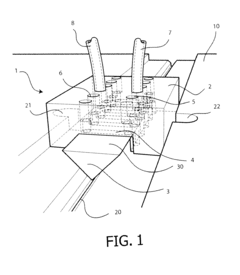
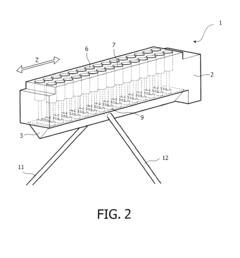
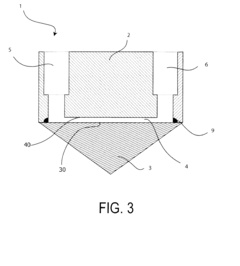
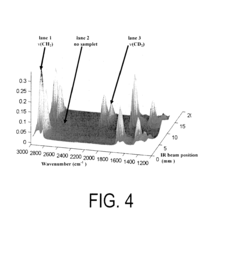
- A device with an ATR element featuring a sample compartment with multiple chambers, allowing for the analysis of multiple samples, and an organic compound for grafting the ATR element to stabilize it against hydrolysis, enabling simultaneous analysis of multiple samples and improving surface stability.
Method for predicting total petroleum hydrocarbon concentration in soils
PatentActiveUS20180017540A1
Innovation
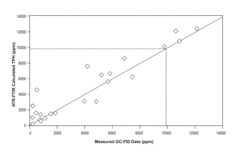
- A method using attenuated total reflectance (ATR) spectroscopy combined with Fourier transform infrared (FTIR) spectroscopy and partial least squares regression analysis to generate a site-specific predictive model for TPH concentration, allowing for rapid field measurements without the need for solvent extraction or sample drying, utilizing a handheld FTIR spectrometer with ATR window and correlating data with GC-FID results.

Standardization and Calibration Protocols for Water Analysis
Standardization and calibration protocols are essential for ensuring reliable and reproducible water analysis using ATR-FTIR spectroscopy. The development of these protocols requires careful consideration of the unique challenges presented by water bands in infrared spectra, particularly regarding baseline handling, hydrogen bonding effects, and quantitation limits.
Effective standardization begins with sample preparation procedures that minimize variability. This includes controlling temperature during measurement, as thermal fluctuations significantly affect hydrogen bonding networks in water and consequently alter spectral features. Research indicates that temperature variations as small as 1°C can produce detectable shifts in O-H stretching bands, necessitating precise temperature control systems during analysis.
Baseline correction methodologies must be systematically defined and validated for water analysis. The broad nature of water absorption bands, particularly in the 3400-3200 cm⁻¹ and 1640 cm⁻¹ regions, presents unique challenges for accurate baseline determination. Comparative studies have demonstrated that polynomial fitting algorithms of 3rd to 5th order typically provide optimal baseline correction for water bands, though this may vary depending on sample complexity and spectral range.
Calibration curves for water quantification require careful design to account for non-linear responses at varying concentrations. The establishment of appropriate concentration ranges is critical, as ATR-FTIR exhibits different sensitivity regimes for water analysis. Current research suggests optimal quantitation limits between 0.1% and 5% water content for most ATR-FTIR systems, with detection limits approaching 0.05% under optimized conditions.
Reference standards must be meticulously selected to match the matrix composition of analytical samples. Deuterated water (D₂O) standards have proven valuable for calibration purposes, as they provide distinct spectral features that can be used as internal references without interfering with H₂O bands. Additionally, certified reference materials with precisely known water content should be incorporated into calibration protocols.
Validation procedures must address the specific challenges of hydrogen bonding effects on spectral features. This includes assessing the impact of different solvent environments on water band characteristics and incorporating appropriate correction factors. Statistical validation approaches, including determination of precision, accuracy, linearity, and robustness parameters, should be tailored specifically for water analysis applications.
Interlaboratory comparison studies have demonstrated that standardized protocols can reduce measurement variability by up to 80% compared to non-standardized approaches. These findings underscore the importance of establishing comprehensive calibration and standardization methodologies for water analysis using ATR-FTIR spectroscopy, particularly when quantitative results are required for regulatory compliance or quality control applications.
Effective standardization begins with sample preparation procedures that minimize variability. This includes controlling temperature during measurement, as thermal fluctuations significantly affect hydrogen bonding networks in water and consequently alter spectral features. Research indicates that temperature variations as small as 1°C can produce detectable shifts in O-H stretching bands, necessitating precise temperature control systems during analysis.
Baseline correction methodologies must be systematically defined and validated for water analysis. The broad nature of water absorption bands, particularly in the 3400-3200 cm⁻¹ and 1640 cm⁻¹ regions, presents unique challenges for accurate baseline determination. Comparative studies have demonstrated that polynomial fitting algorithms of 3rd to 5th order typically provide optimal baseline correction for water bands, though this may vary depending on sample complexity and spectral range.
Calibration curves for water quantification require careful design to account for non-linear responses at varying concentrations. The establishment of appropriate concentration ranges is critical, as ATR-FTIR exhibits different sensitivity regimes for water analysis. Current research suggests optimal quantitation limits between 0.1% and 5% water content for most ATR-FTIR systems, with detection limits approaching 0.05% under optimized conditions.
Reference standards must be meticulously selected to match the matrix composition of analytical samples. Deuterated water (D₂O) standards have proven valuable for calibration purposes, as they provide distinct spectral features that can be used as internal references without interfering with H₂O bands. Additionally, certified reference materials with precisely known water content should be incorporated into calibration protocols.
Validation procedures must address the specific challenges of hydrogen bonding effects on spectral features. This includes assessing the impact of different solvent environments on water band characteristics and incorporating appropriate correction factors. Statistical validation approaches, including determination of precision, accuracy, linearity, and robustness parameters, should be tailored specifically for water analysis applications.
Interlaboratory comparison studies have demonstrated that standardized protocols can reduce measurement variability by up to 80% compared to non-standardized approaches. These findings underscore the importance of establishing comprehensive calibration and standardization methodologies for water analysis using ATR-FTIR spectroscopy, particularly when quantitative results are required for regulatory compliance or quality control applications.
Environmental Applications and Regulatory Compliance
ATR-FTIR spectroscopy has emerged as a critical analytical tool in environmental monitoring and regulatory compliance frameworks worldwide. The technique's ability to detect and quantify water-related compounds makes it particularly valuable for environmental agencies tasked with monitoring water quality and contamination levels. Regulatory bodies including the Environmental Protection Agency (EPA) in the United States, the European Environment Agency (EEA), and similar organizations globally have increasingly incorporated ATR-FTIR methodologies into their standard testing protocols.
The handling of water bands in ATR-FTIR analysis directly impacts compliance with environmental regulations concerning maximum contaminant levels in drinking water, industrial effluents, and natural water bodies. Proper baseline correction techniques are essential for accurate quantification of pollutants at the parts-per-billion levels often mandated by regulatory standards. Environmental laboratories must demonstrate proficiency in managing these water band interferences to maintain their certification status.
Hydrogen bonding characterization through ATR-FTIR provides crucial insights into the interaction between contaminants and water molecules, helping regulators assess the environmental fate and transport of pollutants. This information guides the development of remediation strategies and informs risk assessment models used in regulatory decision-making processes. The ability to distinguish between different hydrogen bonding states has proven particularly valuable in monitoring emerging contaminants such as per- and polyfluoroalkyl substances (PFAS).
Quantitation limits represent a significant consideration in environmental compliance, as regulatory thresholds continue to decrease with improved understanding of toxicological impacts. Advanced ATR-FTIR methodologies that effectively manage water band interference can achieve detection limits that satisfy increasingly stringent regulatory requirements. Environmental monitoring programs have documented substantial improvements in detection sensitivity when implementing optimized baseline correction algorithms specifically designed for water-rich samples.
Several international standards organizations, including ISO and ASTM, have developed specific protocols for ATR-FTIR analysis in environmental applications that address water band management. These standardized methods ensure consistency in regulatory enforcement across jurisdictions and provide a framework for quality assurance in environmental testing laboratories. Compliance with these standards often requires demonstration of proficiency in handling the specific challenges posed by water bands in environmental samples.
The integration of ATR-FTIR data into environmental compliance reporting systems has streamlined regulatory oversight processes while improving the reliability of contamination assessments. Modern environmental information systems now incorporate spectral databases that account for water band variations, enabling more accurate automated compliance verification. This technological advancement has enhanced the efficiency of regulatory monitoring programs while reducing the administrative burden on both regulated entities and enforcement agencies.
The handling of water bands in ATR-FTIR analysis directly impacts compliance with environmental regulations concerning maximum contaminant levels in drinking water, industrial effluents, and natural water bodies. Proper baseline correction techniques are essential for accurate quantification of pollutants at the parts-per-billion levels often mandated by regulatory standards. Environmental laboratories must demonstrate proficiency in managing these water band interferences to maintain their certification status.
Hydrogen bonding characterization through ATR-FTIR provides crucial insights into the interaction between contaminants and water molecules, helping regulators assess the environmental fate and transport of pollutants. This information guides the development of remediation strategies and informs risk assessment models used in regulatory decision-making processes. The ability to distinguish between different hydrogen bonding states has proven particularly valuable in monitoring emerging contaminants such as per- and polyfluoroalkyl substances (PFAS).
Quantitation limits represent a significant consideration in environmental compliance, as regulatory thresholds continue to decrease with improved understanding of toxicological impacts. Advanced ATR-FTIR methodologies that effectively manage water band interference can achieve detection limits that satisfy increasingly stringent regulatory requirements. Environmental monitoring programs have documented substantial improvements in detection sensitivity when implementing optimized baseline correction algorithms specifically designed for water-rich samples.
Several international standards organizations, including ISO and ASTM, have developed specific protocols for ATR-FTIR analysis in environmental applications that address water band management. These standardized methods ensure consistency in regulatory enforcement across jurisdictions and provide a framework for quality assurance in environmental testing laboratories. Compliance with these standards often requires demonstration of proficiency in handling the specific challenges posed by water bands in environmental samples.
The integration of ATR-FTIR data into environmental compliance reporting systems has streamlined regulatory oversight processes while improving the reliability of contamination assessments. Modern environmental information systems now incorporate spectral databases that account for water band variations, enabling more accurate automated compliance verification. This technological advancement has enhanced the efficiency of regulatory monitoring programs while reducing the administrative burden on both regulated entities and enforcement agencies.
Unlock deeper insights with Patsnap Eureka Quick Research — get a full tech report to explore trends and direct your research. Try now!
Generate Your Research Report Instantly with AI Agent
Supercharge your innovation with Patsnap Eureka AI Agent Platform!