ATR-FTIR Contamination Forensics: Additives, Plasticizers And Residue Libraries
SEP 22, 20259 MIN READ
Generate Your Research Report Instantly with AI Agent
Patsnap Eureka helps you evaluate technical feasibility & market potential.
ATR-FTIR Spectroscopy Background and Objectives
Attenuated Total Reflectance Fourier Transform Infrared (ATR-FTIR) spectroscopy has emerged as a cornerstone analytical technique in materials science and forensic analysis since its development in the mid-20th century. The technology evolved from traditional FTIR methods, offering significant advantages in sample preparation and analysis speed. By utilizing the principle of evanescent waves, ATR-FTIR enables direct surface examination of materials without extensive preparation, revolutionizing contamination analysis across multiple industries.
The evolution of ATR-FTIR technology has been marked by continuous improvements in sensitivity, resolution, and data processing capabilities. Early systems required substantial sample quantities and offered limited spectral resolution, whereas modern instruments can detect trace contaminants at parts-per-billion levels with remarkable accuracy. The integration of advanced computational methods, including machine learning algorithms and comprehensive spectral libraries, has further enhanced the analytical power of this technology.
Current technological trends in ATR-FTIR focus on miniaturization, portability, and integration with complementary analytical techniques. Handheld ATR-FTIR devices now enable field analysis, while hyphenated systems combining ATR-FTIR with techniques such as Raman spectroscopy or mass spectrometry provide multi-dimensional analytical capabilities. These developments have expanded the application scope from traditional laboratory settings to on-site industrial quality control and environmental monitoring.
The primary objective of ATR-FTIR contamination forensics is to establish reliable methodologies for identifying and characterizing additives, plasticizers, and residues in complex material systems. This includes developing comprehensive spectral libraries specifically tailored to industrial contaminants, enhancing pattern recognition algorithms for automated identification, and standardizing analytical protocols to ensure reproducibility across different laboratory environments.
Additionally, the technology aims to bridge the gap between qualitative identification and quantitative analysis, enabling precise determination of contaminant concentrations even in complex matrices. This quantitative capability is particularly crucial for regulatory compliance in industries such as pharmaceuticals, food packaging, and consumer electronics, where strict limits on certain additives and plasticizers are enforced.
Long-term technological goals include real-time monitoring capabilities, integration with industrial Internet of Things (IoT) frameworks, and development of predictive models that can anticipate contamination issues before they manifest as product failures. The ultimate vision is to establish ATR-FTIR as a cornerstone technology in quality assurance systems, enabling proactive rather than reactive approaches to contamination management across manufacturing sectors.
The evolution of ATR-FTIR technology has been marked by continuous improvements in sensitivity, resolution, and data processing capabilities. Early systems required substantial sample quantities and offered limited spectral resolution, whereas modern instruments can detect trace contaminants at parts-per-billion levels with remarkable accuracy. The integration of advanced computational methods, including machine learning algorithms and comprehensive spectral libraries, has further enhanced the analytical power of this technology.
Current technological trends in ATR-FTIR focus on miniaturization, portability, and integration with complementary analytical techniques. Handheld ATR-FTIR devices now enable field analysis, while hyphenated systems combining ATR-FTIR with techniques such as Raman spectroscopy or mass spectrometry provide multi-dimensional analytical capabilities. These developments have expanded the application scope from traditional laboratory settings to on-site industrial quality control and environmental monitoring.
The primary objective of ATR-FTIR contamination forensics is to establish reliable methodologies for identifying and characterizing additives, plasticizers, and residues in complex material systems. This includes developing comprehensive spectral libraries specifically tailored to industrial contaminants, enhancing pattern recognition algorithms for automated identification, and standardizing analytical protocols to ensure reproducibility across different laboratory environments.
Additionally, the technology aims to bridge the gap between qualitative identification and quantitative analysis, enabling precise determination of contaminant concentrations even in complex matrices. This quantitative capability is particularly crucial for regulatory compliance in industries such as pharmaceuticals, food packaging, and consumer electronics, where strict limits on certain additives and plasticizers are enforced.
Long-term technological goals include real-time monitoring capabilities, integration with industrial Internet of Things (IoT) frameworks, and development of predictive models that can anticipate contamination issues before they manifest as product failures. The ultimate vision is to establish ATR-FTIR as a cornerstone technology in quality assurance systems, enabling proactive rather than reactive approaches to contamination management across manufacturing sectors.
Market Demand for Contamination Forensics Solutions
The contamination forensics market is experiencing significant growth driven by increasing regulatory requirements across multiple industries. Manufacturing sectors including pharmaceuticals, food and beverage, electronics, and aerospace demand advanced analytical solutions to identify contaminants that can compromise product quality, safety, and compliance. The global market for analytical instrumentation in contamination analysis was valued at approximately $4.7 billion in 2022 and is projected to grow at a compound annual growth rate of 5.8% through 2028.
ATR-FTIR (Attenuated Total Reflection-Fourier Transform Infrared) spectroscopy has emerged as a particularly valuable technique within this market due to its non-destructive nature, minimal sample preparation requirements, and rapid analysis capabilities. The specific segment focusing on additives, plasticizers, and residue identification is expanding at an above-average rate of 7.2% annually, reflecting the increasing complexity of manufacturing materials and stricter quality control standards.
Pharmaceutical companies represent the largest market segment, accounting for nearly 32% of demand for contamination forensics solutions. This is primarily driven by FDA and EMA regulations requiring thorough investigation of any foreign particulate matter in drug products. The food and beverage industry follows closely at 28% market share, with growing consumer awareness regarding food safety and increasing regulatory scrutiny creating demand for advanced contaminant identification methods.
Electronics manufacturing constitutes approximately 18% of the market, where even microscopic contaminants can cause catastrophic failures in sensitive components. The remaining market share is distributed among aerospace, automotive, and other precision manufacturing industries where product integrity is critical.
Geographically, North America leads the market with 38% share, followed by Europe (29%) and Asia-Pacific (26%). The Asia-Pacific region demonstrates the fastest growth trajectory at 8.5% annually, driven by rapid industrialization and increasing adoption of international quality standards.
Customer surveys indicate that key purchasing factors include analysis speed (cited by 87% of respondents), comprehensive reference libraries (76%), ease of use (72%), and integration capabilities with existing quality management systems (68%). The ability to identify not only the contaminant but also its source is increasingly valued, with 91% of quality managers rating this capability as "highly important" or "critical" to their operations.
Market forecasts suggest that demand for specialized contamination forensics solutions focusing on additives and plasticizers will continue to accelerate as industries face more complex material compositions and increasingly stringent regulatory requirements.
ATR-FTIR (Attenuated Total Reflection-Fourier Transform Infrared) spectroscopy has emerged as a particularly valuable technique within this market due to its non-destructive nature, minimal sample preparation requirements, and rapid analysis capabilities. The specific segment focusing on additives, plasticizers, and residue identification is expanding at an above-average rate of 7.2% annually, reflecting the increasing complexity of manufacturing materials and stricter quality control standards.
Pharmaceutical companies represent the largest market segment, accounting for nearly 32% of demand for contamination forensics solutions. This is primarily driven by FDA and EMA regulations requiring thorough investigation of any foreign particulate matter in drug products. The food and beverage industry follows closely at 28% market share, with growing consumer awareness regarding food safety and increasing regulatory scrutiny creating demand for advanced contaminant identification methods.
Electronics manufacturing constitutes approximately 18% of the market, where even microscopic contaminants can cause catastrophic failures in sensitive components. The remaining market share is distributed among aerospace, automotive, and other precision manufacturing industries where product integrity is critical.
Geographically, North America leads the market with 38% share, followed by Europe (29%) and Asia-Pacific (26%). The Asia-Pacific region demonstrates the fastest growth trajectory at 8.5% annually, driven by rapid industrialization and increasing adoption of international quality standards.
Customer surveys indicate that key purchasing factors include analysis speed (cited by 87% of respondents), comprehensive reference libraries (76%), ease of use (72%), and integration capabilities with existing quality management systems (68%). The ability to identify not only the contaminant but also its source is increasingly valued, with 91% of quality managers rating this capability as "highly important" or "critical" to their operations.
Market forecasts suggest that demand for specialized contamination forensics solutions focusing on additives and plasticizers will continue to accelerate as industries face more complex material compositions and increasingly stringent regulatory requirements.
Current State and Challenges in ATR-FTIR Analysis
ATR-FTIR (Attenuated Total Reflectance-Fourier Transform Infrared) spectroscopy has emerged as a cornerstone technology in contamination forensics, particularly for identifying additives, plasticizers, and residues in various materials. Currently, the global adoption of this technology spans multiple industries including pharmaceuticals, polymers, food safety, and environmental monitoring, with significant advancements in both hardware capabilities and analytical methodologies.
The current state of ATR-FTIR analysis is characterized by high-resolution spectral acquisition with modern instruments capable of achieving spectral resolution below 0.5 cm^-1, enabling the differentiation of closely related chemical compounds. Commercial systems now feature advanced sampling interfaces that require minimal to no sample preparation, allowing for rapid analysis of solids, liquids, and thin films directly.
Database development represents a significant achievement in the field, with extensive libraries containing spectral signatures of thousands of additives, plasticizers, and industrial contaminants. These libraries have been developed through collaborative efforts between academic institutions, industry partners, and regulatory bodies, creating standardized reference materials for contamination identification.
Despite these advancements, several technical challenges persist in ATR-FTIR analysis. Sample heterogeneity remains a significant obstacle, as contaminants may not be uniformly distributed throughout materials, leading to sampling errors and inconsistent results. The detection limits of ATR-FTIR systems typically range from 0.1-1% by weight, making trace contamination analysis difficult without sample pre-concentration techniques.
Spectral interpretation presents another major challenge, particularly when analyzing complex mixtures where overlapping absorption bands can obscure the identification of individual components. Current algorithms for spectral deconvolution and mixture analysis still struggle with highly complex samples containing multiple contaminants at varying concentrations.
The geographic distribution of ATR-FTIR technology development shows concentration in North America, Western Europe, and East Asia, with emerging research centers in China and India contributing significantly to method development. However, standardization across different laboratories and instrument platforms remains inconsistent, creating challenges for result comparability and method transfer.
Environmental factors such as humidity and temperature can significantly impact measurement accuracy, requiring stringent control measures that are not always feasible in field applications. Additionally, the analysis of certain material types, particularly those with high water content or strong background absorption, continues to present technical difficulties that limit the universal applicability of ATR-FTIR in contamination forensics.
The current state of ATR-FTIR analysis is characterized by high-resolution spectral acquisition with modern instruments capable of achieving spectral resolution below 0.5 cm^-1, enabling the differentiation of closely related chemical compounds. Commercial systems now feature advanced sampling interfaces that require minimal to no sample preparation, allowing for rapid analysis of solids, liquids, and thin films directly.
Database development represents a significant achievement in the field, with extensive libraries containing spectral signatures of thousands of additives, plasticizers, and industrial contaminants. These libraries have been developed through collaborative efforts between academic institutions, industry partners, and regulatory bodies, creating standardized reference materials for contamination identification.
Despite these advancements, several technical challenges persist in ATR-FTIR analysis. Sample heterogeneity remains a significant obstacle, as contaminants may not be uniformly distributed throughout materials, leading to sampling errors and inconsistent results. The detection limits of ATR-FTIR systems typically range from 0.1-1% by weight, making trace contamination analysis difficult without sample pre-concentration techniques.
Spectral interpretation presents another major challenge, particularly when analyzing complex mixtures where overlapping absorption bands can obscure the identification of individual components. Current algorithms for spectral deconvolution and mixture analysis still struggle with highly complex samples containing multiple contaminants at varying concentrations.
The geographic distribution of ATR-FTIR technology development shows concentration in North America, Western Europe, and East Asia, with emerging research centers in China and India contributing significantly to method development. However, standardization across different laboratories and instrument platforms remains inconsistent, creating challenges for result comparability and method transfer.
Environmental factors such as humidity and temperature can significantly impact measurement accuracy, requiring stringent control measures that are not always feasible in field applications. Additionally, the analysis of certain material types, particularly those with high water content or strong background absorption, continues to present technical difficulties that limit the universal applicability of ATR-FTIR in contamination forensics.
Current Methodologies for Additives and Plasticizers Detection
01 ATR-FTIR spectroscopy for contamination identification
Attenuated Total Reflection Fourier Transform Infrared (ATR-FTIR) spectroscopy is used as a non-destructive analytical technique for identifying contaminants in various materials. This method allows for rapid analysis of surface contamination by measuring the changes in an internally reflected infrared beam when it comes into contact with a sample. The technique is particularly valuable in forensic investigations as it can identify organic and inorganic contaminants without extensive sample preparation.- ATR-FTIR spectroscopy for contamination identification: Attenuated Total Reflection Fourier Transform Infrared (ATR-FTIR) spectroscopy is used as a non-destructive analytical technique for identifying contaminants in various materials. This method allows for rapid surface analysis without sample preparation, making it ideal for forensic applications. The technique works by measuring the changes in an internally reflected infrared beam when it comes into contact with a sample, providing characteristic spectral fingerprints of contaminants.
- Machine learning and AI for contamination analysis: Advanced machine learning algorithms and artificial intelligence systems are being integrated with ATR-FTIR spectroscopy to enhance contamination identification capabilities. These computational approaches can rapidly analyze complex spectral data, identify patterns, and classify contaminants with high accuracy. The combination of spectroscopic techniques with AI enables automated forensic analysis, reducing human error and increasing efficiency in contamination identification workflows.
- Portable and in-situ contamination detection systems: Portable ATR-FTIR systems have been developed for on-site contamination forensics, allowing for real-time analysis in field conditions. These systems integrate miniaturized spectrometers with robust sampling interfaces that can be deployed at crime scenes or industrial environments. The portable nature of these devices enables immediate contamination identification without transporting samples to a laboratory, preserving sample integrity and accelerating investigation processes.
- Database-driven contamination identification frameworks: Comprehensive spectral databases coupled with matching algorithms form the backbone of modern contamination forensics. These systems contain reference spectra of thousands of potential contaminants, allowing for rapid identification through comparison with unknown samples. The databases are continuously updated with new contaminant profiles and can be integrated with case management systems to maintain chain of custody in forensic investigations.
- Multi-analytical approaches combining ATR-FTIR with other techniques: Combining ATR-FTIR with complementary analytical techniques such as Raman spectroscopy, mass spectrometry, or scanning electron microscopy provides more comprehensive contamination identification. These multi-analytical approaches overcome the limitations of individual techniques and offer confirmatory analysis for complex contamination scenarios. The integration of multiple data sources enhances the reliability of forensic findings and provides a more complete characterization of contaminants.
02 Machine learning algorithms for contamination analysis
Advanced machine learning algorithms are being integrated with ATR-FTIR spectroscopy to enhance contamination identification capabilities. These algorithms can process complex spectral data, recognize patterns, and classify contaminants with high accuracy. By comparing unknown contaminant spectra with reference databases, these systems can rapidly identify substances even in trace amounts, significantly improving forensic investigation efficiency and reliability.Expand Specific Solutions03 Portable ATR-FTIR systems for on-site forensic analysis
Portable and field-deployable ATR-FTIR systems have been developed for on-site contamination identification in forensic investigations. These compact devices allow investigators to perform real-time analysis at crime scenes or industrial incidents without transporting samples to a laboratory. The portability enables rapid decision-making during investigations and reduces the risk of sample degradation or cross-contamination during transport.Expand Specific Solutions04 Database systems for contamination fingerprinting
Comprehensive spectral database systems have been developed to support ATR-FTIR contamination forensics. These databases contain reference spectra of thousands of potential contaminants, allowing for rapid matching and identification of unknown substances. The fingerprinting approach compares unique spectral features of contaminants against these databases, enabling forensic analysts to identify specific compounds, their sources, and potentially their manufacturing origins.Expand Specific Solutions05 Multi-analytical approaches combining ATR-FTIR with other techniques
Integrated analytical approaches that combine ATR-FTIR with complementary techniques such as Raman spectroscopy, SEM-EDX, or mass spectrometry provide comprehensive contamination identification. These multi-analytical methods overcome the limitations of individual techniques and deliver more definitive contamination characterization. The combined approach is particularly valuable for complex forensic investigations where contaminants may be mixtures or present in challenging matrices.Expand Specific Solutions
Leading Organizations in ATR-FTIR Technology
ATR-FTIR Contamination Forensics is currently in a growth phase, with the market expanding due to increasing demand for advanced analytical techniques in quality control and forensic investigations. The global market size for spectroscopic analysis in contamination detection is projected to reach significant value as industries prioritize product integrity and regulatory compliance. Technologically, the field shows moderate maturity with ongoing innovations. Leading players demonstrate varying levels of specialization: FUJIFILM and 3M Innovative Properties focus on imaging and material science applications; Orono Spectral Solutions specializes directly in chemical sampling and analytical methods; while companies like BASF, ExxonMobil, and DSM leverage ATR-FTIR for quality control in their chemical manufacturing processes. Academic institutions like Johns Hopkins University and USC contribute fundamental research advancing the field's capabilities.
BASF Corp.
Technical Solution: BASF has developed an integrated ATR-FTIR contamination forensics platform specifically designed for identifying additives and plasticizers in polymer systems. Their technology combines high-resolution FTIR spectroscopy with proprietary sampling accessories optimized for different material types. The system features BASF's extensive spectral libraries containing over 20,000 industrial compounds, with particular strength in polymer additives, plasticizers, and processing aids used across the chemical industry. Their approach incorporates advanced chemometric algorithms that can identify and quantify multiple components in complex mixtures, even at low concentrations. The technology includes specialized sample preparation protocols that enhance detection sensitivity for trace contaminants while minimizing matrix interference effects. BASF's system also features a knowledge-based expert system that correlates spectral data with potential contamination sources based on manufacturing processes, providing not just identification but also likely contamination pathways.
Strengths: Unparalleled expertise in chemical additives and plasticizers; extensive proprietary spectral libraries covering thousands of industrial compounds; integrated with manufacturing process knowledge. Weaknesses: May be optimized primarily for BASF's own chemical portfolio; potentially complex system requiring specialized training.
3M Innovative Properties Co.
Technical Solution: 3M has engineered a sophisticated ATR-FTIR contamination forensics system specifically optimized for industrial applications involving polymers, adhesives, and coatings. Their technology utilizes multi-bounce diamond ATR accessories coupled with high-resolution FTIR spectrometers to achieve exceptional sensitivity for detecting trace additives and plasticizers. The system incorporates 3M's proprietary spectral libraries containing over 15,000 industrial compounds, including comprehensive databases of polymer additives, plasticizers, and processing aids used across multiple industries. Their solution features advanced chemometric algorithms that can deconvolute complex spectra to identify multiple contaminants simultaneously, even in the presence of overlapping spectral features. The technology includes specialized sampling protocols for different material types and surface preparations to optimize signal quality. 3M's system also incorporates machine learning models trained on thousands of real-world contamination cases to improve identification accuracy and reduce false positives.
Strengths: Extensive industrial experience across multiple sectors; proprietary spectral libraries developed through decades of materials research; integrated solution covering sampling through analysis. Weaknesses: System may be optimized primarily for 3M's own materials and processes; potentially higher cost compared to academic or open-source solutions.
Key Innovations in Spectral Libraries Development
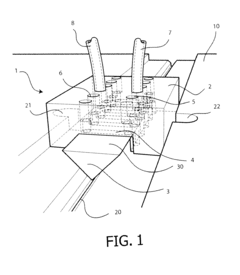
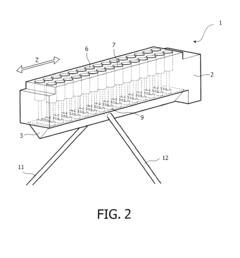
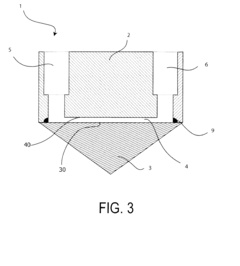
Device for multiple ATR analysis
PatentInactiveEP2116839A1
Innovation
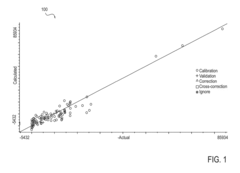
- A device with an ATR element featuring a sample compartment with multiple chambers, allowing for the analysis of multiple samples, and an organic compound for grafting the ATR element to stabilize it against hydrolysis, enabling simultaneous analysis of multiple samples and improving surface stability.
Method for predicting total petroleum hydrocarbon concentration in soils
PatentActiveUS20180017540A1
Innovation
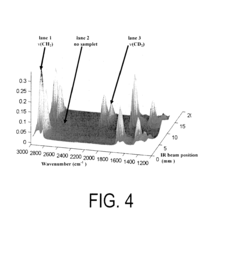
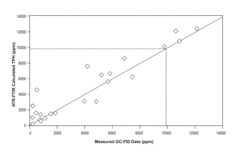
- A method using attenuated total reflectance (ATR) spectroscopy combined with Fourier transform infrared (FTIR) spectroscopy and partial least squares regression analysis to generate a site-specific predictive model for TPH concentration, allowing for rapid field measurements without the need for solvent extraction or sample drying, utilizing a handheld FTIR spectrometer with ATR window and correlating data with GC-FID results.

Quality Control Standards for Forensic Spectroscopy
The establishment of robust quality control standards is paramount in forensic spectroscopy, particularly for ATR-FTIR contamination forensics involving additives, plasticizers, and residue libraries. These standards ensure the reliability, reproducibility, and admissibility of spectroscopic evidence in legal proceedings.
Standardized protocols for sample preparation, instrument calibration, and data collection form the foundation of quality control in forensic spectroscopy. For ATR-FTIR analysis, these protocols must address variables such as crystal cleanliness, pressure application, and environmental conditions that can significantly impact spectral quality and interpretation.
Reference materials play a critical role in quality assurance frameworks. Certified reference materials (CRMs) for common additives and plasticizers enable laboratories to validate their analytical methods and establish traceability to recognized standards. The development of comprehensive spectral libraries requires rigorous validation processes to ensure the accuracy of reference spectra for forensic comparisons.
Proficiency testing programs specifically designed for ATR-FTIR contamination analysis provide an external assessment of laboratory performance. These programs typically involve the distribution of blind samples containing known additives or contaminants, allowing laboratories to demonstrate their analytical capabilities and identify potential areas for improvement.
Statistical methods for spectral data analysis must be standardized to ensure consistent interpretation across different laboratories. This includes protocols for baseline correction, spectral preprocessing, and chemometric analysis techniques that enhance the discriminatory power of ATR-FTIR in forensic applications.
Documentation requirements constitute another essential component of quality control standards. Detailed records of instrument maintenance, calibration history, and analytical procedures provide the necessary foundation for establishing the reliability of forensic results and withstanding legal scrutiny.
Accreditation standards such as ISO/IEC 17025 provide a comprehensive framework for quality management in forensic laboratories. These standards address technical competence, impartiality, and consistent operation of laboratories performing ATR-FTIR analysis for contamination forensics.
Validation studies must demonstrate the method's specificity, sensitivity, and limitations when applied to complex matrices containing multiple additives or degraded plasticizers. This includes establishing detection limits, quantification ranges, and potential interferents that could compromise analytical results.
Ongoing research continues to refine quality control standards for ATR-FTIR contamination forensics, with particular emphasis on developing standardized approaches for the analysis of emerging additives and novel plasticizer formulations that present unique analytical challenges.
Standardized protocols for sample preparation, instrument calibration, and data collection form the foundation of quality control in forensic spectroscopy. For ATR-FTIR analysis, these protocols must address variables such as crystal cleanliness, pressure application, and environmental conditions that can significantly impact spectral quality and interpretation.
Reference materials play a critical role in quality assurance frameworks. Certified reference materials (CRMs) for common additives and plasticizers enable laboratories to validate their analytical methods and establish traceability to recognized standards. The development of comprehensive spectral libraries requires rigorous validation processes to ensure the accuracy of reference spectra for forensic comparisons.
Proficiency testing programs specifically designed for ATR-FTIR contamination analysis provide an external assessment of laboratory performance. These programs typically involve the distribution of blind samples containing known additives or contaminants, allowing laboratories to demonstrate their analytical capabilities and identify potential areas for improvement.
Statistical methods for spectral data analysis must be standardized to ensure consistent interpretation across different laboratories. This includes protocols for baseline correction, spectral preprocessing, and chemometric analysis techniques that enhance the discriminatory power of ATR-FTIR in forensic applications.
Documentation requirements constitute another essential component of quality control standards. Detailed records of instrument maintenance, calibration history, and analytical procedures provide the necessary foundation for establishing the reliability of forensic results and withstanding legal scrutiny.
Accreditation standards such as ISO/IEC 17025 provide a comprehensive framework for quality management in forensic laboratories. These standards address technical competence, impartiality, and consistent operation of laboratories performing ATR-FTIR analysis for contamination forensics.
Validation studies must demonstrate the method's specificity, sensitivity, and limitations when applied to complex matrices containing multiple additives or degraded plasticizers. This includes establishing detection limits, quantification ranges, and potential interferents that could compromise analytical results.
Ongoing research continues to refine quality control standards for ATR-FTIR contamination forensics, with particular emphasis on developing standardized approaches for the analysis of emerging additives and novel plasticizer formulations that present unique analytical challenges.
Data Management for Spectral Reference Libraries
Effective data management is crucial for the development and utilization of spectral reference libraries in ATR-FTIR contamination forensics. These libraries serve as the foundation for identifying unknown additives, plasticizers, and residues through spectral matching algorithms. The exponential growth of spectral data necessitates robust database architectures that can accommodate diverse spectral formats while maintaining data integrity and accessibility.
Modern spectral reference libraries require standardized data formats to ensure interoperability between different analytical platforms. The JCAMP-DX format has emerged as an industry standard, allowing seamless exchange of spectral data across various software environments. Additionally, the development of XML-based formats has further enhanced metadata integration capabilities, enabling more comprehensive documentation of sample preparation methods, instrument parameters, and environmental conditions during spectral acquisition.
Database indexing strategies play a vital role in optimizing search efficiency within large spectral repositories. Advanced indexing techniques based on spectral fingerprinting allow for rapid retrieval of relevant reference spectra even in databases containing millions of entries. These techniques typically involve the extraction of key spectral features that serve as unique identifiers, significantly reducing computational overhead during similarity searches.
Quality control protocols for spectral libraries represent another critical aspect of data management. Implementing automated validation procedures ensures that only high-quality spectra meeting predefined criteria are incorporated into reference libraries. These procedures typically evaluate spectral resolution, signal-to-noise ratio, baseline stability, and peak consistency. Furthermore, periodic revalidation of existing library entries helps maintain the reliability of the database over time.
Version control systems have become essential for managing the evolution of spectral libraries. These systems track changes to individual spectra and the overall database structure, allowing users to access previous versions when needed. This capability is particularly valuable for forensic applications, where the ability to reproduce historical analyses may have legal implications.
Cloud-based solutions are increasingly being adopted for spectral library management, offering advantages in terms of accessibility, scalability, and collaborative capabilities. These platforms enable real-time updates to reference libraries and facilitate knowledge sharing among forensic scientists across different organizations. However, they also introduce challenges related to data security and privacy, necessitating robust encryption and access control mechanisms.
Modern spectral reference libraries require standardized data formats to ensure interoperability between different analytical platforms. The JCAMP-DX format has emerged as an industry standard, allowing seamless exchange of spectral data across various software environments. Additionally, the development of XML-based formats has further enhanced metadata integration capabilities, enabling more comprehensive documentation of sample preparation methods, instrument parameters, and environmental conditions during spectral acquisition.
Database indexing strategies play a vital role in optimizing search efficiency within large spectral repositories. Advanced indexing techniques based on spectral fingerprinting allow for rapid retrieval of relevant reference spectra even in databases containing millions of entries. These techniques typically involve the extraction of key spectral features that serve as unique identifiers, significantly reducing computational overhead during similarity searches.
Quality control protocols for spectral libraries represent another critical aspect of data management. Implementing automated validation procedures ensures that only high-quality spectra meeting predefined criteria are incorporated into reference libraries. These procedures typically evaluate spectral resolution, signal-to-noise ratio, baseline stability, and peak consistency. Furthermore, periodic revalidation of existing library entries helps maintain the reliability of the database over time.
Version control systems have become essential for managing the evolution of spectral libraries. These systems track changes to individual spectra and the overall database structure, allowing users to access previous versions when needed. This capability is particularly valuable for forensic applications, where the ability to reproduce historical analyses may have legal implications.
Cloud-based solutions are increasingly being adopted for spectral library management, offering advantages in terms of accessibility, scalability, and collaborative capabilities. These platforms enable real-time updates to reference libraries and facilitate knowledge sharing among forensic scientists across different organizations. However, they also introduce challenges related to data security and privacy, necessitating robust encryption and access control mechanisms.
Unlock deeper insights with Patsnap Eureka Quick Research — get a full tech report to explore trends and direct your research. Try now!
Generate Your Research Report Instantly with AI Agent
Supercharge your innovation with Patsnap Eureka AI Agent Platform!