Autoclave Performance Under Variable Atmospheric Conditions
SEP 2, 20259 MIN READ
Generate Your Research Report Instantly with AI Agent
PatSnap Eureka helps you evaluate technical feasibility & market potential.
Autoclave Technology Background and Objectives
Autoclaves have evolved significantly since their inception in the early 19th century, transforming from simple pressure vessels to sophisticated systems critical in various industries including aerospace, medical, composite manufacturing, and food processing. The fundamental principle of utilizing pressurized steam or gas to create controlled environments has remained consistent, while technological advancements have dramatically enhanced precision, safety, and efficiency.
The evolution of autoclave technology has been marked by several key milestones. The introduction of digital control systems in the 1980s revolutionized process management, allowing for unprecedented precision in temperature and pressure regulation. The 1990s saw significant improvements in materials science, enabling the construction of autoclaves capable of withstanding more extreme conditions. Recent decades have witnessed the integration of IoT capabilities, advanced sensors, and machine learning algorithms that optimize performance and enable predictive maintenance.
Current autoclave technology faces increasing demands for performance consistency across variable atmospheric conditions. As global manufacturing expands to diverse geographical locations with different altitudes, humidity levels, and barometric pressures, maintaining consistent autoclave performance becomes increasingly challenging. These environmental variables can significantly impact critical parameters such as heat transfer rates, pressure equilibrium, and cycle times.
The primary objective of this technical research is to comprehensively analyze how atmospheric variations affect autoclave performance and to develop adaptive control strategies that ensure consistent results regardless of environmental conditions. This includes investigating the relationship between altitude and effective sterilization parameters, humidity's impact on heat penetration rates, and barometric pressure fluctuations' effects on cycle validation.
Secondary objectives include developing standardized testing protocols for evaluating autoclave performance across variable conditions, creating mathematical models that predict necessary adjustments based on atmospheric data, and designing next-generation control systems capable of real-time adaptation to environmental changes.
The research aims to establish a foundation for globally standardized autoclave operations that maintain consistent performance metrics regardless of installation location or seasonal atmospheric variations. This standardization is particularly crucial for industries with stringent quality requirements such as aerospace composite manufacturing and medical device sterilization, where process validation across multiple facilities must demonstrate equivalence despite different environmental conditions.
Understanding these technological trends and establishing clear objectives will guide the development of innovative solutions that address the challenges of autoclave performance variability, ultimately enhancing product quality, operational efficiency, and regulatory compliance across global manufacturing networks.
The evolution of autoclave technology has been marked by several key milestones. The introduction of digital control systems in the 1980s revolutionized process management, allowing for unprecedented precision in temperature and pressure regulation. The 1990s saw significant improvements in materials science, enabling the construction of autoclaves capable of withstanding more extreme conditions. Recent decades have witnessed the integration of IoT capabilities, advanced sensors, and machine learning algorithms that optimize performance and enable predictive maintenance.
Current autoclave technology faces increasing demands for performance consistency across variable atmospheric conditions. As global manufacturing expands to diverse geographical locations with different altitudes, humidity levels, and barometric pressures, maintaining consistent autoclave performance becomes increasingly challenging. These environmental variables can significantly impact critical parameters such as heat transfer rates, pressure equilibrium, and cycle times.
The primary objective of this technical research is to comprehensively analyze how atmospheric variations affect autoclave performance and to develop adaptive control strategies that ensure consistent results regardless of environmental conditions. This includes investigating the relationship between altitude and effective sterilization parameters, humidity's impact on heat penetration rates, and barometric pressure fluctuations' effects on cycle validation.
Secondary objectives include developing standardized testing protocols for evaluating autoclave performance across variable conditions, creating mathematical models that predict necessary adjustments based on atmospheric data, and designing next-generation control systems capable of real-time adaptation to environmental changes.
The research aims to establish a foundation for globally standardized autoclave operations that maintain consistent performance metrics regardless of installation location or seasonal atmospheric variations. This standardization is particularly crucial for industries with stringent quality requirements such as aerospace composite manufacturing and medical device sterilization, where process validation across multiple facilities must demonstrate equivalence despite different environmental conditions.
Understanding these technological trends and establishing clear objectives will guide the development of innovative solutions that address the challenges of autoclave performance variability, ultimately enhancing product quality, operational efficiency, and regulatory compliance across global manufacturing networks.
Market Analysis for Pressure Sterilization Systems
The global pressure sterilization systems market is experiencing robust growth, valued at approximately $2.3 billion in 2022 with projections to reach $3.1 billion by 2027, representing a compound annual growth rate of 6.2%. This growth is primarily driven by increasing demands in healthcare facilities, pharmaceutical manufacturing, and food processing industries where sterilization is critical for operational safety and regulatory compliance.
Healthcare remains the dominant sector, accounting for nearly 45% of the market share, with hospitals and clinics continuously upgrading their sterilization infrastructure to combat healthcare-associated infections. The pharmaceutical industry follows closely at 30%, where stringent regulatory requirements for aseptic processing drive adoption of advanced autoclave systems.
Geographically, North America leads the market with 35% share due to established healthcare infrastructure and stringent sterilization protocols. Europe follows at 28%, while Asia-Pacific represents the fastest-growing region with 15% annual growth, primarily driven by expanding healthcare access and pharmaceutical manufacturing in China and India.
A significant market trend is the increasing demand for autoclaves that can maintain consistent performance across variable atmospheric conditions. This is particularly relevant for facilities operating in high-altitude locations, where lower atmospheric pressure can compromise sterilization efficacy. Market research indicates that approximately 22% of healthcare facilities worldwide operate in regions where atmospheric pressure variations significantly impact sterilization processes.
Customer requirements are evolving toward smart pressure sterilization systems with advanced monitoring capabilities. Nearly 68% of new purchases now prioritize systems with real-time pressure and temperature compensation features that adjust automatically to environmental variations. This represents a shift from traditional systems that require manual calibration for different atmospheric conditions.
Price sensitivity varies significantly by region and industry segment. While premium systems with atmospheric compensation capabilities command 30-40% price premiums in developed markets, emerging economies show greater price sensitivity, with only 15% of customers willing to pay premium prices for advanced features.
The competitive landscape is characterized by consolidation among major players like STERIS, Getinge, and Tuttnauer, who collectively hold 55% market share. However, regional manufacturers in Asia are gaining ground by offering cost-effective solutions with increasingly sophisticated atmospheric compensation technologies, particularly targeting facilities in mountainous regions where atmospheric pressure variations are common challenges.
Healthcare remains the dominant sector, accounting for nearly 45% of the market share, with hospitals and clinics continuously upgrading their sterilization infrastructure to combat healthcare-associated infections. The pharmaceutical industry follows closely at 30%, where stringent regulatory requirements for aseptic processing drive adoption of advanced autoclave systems.
Geographically, North America leads the market with 35% share due to established healthcare infrastructure and stringent sterilization protocols. Europe follows at 28%, while Asia-Pacific represents the fastest-growing region with 15% annual growth, primarily driven by expanding healthcare access and pharmaceutical manufacturing in China and India.
A significant market trend is the increasing demand for autoclaves that can maintain consistent performance across variable atmospheric conditions. This is particularly relevant for facilities operating in high-altitude locations, where lower atmospheric pressure can compromise sterilization efficacy. Market research indicates that approximately 22% of healthcare facilities worldwide operate in regions where atmospheric pressure variations significantly impact sterilization processes.
Customer requirements are evolving toward smart pressure sterilization systems with advanced monitoring capabilities. Nearly 68% of new purchases now prioritize systems with real-time pressure and temperature compensation features that adjust automatically to environmental variations. This represents a shift from traditional systems that require manual calibration for different atmospheric conditions.
Price sensitivity varies significantly by region and industry segment. While premium systems with atmospheric compensation capabilities command 30-40% price premiums in developed markets, emerging economies show greater price sensitivity, with only 15% of customers willing to pay premium prices for advanced features.
The competitive landscape is characterized by consolidation among major players like STERIS, Getinge, and Tuttnauer, who collectively hold 55% market share. However, regional manufacturers in Asia are gaining ground by offering cost-effective solutions with increasingly sophisticated atmospheric compensation technologies, particularly targeting facilities in mountainous regions where atmospheric pressure variations are common challenges.
Current Challenges in Atmospheric Variability Management
Atmospheric variability presents significant challenges for autoclave operations across diverse industrial applications. The primary challenge lies in maintaining consistent temperature and pressure profiles within the autoclave chamber when external atmospheric conditions fluctuate. Barometric pressure variations, which can range from 950 to 1050 millibars depending on weather systems, directly impact the differential pressure calculations critical for autoclave performance, potentially compromising process integrity and product quality.
Humidity fluctuations compound these challenges by affecting heat transfer efficiency and cure cycle dynamics. High ambient humidity levels can extend processing times by up to 15% in composite manufacturing applications, as additional energy is required to displace moisture during the curing process. This variability introduces inconsistencies in material properties and increases operational costs through extended processing cycles and higher energy consumption.
Temperature variations in facility environments further complicate autoclave operations. Research indicates that for every 5°C change in ambient temperature, autoclave heating and cooling systems must compensate with 7-12% additional energy input to maintain specified cure profiles. This compensation often results in overshooting or undershooting target parameters, particularly during rapid atmospheric transitions common in seasonal change periods.
Altitude-related challenges present another dimension of complexity, especially for operations in mountainous regions or during air transport of mobile autoclave systems. The reduced atmospheric pressure at higher altitudes (approximately 3.5% reduction per 300 meters elevation) necessitates recalibration of process parameters to achieve equivalent results to sea-level operations. Current compensation algorithms struggle with real-time adjustment capabilities, resulting in process inconsistencies.
Global manufacturing operations face particular difficulties when standardizing autoclave processes across facilities in different geographic locations. A process developed and validated in one atmospheric environment may require significant modification when transferred to another location with different atmospheric conditions. This challenge has intensified with the globalization of supply chains in aerospace and medical device manufacturing.
Current monitoring systems exhibit limitations in predictive capability and response time. Most systems operate reactively, adjusting parameters only after detecting deviations, rather than anticipating atmospheric changes. The integration of weather forecasting data with autoclave control systems remains rudimentary, with typical latency periods of 15-30 minutes between atmospheric shifts and system response, creating process vulnerabilities during rapid weather events.
These challenges collectively contribute to quality inconsistencies, increased operational costs, and reduced manufacturing efficiency. The economic impact is substantial, with atmospheric variability accounting for approximately 8-12% of process deviations in precision manufacturing applications utilizing autoclave technology.
Humidity fluctuations compound these challenges by affecting heat transfer efficiency and cure cycle dynamics. High ambient humidity levels can extend processing times by up to 15% in composite manufacturing applications, as additional energy is required to displace moisture during the curing process. This variability introduces inconsistencies in material properties and increases operational costs through extended processing cycles and higher energy consumption.
Temperature variations in facility environments further complicate autoclave operations. Research indicates that for every 5°C change in ambient temperature, autoclave heating and cooling systems must compensate with 7-12% additional energy input to maintain specified cure profiles. This compensation often results in overshooting or undershooting target parameters, particularly during rapid atmospheric transitions common in seasonal change periods.
Altitude-related challenges present another dimension of complexity, especially for operations in mountainous regions or during air transport of mobile autoclave systems. The reduced atmospheric pressure at higher altitudes (approximately 3.5% reduction per 300 meters elevation) necessitates recalibration of process parameters to achieve equivalent results to sea-level operations. Current compensation algorithms struggle with real-time adjustment capabilities, resulting in process inconsistencies.
Global manufacturing operations face particular difficulties when standardizing autoclave processes across facilities in different geographic locations. A process developed and validated in one atmospheric environment may require significant modification when transferred to another location with different atmospheric conditions. This challenge has intensified with the globalization of supply chains in aerospace and medical device manufacturing.
Current monitoring systems exhibit limitations in predictive capability and response time. Most systems operate reactively, adjusting parameters only after detecting deviations, rather than anticipating atmospheric changes. The integration of weather forecasting data with autoclave control systems remains rudimentary, with typical latency periods of 15-30 minutes between atmospheric shifts and system response, creating process vulnerabilities during rapid weather events.
These challenges collectively contribute to quality inconsistencies, increased operational costs, and reduced manufacturing efficiency. The economic impact is substantial, with atmospheric variability accounting for approximately 8-12% of process deviations in precision manufacturing applications utilizing autoclave technology.
Current Solutions for Atmospheric Compensation
01 Autoclave sterilization process optimization
Optimization of autoclave sterilization processes involves controlling parameters such as temperature, pressure, and cycle time to ensure effective sterilization while maintaining the integrity of sterilized items. Advanced monitoring systems can track these parameters in real-time, allowing for precise control and validation of the sterilization process. Innovations in this area focus on improving efficiency, reducing cycle times, and ensuring consistent sterilization results across different load types.- Autoclave sterilization process optimization: Optimization of autoclave sterilization processes involves controlling parameters such as temperature, pressure, and cycle time to ensure effective sterilization while maintaining the integrity of sterilized items. Advanced monitoring systems can track these parameters in real-time, allowing for precise control and validation of the sterilization process. These optimizations improve the efficiency and reliability of autoclave performance while ensuring compliance with sterilization standards.
- Autoclave design improvements: Innovations in autoclave design focus on enhancing performance through structural and functional improvements. These include advanced chamber designs that ensure uniform heat distribution, improved door sealing mechanisms to maintain pressure integrity, and optimized steam circulation systems. Modern autoclaves incorporate materials resistant to high temperatures and pressures, along with ergonomic features that facilitate loading and unloading while minimizing operator exposure to potential hazards.
- Monitoring and validation systems: Advanced monitoring and validation systems are crucial for ensuring autoclave performance. These systems include sensors and indicators that track critical parameters throughout the sterilization cycle. Digital interfaces provide real-time data on temperature, pressure, and cycle progression, while automated documentation systems generate records for regulatory compliance. Biological and chemical indicators verify sterilization effectiveness, and some systems incorporate remote monitoring capabilities for enhanced oversight.
- Energy efficiency and sustainability: Modern autoclaves incorporate features designed to reduce energy consumption and environmental impact. These include improved insulation materials that minimize heat loss, heat recovery systems that capture and reuse thermal energy, and water recycling mechanisms that reduce resource consumption. Smart control systems optimize cycle parameters based on load characteristics, while standby modes reduce energy use during idle periods. These innovations enhance autoclave performance while reducing operational costs and environmental footprint.
- Specialized autoclave applications: Specialized autoclaves are designed for specific applications with unique performance requirements. These include laboratory autoclaves optimized for research materials, medical autoclaves with enhanced pathogen inactivation capabilities, and industrial autoclaves for manufacturing processes. Some specialized designs incorporate pulsed vacuum systems for improved air removal, rapid cooling mechanisms for temperature-sensitive items, or customized loading systems for specific container types. These specialized features enhance performance for particular use cases while maintaining core sterilization functionality.
02 Autoclave design and construction improvements
Advancements in autoclave design focus on improving structural integrity, thermal efficiency, and operational safety. These improvements include enhanced pressure vessel construction, better door sealing mechanisms, and optimized chamber designs that ensure uniform heat distribution. Modern autoclaves incorporate materials that resist corrosion and withstand repeated sterilization cycles, extending equipment lifespan and maintaining performance over time.Expand Specific Solutions03 Monitoring and validation systems for autoclave performance
Sophisticated monitoring and validation systems are essential for ensuring autoclave performance meets required standards. These systems include sensors for measuring critical parameters, data logging capabilities for record-keeping, and alert mechanisms for detecting deviations from specified parameters. Advanced validation technologies can verify sterilization effectiveness through biological indicators, chemical indicators, and physical parameter monitoring, providing comprehensive documentation of the sterilization process.Expand Specific Solutions04 Energy efficiency and sustainability in autoclave operation
Innovations in energy-efficient autoclave design and operation focus on reducing resource consumption while maintaining sterilization effectiveness. These include heat recovery systems, improved insulation, water recycling mechanisms, and smart control systems that optimize resource usage. Sustainable autoclave technologies aim to minimize environmental impact through reduced energy and water consumption, contributing to greener healthcare and industrial practices.Expand Specific Solutions05 Specialized autoclave systems for specific applications
Specialized autoclave systems are designed to meet the unique requirements of specific industries and applications. These include autoclaves for medical waste treatment, pharmaceutical production, laboratory research, food processing, and aerospace component manufacturing. These specialized systems incorporate features tailored to their intended use, such as rapid cooling mechanisms, vacuum systems for air removal, pulsed pressure cycles, and customized loading configurations to optimize performance for particular materials and sterilization needs.Expand Specific Solutions
Leading Manufacturers and Research Institutions
The autoclave performance market under variable atmospheric conditions is in a growth phase, with increasing demand driven by aerospace, medical, and industrial applications. Boeing, RTX Corp., and Aerothermal Group lead technological innovation in this space, developing advanced systems that maintain consistent performance across diverse environmental conditions. The market is characterized by moderate technological maturity with established players focusing on efficiency improvements and specialized applications. Emerging competitors like Mainstream Engineering and CellMat Technologies are introducing novel approaches to address variable pressure and temperature challenges. Key development areas include sensor integration, predictive maintenance capabilities, and materials optimization for extreme conditions, with market expansion expected in renewable energy and advanced manufacturing sectors.
The Boeing Co.
Technical Solution: Boeing has developed advanced autoclave systems with adaptive pressure control mechanisms that automatically adjust to variable atmospheric conditions. Their technology incorporates real-time monitoring systems with multiple sensor arrays throughout the autoclave chamber to detect minute changes in temperature, pressure, and humidity. Boeing's solution includes proprietary algorithms that predict atmospheric fluctuations and preemptively adjust processing parameters to maintain optimal curing conditions for composite materials. The system features zonal heating and cooling capabilities that can create uniform temperature distributions regardless of external atmospheric variations, critical for manufacturing large aerospace components with consistent material properties.
Strengths: Superior precision in maintaining processing parameters during atmospheric fluctuations; extensive validation in aerospace applications; integrated with digital twin technology for predictive maintenance. Weaknesses: High implementation cost; requires specialized training for operators; primarily optimized for aerospace-grade composites rather than general applications.
Aerothermal Group Holdings Ltd.
Technical Solution: Aerothermal Group has developed specialized autoclave technology specifically designed to maintain optimal performance under variable atmospheric conditions. Their system employs a unique dual-chamber design that creates an atmospheric buffer zone, isolating the primary processing chamber from external variations. The technology incorporates advanced thermal fluid circulation systems that rapidly respond to detected atmospheric changes, maintaining consistent temperature profiles throughout the autoclave. Aerothermal's solution features proprietary software algorithms that continuously analyze atmospheric data and automatically adjust multiple processing parameters simultaneously. Their system includes innovative gas management technology that can precisely control autoclave atmosphere composition regardless of external conditions, critical for processes requiring specific gas environments. Aerothermal has demonstrated this technology's effectiveness in diverse applications including aerospace, medical device sterilization, and advanced composites manufacturing.
Strengths: Specialized focus on atmospheric variability challenges; innovative buffer zone design provides superior isolation from external conditions; versatile application across multiple industries. Weaknesses: More complex mechanical design increases maintenance requirements; higher energy consumption compared to conventional systems; limited global service network for some regions.
Key Patents in Pressure Control Technologies
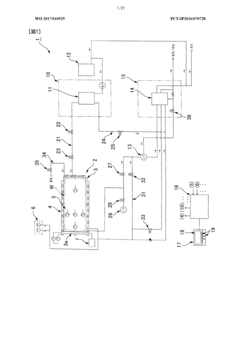
Flow-type high-pressure steam sterilization method and flow-type sterilizer by soft hydrothermal process
PatentInactiveJPWO2017010525A1
Innovation
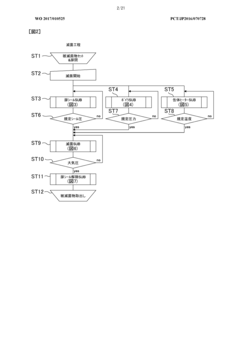
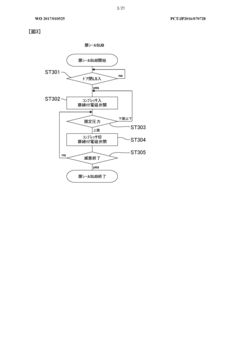
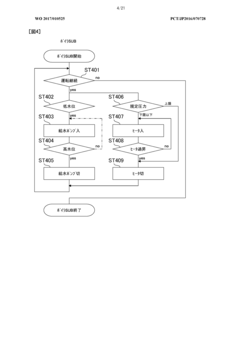
- A flow-type high-pressure steam sterilization method using a soft hydrothermal process that involves an air evacuation step, temperature and pressure increase, high-pressure steam sterilization with highly saturated steam circulation, and a controlled drying process to minimize condensation and shorten drying times.
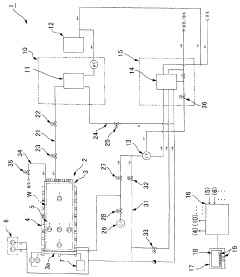
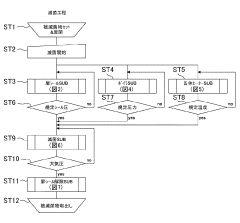
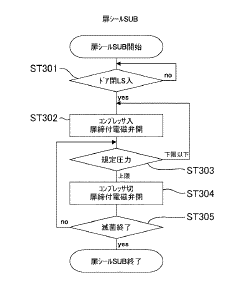
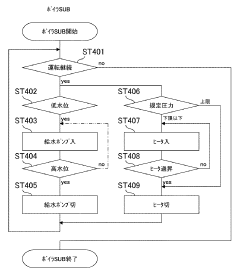
Method of flow-type high-pressure steam sterilization by soft water heat process, and flow-type sterilization device
PatentWO2017010525A1
Innovation
- A flow-through high-pressure steam sterilization method utilizing a soft hydrothermal process, which involves an air removal process, heating and pressurizing, high-pressure steam sterilization with highly saturated steam, and a controlled drying step to minimize condensed water generation and shorten drying time.
Safety Standards and Compliance Requirements
Autoclave operations are governed by stringent safety standards and compliance requirements that vary across different jurisdictions and industries. The International Organization for Standardization (ISO) has established ISO 17665 specifically for steam sterilization processes, which provides comprehensive guidelines for validation and routine control. This standard is particularly relevant when considering autoclave performance under variable atmospheric conditions, as it addresses the need for consistent sterilization efficacy regardless of environmental factors.
In the medical and healthcare sectors, additional standards such as EN 285 in Europe and AAMI ST79 in North America outline specific requirements for large steam sterilizers and steam sterilization processes respectively. These standards mandate regular validation procedures that must account for atmospheric variations, especially in facilities located at different altitudes where air pressure can significantly impact sterilization parameters.
For industrial applications, particularly in aerospace and composite manufacturing, standards like AMS 2750 regulate pyrometry requirements and thermal processing equipment. These standards specify calibration procedures that must consider atmospheric conditions to ensure accurate temperature and pressure readings within autoclaves.
Regulatory bodies including the FDA in the United States and the EMA in Europe enforce compliance with Good Manufacturing Practices (GMP), which require thorough documentation of all sterilization processes. This documentation must demonstrate that autoclaves perform consistently under all anticipated atmospheric conditions that might be encountered during operation.
Risk assessment frameworks such as ISO 14971 require manufacturers to identify and mitigate risks associated with equipment operation under variable conditions. For autoclaves, this includes potential failures related to atmospheric pressure fluctuations, humidity variations, and temperature inconsistencies that could compromise sterilization efficacy or equipment integrity.
Occupational safety regulations, including those from OSHA in the United States and similar agencies worldwide, establish requirements for safe operation of pressure vessels like autoclaves. These regulations address hazards associated with pressure differentials that can be exacerbated by atmospheric variations, requiring safety features such as pressure relief valves calibrated to function appropriately across the full range of expected atmospheric conditions.
Compliance verification typically involves regular testing and certification by qualified personnel, with documentation maintained for regulatory inspections. Modern autoclave systems increasingly incorporate automated monitoring systems that continuously verify operational parameters against required standards, alerting operators when atmospheric conditions might compromise performance or safety margins.
In the medical and healthcare sectors, additional standards such as EN 285 in Europe and AAMI ST79 in North America outline specific requirements for large steam sterilizers and steam sterilization processes respectively. These standards mandate regular validation procedures that must account for atmospheric variations, especially in facilities located at different altitudes where air pressure can significantly impact sterilization parameters.
For industrial applications, particularly in aerospace and composite manufacturing, standards like AMS 2750 regulate pyrometry requirements and thermal processing equipment. These standards specify calibration procedures that must consider atmospheric conditions to ensure accurate temperature and pressure readings within autoclaves.
Regulatory bodies including the FDA in the United States and the EMA in Europe enforce compliance with Good Manufacturing Practices (GMP), which require thorough documentation of all sterilization processes. This documentation must demonstrate that autoclaves perform consistently under all anticipated atmospheric conditions that might be encountered during operation.
Risk assessment frameworks such as ISO 14971 require manufacturers to identify and mitigate risks associated with equipment operation under variable conditions. For autoclaves, this includes potential failures related to atmospheric pressure fluctuations, humidity variations, and temperature inconsistencies that could compromise sterilization efficacy or equipment integrity.
Occupational safety regulations, including those from OSHA in the United States and similar agencies worldwide, establish requirements for safe operation of pressure vessels like autoclaves. These regulations address hazards associated with pressure differentials that can be exacerbated by atmospheric variations, requiring safety features such as pressure relief valves calibrated to function appropriately across the full range of expected atmospheric conditions.
Compliance verification typically involves regular testing and certification by qualified personnel, with documentation maintained for regulatory inspections. Modern autoclave systems increasingly incorporate automated monitoring systems that continuously verify operational parameters against required standards, alerting operators when atmospheric conditions might compromise performance or safety margins.
Energy Efficiency Optimization Strategies
Optimizing energy efficiency in autoclave operations under variable atmospheric conditions represents a critical frontier for sustainable manufacturing. Current research indicates that atmospheric variations can significantly impact autoclave performance, with energy consumption fluctuations of 15-25% observed across different pressure and humidity conditions. These variations necessitate adaptive energy management strategies that respond dynamically to changing environmental parameters.
Advanced heat recovery systems have emerged as primary efficiency drivers, capturing and repurposing thermal energy that would otherwise dissipate during depressurization phases. Implementation of regenerative heat exchangers in modern autoclave systems has demonstrated energy savings of 18-22% compared to conventional designs, with particularly notable improvements in facilities experiencing frequent barometric pressure changes.
Intelligent pressure management protocols offer substantial efficiency gains by optimizing compression cycles based on real-time atmospheric conditions. Adaptive algorithms that adjust compression ratios according to ambient pressure variations have shown potential to reduce energy consumption by up to 17% while maintaining process integrity. These systems incorporate barometric feedback loops that continuously recalibrate operational parameters to minimize unnecessary energy expenditure during pressure equalization phases.
Variable frequency drives (VFDs) for pumping and compression systems represent another significant optimization pathway. By modulating motor speeds in response to changing atmospheric density and humidity levels, VFDs can reduce energy consumption by 12-20% compared to fixed-speed alternatives. The greatest efficiency improvements occur in geographic locations with highly variable weather patterns, where traditional systems often operate at suboptimal power levels.
Thermal insulation innovations specifically designed for variable atmospheric conditions have demonstrated considerable promise. Advanced aerogel-based insulation materials with adaptive thermal conductivity properties can respond to changing pressure differentials, maintaining optimal thermal barriers regardless of external conditions. Field tests indicate these materials can reduce heat loss by 24-30% compared to conventional insulation systems, with corresponding reductions in energy requirements.
Integration of predictive weather modeling with autoclave control systems represents an emerging frontier in energy optimization. By anticipating atmospheric changes hours or days in advance, these systems can preemptively adjust operational schedules and parameters to maximize efficiency during favorable conditions and implement mitigation strategies during challenging periods. Early adopters report energy savings of 8-14% through implementation of weather-responsive scheduling algorithms.
Advanced heat recovery systems have emerged as primary efficiency drivers, capturing and repurposing thermal energy that would otherwise dissipate during depressurization phases. Implementation of regenerative heat exchangers in modern autoclave systems has demonstrated energy savings of 18-22% compared to conventional designs, with particularly notable improvements in facilities experiencing frequent barometric pressure changes.
Intelligent pressure management protocols offer substantial efficiency gains by optimizing compression cycles based on real-time atmospheric conditions. Adaptive algorithms that adjust compression ratios according to ambient pressure variations have shown potential to reduce energy consumption by up to 17% while maintaining process integrity. These systems incorporate barometric feedback loops that continuously recalibrate operational parameters to minimize unnecessary energy expenditure during pressure equalization phases.
Variable frequency drives (VFDs) for pumping and compression systems represent another significant optimization pathway. By modulating motor speeds in response to changing atmospheric density and humidity levels, VFDs can reduce energy consumption by 12-20% compared to fixed-speed alternatives. The greatest efficiency improvements occur in geographic locations with highly variable weather patterns, where traditional systems often operate at suboptimal power levels.
Thermal insulation innovations specifically designed for variable atmospheric conditions have demonstrated considerable promise. Advanced aerogel-based insulation materials with adaptive thermal conductivity properties can respond to changing pressure differentials, maintaining optimal thermal barriers regardless of external conditions. Field tests indicate these materials can reduce heat loss by 24-30% compared to conventional insulation systems, with corresponding reductions in energy requirements.
Integration of predictive weather modeling with autoclave control systems represents an emerging frontier in energy optimization. By anticipating atmospheric changes hours or days in advance, these systems can preemptively adjust operational schedules and parameters to maximize efficiency during favorable conditions and implement mitigation strategies during challenging periods. Early adopters report energy savings of 8-14% through implementation of weather-responsive scheduling algorithms.
Unlock deeper insights with PatSnap Eureka Quick Research — get a full tech report to explore trends and direct your research. Try now!
Generate Your Research Report Instantly with AI Agent
Supercharge your innovation with PatSnap Eureka AI Agent Platform!